CoinEx Official Statement Regarding The Wall Street Journal Report
CoinEx is aware of the recent report published by The Wall Street Journal. We fully respect media oversight and press freedom, and understand the public's heightened concern regarding compliance, anti-money laundering, and sanctions risks in the digital asset industry. We take this matter very seriously and believe we have a responsibility to provide a clear and objective response to our users and partners.
Regarding CoinEx's Relationship with Iran
CoinEx is a digital asset exchange serving ordinary users worldwide. We have never established any commercial relationship with Iranian government-related entities or Iranian domestic exchanges, nor have we ever provided funding channels or any form of active assistance to Iranian government agencies, Revolutionary Guard-related entities, or other sanctioned parties.
It is important to note that CoinEx was blacklisted by the Iranian government as early as 2021, with its official domain blocked within Iran. This fact alone demonstrates that CoinEx is not a platform recognized, supported, or partnered with by Iranian authorities, nor does it have a realistic basis to serve as an official Iranian funding channel.
CoinEx has never established any office or operating entity in Iran. CoinEx operates a referral commission program open to all users globally, and some individuals independently used this program to promote CoinEx. This was not an activity organized by CoinEx.
We firmly reject any narrative that conflates ordinary user activity with state-level sanctions evasion, and any inference that equates on-chain fund flows with platform knowledge of, support for, or participation in illicit activity.
Regarding Specific Matters Referenced in the Report
With respect to the transactions involving Alireza Derakhshan and Zedcex/Zanjani referenced in the report, based on the information currently available to us, the relevant transactions all occurred prior to the U.S. Treasury Department's designation of these entities. We do not provide services to any sanctioned entity or individual, and have never knowingly provided any form of facilitation to any party after it was designated.
Regarding the Bybit theft referenced in the report, CoinEx assisted Bybit with account blocking and asset freezing immediately upon learning of the incident, and we will conduct an internal review of the transactions mentioned in the report. CoinEx itself was the victim of a cyberattack in 2023, attributed by multiple investigations to a North Korea-affiliated group, resulting in losses of approximately USD 80 million. We are acutely aware of the enormous harm that malicious cybercrime inflicts on the crypto industry and user assets, and our interests and position are fully aligned with global law enforcement and on-chain security organizations in combating hacking and tracing stolen funds. Any suggestion that CoinEx intentionally condoned or assisted in money laundering by hackers is contrary to the facts and fundamentally at odds with our core values and interests.
Regarding the Interpretation of On-Chain Data
Blockchain transactions are open, cross-platform, and traceable by nature. The fact that funds have passed through a platform on-chain does not mean that the platform was aware of, supported, or participated in the related fund activity. Data from different third-party blockchain analytics platforms varies significantly, and data from any single platform should not be treated as definitive. On-chain attribution is inherently a methodology with limitations, and its conclusions depend largely on interpretation. Furthermore, combining bidirectional fund flows into a single aggregate figure and presenting it as the amount "processed" by CoinEx is highly misleading.
Regarding Recent Measures Taken
Following the sanctioning of Iranian domestic exchanges, CoinEx immediately initiated a comprehensive review and exit process for all Iran-related risk exposure, and implemented the following measures:
- Strengthened identification of Iranian users, refused user registrations from Iranian regions, and initiated ongoing compliance off-boarding for accounts identified as belonging to Iranian users;
- Implemented comprehensive geo-fencing and access restrictions for Iranian regions; accounts and assets of any identified sanctioned entity or individual will be restricted or frozen;
- Enhanced the KYT system to improve monitoring and review capabilities for sanctioned regions, high-risk addresses, and anomalous on-chain transaction paths, and to freeze related transactions;
- Continued to identify and take action against accounts abusing the platform for illicit activity, particularly those using CoinEx as a fund transit point.
Regarding Our Future Commitment
The digital asset industry continues to develop rapidly, and the global regulatory environment is continuously evolving. As with the industry at large, CoinEx's anti-money laundering and transaction monitoring capabilities are continuously being strengthened. We will continue to invest resources in enhancing our KYC, AML, sanctions screening, and on-chain risk monitoring capabilities, respond to concerns from all parties in a responsible manner, and welcome review by relevant authorities.
CoinEx Global
25th June 2026
Oh hello, @durov
Nobody is using Telegram in India for messaging. Telegram is mostly used by scammers in India. Most financial fraud (Billions of dollars) in India happens through Telegram
The Indian government should have banned Telegram years ago. It is long overdue.
I’ve been noticing the same pattern for years. Almost every fraudster immediately moves to Telegram. it’s harder to trace, easier to operate.
Calling this an internet freedom issue misses the point completely.
Telegram became one of the preferred platforms for financial fraud, scam networks, betting groups, piracy, and other illegal activities in India.
@jasveer10@durov A survey from your useless dating app doesn't represent all of India. Claiming Telegram is mostly used by scammers is baseless. By that logic, we should ban the internet too, since plenty of fraud and crimes happen online. The problem is criminals, not the platform.
@KartiPC@NTA_Exams You should also shut down all the shopping malls since there might be a theft in one of them. And close the roads because I heard someone was speeding.
India’s IT ministry banned Telegram for one week because some users shared leaked exam questions.
This punishes 150M+ ordinary Telegram users in India — not the insiders who leaked the exam materials.
And the ban hasn't stopped anything. The leaks just moved to other apps.
Statement : Shutting down Telegram is a band aid solution and is a disproportionate answer to exam fraud
The Internet Freedom Foundation objects to the directions announced today in the National Testing Agency's press release on action against the Telegram platform. On the NTA's recommendation, the Ministry of Electronics and Information Technology has, under Section 69A of the Information Technology Act, 2000, restricted access to the whole of Telegram in India until 22 June 2026, and has separately ordered the platform to switch off message-editing for every Indian user until 30 June 2026. This is a blunt, nationwide measure aimed at the conduct of rampant fraud rackets, and on the Government's own admission is constitutionally incompatible.
At the outset it is important to note that Section 69A and the Blocking Rules of 2009 framed under it allow the Government to block access to specific “information” on a computer resource. They do not extend to switching off an entire intermediary, still less to ordering a company to redesign its product by removing a feature for a whole country. In Shreya Singhal v Union of India, the Supreme Court upheld Section 69A because it is narrow and hedged with procedural safeguards. Reading it to authorise shutting down a platform that lakhs use is an overbroad restriction by the NTAs own admission. For the message-editing direction the release identifies no source of power at all. If one exists, the order must say so.
The release argues against itself
A restriction on access has to be the least intrusive measure that achieves its aim as per the constitutional test of proportionality laid down in Justice K.S. Puttaswamy v. Union of India (2017) and applied in Anuradha Bhasin v. Union of India (2020). The NTA's own narration shows the block fails its nodal agency, the release says, “has secured the prompt take-down of a substantial number of Telegram channels, groups and bots”, and this targeted work “is the reason the harm caused by these rackets has been contained to the extent it has”. If channel level takedown contained the harm, the case for a blanket block collapses and hence the Government has reached for a heavier tool while conceding that a lighter one was working. The collateral cost sits on the record too as noted in the press release. The block, the NTA accepts, “affects lakhs of citizens who use the Telegram platform for legitimate personal, educational, professional and informational purposes”. The release also says there is "no such paper available outside the secured examination chain" and that “the security of the examination is unaffected by the action taken”. If the exam is secure and no leak exists, what is being suppressed is rumour, and rumour cannot justify closing a platform when specific blocking and criminal prosecution remain available.
Students use of Telegram
The block of telegram is reactive and ineffective and will punish ordinary users instead of addressing the systemic source of exam leaks. This blocking comes in the final days of NEET preparation, when thousands of students depend on Telegram for study groups, doubt-clearing, and shared resources. Also, it is important to consider that the source of exam papers leak will occur from inside the system, among insiders and across the printing and logistics chain, with the platform being the most downstream channel for distribution. Hence, switching off Telegram, is merely a deflection from the repeated failures that will continue while media attention is directed towards this Telegram ban.
Lack of transparency
At present only a press release from the NTA has been provided, which recommended the block but the reasoned order of MeitY, the authority that issued it, has not been released. The Anuradha Bhasin decision requires that orders restricting access be published so they can be tested in court. Here the order, and the reasoning of the committee behind it, stay out of view, and we do not know whether Telegram was heard at all. An announcement of a block is no substitute for an order the affected party can challenge.
Blunt to enforce and very easy to evade
Usually, app-level blocks run through IS-level DNS and IP filtering. They are over inclusive, sweeping in lawful use, yet simple to evade as a determined exam leak racket moves to a VPN or a mirror within minutes while ordinary users lose the service for a week.
We ask the Government to:
1) Publish the MeitY Section 69A order and the NTA recommendation behind it, with reasons;
2) State the legal basis for the message editing direction, or withdraw it;
3) Confirm whether Telegram was given a hearing under the Blocking Rules, and place the committee's record before any court that hears a challenge; and
4) Lift the platform-wide restriction and rely on the targeted takedowns the NTA itself credits with containing the harm.
We emphasise that the NEET (UG) 2026 re-examination is worth protecting and it concerns the future of lakhs of aspirants. It requires securing the entire process of examination rather than reaching for purported band aid solutions that instead cause more harm. The State cannot switch off a service used by lakhs to answer the wrongdoing of a few, and cannot do it through an order no one affected is allowed to read. On its own facts, the Government has done both.
New Delhi, 16 June 2026.
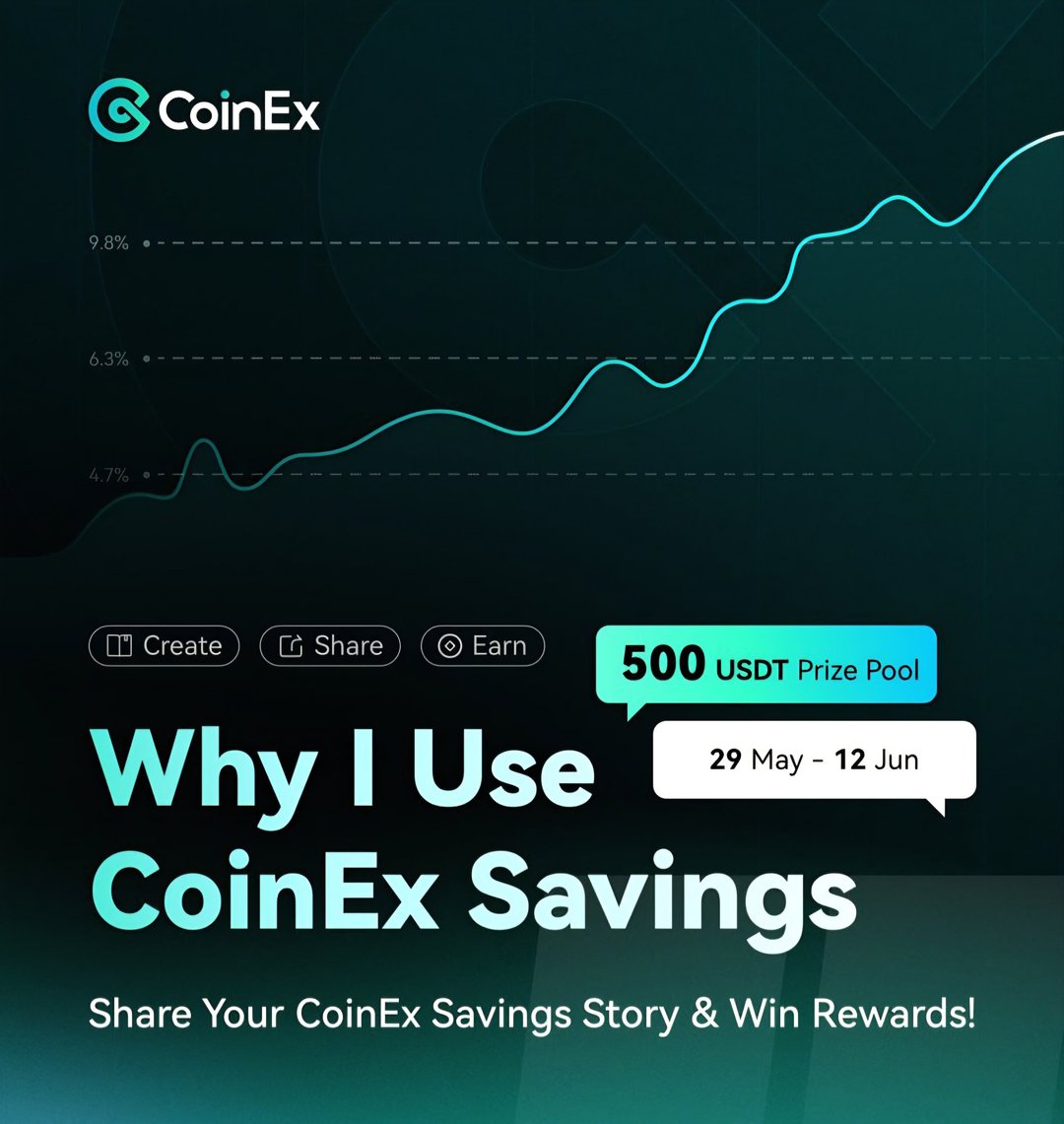
Tell us why you use CoinEx Savings and you could win from 500 USDT! 💰
Share your story, strategy, meme, video, or any creative post about Flexible or Fixed Savings on X, Reddit, or other social platforms, then submit your link.
👉10 winners × 50 USDT
👉Post multiple times & submit daily for more chances
👉Enter here: https://t.co/iGl06az6Wb
Drop your QS Panel setups below (OneUI 8.5 Only).
I'll drop the first version of Glass Texture pack on 17th (sunday), for Quickstar based on the most common QS panel layouts, will gradually add support for more tiles and layouts with time.
hey @telegram@durov,
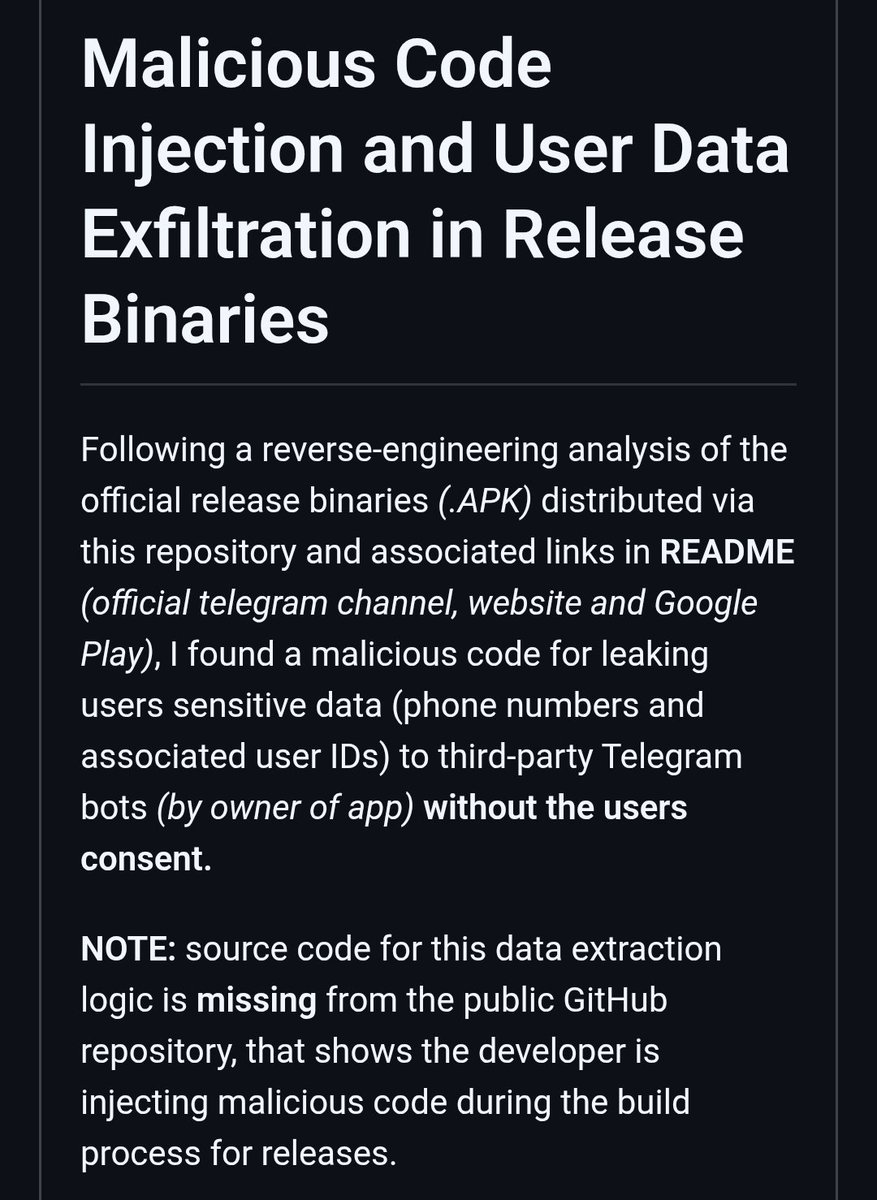
nekogram reportedly sent users’ phone numbers + user ids without clear consent, and even hid that from the public source. the dev didn’t deny it either
how is this still allowed on play store?
and why hasn’t telegram taken any action?
#telegram#privacy
Dear CoinEx Community,
Today marks CoinEx’s 8th anniversary.
Thanks to everyone who's been with us. These years weren't easy — the crypto world has changed significantly. What kept us going? The choices we made, and your long-term trust.
Users always come first. Growth matters, but trust matters even more. Before we build anything, we ask: does this really help our users? If not, we don't do it. That’s been our rule from the start.
We care about transparency. We published Proof of Reserves early, and keep your assets fully backed. You should know your funds are safe — and we show it through action.
Crypto is full of noise. But lasting trust comes from solid products and reliable service. We focus on what truly matters — because your experience is what we care most about.
More change is coming. With the integration of TradFi and crypto, and the convergence of on-chain finance and AI, we’ll keep adapting. Our goal remains clear: to enhance trading efficiency, safeguard assets, and serve you well.
A huge thank you to our users and partners. Your trust got us here — from a small team to a global platform. Eight years is just the beginning. With you beside us, we’re ready to keep building.
Onward, together.
Regards,
Haipo Yang
CEO, CoinEx