🦋 Are you headed to the Nebraska State Fair this morning? Stop by the Groundwater Guardians Outdoor Learning Area to see monarch butterflies being tagged and released!
Find us in the gazebo near the Raising Nebraska Building from 10-1. Come learn about these amazing pollinators!
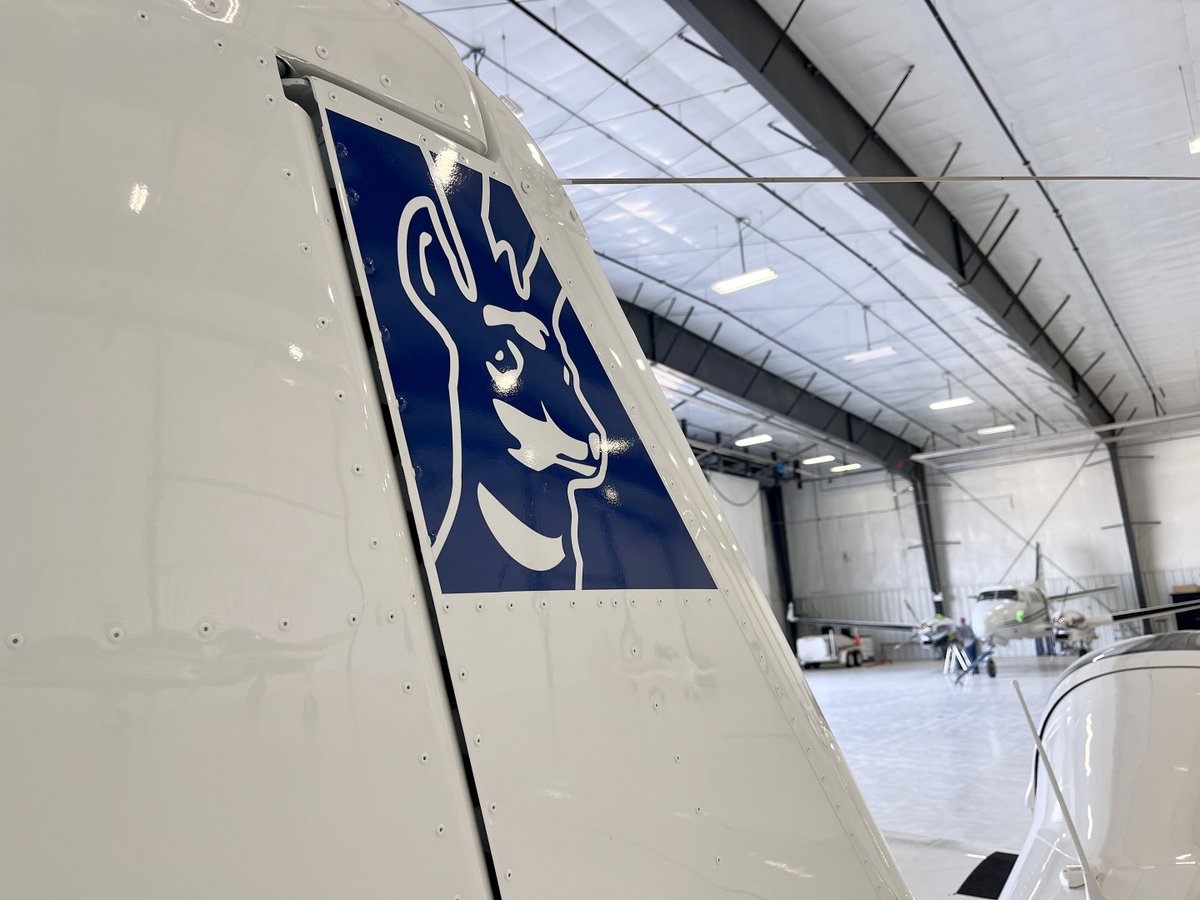
UNK will celebrate the launch of its new Loper Flight Academy with a ribbon-cutting ceremony and open house Thursday at Kearney Regional Airport.
The public event is scheduled for 3 to 5 p.m. at 4845 Airport Road, inside the corporate hangar located south of the terminal. Guests can meet UNK aviation instructors, check out the new aircraft and enjoy light refreshments.
The celebration will get off the ground shortly before 3 p.m., when UNK Chancellor Neal Schnoor participates in a fly-in aboard one of the academy’s new planes. Schnoor, who has a private pilot license, will land at approximately 2:55 p.m. before opening the program with remarks at 3 p.m.
FULL STORY: https://t.co/R1u1bzdyla
#PowerOfTheHerd
When you talk about what’s happening in Kearney, lead with UNK. Talk about our students and graduates. Talk about how investing in them and our university helps retain talent and strengthen our workforce, communities and state for generations to come.
A strong UNK means a stronger future for Greater Nebraska, our state and region.
Read Chancellor Neal Schnoor’s full remarks: https://t.co/4M16wSXySA
#PowerOfTheHerd
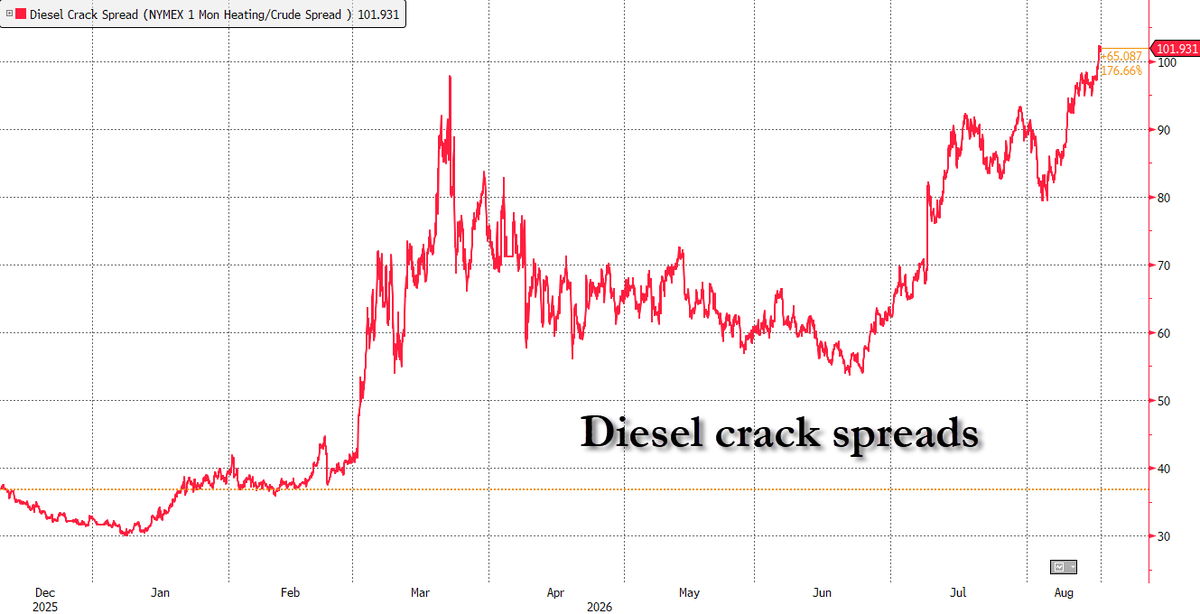
BREAKING: US diesel crack, the gap between diesel and crude, has just hit a record $102.20 for the first time in history.
Food is about to get a lot more expensive. Agriculture runs on diesel equipment and shipping, heating oil is next ahead of winter, and everything moved by truck or ship will drive inflation higher.
The industrial economy either grinds to a halt, or consumers are about to be hit with the biggest energy pass-through in history as refining costs transmit downstream into higher prices for businesses and consumers.
Okay. Let's have some fun.
Whenever you bring up the heatwaves and drought of the 1930s, climate panic puppies are quick to dismiss them as “statistical outliers” that were caused by “unsustainable farming practices” in the Great Plains.
This is cute, but it's not really true.
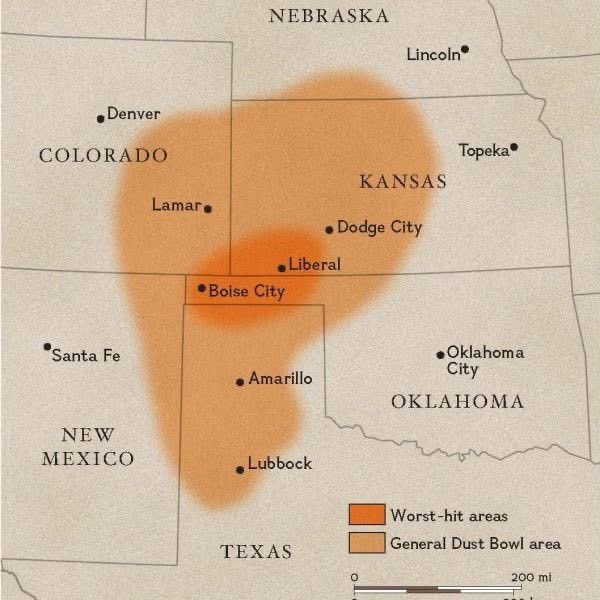
The decade-long drought of the 1930s covered much of the United States and significant portions of Canada. The extreme heat in July-August 1930, June 1933, May-August 1934, June-August 1936, and September 1939 also covered much of the Continent. But the “Dust Bowl” itself was primarily confined to a relatively small area in northern Texas, the Oklahoma Panhandle, and western Kansas.
In other words, farmers plowing up deep-rooted perennial prairie grasses and replacing them with shallow-rooted annual crops outside of places like Liberal, Kansas or Boise City, Oklahoma were not responsible for the heatwaves and continental-scale drought. Sure, those agricultural practices amplified drought conditions and, by extension, the intensity of heatwaves on a very localized basis, and they stirred up the dust storms that swept through the Great Plains, but those farming practices were not the actual cause the persistent drought or heatwaves during the 1930s.
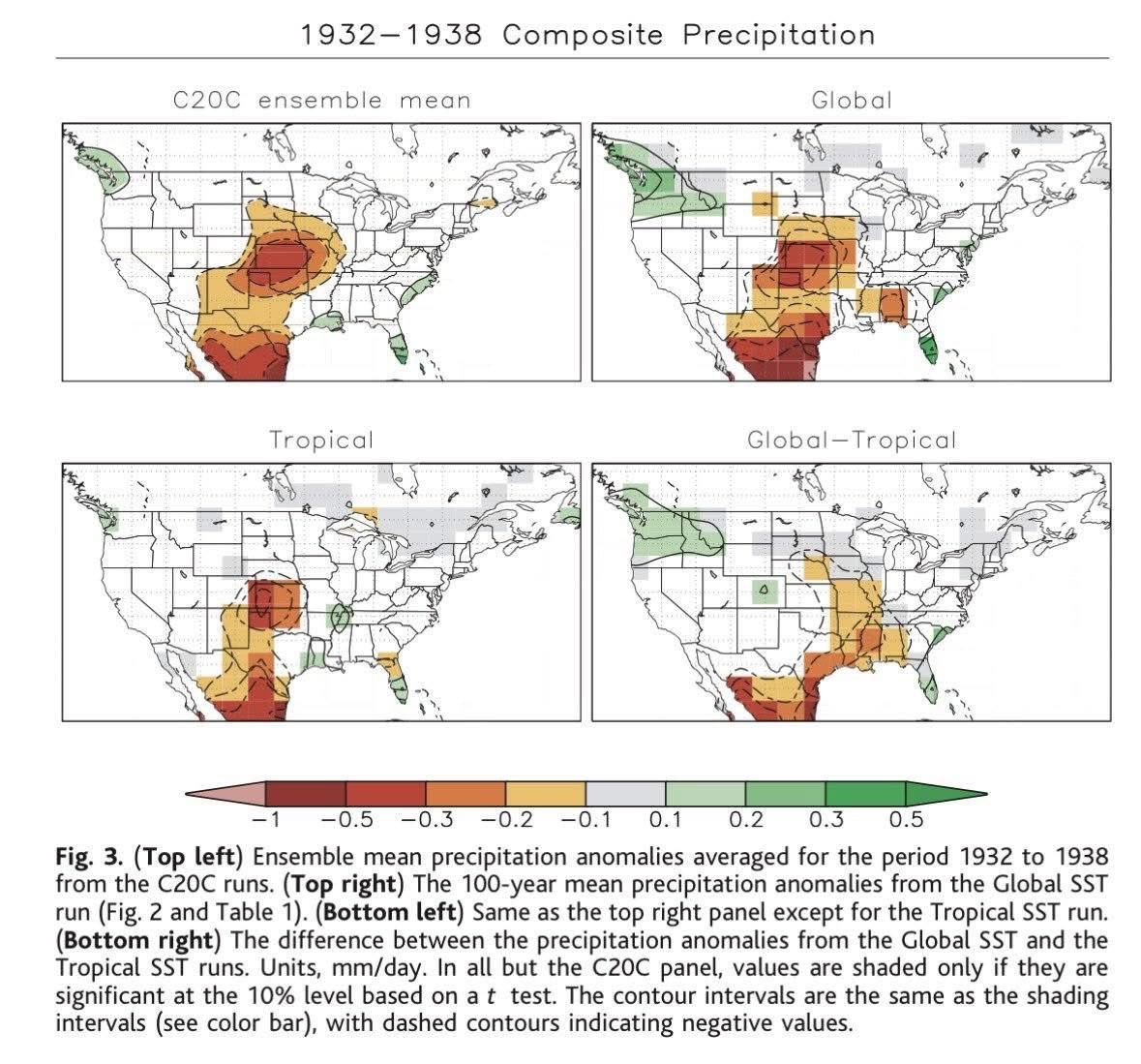
The drought was naturally forced by persistent La Niña conditions (similar to what has been occurring in recent years) in the equatorial Pacific Ocean and an unusually warm subtropical North Atlantic (Schubert et al., 2004; Seager et al., 2008).
🔗https://t.co/a1gWo8IXoX / open-access: https://t.co/xvH4jEy42z
🔗https://t.co/mqcfcNSaa6
Below average sea surface temperatures (SSTs) in the tropical Pacific produced negative 500 hPa geopotential height anomalies over the tropics, which led to positive anomalies over the mid-latitudes. This created large-scale subsidence (sinking air) over the Plains, which suppressed rainfall for several years.
Concurrently, a warm North Atlantic generated anticyclonic rotation in the mid-to-upper troposphere and low-level cyclonic flow that cut off moisture transport from the Gulf of Mexico (or America if you prefer; I'm not going to get into that argument with anyone) to the central United States, especially during the summer and fall.
These two factors alone initiated the drought, as they had during the preceding centuries and also recently. In fact, severe droughts in the Great Plains typically happen about once or twice a century (Woodhouse & Overpeck, 1998), and occasionally have been so severe that they transformed the region into a de-facto desert with blowing sand.
🔗https://t.co/0WLG8g0wAh
Notably, multi-decadal droughts during both the 13th and 16th centuries exceeded the 1930s drought by intensity and duration, all naturally forced. A tree-ring analysis in Nebraska found that the 13th century Medieval drought lasted an incredible 38 years (Herweijer et al., 2006).
🔗https://t.co/YaOb7mIphR / open-access: https://t.co/STJfOxFLpx
Land degradation only locally enhanced drought and heatwave conditions during the 1930s. It did not cause it, nor did it enhance those similar conditions exhibited elsewhere on the entire continent.
In other words, you cannot simply dismiss the 1930s heatwaves and droughts because they are problematic for your narrative.
It was almost entirely natural.
It verifiably happened.
And, it isn't going to be dumped down the memory hole so long as I am still standing, I can rest assure you of that.
Glyphosate isn’t controversial because it’s understudied.
It’s controversial because the evidence is ignored.
Fact 1. This chemical is exhaustively studied:
•40+ years of data.
•Thousands of studies.
•Reviewed repeatedly across continents.
Fact 2. Global regulators agree:
Every major regulatory authority that assesses real-world exposure reaches the same conclusion:
•US EPA
•EFSA
•ECHA
•Health Canada
👉 Not carcinogenic at human exposure levels.
👉 Not genotoxic.
👉 No unacceptable health risk when used as directed.
This is not one agency.
This is not a global conspiracy.
Fact 3: The largest human study says no.
•54,000+ pesticide applicators.
•Followed since 1993.
•No link to overall cancer.
•No consistent link to non-Hodgkin lymphoma.
If glyphosate caused cancer, this study should have found it.
It didn’t.
Fact 4: Food residues are not the issue.
•Residues are far below safety limits.
•Dietary exposure does not pose a cancer risk.
•Drinking water exposure is not a health hazard.
“Toxic” without dose is not toxicology.
Fact 5: Worker exposure is also low.
•Measured exposures are far below NOAELs.
•Regulators repeatedly conclude: not of concern.
So where does the scare come from?
One outlier → IARC
IARC did a hazard classification, not a risk assessment.
They put glyphosate in the same category as:
•Red meat.
•Hot beverages.
•Being a barber.
IARC explicitly ignores exposure.
Regulators do not.
This is the entire conflict:
Hazard-only classification
vs
Risk-based regulation.
Confuse the two - and fear wins.
Bottom line:
No pesticide regulator on Earth currently considers glyphosate a cancer risk at real-world exposure levels.
The science is boring.
It’s to put a stop to the misinformation.
In Buffalo County, six fungicides applied by drone (30 ft swaths on July 16) were tested to evaluate their impact on disease development and corn yield. Disease assessments and harvest data were collected will be available at the NOFR Results meetings in February!