Introducing OpenShip.
An open-source application platform for building, deploying, operating, and scaling applications on infrastructure you own.
Replace deployment tools, managed services, and infrastructure workflows with one open-source platform.
Available today:
- Mail Server (Built in. One click).
• Runs on your own VPS
• Unlimited domains
• Unlimited mailboxes
• Modern webmail included
• Connect with Gmail, Outlook, Apple Mail, Thunderbird, or any IMAP/SMTP client
• Send email directly from your applications using SMTP
• No mailbox subscriptions or API fees
• High email deliverability
- Deployment:
• Deploy any stack
• Git-based deployments
• Zero-downtime deployments
• One-click rollbacks
• Development, Staging, and Production environments
• Multi-branch deployments with isolated environments • Deploy to VPSs, dedicated servers, cloud VMs, or your homelab
- Services:
Provision the services your applications need in one click.
Replace multiple managed providers with services running on your own infrastructure.
• Supabase
• PostgreSQL
• MySQL
• MariaDB
• MongoDB
• Redis
• MinIO
• Meilisearch
• Qdrant
• RabbitMQ
• Kafka
• ClickHouse
• Elasticsearch
...and deploy any other service alongside your applications.
- Operate:
• Live deployment logs
• Live request logs
• Real-time traffic analytics
• Automated backups
• Monitoring
• Secrets management
• Domains
• Automatic SSL
• Environment variables
• Scheduled jobs
• Health checks
-Multi Environments:
• Separate Development, Staging, and Production environments
• Deploy every branch independently
• Test changes before production
• Isolated services, secrets, and configuration per environment
- Security & Teams:
• Team management
• Role-based access control
• IP allow/block rules
• Rate limiting
• Security rules
- Developer Experience:
• Web dashboard
• Native desktop application
• CLI
• REST API
• MCP support for AI agents, just add the mcp and your agent can do the work for you
• Manage your infrastructure without living in SSH
- Coming Soon:
• Multi-server clustering for applications and databases
• One-click load balancing
• Horizontal scaling across multiple servers
• Built-in high availability and failover
• Scale from a single VPS to a cluster with the same workflow
• Just add servers. OpenShip handles the rest.
Open source.
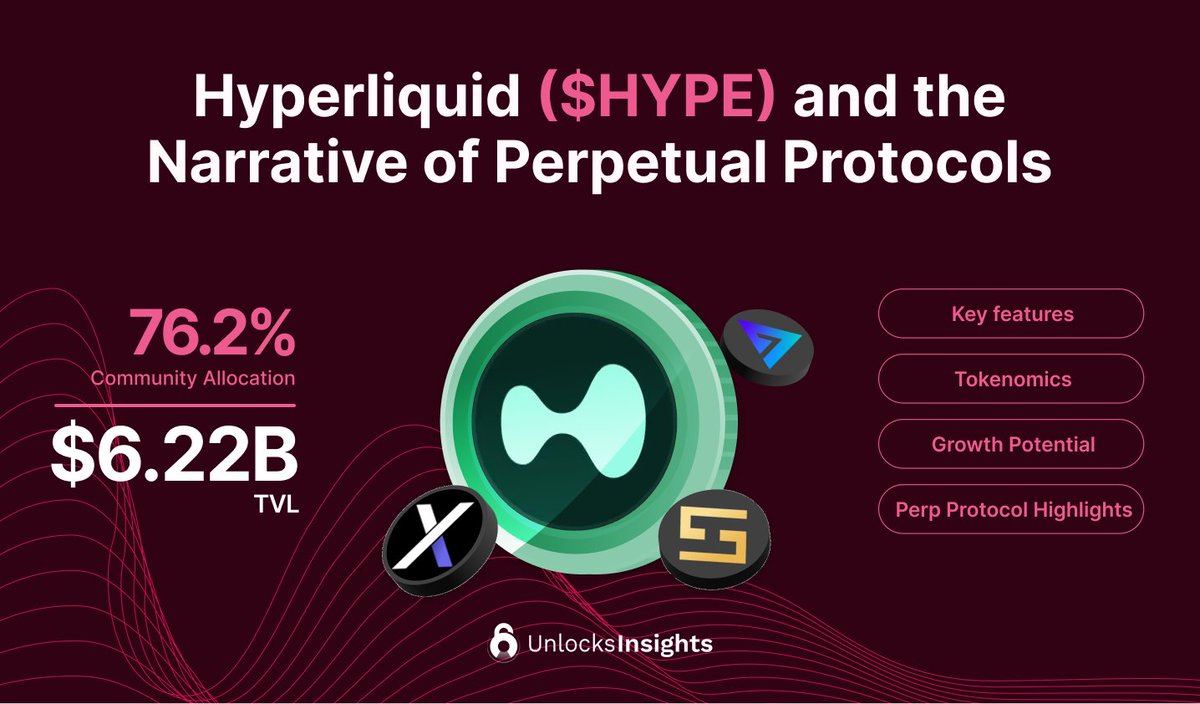
Bullish vibes are brewing in crypto! While MEMEs and AI grab headlines, @HyperliquidX is quietly bringing DeFi back into focus
Their unique community-first token launch is setting new standards for transparency and innovation in decentralized finance 🧵 ;
The third largest cryptocurrency is a token on the Ethereum blockchain - USDT.
It has a built-in fee-on-transfer mechanism (pictured below). Luckily, currently the value (basisPointsRate) is zero.
If USDT flips the fee switch, how much of the current DeFi infrastructure breaks?
A MUST READ.
Before learning Solidity or smart contract security, I always recommend this book for fundamental blockchain & Ethereum knowledge.
Enjoy👇
https://t.co/OqLuBBhjvX
What does Tony & Winterfell have in common? 🤔
📢 Listing Announcement! 🚀
$STRK/USD (@Starknet) is now LIVE 🟢 on @HMXorg
Trade now 📊:
https://t.co/alOMIGmLlV
Dragons, we are proud to announce the first utility amongst many to come of $HMX tokens: Trading Fee Discount!
Starting from the 1st of February (this Thursday), you will receive trading fee discount from staking your $esHMX & $HMX!
More details in the 🧵 below
1/
UniswapV3: Visualize How Liquidity Works! (2.5 Minute Read)
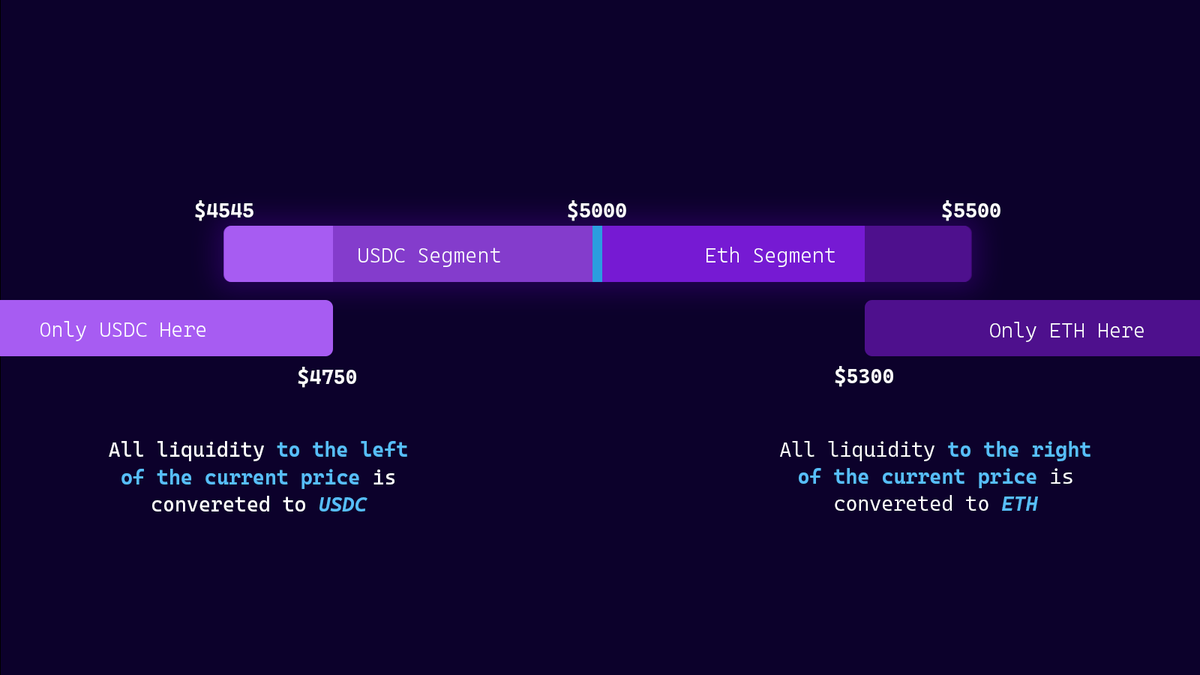
Let's consider a price range for USDC/ETH:
- Upper Price ($5500)
- Lower Price ($4545)
- Current Price ($5000)
This can look like this:
By price, we mean ETH expressed in USDC, as in 1 ETH = 5000 USDC.
If we move to the right, the price increases, and the ETH reserve decreases. Moving to the right is taking ETH out of the pool, which makes it more valuable.
If we move to the left, the price and USDC reserve decrease. As we are taking USDC from the pool and putting ETH in, so ETH is less valuable.
Now, let’s say we want to provide liquidity, in a range that overlaps with our current range, but not completely.
This can look like this:
The range on the left has an upper price of $4750, and the range on the right has a lower price of $5300.
Now, since the current price is $5000, here is what happens:
For The Left Price Range:
- Upper price ($4750) is less than the current price ($5000)
- If we reach our price segment we will have more ETH than USDC, and to continue performing swaps in that direction, we need USDC.
- So all liquidity we provide will be converted to USDC.
For The Right Price Range:
- lower price ($5300) is greater than the current price ($5000)
- If we reach our price segment we will have more USDC than ETH, and to continue performing swaps in that direction, we need ETH.
- So all liquidity we provide will be converted to ETH.
Let me know if you have any questions!
1/🧵 $CRV is a ticking bomb
The Curve ecosystem is in the hands of "questionable people/entities" and Mich's ability to service his debt which grows $1.7M/month.
I will explain why I see a light at the end of the tunnel and how @0xSifu is playing this game.
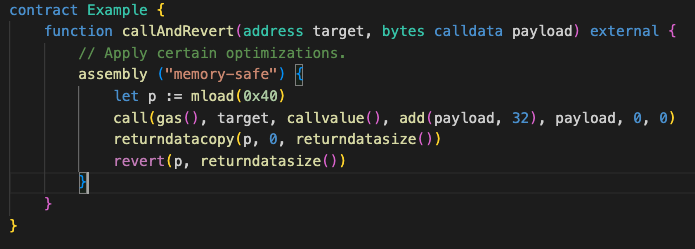
What does the `memory-safe` flag do?
The flag tells the compiler to rely on the assembly block respecting Solidity's memory layout, enabling specific optimizations.
By default, moving stack variables to memory and other memory optimizations are disabled in inline assembly
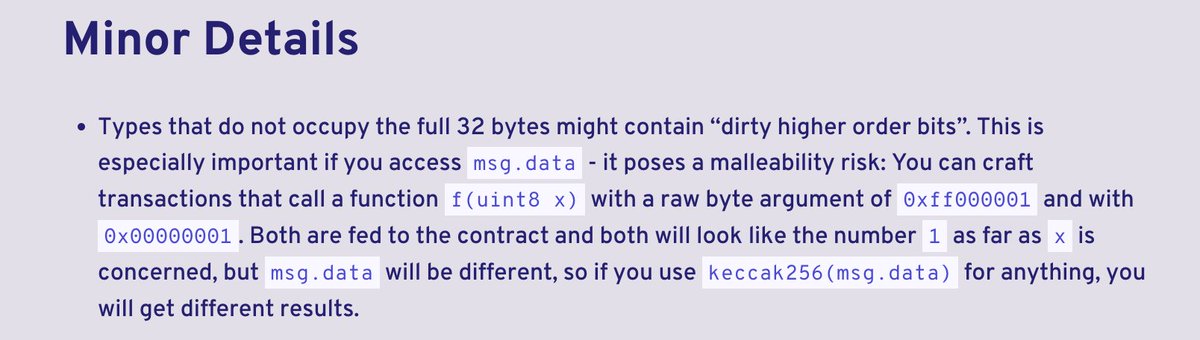
Be careful when you use `keccak256(https://t.co/wgGq94MnHv)`. It can contain dirty higher order bits which could lead to malleability attacks.
From the Solidity docs 👇
UniswapV3: All The Equations You Will Need!
If you ever felt overwhelmed by the amount of equations and conversions you need to understand UniswapV3, you are not alone!
I’ve summarized the most essential equations that you will need in the majority of interactions with the AMM giant!
A Thread🧵