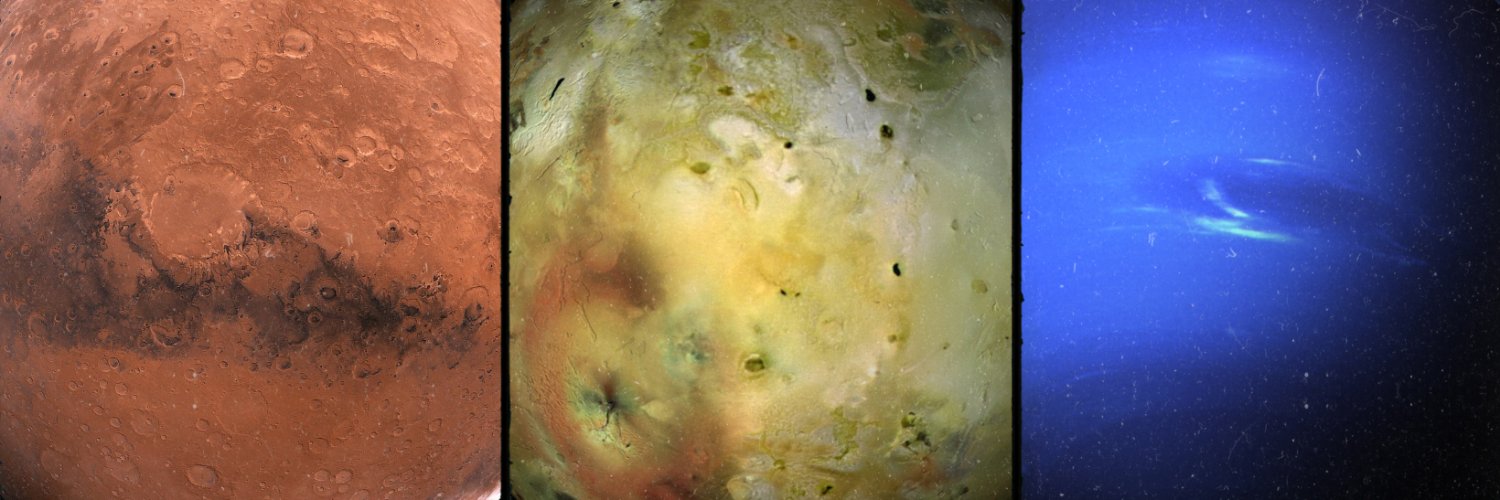
Planetary Pandemonium is officially live 🚀🐱
In Episode 0, I introduce the show—where planetary science meets science fiction (and yes, cats).
If you love space, stories, and the people behind the science, come join me.
🎧 Listen: https://t.co/Tv0PJgGYk6
For the second year in a row, the SETI Institute joined in @ATLSciFest’s Exploration Expo in Piedmont Park. The expo drew over 20,000 science lovers, many of whom visited our booth.
This year’s booth theme, “What Would You Say to Aliens,” focused on the Arecibo Message, sent in 1974 from the Arecibo Telescope to the globular cluster M13. The message encoded information about life on Earth, visualized as a grid of binary data.
Building on the theme, visitors of all ages used graph paper and colored pencils to create their own messages to aliens. At the same time, SETI Institute booth hosts, @astro_sgro and @planetarypan, explained the contents of the original Arecibo Message and how and where it was sent.
Learn more: https://t.co/fqUBO81TkD
Dr. Lauren Sgro (@astro_sgro) is helping people around the world discover exoplanets 🌍✨
In Episode 1 of Planetary Pandemonium, we talk citizen science, sci-fi inspiration, and—of course—her pets Zuul 🐶 and Salem 🐱
🎧 Listen now: https://t.co/nbXZ1CmVON
All right. It's time. Coming Monday, April 6 - which is also my 51st birthday - I will be releasing the first episode of my new podcast, Planetary Pandemonium. It will be a short interview with myself!
Follow me on Patreon (for free) for the notification. Stay curious! 🐈⬛🪐
Hi, y'all! I'm finally ready to announce... my new podcast, Planetary Pandemonium, is coming soon. We'll meet at the intersection of space science and science fiction. There will be cats. Check out my Patreon for more info!
https://t.co/WJ9EY9qEKM
Hi, y'all! I'm finally ready to announce... my new podcast, Planetary Pandemonium, is coming soon. We'll meet at the intersection of space science and science fiction. There will be cats. Check out my Patreon for more info!
https://t.co/WJ9EY9qEKM
Oh, hey, that's me!
People keep asking me about SETI@home, and today, I will have some answers. But #notaliens. Yet. Come watch and bring your questions!
SETI@home ran for 21 years.
Now scientists are revisiting the data.
Join us live with UC Berkeley’s Eric Korpela to talk about ~100 signals flagged for deeper study—and how SETI sorts signal from noise.
🔴 SETI Live
🔗 https://t.co/zTbQCp2EgS
#SETI#Astronomy#CitizenScience
2026 is shaping up to be a notable year for space science. Long-planned missions are entering active phases, new approaches to lunar and deep-space explorations are taking form, and observational capabilities are becoming increasingly interconnected. Together, these developments reflect a shift towards time-sensitive, coordinated science across the solar system and beyond.
In a recent SETI Live conversation, @planetarypan and @allplanets discussed the missions, milestones, and observations that define space science in 2026. Their discussion placed individual missions within a broader scientific framework focused on planetary systems, cosmic environments, and humanity’s place in the universe.
Learn more: https://t.co/M6lkgwL94K
This week's #SETILive looked at what is coming up in space science and exploration this year. First up is the Artemis II mission, which will take 10 days, 4 astronauts, and a trip around the Moon. Watch the full discussion: https://t.co/oSPx351T5a
Comet 3I/ATLAS passed through the inner solar system on a one-time trajectory, entering a brief but consequential observational gap. During this interval, the object moved behind the Sun from Earth’s perspective, placing it beyond the reach of ground-based observatories and space telescopes in Earth orbit.
At the same time, @NASA’s Europa Clipper spacecraft occupied a vantage point that allowed it to observe what no Earth-based instrument could. Although designed to investigate Jupiter’s icy moon Europa, Europa Clipper used its ultraviolet spectrograph to collect rare compositional data from the interstellar comet while it remained hidden from view.
In a recent #SETILive discussion, @planetarypan and @PlanetCynthia discussed how an instrument built for a very different target was rapidly repurposed to study one of the rarest objects ever detected in the solar system.
Learn more: https://t.co/LY0hfF6SAk
It’s that time of year, and for the first time in over a decade, I am in person at #AAS247! Excited to be here. Want me to check out your work? Let me know. I’m looking for stories and podcast guests.
In a recent SETI Live discussion, communication specialist @planetarypan spoke with astronomer and entrepreneur @allplanets, CEO of @skymapperspace and Senior Planetary Astronomer at the SETI Institute. The conversation introduced SkyMapper, a global network of smart telescopes and all-sky sensors designed to expand access to astronomical observations. The platform connects professional observatories, citizen astronomers, and classrooms into a single decentralized system that supports real scientific discovery.
SkyMapper integrates global imaging systems, AI-driven processing, and Web3 technology. The network monitors satellites, meteors, comets, and transient astronomical events in real time. It also allows users to request observations, upload data, and participate directly in modern astronomy.
Learn more: https://t.co/GvgU3vRjg8
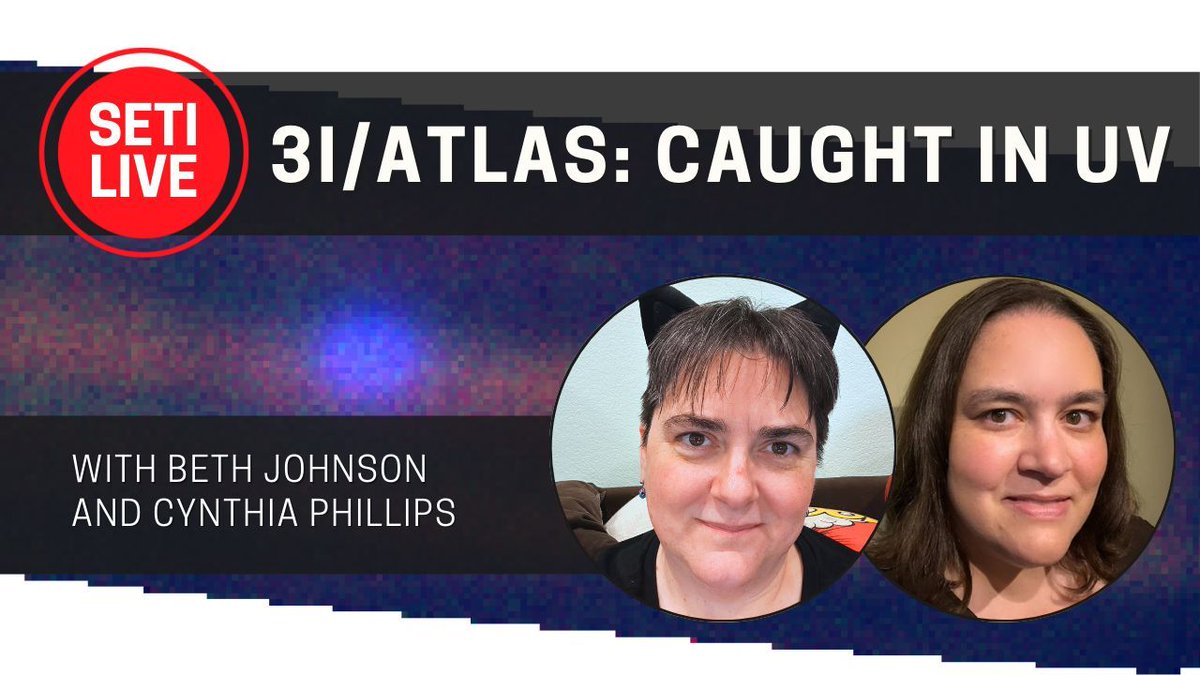
Next #SETILive: 3I/ATLAS: Caught in UV
TODAY, 19 December, 2:30 pm PST / 5:30 pm EST
We’re going live with @PlanetCynthia, Europa Clipper Project Staff Scientist and Science Communications Lead, from NASA’s Jet Propulsion Laboratory, to explore a surprising and exciting new chapter in comet science. Recently, the Ultraviolet Spectrograph (UVS) aboard NASA’s Europa Clipper spacecraft made unique observations of the interstellar #comet3I/ATLAS at a time when Earth- and Mars-based telescopes couldn’t see it.
In this livestream, communications specialist @planetarypan and Dr. Phillips will unpack what these observations mean for our understanding of interstellar visitors and how instruments designed for one mission can yield discoveries well beyond their original goals.
WATCH LIVE: https://t.co/pxSaS6kC1Y
Astronomy has a long memory.
Six years after it left the telescope, the Gemini Planet Imager @PlanetImager just revealed a new exoplanet — hidden in plain sight in old data. A reminder that archives still hold discoveries waiting for the right tools and questions.
🔗 https://t.co/jADsmdlNdE
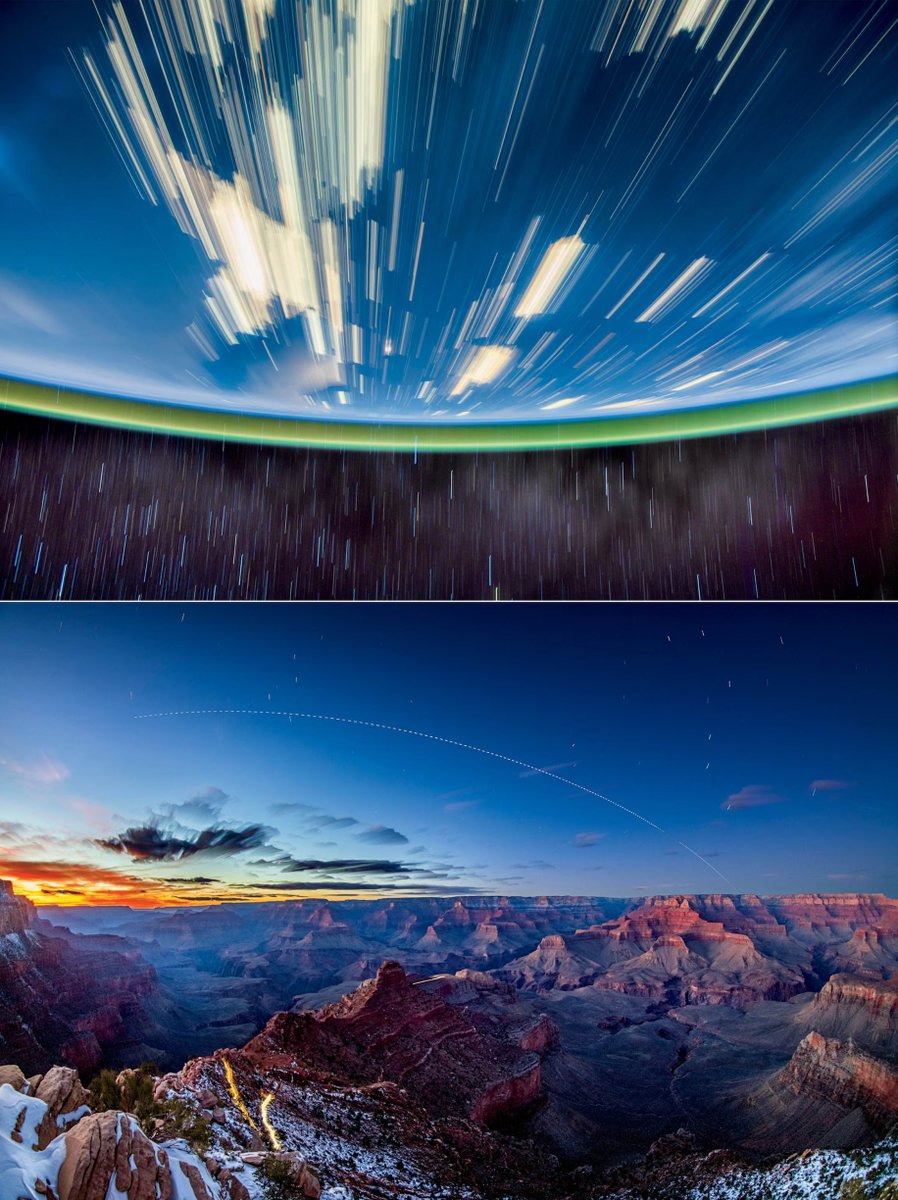
The Grand Canyon seen by timelapse from Earth and space! Above, the ISS orbits the lights of the American West and the canyon's dark patch.
Below, a 6 minute exposure reveals our path from Earth's perspective. Made in collaboration with National Geographic's @BabakTafreshi.