Novel Performances of a Combined Raman‐LIBS Instrument for Future Lunar Astronaut Exploration Program: The PHOENIX for PANGAEA Project - Moral - Journal of Raman Spectroscopy - Wiley Online Library https://t.co/cUqX8tBEn4
Happy International Day of Women and Girls in Science!
Today, we honor not only the incredible contributions of women in STEM disciplines worldwide, but also the inspiring talent of our #ESAEnVision team. We believe that women and girls belong in science, not just for fairness, but because their inclusion is essential for driving innovation and unlocking humanity’s full potential in space exploration.
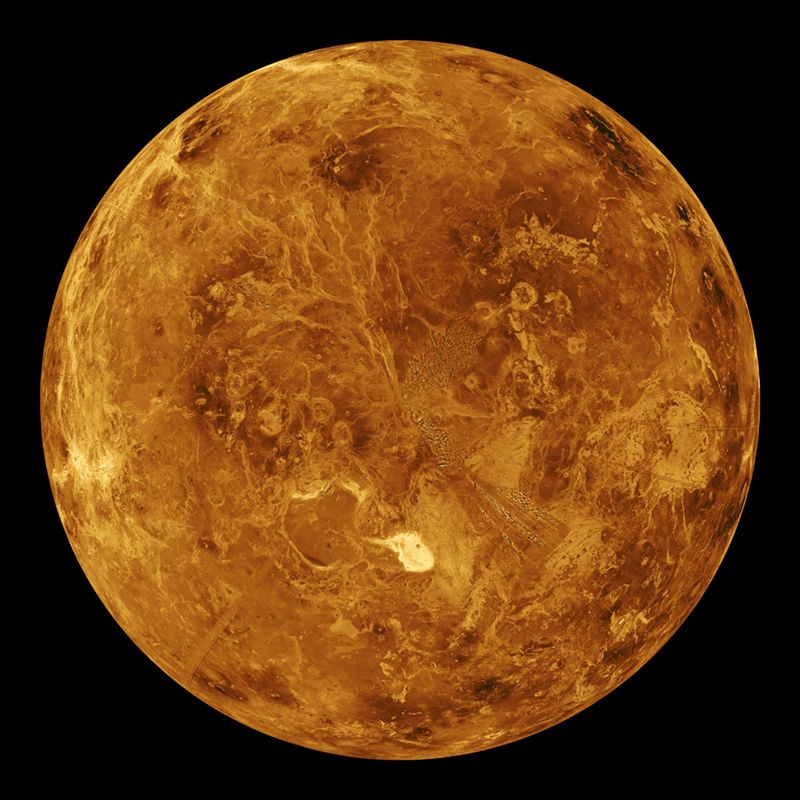
Join us in celebrating some of the remarkable women engineers, scientists, project management officers and young graduate trainees who are paving the road to Venus, a planet celebrated as a symbol of femininity across cultures since ancient times.
#WomeninScience #GirlsInSTEM #ESAEnVision #HumansofEnVision
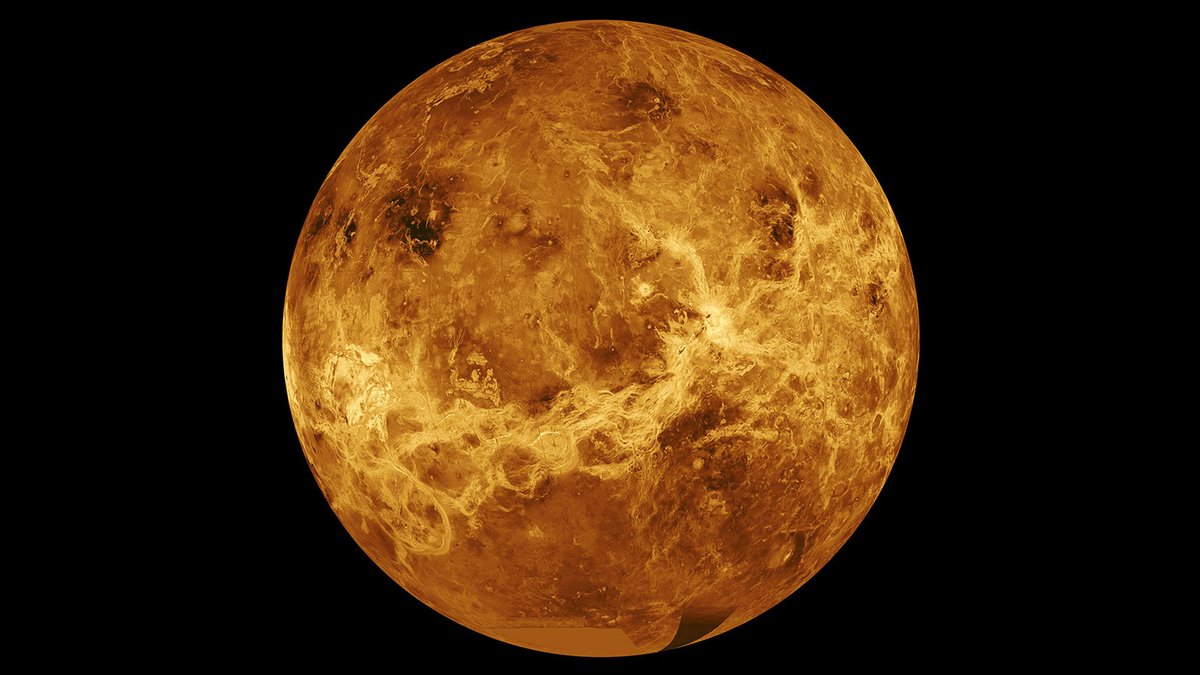
The @esa mini-site dedicated to @ESA_Envision is now on line! Scheduled for launch in 2031, Envision will provide a complete view of Venus from its inner core to its upper atmosphere to determine how and why Venus and Earth evolved so differently. https://t.co/L5NLJNltDg
Signed and sealed: @ESA_Envision can move towards construction!
Today, during the 17th European Space Conference, @ESA awarded @Thales_Alenia_S the contract to build the @ESA_Envision spacecraft 🛰️
We are pleased to announce our collaboration with Thales Alenia Space Italy, a leading organization in the European space industry with extensive expertise in complex scientific missions and a strong history of collaboration with ESA.
Twenty years since the launch of ESA’s historic Venus Express mission, we are now preparing for a new journey to Venus to further our understanding of this intriguing planet!
Curious to explore more about our mission? 👉https://t.co/QfrJ6jx7Qi
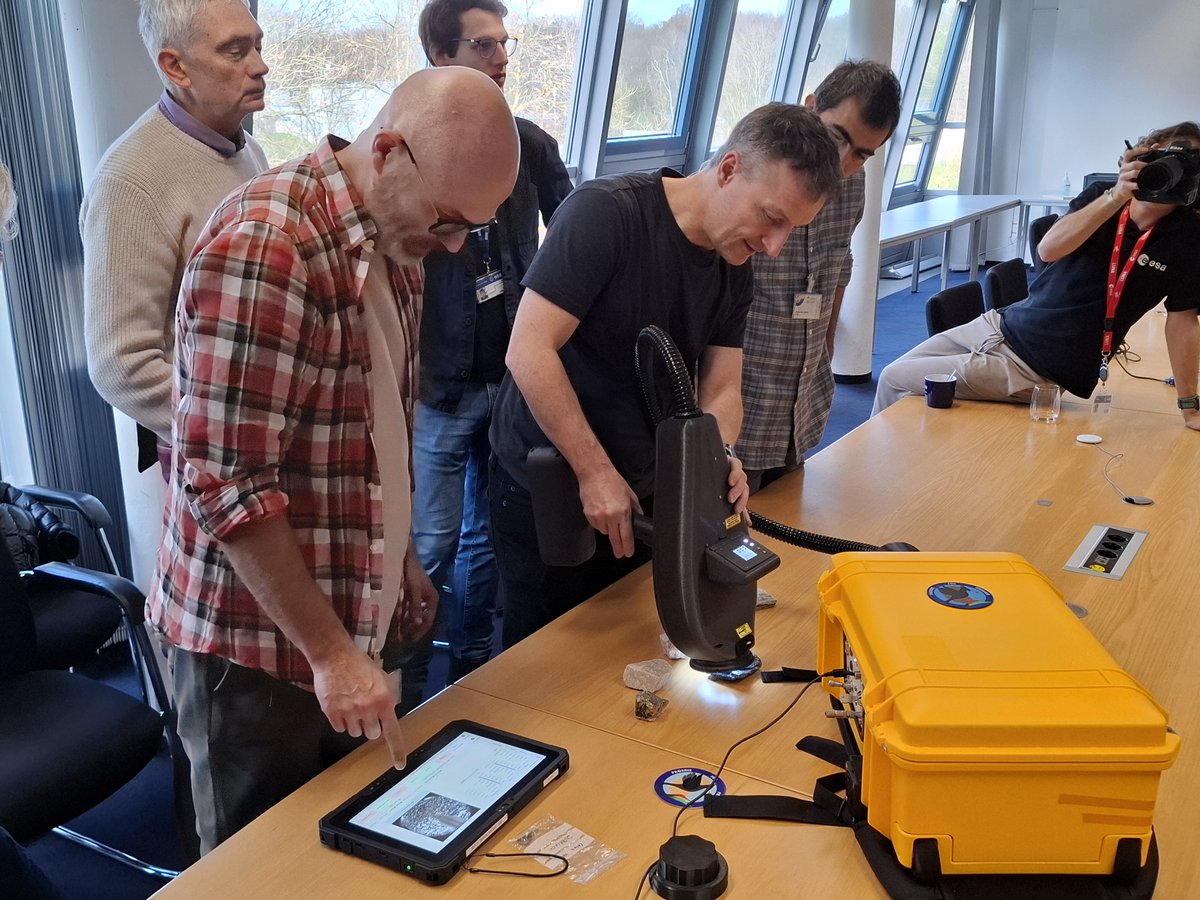
Durante estos días, el astronauta @astro_matthias ha probado el instrumento PHOENIX mostrando un gran interés al equipo del INTA por las capacidades que ofrece.
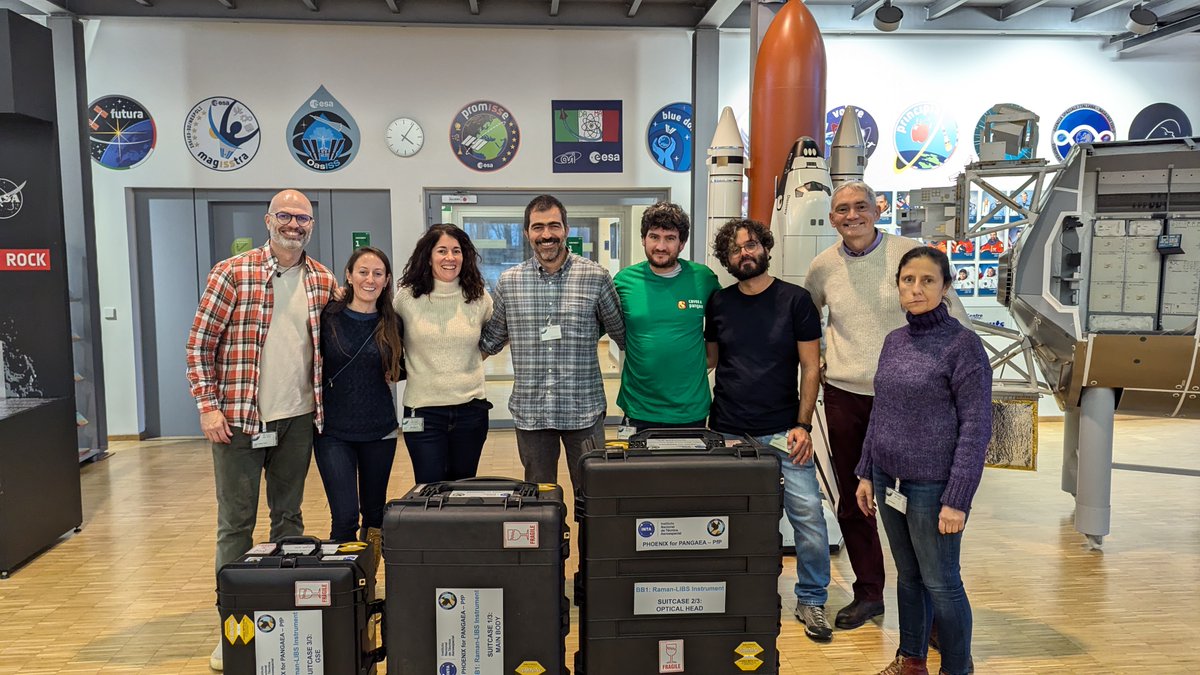
Se trata de un espectrómetro portátil que combina la tecnología RAMAN y LIBS y que será clave en el programa PANGAEA, destinado al entrenamiento de astronautas en la Tierra y en la instalación análoga lunar ��LUNA» ubicada en el EAC, de la ESA y @DLR_en.
Esta semana, el equipo de desarrollo de tecnología Raman del INTA se ha desplazado hasta el Centro Europeo de Astronautas (EAC) en Colonia, Alemania, para entregar a la @esa el instrumento PHOENIX (@ESA_CAVES).
Another NASA Venus mission is also in the works: Led by @NASAJPL, the VERITAS mission will help scientists understand how Venus became an inhospitable inferno, while Earth evolved to become home to an abundance of life. https://t.co/DuQbsIDHBf
How did Venus become the planet we know? In the early 2030s, Goddard’s DAVINCI mission will become the first this century to brave Venus’ harsh atmosphere to explore and photograph its Alpha Regio region — all to better understand the planet’s past.
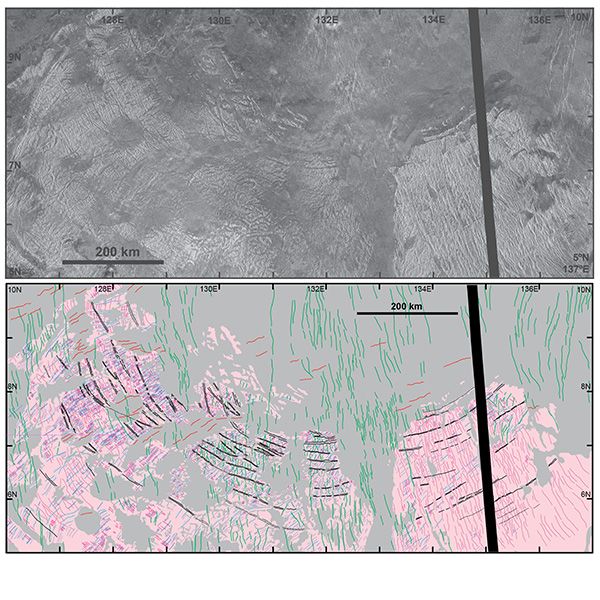
The analysis of Magellan data still has a lot to offer, but we really need new data to understand the geology of Venus. Can't wait to return to Venus with @ESA_Envision, #VERITAS and #DAVINCI
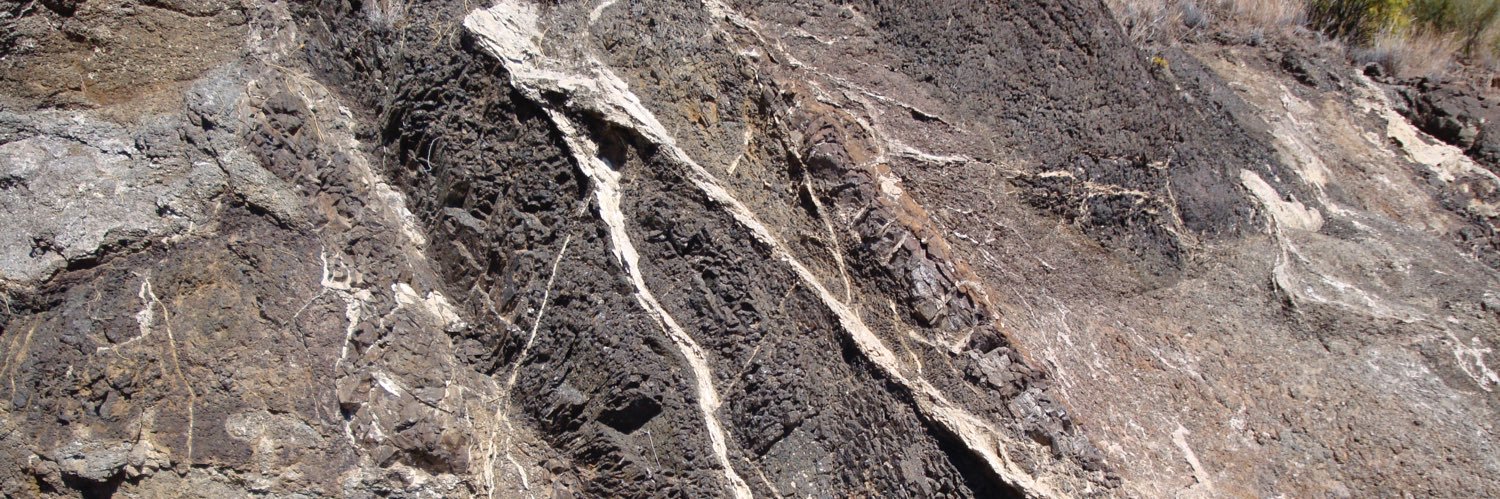
Geologic Evolution of Imdr Regio, Venus: Insight Into the Origin of a Possible Young/Active Hot Spot. https://t.co/3LiMO7oE4i The complex geology and the topography of Imdr Regio suggest that it could be the result of multiple or secondary plumes in the area.
Here you can read our last paper on the geologic evolution of Imdr Regio. The area was focus of attention for the presence of Idunn Mons, a possible active volcano, but it has revealed a very complex and interesting geology with also rifting and associated volcanism.
Geologic Evolution of Imdr Regio, Venus: Insight Into the Origin of a Possible Young/Active Hot Spot. https://t.co/3LiMO7oE4i The complex geology and the topography of Imdr Regio suggest that it could be the result of multiple or secondary plumes in the area.
A smooth, mostly flat surface awaits the Rosalind Franklin rover at Oxia Planum.
@esa's Mars Express captured this bird's-eye view of the landing site and Ares Vallis.
📽️ Explore the full flyover sequence here: https://t.co/P1PwfVwNyD
@jgrplanets Aquí podéis leer uno de nuestros últimos trabajos sobre la fascinante geología del planeta Venus. A pesar de algunos titulares es una hipótesis de trabajo, necesitamos nuevos datos para poner a prueba nuestros modelos. #back2Venus@URJCcientifica@tecvolrisk
19 years ago, #VenusExpress started its journey!
Europe’s first mission to Venus provided an unprecedented global picture of our nearest planetary neighbour 👉 https://t.co/uiC39N55Ck
Scientists have found possibly the oldest and largest #crater on #Venus — and it’s like none they’ve ever seen on our sister #planet.
https://t.co/9hXLTrNuvX
New research: Back-to-back impacts on a younger Venus with a thin outer shell, or lithosphere, created conditions in which giant impact events look nothing like those on the Moon and Mars, but rather the Valhalla crater on Callisto. 🌖 ☄️
Read why: https://t.co/nwExONvWZc