MORE HARM THAN GOOD: Trump can delete Elizabeth Warren’s failed experiment once and for all. How the president can rein in "an outright rogue agency" that's become "an unchecked behemoth." https://t.co/nhxpOmpBnm
In passing the Depository Institutions Deregulation and Monetary Control Act, Congress created national rules that would guide lending across state borders. States can’t simply opt out of them, writes @PMBrenner91, of @SouthwestPolicy, in @AmerBanker@BankThink. https://t.co/tir93pXwUd #DIDMCA #BankRegulation
This is a great column by @genemarks on credit card surcharges. A few weeks ago I was at the Ocean City, MD boardwalk for a few days with the family. Every business along the boardwalk surcharged AT LEAST 3%. And not a single one disclosed it up front.
🚨BREAKING: The American Innovation and Choice Online Act (AICOA) is back.
AICOA punishes size, not anticompetitive conduct, putting America's most successful innovators at a disadvantage.
Congress should reject government picking winners and losers.
https://t.co/QwQyJNp1Y6
AICOA was reintroduced in Congress yesterday.
ITIF and @ACTonline sent a letter signed by 30+ organizations and individuals to @ChuckGrassley and @SenatorDurbin explaining that AICOA would not promote innovation or choice, but it would actively undermine both.
Chairman @RonnaMcDaniel on #AICOA reintroduction: “AICOA represents a major blunder by lawmakers who should know better than to try and kneecap America’s economic engines and hurt President Trump’s efforts to Make America Competitive Again.” FULL STATEMENT:https://t.co/RjzishWFYW
Chairman @RonnaMcDaniel and many of our Coalition members signed onto @ITIFdc’s letter to U.S. Senators in opposition to the #AICOA, which would harm global competition and the user experience. Read it here: https://t.co/iSZSZjxuaY
Today I published an oped in the American Banker summarizing my ICLE Working Paper that critiques the widespread and growing use of "thresholds" in financial regulation.
Today, a coalition of 30+ organizations and individuals led by @CmteForJustice sent Congress a letter in support of the NDO Fairness Act, which would ensure nondisclosure orders are subject to judicial review and cannot be used to obtain personal data without notification. 1/x
Critics calling the Trump Administration’s 401(k) reform "dangerous" have some explaining to do. From @Pinpoint_Policy: The nonprofit leading the attack has repeatedly failed to follow basic IRS disclosure laws. Hypocrisy at its finest.
https://t.co/ELmKgbA3kv
The Institute for the Fiduciary Standard says Trump's 401(k) rule "shreds logic and truth."
Here's what they won't tell you: Since November, Pinpoint has made 8 separate requests to the Institute for the Fiduciary Standard for their legally required IRS disclosures. IFS has ignored every single one.
A group preaching transparency that won't follow the law.
Excellent article. Dodd-Frank and the Durbin amendment forced American Express to model Rewards identically to the Stress Capital Buffer minimums of banks. Downstream this destroyed community banking. What could now possibly go wrong (again)?
Don't be fooled by bad economics--as @pmbrenner91 notes, laws that forcibly reduce interchange fee revenues or raise the costs and complexity of processing payments will lead to higher bank fees and lower rewards for consumers. And 15 years after the Durbin Amendment promised a windfall for consumers from his law, consumers still have yet to see more than trivial pass-through of cost savings by merchants. Given that merchants pocket the savings from forced reductions in card costs, reduced rewards are identical to implicit price increases. https://t.co/2YsI8oDvH4
Spirit Airlines is gone, and others could be next.
By attacking interchange fees, Illinois and Colorado are grounding the rewards programs that keep airlines afloat.
Our CEO @pmbrenner91 explains why this is a flight path to disaster in @thehill.
https://t.co/jtc7tsXLNJ
Federal agencies issue 3,000+ rules a year, but they also shape policy through guidance docs, memos, and FAQs the public never gets to see or comment on. @wayne_crews and a broad coalition are urging the Senate to shine a light on this "regulatory dark matter." Read the letter here: https://t.co/5vLv0k3wUd
We’re joining @ceidotorg and a broad coalition to urge the Senate to pass the GOOD Act & IQAA.
Federal agencies shouldn't govern through "dark matter" memos and FAQs that bypass the public. It’s time for transparency and evidence-based policy.
https://t.co/oC0OgKxl1f
The article makes a fair point about preserving payment infrastructure and rewards programs. But small businesses are also dealing with swipe fees that have climbed dramatically over the last decade, with very little transparency or competitive pressure.
Most merchants aren’t trying to “break” the system. They’re trying to survive in it.
That’s why more businesses are turning to transparent models like dual pricing, cash discounts, and ACH incentives instead of quietly raising prices on every customer across the board.
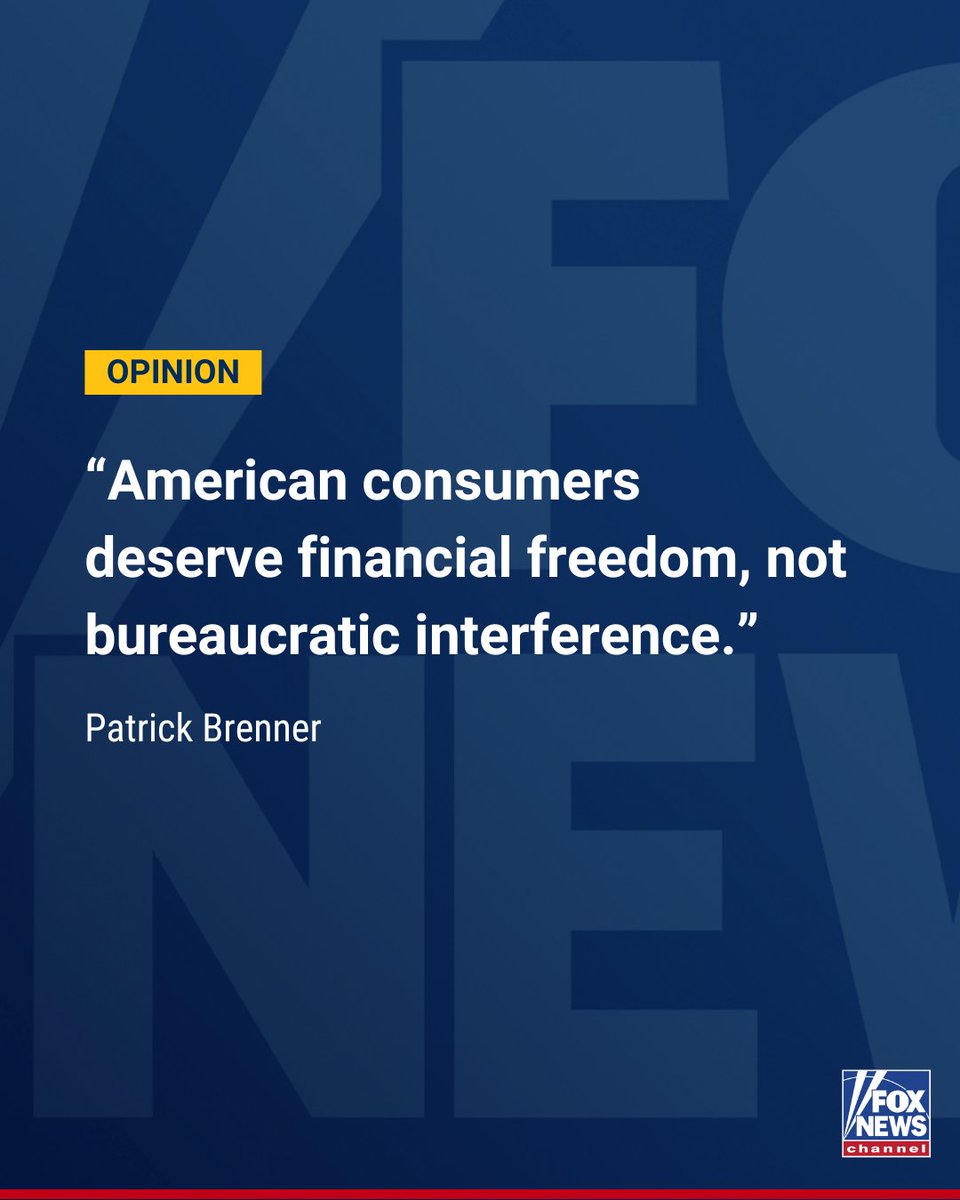
To Interchange or Not to Interchange… "It is time for policymakers to stop experimenting with our reward programs and start focusing on policies that actually support consumer financial freedom."
https://t.co/EIq9lwRXFP
States like Illinois and Colorado are experimenting with our financial infrastructure, but the @USOCC is stepping in to stop the chaos. @pmbrenner91 breaks down the legal battle over interchange fees and federal preemption with @InsideSourcesDC.
https://t.co/7ITEsL8YyD
This is good to hear, but also all true. Americans need to be able to invest in their fellow Americans' success, which is why regulations that stop that from happening are a bad thing. See @jberlau and @RichardMorrison passim.