The Bureau of Land Management is asking for the public’s help investigating two vandalism incidents involving prehistoric petroglyph panels in the Moab area.
Names were carved into or near rock art in one incident along Highway 279 and another near Hell’s Revenge. These irreplaceable cultural resources are part of the region’s shared heritage. Once damaged, they can’t be restored.
The BLM says vandalizing or disturbing archaeological resources is a serious federal offense under the Archaeological Resources Protection Act. It can result in significant fines, imprisonment and/or exclusion from public lands.
Anyone with information that could help identify those responsible is asked to contact Moab BLM Law Enforcement at 435-259-2131.
Richard Spencer explains why Nick Fuentes’ midterm strategy was powerful like Paul Atreides in Dune
“If you can destroy a thing you have power over it. Attacking something is more powerful than being a cheerleader. ”
Also very obvious from tonight that the infiltration of Utah is far worse and widespread than we realized.
This great bastion of a state is under attack.
We have a serious problem.
Jar jar is actually one of the most realistic characters for our time. He's an incompetent retard from a jungle country who is given a position of political power by a female bureaucrat who thinks he will be an amazing leader if just given the right opportunity.
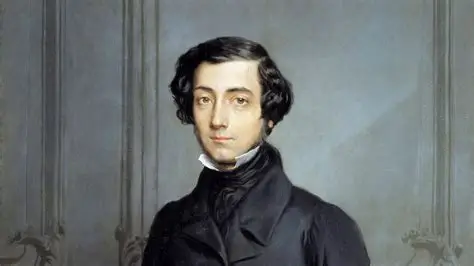
In 1835, a Young French Aristocrat Predicted the Exact Bureaucratic Trap Threatening the West Today
Before the philosopher Alexis de Tocqueville ever set foot in America, radical tyranny had already scarred his family. During the French Revolution’s Reign of Terror, left-wing Jacobin zealots guillotined his great-grandfather and threw his newlywed parents into a Paris dungeon. Waiting daily for the executioner's blade, his father’s hair turned snow-white at the age of twenty-one. Only the sudden fall of Robespierre spared his parents' lives by a matter of hours, allowing Alexis to be born a decade later.
Raised in the shadow of state terror, Tocqueville became obsessed with a single question: why did the French pursuit of utopian equality end in a bloodbath, while the American Revolution produced the freest, most prosperous republic on earth? In 1831, at just twenty-five years old, he convinced the French government to send him to the United States under the mundane bureaucratic cover of inspecting American prisons. Once he arrived, he spent nine months traveling seven thousand miles by stagecoach, steamboat, and horseback to study the soul of the American citizen.
His observations became Democracy in America, one of the most brilliant political analyses ever written. Tocqueville realized that American greatness rested on three pillars: fierce individual self-reliance, decentralized local communities, and a strong foundation of religious morality. Whenever Americans saw a problem, they formed a local group and fixed it themselves rather than begging a distant politician for help.
Yet as he studied the young republic, Tocqueville foresaw a chilling vulnerability. He realized that a proud, armed citizenry would always fight back against an obvious military dictator. Therefore, future tyrants would abandon whips and chains in favor of welfare, cradle-to-grave safety, and endless administrative rules. They would conquer free citizens by offering to manage their lives in the name of compassion.
Describing this future nanny state in 1840, Tocqueville wrote a passage that reads like a headline from today:
"Above this race of men stands an immense and tutelary power, which takes upon itself alone to secure their gratifications and to watch over their fate... It seeks to keep them in perpetual childhood. It covers the surface of society with a network of small complicated rules, minute and uniform, through which the most original minds and the most energetic characters cannot penetrate, to rise above the crowd... till each nation is reduced to nothing better than a flock of timid and industrious animals, of which the government is the shepherd."
Tocqueville called this system "soft despotism." Nearly two centuries ago, he understood that when citizens trade personal responsibility for government security, the state gladly reduces them to dependent children. Every bloated regulatory agency, speech code, and entitlement program today operates on the exact blueprint he exposed. Liberty rarely perishes overnight in a violent coup; it erodes quietly when a free people allow bureaucrats to become their shepherds.