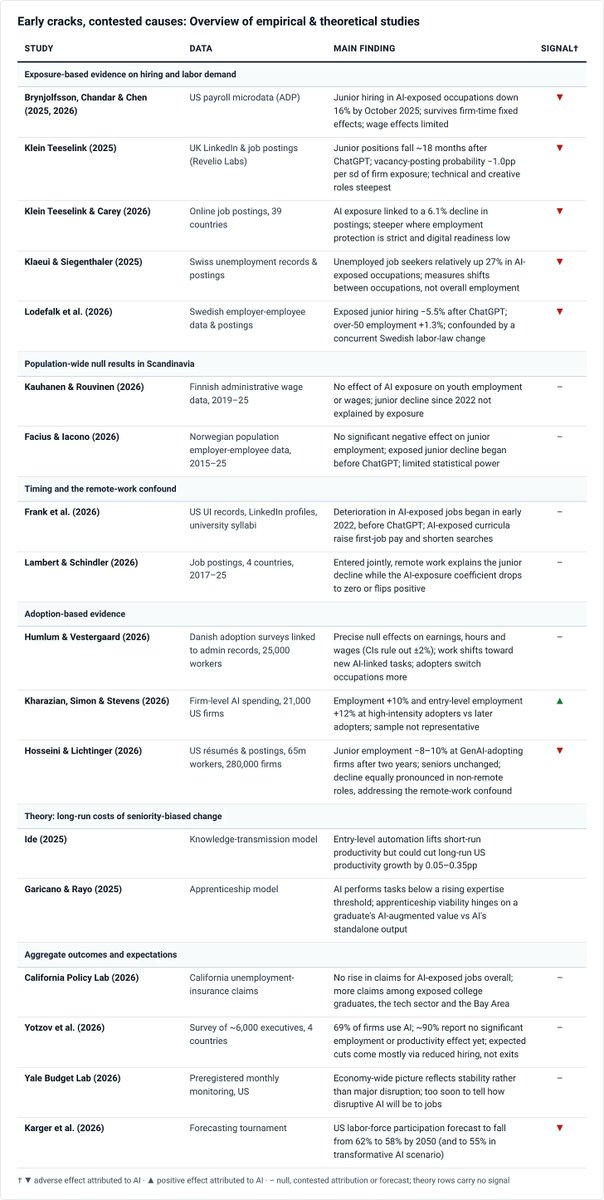
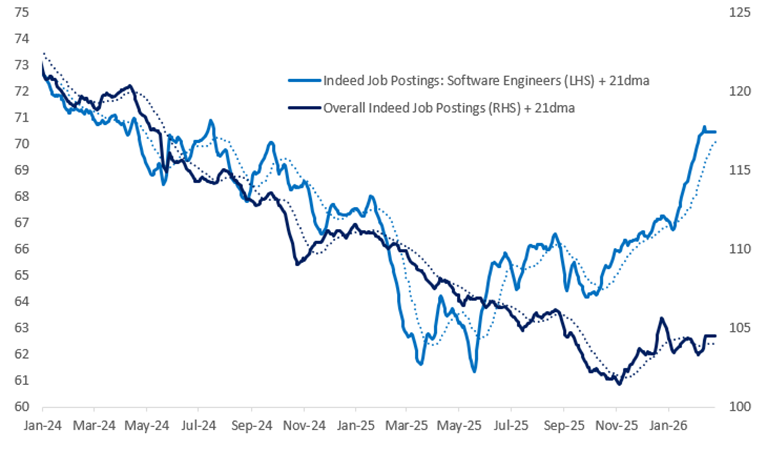
Has AI hit the labor market yet? @alexolegimas and my verdict after ~20 papers: not yet in aggregate. Unemployment and layoffs show almost nothing. But AI may already be cutting junior hiring in exposed white-collar jobs. Remote work may explain part of that decline.
A 🧵
Some crazy stats from this new JEL paper:
- IV est. average 3–10x OLS (meta analysis)
- Sign. results 30x more likely to be published in experimental econ (Andrews & Kasy)
- <2% of empirical polisci report null-only findings in abstracts (Briggs et al.)
https://t.co/rbpoQctWxU
since high-stakes exams are in the news:
not the main point of what's rocking India right now, but worth noting how hard it is for developing countries to get this kind of exam right, even without malfeasance.
Nice case study. The 'colonial origins' IV was always suspicious, and all this is consistent with what we now know about the sensitivity of IV as a tool in general.
AJR showed that it is possible to win a Nobel Prize using Mickey Mouse Numbers. In my new blog post, I show how their results depend on choice made in data construction, in both "The Colonial Origins of Comparative Development" (2001) and "Reversal of Fortune" (2002). 1/9
Lots of discussion on here currently about what specifically the focus should be within the research on "development economics". My main priority if I could choose one: we need much *more* of all types of good economics research on low- and middle-income countries.
1/n
Can AI agents read a social science paper and write the code from scratch to reproduce its results?
No access to original code. Just text + data.
New paper with Ben Kohler, @david_rzs, @__jae_1, and @miserlis_
👇
Deserved award, and ppl should be aware of it. Read the abstract at least!
It's been in the readings of my MSc Replication Workshop since the DP came out.
We are thrilled to share the @InquiryWEAI 2025 Best Article Award winner! Discover this year’s standout research from @jrgptrs, Nathan Fiala & Florian Neubauer!
Read the award-winning open access article: https://t.co/2HbnKDnmhJ
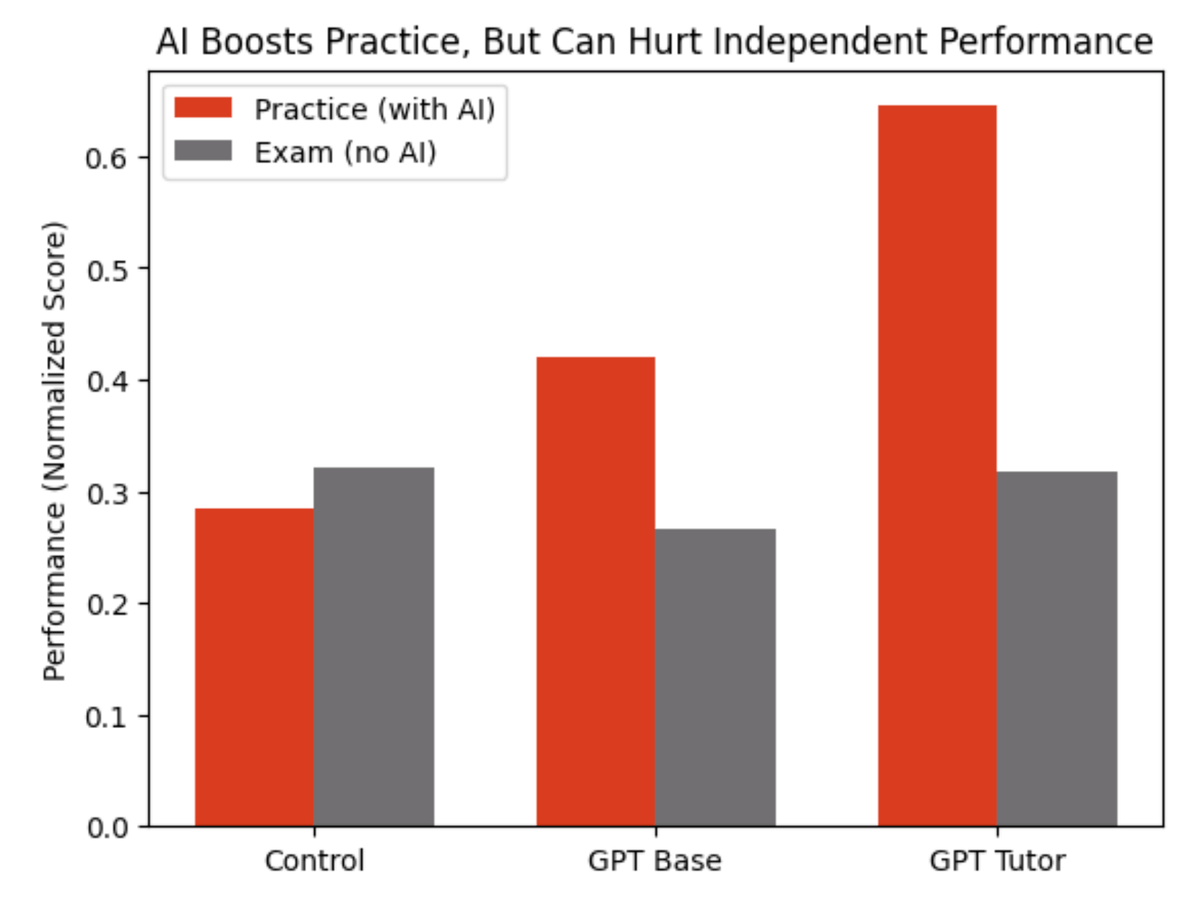
Wharton researchers gave nearly 1,000 high school math students access to ChatGPT during practice problems
Result: chatGPT is the perfect trap.
Look at the red bars.
Students with ChatGPT crushed their practice sessions.
The basic ChatGPT group solved more problems and those on the "tutor" version did even more.
Now look at the gray bars. That's the exam.
No AI allowed.
The ChatGPT group scored 17% worse than kids who practiced with zero technology.
And the fancy tutor version?
No better than working alone.
The researchers called AI a "crutch."
When they analyzed what students actually typed into ChatGPT, most of them just wrote - “What’s the answer?”
The kicker: students who used ChatGPT believed it hadn't hurt their learning.
They were confidently wrong.
This is the AI trap in education.
Outsourcing your thinking.
Of course, lots of half-baked AI literacy curricula being rolled out in schools now
Let’s of course ignore that basic literacy (the ability to read) is possible for <50% of 8th graders
Source: Bastani et al. (2025), "Generative AI Can Harm Learning," PNAS
Causal evidence (RDD): Elite STEM admission in Finland improves peer quality and triples elite graduation, but does not raise early-career earnings. Returns are positive for students from low-educated families.
Our new paper in Journal of Human Capital:
https://t.co/8DM9NtVymv
@KevinDenny Probably doesn't sit with the 'official definition', but 40 year repayment of 6% of earnings above the threshold surely feels like an extra tax for the duration of the career. While you might pay it back, you don't really know when since earnings can't be foreseen.
This is a good point. We are doing everyone a disservice by calling the UK student finance system 'debt' when 'graduate tax' is more appropriate.
https://t.co/Yg0dqEiem2
Discussing education in Peru at a @marginalbabble podcast. Covering improvement of public school results over 2010-16 and lessons for middle & lower income countries in general. Based on work at @SussexUBusiness, funded by @BritishAcademy_ https://t.co/5Ruxs5eZ0n
We have a new PhD-position out! Come join us in beautiful #Bergen. At UoB, we're particularly strong in finance, labour/family economics, and IO. For those who cannot apply themselves: please share!
https://t.co/l1MmYpyOFh