Check out our paper showing how IGHV1-69 polymorphisms can affect SARS-CoV-2 antibody functions. Amazing supervision from @NillaKH Martin Corcoran.
Great collaboration with @BenjMurrell@DannySheward @das_hrishikesh1 @BMartinHallberg out @ImmunityCP
https://t.co/VCcIBkONPu
Antibodies with shared structure and CDR H3 sequence features from 3 recent publications take center stage in our Trends in Microbiology Spotlight.
A classic example of how mAbs help guide vaccine design.
https://t.co/yfMyb8JlTT
It's an absolute scandal and tragedy that India is forced to spend $250m/year to provide access to the latest science to its people. A complete and total failure of global science leadership and of science writ large.
By reintroducing somatic hypermutations into a germline-reverted mAb, we delineate the role of affinity maturation in the development of cross-neutralization in a public class of antibodies.
As always, antibodies are fascinating.
Thanks to @NillaKH and everyone involved 🤍
BREAKING NEWS
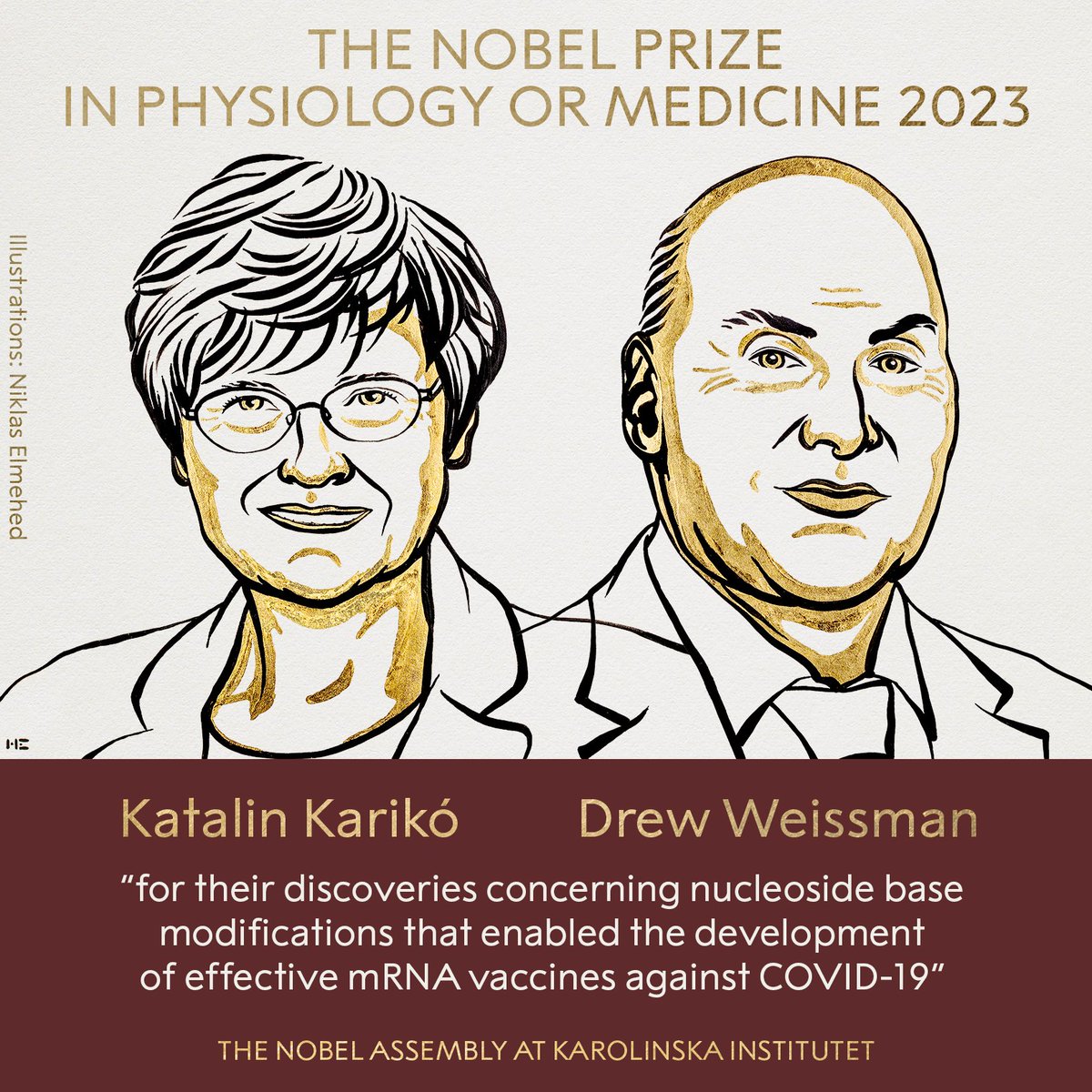
The 2023 #NobelPrize in Physiology or Medicine has been awarded to Katalin Karikó and Drew Weissman for their discoveries concerning nucleoside base modifications that enabled the development of effective mRNA vaccines against COVID-19.
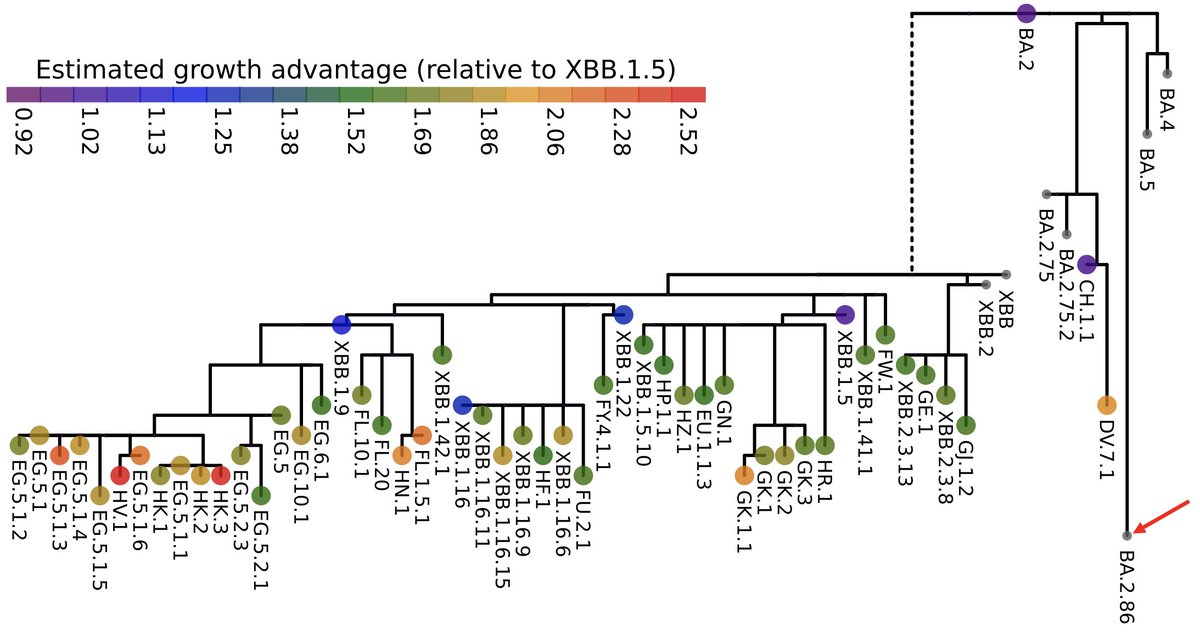
Real-time data update: we've got our first BA.2.86 (see red arrow) neutralization results. Short 🧵with much credit to @DannySheward and the rest of the team.
Sharing some new experimental data on BA.2.86:
1) BA.2.86 is antigenically distinct compared to XBB.1.5.
2) BA.2.86 can significantly escape XBB-infection/vaccination induced antibodies.
3) However, the infectivity of BA.2.86 may be much lower than XBB.1.5 and EG.5. (1/n)
Antibody gene features associated with binding and functional activity in vaccine-derived human mAbs targeting malaria parasites https://t.co/oX6krrsBqX #biorxiv_immuno