@RiloeGaming It's about the Spirit of survival, the image (here) although seems cinematic, is not the message because that's desolate and incomplete. It's the survival of that young soldier! The soldier getting captured and the burning plane shows the horrors of war/wounds. A bitter sweet end
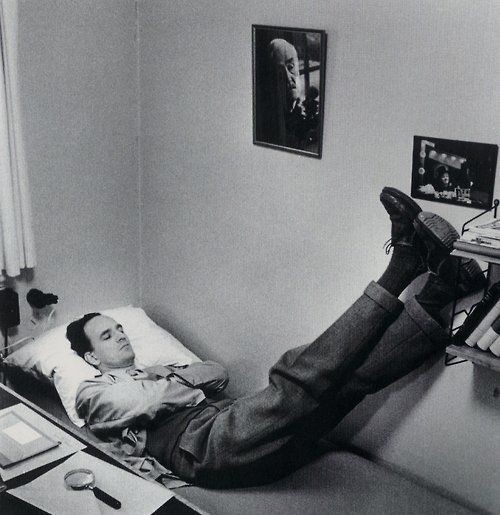
“I make all my decisions on intuition. I throw a spear into the darkness. That is intuition. Then I must send an army into the darkness to find the spear. That is intellect.”
- Ingmar Bergman
Bond is an orphan. Skyfall is the story of him losing his second mother. And Sam Mendes shot Dench's death scene on her actual last day after 17 years as M. So part of the grief on screen is real.
His parents died when he was a small boy. He hid for two days in a secret passage at his childhood home. That home is called Skyfall. M says it out loud at one point in the film: "orphans always make the best recruits."
So when Mendes set out to give Dench her goodbye, he picked Skyfall as the title. And the location. The same house where Bond lost his first mother is where he loses his second one. He's a grown man, and he's going home to bury a parent again.
The villain, Silva, calls M "Mommy" and "Mother" through the whole movie. He's the son she rejected. Bond is the son she chose. Her dying words to Bond, in his arms in the chapel on his family estate, are "Well, I did get one thing right." She means him.
The poem M reads earlier in the film, in front of a bunch of British politicians who are about to fire her, is an old British poem called Ulysses. The poet wrote it after losing his closest friend. The lines she picks are about old soldiers who aren't as strong as they used to be, but won't quit. "To strive, to seek, to find, and not to yield." She's reading her own eulogy out loud while Silva is shooting his way into the room. Mendes cuts back and forth between the two.
Daniel Craig once said Dench could speak a hundred words and make them sound wonderful, but a single look from her could break your heart.
That same year, 2012, Dench was diagnosed with an eye disease that's been slowly taking her sight. She's 91 now. She can't recognize faces anymore. She's stopped acting.
Watch the chapel scene again knowing all that. Bond cries. He kisses her forehead. The boy who hid in that secret passage at Skyfall is back in the same house, holding the woman who became the closest thing he had to a mother.
She leaves him a small bulldog statue from her desk. And for the first time in the entire franchise, the audience learns her real name. Olivia.
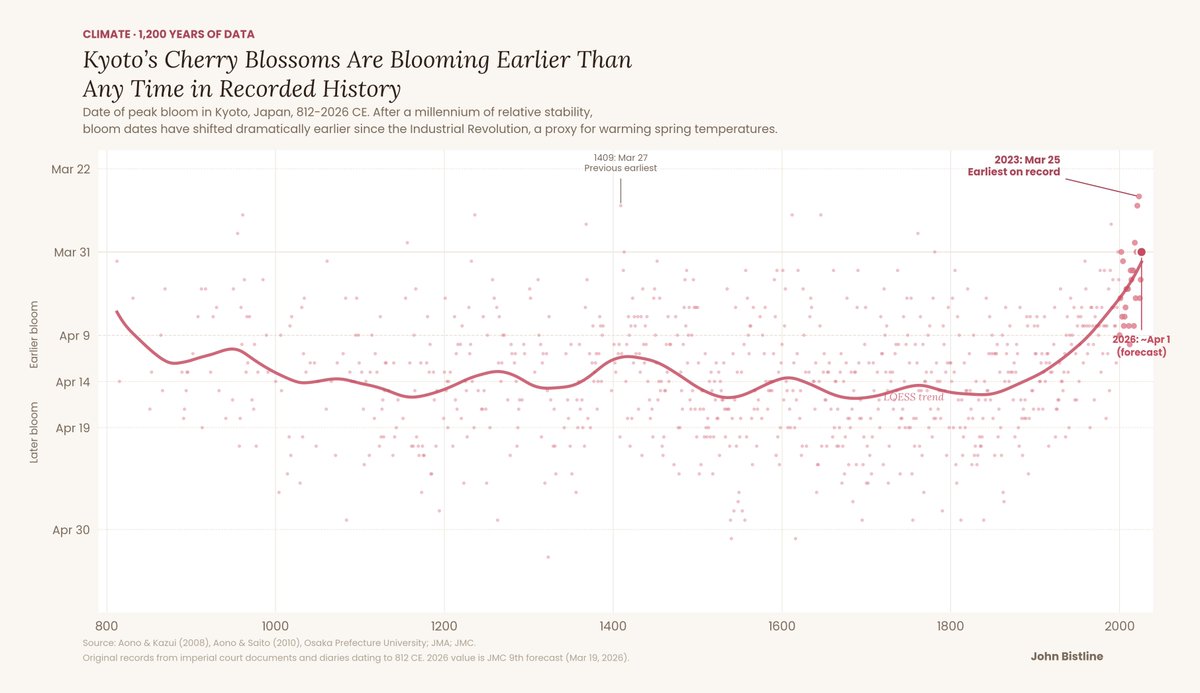
This is my favorite climate change chart. Japanese monks, aristocrats, and emperors kept meticulous records of cherry blossom festivals for 1,200 years and accidentally built the world's longest climate dataset.
A linguistics professor says during a lecture that, “In English, a double negative forms a positive...
But in some languages, such as Russian, a double negative is still a negative.
However, in no language in the world can a double positive form a negative.”
But then a voice from the back of the room piped up, “Yeah, right.”
The math on this image is insane.
New Horizons transmitted at 2,000 bits per second from 3 billion miles away. Slower than a 1990s dial-up modem. It took 16 months to download all the flyby data.
The spacecraft had to hit a target box 100km wide, arriving within 150 seconds of schedule, after 9 years of flight. Miss it and the preloaded observation commands point at empty space.
Ten days before arrival, the spacecraft crashed and went into safe mode. Engineers had 72 hours to restore everything.
The probe is now 5 billion miles out, still whispering data back to Earth. We got 50 gigabits of Pluto photos using technology slower than your phone’s bluetooth.
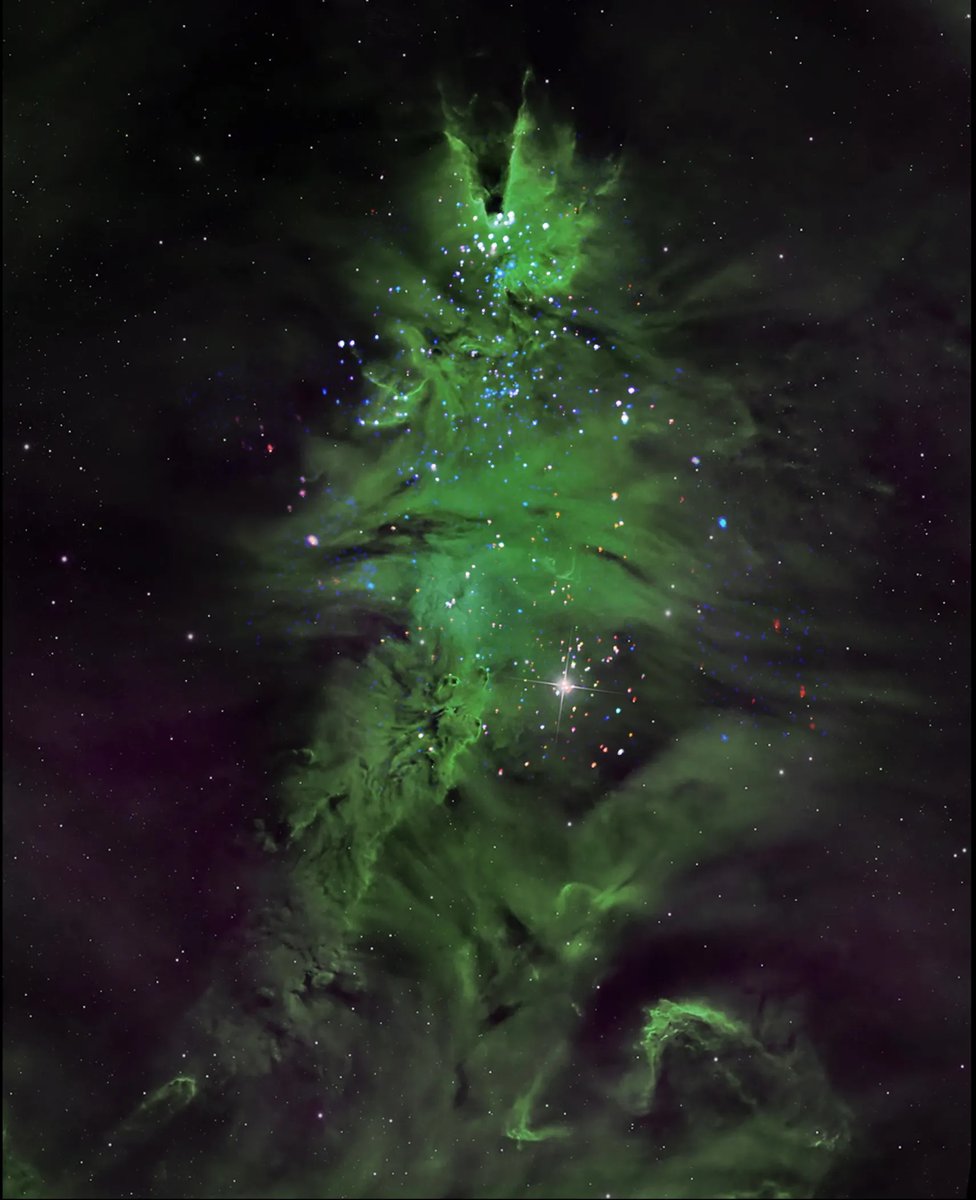
O Christmas tree, o cosmic tree 🎄
Located about 2,500 light-years from Earth, NGC 2264 is a cluster of young stars between one and five million years old. The stars appear as blue and white lights surrounded by swirls of gas—the “pine needles” of the tree—with green representing light in the visible spectrum.
Learn more:https://t.co/srOrqOnBqe
I’m from the Northeast - so when I say this, I mean it with heart and history.
Prema Thongdok (originally from Rupa, West Kameng district, Arunachal Pradesh) was en route from London to Japan, transiting via Shanghai, when she was held 18 hours by Chinese authorities simply because her Indian passport listed Arunachal Pradesh as her birthplace.
They told her: “Arunachal Pradesh is part of China - your passport is invalid.” They even mocked her: “You should get a Chinese passport.”
Here’s the deal:
•Arunachal Pradesh is undeniably Indian territory and Indian citizens born there have full right to Indian passports
•And it undermines the very “normalcy” Beijing claims to want at LAC.
•Chinese interference in civilian transit and identity is not diplomacy - it’s intimidation.
•India lodged a strong demarche in Beijing & Delhi - reminding China that this detention was baseless and breached the Chicago Convention & Montreal Convention on civil aviation.
When a citizen from our Northeast is singled out just for their birthplace - that’s not foreign policy. That’s erasure.
Northeast Indians are not bargaining chips, transit tokens or second-class travellers. We are India - in identity, in territory, in dignity.
PULLING FRAMES - a film editing technique where a couple of frames are removed after a point of impact to amplify and exaggerate the energy of the moment. Shown here in HEAT as the bad guy spins around when shot. 🎞️✂️
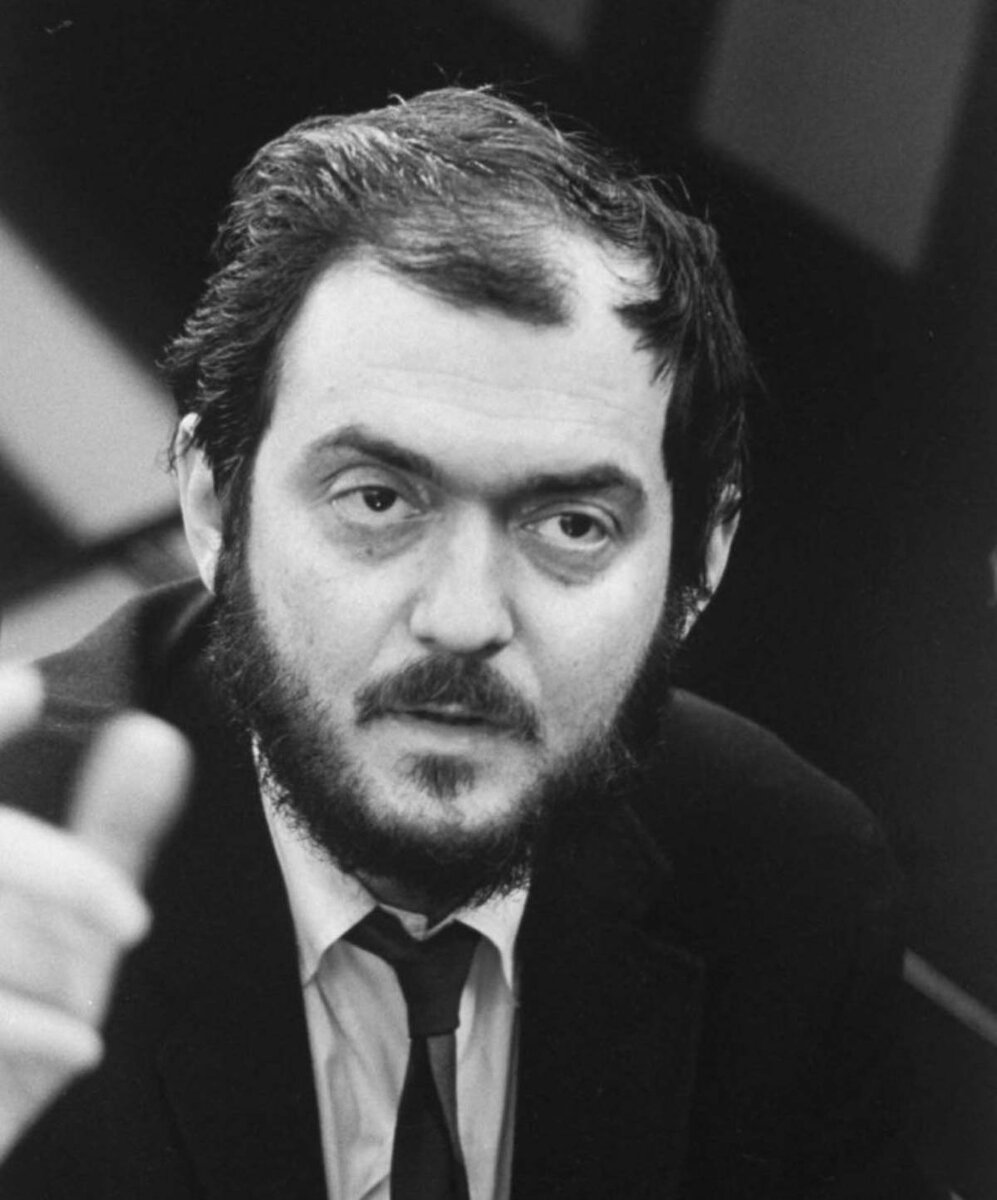
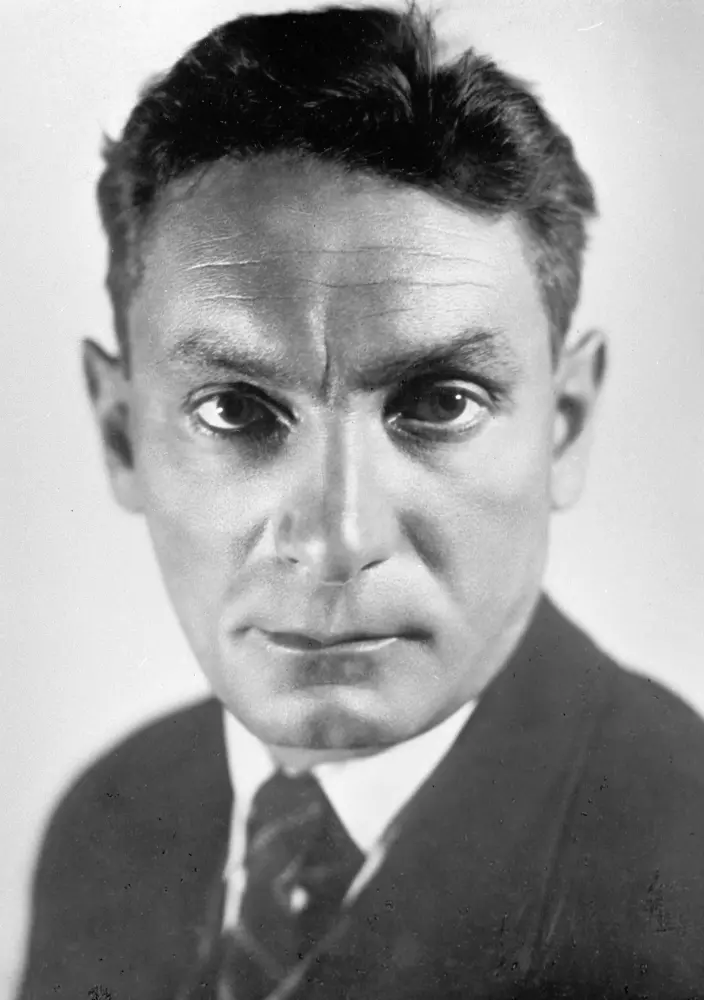
Stanley Kubrick on Vsevolod Pudovkin's influential theories of editing:
"I read Eisenstein’s books at the time, and to this day I still don’t really understand them. The most instructive book on film aesthetics I came across was Pudovkin’s Film Technique, which simply explained that editing was the aspect of the film art form which was completely unique, and which separated it from all other art forms. The ability to show a simple action like a man cutting wheat from a number of angles in a brief moment, to be able to see it in a special way not possible except through film—that this is what it was all about. This is obvious, of course, but it’s so important it cannot be too strongly stressed. Pudovkin gives many clear examples of how good film editing enhances a scene, and I would recommend his book to anyone seriously interested in film technique."
-Interview with Joseph Gelmis in 1970.