Timepass talk on Sunday
1. Apollo Micro Systems
Defence Acquisition Council approved ₹52,000 crore worth military purchase that includes:
• Anti-Unmanned Aerial Vehicles (UAV) Electronic Warfare System
• Man Portable Anti-Tank Guided Missile (MPATGM)
• Medium Range Surface-to-Air Missile (MRSAM) weapon system
• Very Short Range Air Defence System (V-SHORADS)
• Active Protection Systems for tanks
• Jet-powered kamikaze drones
• Multi Influence Ground Mine (MIGM)
• Naval Shipborne Unmanned Aerial System (NSUAS)
In these, one line-item is directly connected to Apollo Micro - Multi Influence Ground Mine (MIGM)
The MIGM is a "smart," high-tech underwater weapon indigenously designed by the DRDO's Naval Science & Technological Laboratory (NSTL) based in Visakhapatnam to target enemy warships and submarines.
The Tech: Traditional sea mines are "dumb" and detonate on contact or proximity, risking friendly ships. The MIGM is programmable and passively listens for unique target signatures. It uses multiple sensors to track acoustic, magnetic, pressure, Underwater Electric Potential (UEP), and Extra Low Frequency Electric Field (ELFE) signatures before deciding to detonate.
The BDL & Apollo Micro Connection: Both Bharat Dynamics Limited (BDL) and Apollo Micro Systems (AMS) are the chosen production partners for this technology. Apollo Micro Systems received the technology transfer for the MIGM-Vighana variant and acts as a Development-cum-Production Partner (DcPP).
Additionally, industry chatter suggests that Bharat Electronics (BEL) is close to securing a ₹30,000 crore Quick Reaction Surface-to-Air Missile (QRSAM) order—a programme in which Apollo Micro Systems supplies the Integrated Avionics Unit (IAU) and Actuator.
On top of that, the market has been abuzz with speculation that the company could be evaluating the acquisition of another defence player.
Of course, the stock is trading at an all-time high, and valuations are also hovering near record levels.
2. Dixon-Vivo JV
The market is abuzz with expectations that the Dixon–Vivo JV will soon receive government approval.
The proposed joint venture (JV) between Dixon Technologies and Vivo is a massive structural catalyst. It dramatically changes Dixon's scale, moving them from a pure third-party contract manufacturer to a controlling partner in one of India's largest smartphone ecosystems
Dixon will hold a 51% majority stake, while Vivo India will retain 49%.
Vivo sold an estimated 3.5 crore handsets in India in 2025.
For comparison, Dixon’s entire standalone mobile production volume for the same period hovered around 3.2 crore units.
Brokerage estimates (such as JPMorgan and JM Financial) indicate that roughly 60% to 67% of Vivo India’s annual volumes will transition into this JV structure. This means an incremental addition of 2.2 to 2.4 crore units annually at peak run rate, practically expanding Dixon's total smartphone handling capability by over 60–70%.
Dixon closed the FY26 fiscal year with a total revenue of ₹48,873 crore (with the mobile and EMS vertical contributing ₹44,257 crore).
Management guidance has indicated that the Vivo JV opens up a ₹30,000 crore revenue opportunity.
If and when the government grants its approval, the stock may witness a quick run-up.
3. Gabriel India
Mahindra & Mahindra (M&M): M&M's passenger vehicle business delivered a strong 15% YoY growth in Q1FY27 volumes, with cumulative sales reaching 1,74,745 units. The momentum continues to be driven by its domestic utility vehicle portfolio, which touched a milestone of 60,393 units in June alone (up 28% YoY), supported by expanding production capacity and sustained demand for the Scorpio, Thar, and XUV range.
TVS Motor: TVS reported its highest-ever quarterly sales of 16.31 lakh units, up 27% YoY, driven by broad-based growth across both domestic and export markets. The biggest highlight, however, was the phenomenal performance of its electric two-wheeler business. EV sales crossed 1.30 lakh units during the quarter, while June EV volumes alone surged an astonishing 237% YoY, underscoring the company's rapidly strengthening position in India's electric mobility market.
Maruti Suzuki India: Maruti continued its dominance, with Q1FY27 retail registrations rising 27.3% YoY to 4,98,632 units.
Now you're probably thinking... "Did I put the wrong heading?"
No, I didn't.
Here's why all of this matters for Gabriel India.
More than 60% of Gabriel India's revenue comes from the 2W and 3W segment, where TVS Motor is its largest customer. Gabriel also commands an impressive 32% market share in this segment.
Another 24% of revenue comes from the passenger vehicle (PV) segment, where Maruti Suzuki and M&M are its two largest customers.
I'll leave the math to you. Sometimes, the best way to analyze an auto ancillary is to first study its customers
4. Marine Electricals (India) Limited (Blast from the past)
From Jan’26 till date, the company has secured ~₹1163 Cr of orders (ex-tax). While the bulk continues to come from its core power distribution systems business, it is encouraging to see incremental orders from data centres and semiconductor facilities, indicating early diversification. Most of these orders are to be executed within ~12-18 months, providing near-term revenue visibility.
Already a silent proxy to naval spending, Marine is also building optional growth drivers such as EV charging solutions, though these are still at a nascent stage.
On the defence side, the company already has capabilities in shock-graded motors and electrical systems, designed to withstand extreme naval conditions (including underwater shocks), creating high entry barriers and sticky relationships. That said, naval revenues have historically been lumpy, given long project cycles and execution timelines.
Importantly, the Indian Navy plans to scale its fleet to 150–160 ships by 2030, 200+ by 2035, and ~230 by 2037, reflecting a clear long-term expansion roadmap. With multiple vessels under parallel construction, this could translate into a more consistent order pipeline for established players like Marine Electricals over the coming years.
Only drawback: Marine Electricals Limited doesn’t conduct concalls, making it relatively difficult for investors to track developments and management commentary.
5. OnEMI Technology Solutions (Kissht)
Kissht operates as a technology company doing lending!
Lets start with the Q1FY27 update
Q1FY27 Provisional Business Update: On July 4, 2026, the company posted a strong provisional update, with AUM surging 60.9% YoY (and 13.2% QoQ) to cross the ₹8,001 crore mark. Quarterly disbursements grew 37.1% YoY to ₹3,812 crore, its registered user base expanded to 74.6 million, and the secured LAP portfolio mix further diversified upward to 7.7% of total AUM.
Are these just one-off eye-popping numbers? Lets look at what they did in FY26
Robust Scale & Premium Return Profile (FY26): Kissht crossed a critical milestone with Assets Under Management (AUM) growing 73% YoY to ₹7,066 crore, delivering a stellar 75% YoY increase in Profit After Tax (PAT) to ₹281 crore. This rapid scaling is backed by best-in-class profitability metrics, reflecting a Return on Average AUM (RoAAUM) of 5.05% and a Return on Average Equity (RoAE) of 23.97%.
Advanced AI Underwriting Edge: Moving beyond rigid traditional bureau data, the company's proprietary underwriting engine analyzes over 60 million registered users across 7,000+ granular variables. The graduation to complex transformer-based AI sequence models has driven its Area Under the Curve (AUC) risk metric to 74% in 2026, delivering roughly 2.5x better risk separation than conventional bureau frameworks.
Sharply Improving Asset Quality: Gross NPA (Stage 3) contracted significantly by 77 basis points YoY to 2.12%, while Net NPA was tightly contained at 0.29%. This improvement is underpinned by a highly conservative provisioning stance, raising Stage 2 ECL coverage to 75.6% alongside a ₹136 crore management overlay to insulate the book from unexpected macro shocks.
Margin Optimization & Lower Cost of Funds: The company has intentionally shifted focus toward higher-quality, lower-yielding borrower cohorts, structurally lowering its overall impairment costs as a percentage of AUM from 9.7% in FY25 to 8.2% in FY26. Concurrently, its newly assigned CRISIL/India Ratings A- / Stable rating has chopped ~200 bps off marginal borrowing costs.
Secured LAP Diversification & Organic Sourcing: To de-risk its unsecured digital credit book, Kissht scaled its secured Loan Against Property (LAP) segment to ₹518 crore across 98 branches. This expansion is highly margin-acquisitive, with over 40% of LAP customers being directly cross-sold from the existing captive database, drastically lowering customer acquisition costs (CAC).
That's all for this edition. Have a great Sunday!
Disclaimer: None or buy or sell recommendations. This publicly available information is shared for learning and education purposes.
Dam,
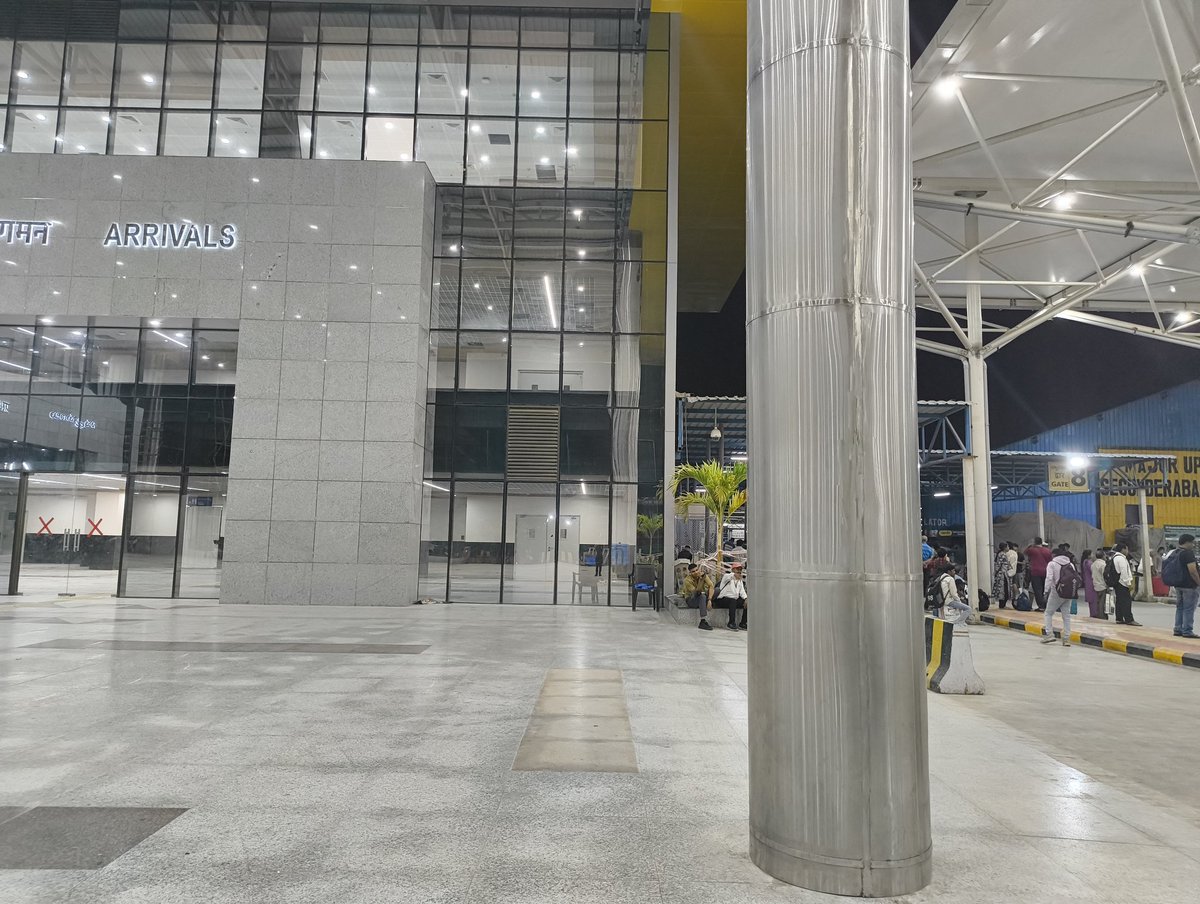
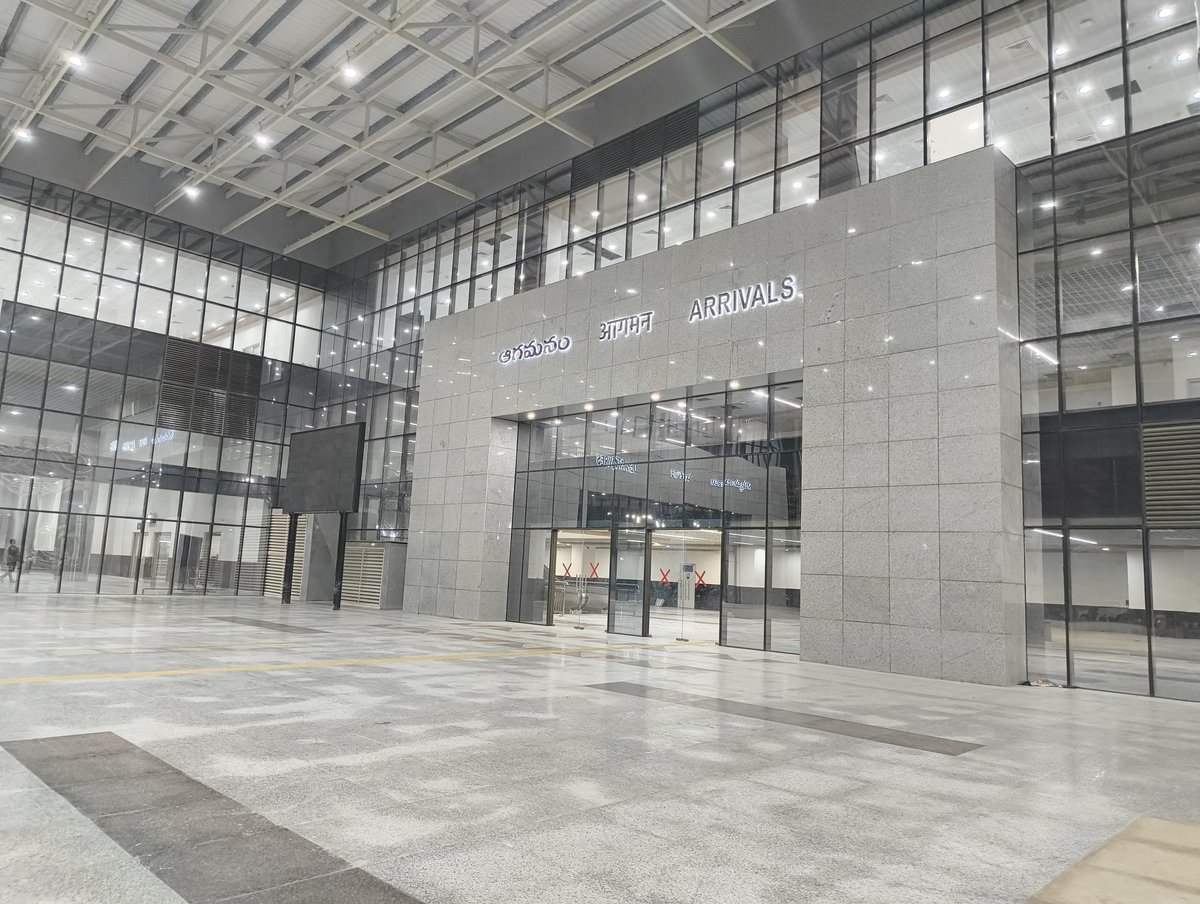
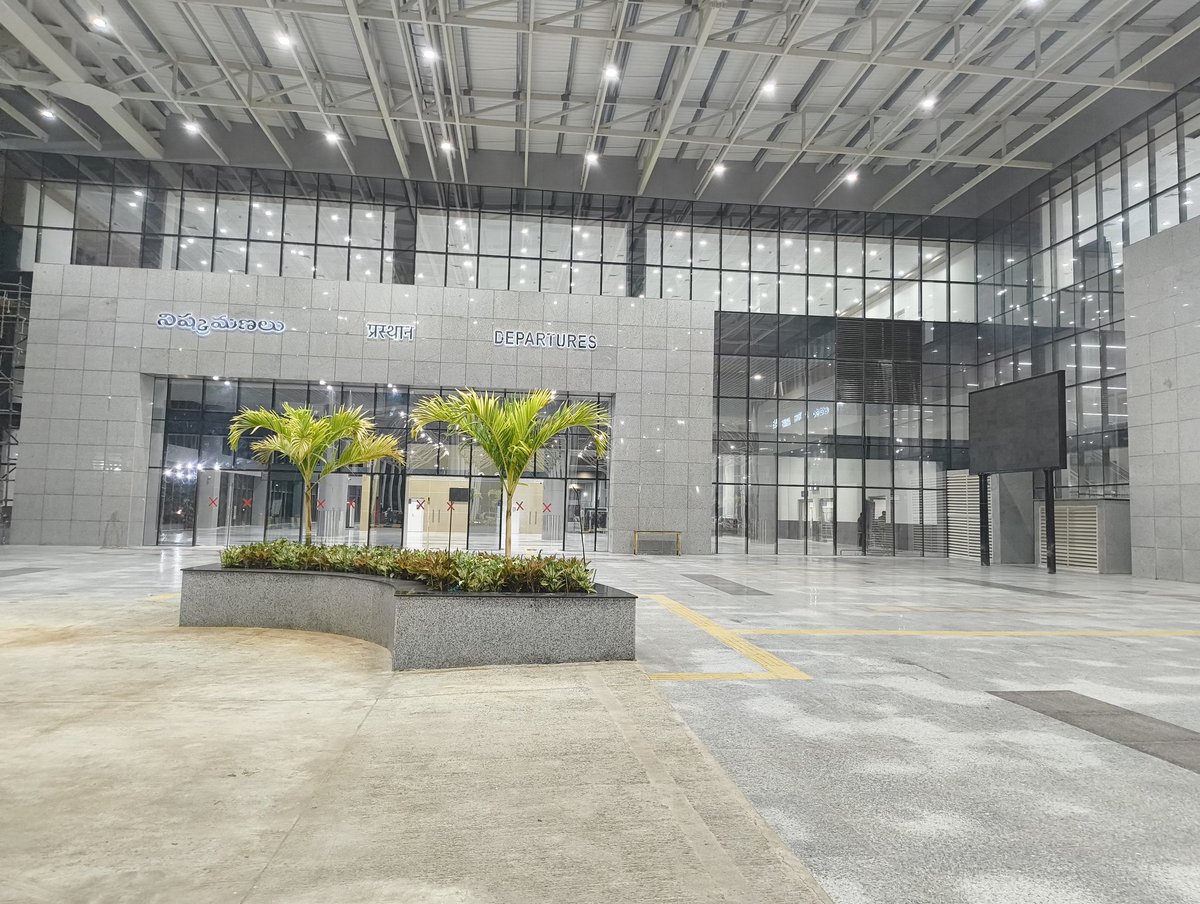
Trust me this is not an airport this is a railway station. (Secunderabad railway station)
India investment in infrastructure over the past few years is visible now in the ground.
Congratulations to @RailMinIndia and hyderabad, keep growing 💗 best wishes
Thank you @kishanreddybjp
Last 3 months:
-- India ended 50 year long problem of Maoist terror
-- India weathered energy crisis caused by US-Iran war
But take a look at social media, and you will think India is in complete collapse.
8 lac new GST Registrations in First Half if the year.. UP alone accounted for 30% (2.54 L)
New business & Formalisation happening of economy especially in rural dominated states like UP..
Have said this before - UP is the next BIG thing. On track to hit $1 trillion GDP..
Ashish Kacholia has survived big losses in his investing career. At 27, he was almost bankrupt. He not only recovered the losses but made ₹100 Cr first & ₹1000 Cr later. He again suffered a big loss in the 2020 Covid crash. This also he recovered. His net worth is now ₹2300 Cr
Chat with S. Naren of ICICI Pru AMC today.
5 points. Watch below.
1. "Clearly the macro is in much better shape.. but we still believe in moderate returns.. still not in a period where you can give a thumping the table call on equity.. we have to still wait for the AI bucket to either start underperforming for India to get a big part of the FII flows"
2. "Midcaps are the most overvalued relative to large caps and small caps.. we are constructive on both large caps and on small caps.."
3. "You need the growth mindset and not defensive value mindset for you to play the 'electrification theme' (industrials/utlities etc)... these are not growing at 5-10% but much faster.. BUT if the global AI theme were to deflate, this would also deflate"
4. "Private sector banks have derated significantly that you should clearly expect decent returns from private sector banks now.."
5. "We are very positive on oil and gas sector”
#Nifty #BankNifty #Investing #Macros
https://t.co/S4BlNxBejv
Donald Trump declared making more than 22,000 stock transactions in 2025, according to the FT analysis. His immediate predecessor, Joe Biden, made 13 transactions over four years. In his first term, Trump made 517. https://t.co/mWDvtvAllj
Do you know?
The geological age of Mount Arunachala (Tiruvannamalai) is around 3.5 billion years old.
It is one of the oldest rock formations in the world, along with the Hamersley Range and the Barberton Makhonjwa Mountains.
Ramana Maharshi used to say that Arunachala is older than the oldest.
Geological research has subsequently confirmed this ancient age.
Bill Ackman literally gave a 44-minute masterclass that explains money better than any business school.
1. Starting early is the single biggest advantage you have. If you save $10,000 at age 22, never add another penny, and earn 10% a year, you have $600,000 by retirement. wait until 32 to start, and the same money only grows to $232,000. The decade you lose at the beginning costs you more than any decade later because compounding does its heaviest lifting at the end.
2. The return rate matters even more than most people grasp. That same $10,000 at 22 earning 10% becomes $600,000. At 15% it becomes over 4 million. At 20%, the rate Warren Buffett has achieved, it becomes 25 million. Einstein called compound interest the most powerful force in the universe. Ackman's lecture is essentially a demonstration of why.
3. Avoiding losses matters as much as chasing returns. if you reach for a 20% return but lose half your money every 12 years from bad decisions or a rough patch, your 25 million collapses to 1.8 million. Buffett's rule one is never lose money. Rule two is never forget rule one. the math of recovery is brutal, so protecting the downside is not caution, it is strategy.
4. Debt is safer, but the upside is capped. Equity is riskier, but the upside is unlimited. In the lemonade stand example, the lender who put up $250 earns a steady 10% and gets paid back first if the business fails. the equity investor who put up $500 earns over 100% if it succeeds but gets wiped out if it fails. The equity holder earns more precisely because they took the risk the lender refused.
5. The risk that matters is permanent loss, not price movement. most people think risk is the stock price bouncing up and down every day. Ackman says ignore that. the real risk is whether you will permanently lose your money. Short-term volatility is noise. the question that matters is whether you get your capital back with a return over the long run.
6. Avoid startups and complicated businesses. You do not need 100% a year to build a fortune. you need 10 to 15% over a long period. so skip the lemonade stands and unknown ventures. Invest in public companies that are established, liquid, and have to clear real hurdles before going public. If you cannot understand how a business makes money, avoid it no matter how good its track record. Ackman cites Enron, a business almost nobody actually understood.
7. Invest in a business you could own forever. if the stock market closed for 10 years, you should not be unhappy holding it. Coca-Cola is his example. easy to understand, sells a syrup and earns a profit on every drink, the population keeps growing, and it is nearly impossible to disrupt with new technology. McDonald's is another. People have to eat, the food is cheap, and they keep growing. find a business you would be comfortable holding through anything.
8. You want products people are loyal to and will pay a premium for. People buy generic flour and sugar without caring about the brand. but they want the Hershey bar, the Cadbury bar, the see's candy specifically. you do not want to sell a commodity that anyone can sell cheaper. You want something unique that customers refuse to substitute even at a 20% discount.
9. Low debt is a safety feature. In the lemonade stand example, $250 of debt was manageable. But if it had been $1,000 and the business hit a rough patch, it could have gone under and wiped out the shareholders. Find companies with little debt or so much profit relative to their interest payments that a bad year cannot sink them.
10. Barriers to entry protect your returns. You want a business that is hard for someone to compete with tomorrow. Coca-Cola's market presence is so strong that you expect to get a Coke at any restaurant. Pepsi has coexisted with it for decades, but neither can put the other out of business. If a competitor can show up next year with a better version and steal the customers, the business is not worth owning long term.
11. The best businesses are immune to outside factors you cannot control. Coca-Cola has survived 120 years through world wars, nuclear weapons, and every kind of crisis, and each year it makes slightly more money. You want companies that do not depend on commodity prices, interest rates, or currency moves. A business that keeps earning regardless of what is happening in the world is the kind you hold forever.
12. Low capital intensity is one of the most underrated qualities. The worst businesses require massive reinvestment to grow. The auto industry has to build enormous factories and buy machine tools before selling a single car, and those tools wear out. GM's stock barely moved over 40 to 50 years for exactly this reason. Coca-Cola, by contrast, sells a formula and collects a royalty. American Express takes a few percent of every dollar spent on its card. a business that earns a royalty on other people's capital is one of the best things you can own.
13. Pay down debt and build a cushion before you invest. If you have high-interest credit card debt, paying it off is a guaranteed return equal to the interest rate. same logic, to a lesser degree, with student loans at 6 or 7%. and you want 6 to 12 months of expenses in the bank so that losing your job tomorrow does not force you to sell. You can only handle market volatility if you do not need the money.
14. Be a buyer when everyone is selling and a seller when everyone is buying. The natural human tendency is the opposite, a lemming-like instinct to sell in a crash and buy in a bubble. people sold into the 1987 crash when they should have been buying. The only way to resist this is to be financially secure enough that the money at risk does not affect your life, so you can withstand the swings without panicking.
15. The stock market is a voting machine in the short term and a weighing machine in the long term. Ben Graham's idea, which Ackman repeats. short-term prices reflect the whims and emotions of investors. long term, prices reflect the actual value of the underlying businesses. If you buy good businesses at reasonable prices and hold them while they grow, you make money over time as long as you are never forced to sell at the wrong moment.
16. A stock is just a bond where you do not know the coupon. Flip a price-to-earnings ratio over, and you get an earnings yield. A stock at 10 times earnings is a 10% earnings yield, which you can compare directly to a 3% treasury. the difference is the bond's coupon is fixed and the stock's coupon, its earnings, moves up and down. Ackman wants an earnings yield higher than a treasury that will also grow over time, so he does not need to be right about explosive growth to earn a good return.
A vey rare combination is getting formed today which never happened in last 12 years.
Jupiter is entering Pushya Nakshatra today around 18:15, where Jupiter will reach the highest exaltation point of 5degree.
Moon is in pushya nakshatra and today is Thursday, forming Guru Pushya Yoga.
Moon is in own sign while Jupiter is exalted in same sign making a strong Gaj Kesari yoga.
Mangal in own sign Aries.
Mercury is in own sign Gemini, making a good Budhaditya Yog.
Mercury will be Vargottami in Gemini.
Venus, Moon and Jupiter conjunction in cancer never happened in last 12years.
It's a very rare and auspicious day for doing Shiv Upasana, a great day for Shaiva Sadhak ✨
All these rare combinations say there will be one or two elevated souls who will take birth on such auspicious day. There will be millions of children born today worldwide but only one or two will be rare souls that will depend on location and karma of lineage.
I offer my sincere obeisance to such soul.
#Mahadev #Jyotish
A historic milestone for India-UK relations.
Delighted to note that the India-UK Comprehensive Economic and Trade Agreement will enter into force on 15th July 2026.
This agreement will significantly boost our bilateral trade and investment.
It will also unlock numerous opportunities for Indian farmers, workers, MSMEs, startups and innovators and contribute meaningfully to the realisation of Viksit Bharat 2047.
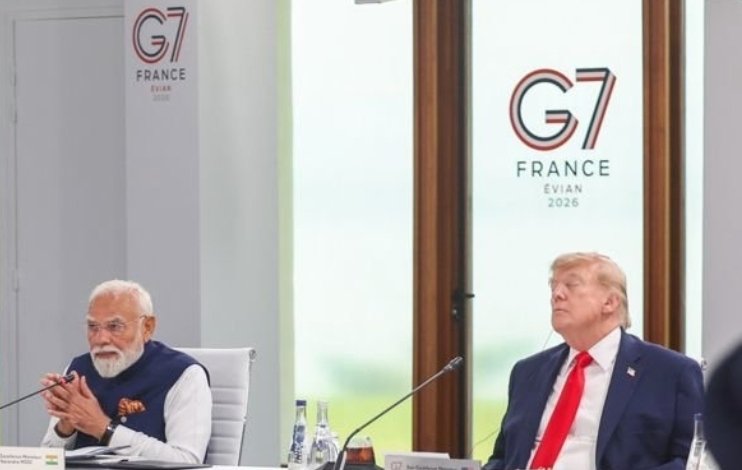
Both PM Starmer and I, who are in Evian for the G7 Summit, are naturally very happy with the significant momentum being added to our economic ties.
@Keir_Starmer
PM MODI SEATED NEXT TO PRESIDENT TRUMP SAYS: “Today the world does not suffer from a shortage of resources; it suffers from a shortage of trust. And the future of our partnerships depends on building this trust”
LOOK AT PRESIDENT TRUMP'S REACTION.
I told you this three weeks ago.
Nobody believed it.
Now read what happened.
May 23, 2026.
Marco Rubio skipped New Delhi.
Flew straight to Kolkata.
Walked into the Missionaries of Charity headquarters.
I said it was a message.
Not a prayer.
The message was for India.
Do not touch our assets.
Washington heard India's FCRA Amendment Bill.
The bill that said: if a foreign-funded NGO loses its licence, India takes the assets.
Schools.
Hospitals.
Hostels.
Children's homes.
Permanently.
That bill shook something loose.
The fight is on.
It will get murkier.
It will get uglier.
Strap your belt.
This is not a policy dispute.
This is a civilizational fight.
And India is ready.