@welloffcourse It had Amitabhji, Rajnikanth and Kamal Hassan. I believe all 3 were brothers. And met while singing a song in the jail. Same song either their father or mother used to sing in their childhood. Vague memory, I can be wrong on some points.
@ylecun@pmarca@tegmark@RishiSunak@vonderleyen@ylecun : I agree with all your points but you are grossly underestimating the challenges of crowdfunding open source software. The current crowdfunding campaign for opencv 5 is making us seriously think about a commercial license for opencv. Please help
https://t.co/ocTE5qjOS1
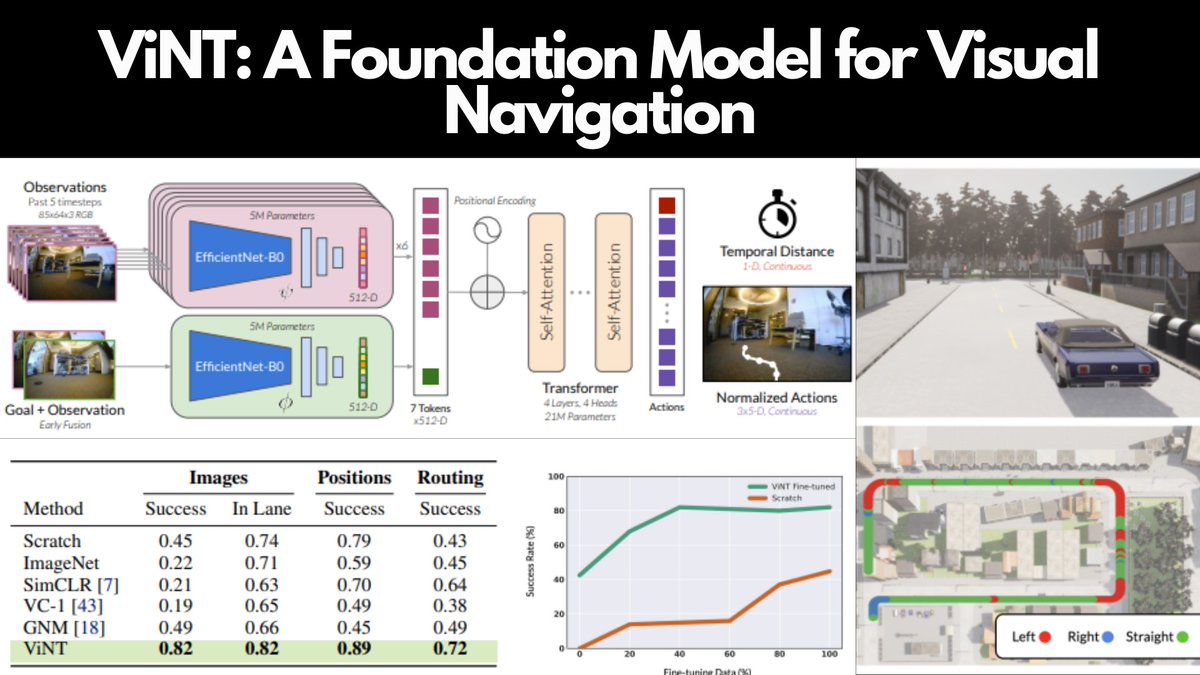
Introducing ViNT: A 31M-parameter model leveraging #Transformer architecture for image-goal navigation in #Robotics. Trains on large, diverse datasets, enabling generalization across different robots & tasks. #AI#ComputerVision@berkeley_ai
Link to Paper down below!
In 1985, Nike held a 24-hour shoe design contest.
Nike was struggling. Their stock dropped 50%. They had to lay off people. Adidas, Converse, & Reebok were all selling more shoes.
So in a panicked attempt to find creative talent, Nike held a shoe design contest.
The winner was
A corporate architect named Tinker Hatfield.
"Two days after the competition," he said, "I wasn't even asked—I was told that I was now a footwear designer for Nike."
As he got to work on his first official shoe design, he thought about a building he had studied in architecture school: The Centre Pompidou in Paris.
The Centre Pompidou is an inside-out building, meaning that the structural, mechanical, and circulation systems are all exposed.
“That building,” Tinker said, “was describing what it was to the people of Paris. And I thought, ‘Well why not do that with a shoe? Let’s cut a hole in the side and show what’s in the shoe.’”
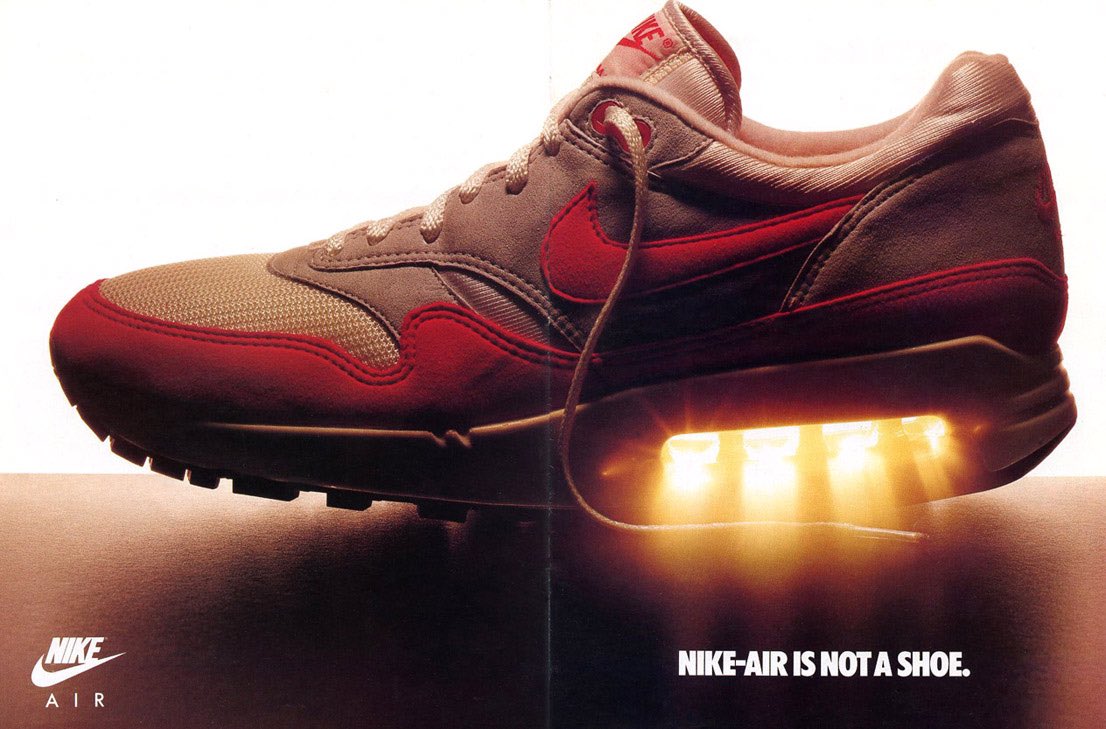
So Tinker designed an inside-out shoe:
The Air Max 1.
The Air Max 1 was a massive success, and it steered Nike's design direction from then on.
"To this day," Tinker says, "Phil Knight says I saved Nike."
Takeaway 1:
Had he not studied that building in Paris, Tinker says, he couldn’t have created the Air Max.
Creativity, he says, is a function of the “library in your head."
“When you sit down to create something...what you create is a culmination of everything you’ve seen and done previous to that point.”
Takeaway 2:
Tinker Hatfield went to architecture school and then he was a corporate architect for 4.5 years. Then, literally overnight, he became one of the best shoe designers in the world.
This makes me think of a counter-intuitive discovery made by psychologist Charles Spearman in 1904.
Before Spearman, the natural assumption was that the more you specialize in one thing, the worse you’ll be at other things.
Instead, Spearman discovered "the positive manifold" phenomenon.
He found that different abilities tend to be positively correlated. That the expertise gained through specialization is transferrable. That the cognitive and creative abilities cultivated as an architect could positively correlate with being a shoe designer.
- - -
"Creativity is a function of the previous work you put in." — Robert Greene
Follow @bpoppenheimer for more content like this!
New Arxiv: https://t.co/i27lVI8dPD
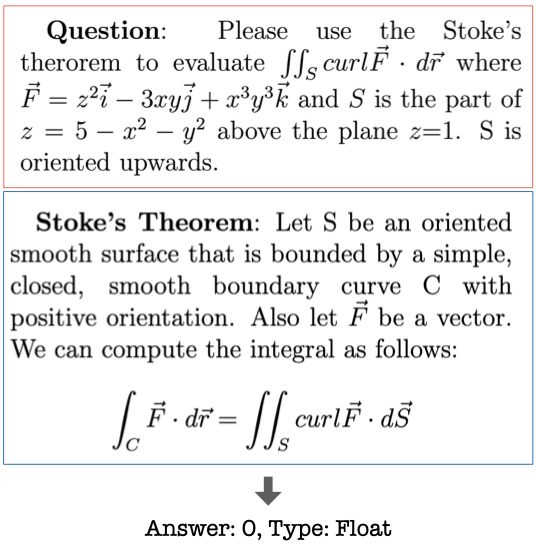
GPT-4/PaLM-2 have both shown almost perfect performance on existing grade school math dataset. What about more challenging STEM questions, especially the ones which require specific theorems, like Stoke's theorem, Wiener Process, etc?
Age reversal works in primates to restore vision. Announced by my collaborator Dr. Bruce Ksander & @lifebiosciences. Next up: age reversal in humans.
How’s that @elonmusk? 🚀
https://t.co/qLCixcbPE0 1/10…
.@DeepMind's incredible AI-powered protein folding breakthrough will help us better understand one of life’s fundamental building blocks + enable researchers to tackle new and hard problems, from fighting diseases to environmental sustainability.
https://t.co/kpr8EAx34h
Could there be a bigger game here ?
Hydroxychloroquin is in use since Mid 40s. Jaipur doctors were the first to cure old Italian patients with HCQS.
WHO conducted study with 4 times higher dosage to arrive at a conclusion that it isn't safe for Patients
https://t.co/kTwjvU7XMk
There is a fundamental misconception that we live “in the age of uncertainty”. This is only true if you believe “What will I eat for dinner?” compares to “Will I eat for dinner?” or “Will I be eaten for dinner?” We just got a tiny taste of true uncertainty and we didn’t do well.