Everything lives in pdfs and docx/ppts in my problem space so there's a lot of overhead in making sure agents readily have access to the content and tool calls get what's expected. My document ingestion service implementation was a bottleneck. I even experimented with using agents themselves as the "ingestor" and surprisingly it was not too expensive and worked well. This couldn't have come at a better time for me. Excited to try this out!
introducing anydoc
now your agents get 100x faster local parsing for pdf, docx, pptx & 10 more formats
- sub-5ms md conversion
- 500 docx files in 1.7s
- top quality across all 13 formats
- rust-based
- open source
already powering @firecrawl /parse
https://t.co/fVsRsYFNyC
Been thinking about voice agents a lot recently.
Excited about realtime voice in Codex, but more interested in the thing that sits in a room like a real appliance.
Not Alexa+ with better answers. Not a chatbot inside a speaker.
Something closer to "Hey Siri," except it can actually plan, use tools, remember state, talk to local devices, ask follow-ups, and hand work off to an agent running on my machine.
But I don't think I've seen a whole thing that feels like a real household object.
I want to experiment with this.
What's the closest thing people have built so far?
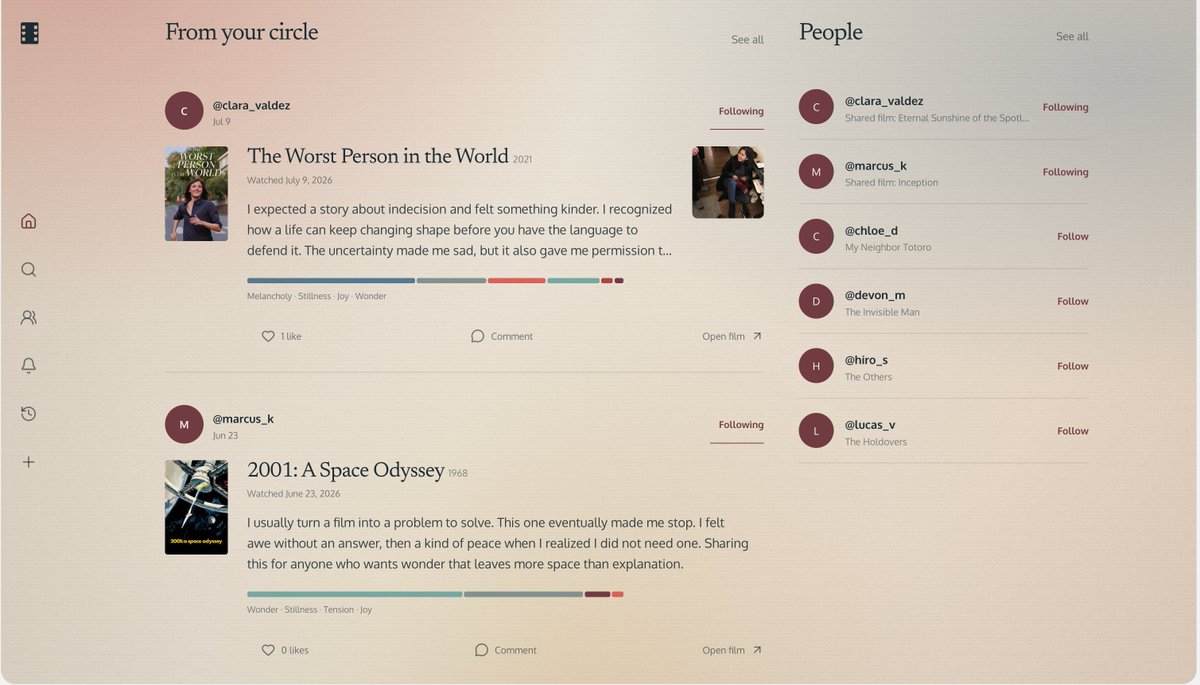
Moodie keeps that human path visible. You see who the recommendation came from, the film you both responded to, what each of you felt, and what the other film meant to them.
No ratings, genre shortcuts, or compatibility percentages. People first. Films second.
My submission for @OpenAI Build Week:
No two people feel the same, especially when it comes to movies.
The best recommendations I have ever received came from people whose response to a film had resonated with mine. Not because we liked the same genres. Not because our ratings matched. I trusted what they gave me next because I understood what had moved them before.
Most recommendation systems remove that person. They remember what you watched and whether you clicked, but lose why any of it mattered to you. The result can be accurate and still feel impersonal.
I built Moodie because I think the person is the reason a recommendation means something.
It starts with what a film meant to you and the feelings that stayed. It finds people who responded to the same films in a way that feels familiar, then lets those people lead you to what moved them next.
Does the person behind a recommendation matter more to you than a score predicting that you will like it?
AI is moving into the physical world.
We're excited about a new wave of startups rebuilding the systems that power the real world, from education and healthcare to defense, finance, infrastructure, and work itself.
https://t.co/QCIz6DnQnN