Another day, another front-page “investigation” by the Indian Express that falls apart under scrutiny.
The newspaper has attempted to manufacture a controversy around the Government’s ₹2,192 crore RDI Fund by insinuating that companies were favoured because some Investment Committee members had past professional or investment associations with them. The facts, however, tell a very different story.
The Government has unequivocally clarified that none of the Investment Committee members who participated in approving any proposal had a conflict of interest. Every potential conflict was disclosed in accordance with the RDI Fund guidelines, and wherever a member had any connection with an applicant, they recused themselves completely from the evaluation, discussion and voting process. No conflicted member participated in any funding decision.
The Indian Express headline deliberately conflates association with participation in decision-making. In India’s relatively small deep-tech ecosystem, domain experts often have prior academic, professional or investment links with startups. The RDI framework was designed precisely with this reality in mind, not by excluding expertise, but by regulating it through internationally accepted safeguards of disclosure, mandatory recusal and collective decision-making.
The safeguards are extensive:
• Independent expert evaluation of every proposal.
• Mandatory disclosure of all interests.
• Mandatory recusal wherever any potential conflict exists.
• Approval only through a supermajority of eligible members.
• Government officials do not determine technical merit, and the Member Secretary has no voting rights.
• Final approval rests with the Technology Development Board after due process.
The report also creates the false impression that Government funds were handed out to companies. That is incorrect. The RDI Fund supports specific research and technology development projects, not companies as entities. These are soft loans tied to defined milestones, requiring matching private investment mobilised after approval and subject to rigorous oversight.
Equally misleading is the suggestion that prior investments by angel investors or venture capital funds somehow taint the process. Deep-tech startups typically raise equity in their early stages because conventional lenders do not finance high-risk research. The Government has clarified that investments made before a proposal is submitted have no bearing whatsoever on project evaluation, while investments made after approval are independent commercial decisions by private investors. Neither influences the Government’s appraisal process, which is based solely on scientific merit, technological innovation and national importance.
Ironically, several of the projects highlighted had already undergone independent evaluation through national innovation platforms or had previously received technology support from TDB long before attracting venture capital. Instead of recognising India’s emerging deep-tech ecosystem, the Indian Express has chosen to sensationalise normal professional relationships into a conspiracy.
This is not investigative journalism. It is guilt by association, a classic attempt to create suspicion where the institutional record shows transparency, disclosure, recusal and merit-based evaluation.
India’s deep-tech ambitions deserve serious journalism, not clickbait headlines. When every safeguard has been followed and no conflicted member has participated in any funding decision, the only thing exposed is the Indian Express’s willingness to sacrifice facts for a sensational front page.
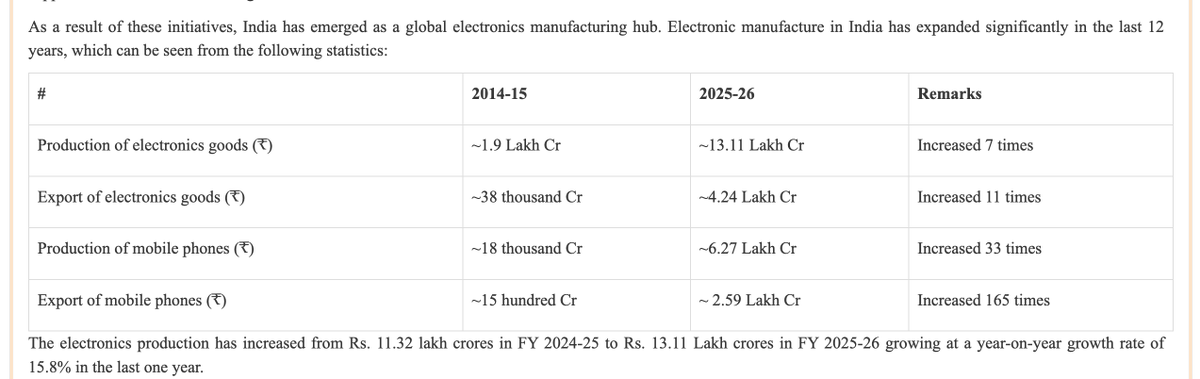
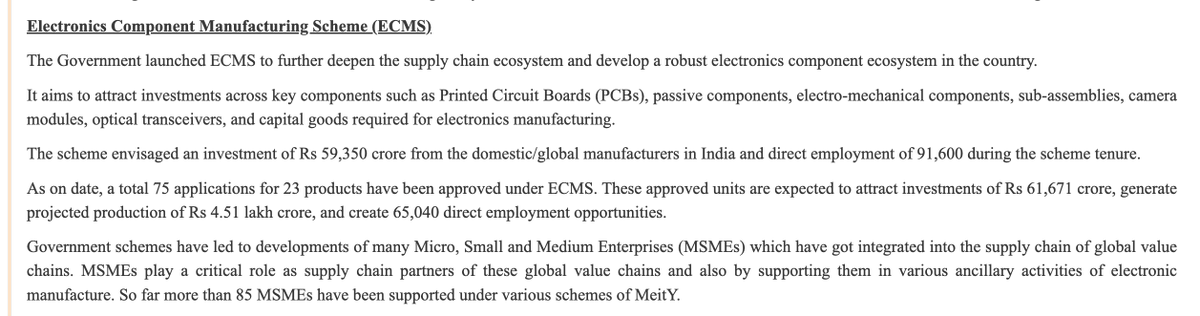
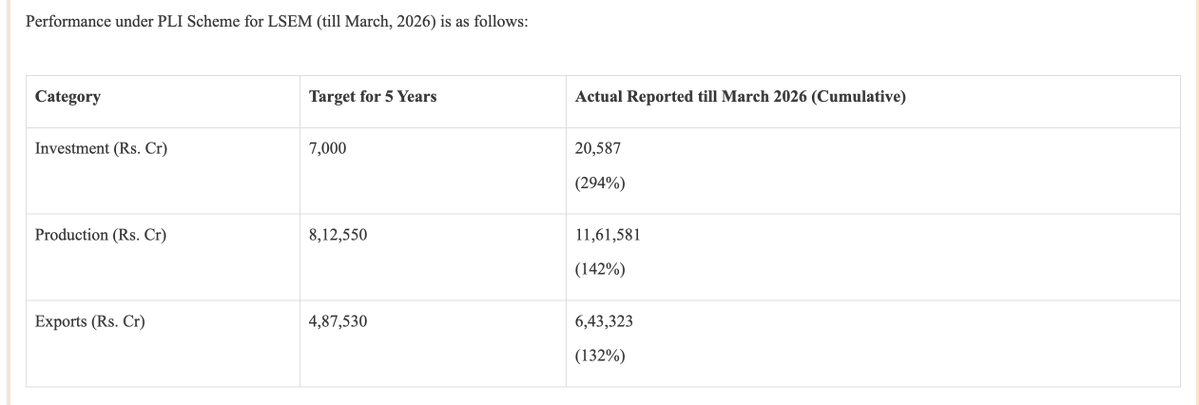
@maisooru Most of the RW wanted him to go after the 2024 results. Ashwini Vaishnaw is the performing minister ever in the Modi Govt. Results have already been delivered in electronics.(PLI+ISM+ ECMS etc)
https://t.co/1LM950E1F7
A ~55% subsidy on satellite launches.
That's what happens when a nation decides to back its space sector. Here's how India just rewrote the economics of what we're building… (1/n)
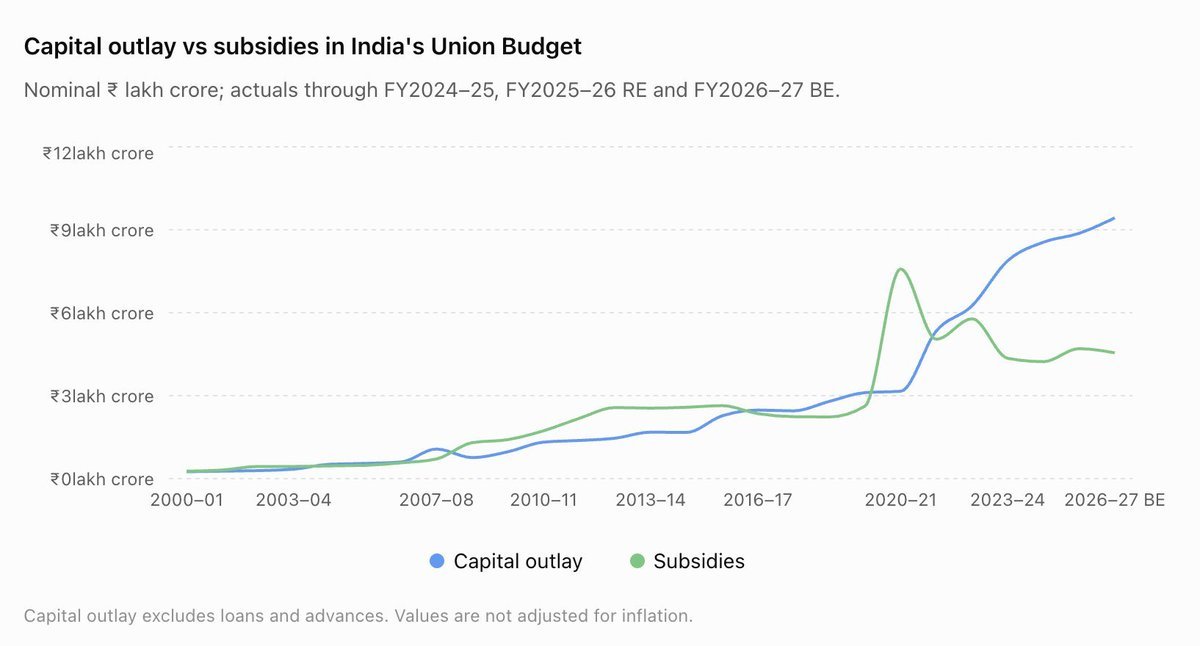
“Free is the most expensive word in public policy," Chief Economic Advisor V Anantha Nageswaran said on Monday, warning that building infrastructure on the promise of below-cost services is a contradiction that ultimately ruins economic balance sheets.
https://t.co/ohzgZ4XoiV
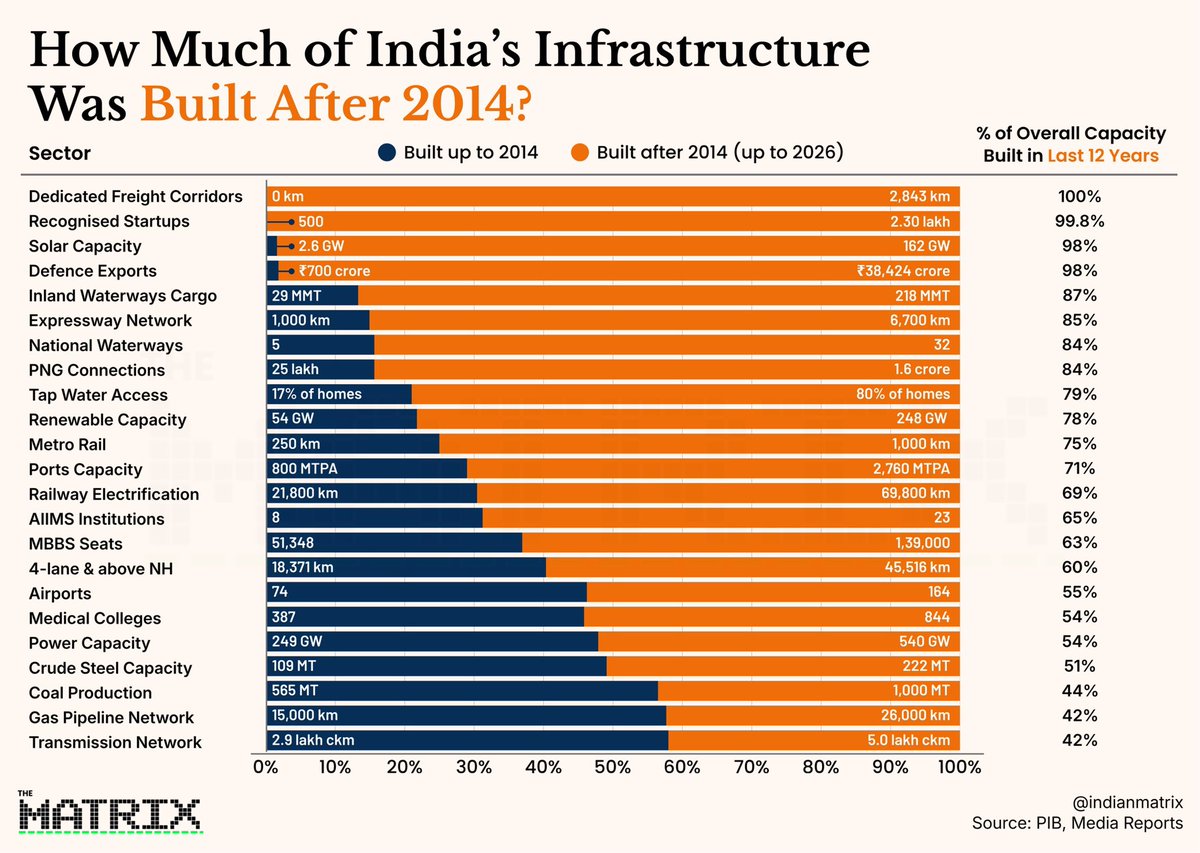
How much of India's infrastructure was built after 2014?
• 100% of Dedicated Freight Corridors
• 98% of Solar Capacity
• 85% of the Expressway Network
• 79% of Tap Water Access
• 75% of Metro Rail
• 71% of Port Capacity
• 69% of Railway Electrification
• 60% of 4-Lane National Highways
Infrastructure is built over decades.
But some decades build more than others.
@indianmatrix Lot of it is done, despite the hostile LAA of 2013.
Separate the things which were done during ABV's time from 1998 to 2004. Then it will show the true contribution of INC's infrastructure progress. cc @indianmatrix
https://t.co/qAUYM77TTn
@ku1deep No amount of pushing INC propaganda will make their stats look better. It is not just about the announcement. It is about execution and breaking the barriers. For eg,DFC was announced during the UPA era, majority of the construction happened post-2014. Compare the budgets
Reaching out for some urgent help.
My father has to undergo a major gastrointestinal surgery tomorrow morning at Hyderabad, and we urgently need 2 male A+ blood donors. He is admitted at KIMS Kondapur.
Would appreciate any leads or support on this please 🙏🏽 @indiacares_2020
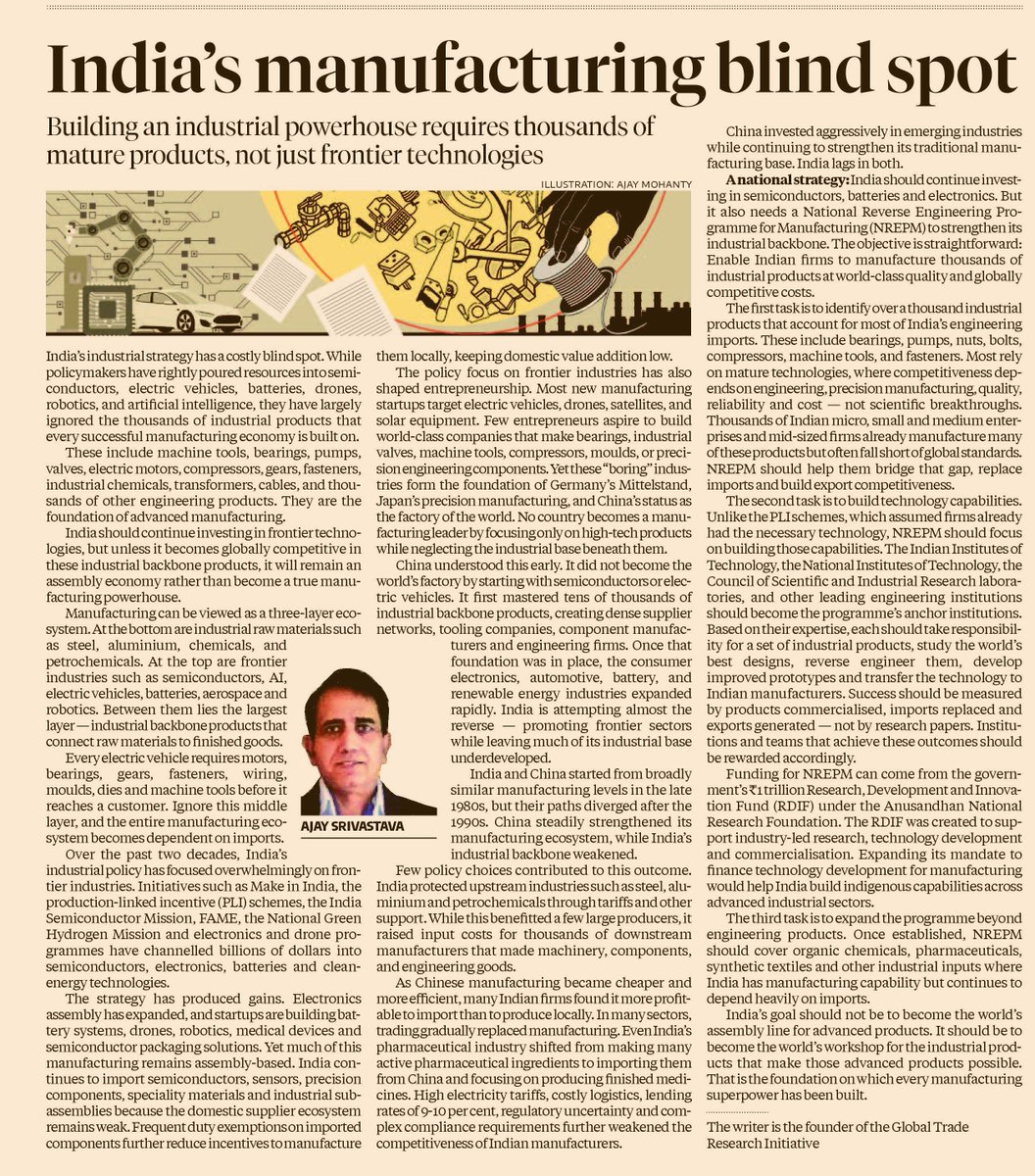
Very good piece on India’s manufacturing challenge that avoids the usual whiny, vacuous “India doesn’t manufacture ” lament and advances a specific industrial-policy thesis (whether one agrees or not)
The author argues that India has increasingly concentrated policy firepower on the frontier layer (semiconductors, electronics, EVs, batteries, drones, robotics, clean energy). And there have been real gains: electronics assembly has surged and new capabilities are emerging in batteries, drones, robotics, medical devices and semiconductor packaging. But much of it still remains assembly-led and import-dependent underneath.
The piece views manufacturing as three layers
Bottom - materials (steel, aluminium, chemicals, petrochemicals)
Middle - industrial backbone (motors, bearings, gears, pumps, compressors, machine tools, fasteners, moulds etc)
Top - frontier products (semiconductors, EVs, batteries, aerospace, robotics)
The author's thesis that India is trying to build the top floor without having sufficiently deepened the middle one.
The author argues that China did not become the factory of the world merely by mastering frontier technologies. It built dense industrial ecosystems producing the thousands of unglamorous components and machines on which sophisticated manufacturing ultimately rests.
His prescription - build a national reverse-engineering programme to master these industrial backbone products, deepen supplier ecosystems and systematically replace imports with globally competitive Indian manufacturing. via @bsindia
@AMR1T1 Sowing seeds for their downfall & paralysis like upa-2. Problem is no clear plan- either take the hit early to absorb short term losses & fix issues. Next, People will ask FM to go if stock market didn’t increase by 20%? Or ministers to resign on random issues decided by mobs🤡
@Me_Predictor Is it worth the huge efforts for pursuing the delimitation bill, especially with crazy characters & scenes witnessed last week?(bjp urban base not as strong as perceived )
One can buy rural votes for 2k if things get tough.Balance shouldn’t be shifted too much b/w groups.
Even bigger perception that It will make is when your own voters and people sympathetic to you, demand the exact same thing you show arrogance and ignore them while the absolute filth of the society demand same and uses violence, you decide to crawl.
@soicfinance Hasn't other players in the bushings-space tell it will take several years for qualification and audit before any approval comes? How will TARIL able to plan to get approvals so quickly and start commissioning?
@ShrrinG Honestly, the criticism should needs to be reasonable on X. The perpetual criticism of the BJP 24/7 for random things has given more to the other side to attack.
BJP ministers communication needs to change. It should be bit more organic. The CM of Assam is a good example.
@Me_Predictor Agree. After this education fiasco, he needs to stop. It will look refreshing at first, and eventually it will become like a PIB news board. BJP's Instagram strategy needs to be much more subtle.
@prakdadlani Sorry to hear this & wishing you a happy birthday! Hope you guys bounce back quickly (hopefully claims settlement process will be smooth) . It’s crazy heavy & record rains in south Gujarat.