Mesopotamia was never the cradle of civilisation. India was.
I spent forty years in international shipping, not academia. When I began researching the history of maritime trade, I had no orthodoxy to defend. I followed the evidence, and it kept arriving in the same place: the Indian subcontinent.
Nineteenth century archaeologists dug in Mesopotamia because the climate preserved artefacts, the biblical sources pointed them there, and the Ottomans allowed the excavations. That is the entire basis for the myth of Mesopotamia as "the cradle of civilisation."
Nobody applied the same rigour to India. Mohenjo-daro was not discovered until 1922. By then the narrative had already hardened.
What was actually there was the largest civilisation of the ancient world. Three hundred cities. Fifty thousand people in each, by 2600 BC. Two thirds of them stood on the banks of the Sarasvati, the central and greatest of the seven rivers described in the Rig Veda, flowing down from the Himalayas before the river vanished entirely by 1900 BC. The Vedic kings claimed territory stretching "sea to sea," from Afghanistan to Maharashtra, some 1.5 million square miles, against Egypt's 13,000. A dock at Lothal built to handle thirty ships of sixty tons, unmatched in Europe for four thousand years. When it was first excavated, it was recorded as a bathing pool.
When the scale became impossible to dismiss, the theory was not corrected. It was replaced with a story of pale-skinned nomads from the steppe who supposedly arrived around 1500 BC and brought civilisation with them. There is no evidence. The chronology doesn't work. The Vedas describe no invasion.
In 2019 a Harvard-led genetic study revived the claim, and the press reported it as confirmation. It was not. The same study found the builders of these cities were indigenous. The Sarasvati river that the Rig Veda described had already dried up before these newcomers arrived. What the study also found is that a small group of men, arriving after the Sarasvati had already dried up, interbred with the existing population and left a genetic signature. That is all.
So, where they chose to dig was mostly an accident of climate and access. The Aryan invasion theory was constructed because an Indian civilisation that owed nothing to Caucasians was a fact the late nineteenth century could not accommodate.
Link to full Substack essay with sources in the comments below.
The #Iran-U.S. conflict enters a new phase of escalation
🔹Developments on July 17 suggest that both Iran and the United States are broadening the scope of the conflict. While it remains too early to draw firm conclusions, the pattern of reported military activity points toward preparations for a potentially more dangerous phase.
🔹On the U.S. side, reports indicate that several aerial refueling aircraft have been redeployed from Europe to the CENTCOM area of operations. Many of these assets had left the region following the ceasefire, making their return noteworthy amid renewed tensions.
🔹At the same time, the geographical scope of U.S. strikes appears to be further expanding. In addition to previous areas in the south, reported attacks have reached Lar in Fars Province and Yazd in central Iran – areas hosting some of Iran’s missile bases.
🔹Iran, meanwhile, appears to be widening its own target set. The IRGC claimed to have struck American UAV facilities and an AI center in Bahrain allegedly used to support U.S. targeting operations, while warning that it would increasingly target economic, technological, and industrial assets linked to American interests across the region.
🔹This marks a potentially important shift. Rather than focusing primarily on military targets, Tehran is signaling that infrastructure associated with U.S. economic and technological interests may now be considered legitimate targets if attacks on Iran continue.
🔹Maritime developments are also becoming more concerning. Iranian sources reported that a Thailand-flagged vessel was targeted after attempting to transit the Strait of Hormuz without coordinating with Iran, while later claiming that two oil tankers struck mines in the Strait and caught fire.
🔹Whether or not all of these claims can be independently verified, they underscore the growing risks to commercial shipping. Even previously deployed mines could have a significant impact on maritime traffic.
🔹Perhaps the most significant reported development is the Iranian strike on Prince Sultan Air Base in Saudi Arabia after U.S. refueling aircraft allegedly operated from the base. It represents the first reported Iranian attack on a U.S. facility in Saudi Arabia since the April ceasefire.
🔹It is also noteworthy that, the previous day, Iran announced an attack on the al-Tanf base in Syria. Some Iranian analysts interpreted the strike as a warning to the Syrian government not to intervene in Lebanon against Hezbollah.
🔹This suggests that Tehran may be setting aside some of the restraint that shaped its earlier responses. Over the past several weeks, Iran’s attacks have focused primarily on Bahrain, Kuwait, and Jordan, with far more limited strikes against the UAE, Qatar, and Oman. That calculation may now be changing, as Tehran appears to believe that these attacks have neither altered U.S. calculations nor changed the military balance on the ground.
🔹Reports that further bridges and transportation infrastructure in southern Iran continue to be targeted have also attracted attention. As mentioned yesterday, many Iranian analysts interpret these strikes as part of a gradual effort to degrade mobility and logistics in southern Iran, potentially laying the groundwork for future military options involving ground troops.
🔹From the Iranian perspective, this does not necessarily mean that a U.S. ground operation is imminent. However, repeated attacks on transportation infrastructure fit a broader pattern of battlefield preparation that cannot be ignored. As such, the question may increasingly be one of "when" rather than "if."
🔹Meanwhile, Iran continues operations on other fronts. The Iranian Army announced additional operations against Kurdish insurgent groups in Iraqi Kurdistan, claiming multiple commanders were killed and several facilities destroyed.
🔹There are also unverified reports that the Houthis are preparing measures that could affect shipping through the Bab el-Mandeb Strait. While these claims remain uncertain, they contribute to perceptions inside Iran that the conflict may increasingly extend beyond the immediate Persian Gulf region.
🔹Overall, Tehran appears to be concluding that its previous level of “restrained engagement” has not generated sufficient deterrence. As a result, it is increasingly willing to expand both the geographical scope of its operations and the categories of targets it is prepared to strike.
🔹Whether this reflects the collapse of expectations surrounding a negotiated framework or simply an effort to restore deterrence remains unclear. What is becoming increasingly evident, however, is that both sides are incrementally raising the stakes, increasing the risk that the conflict could enter a broader and significantly more dangerous phase.
P.S.: I cannot believe I’m doing this again…
Britain abolished slavery in 1833. Three years later, they invented its replacement. They used Indians to run it.
Between 1.9 and 3.5 million people. Lied to, Shipped across oceans. Worked under a system survivors called "slavery with the chains taken off."
The story India almost forgot featuring powerful insights from @ShawnBinda
A joyous moment for every Indian!
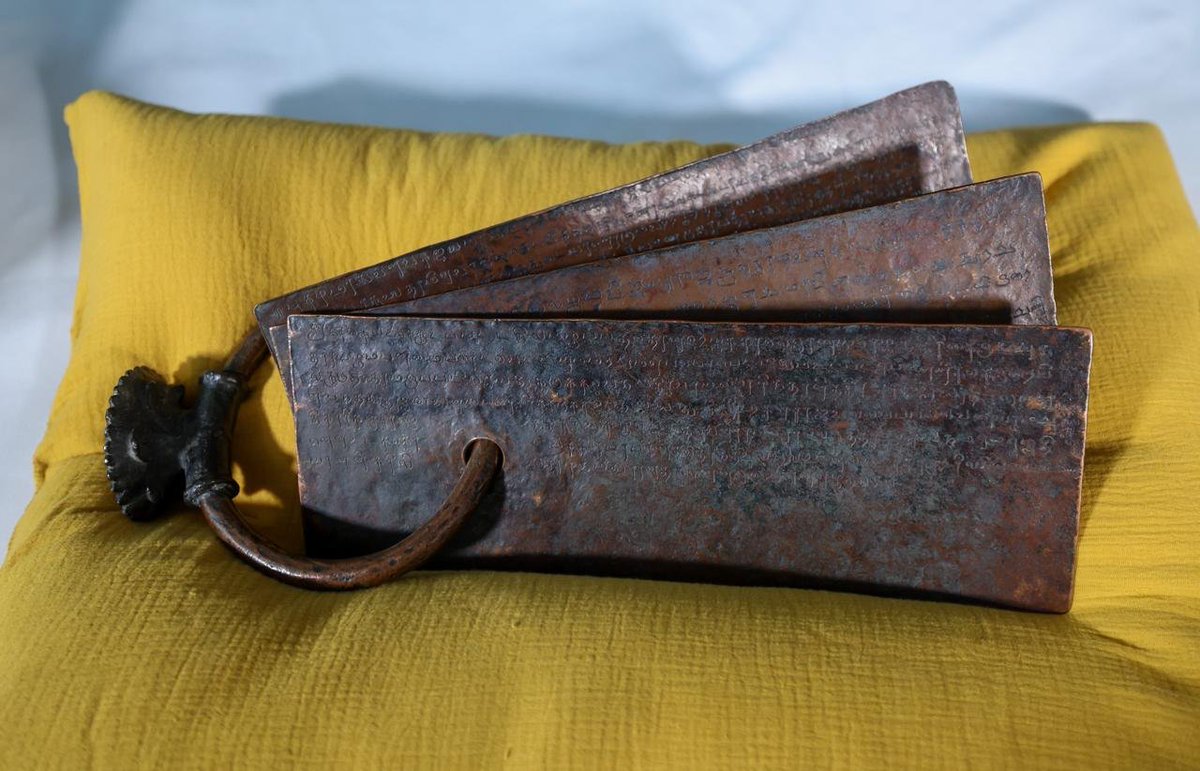
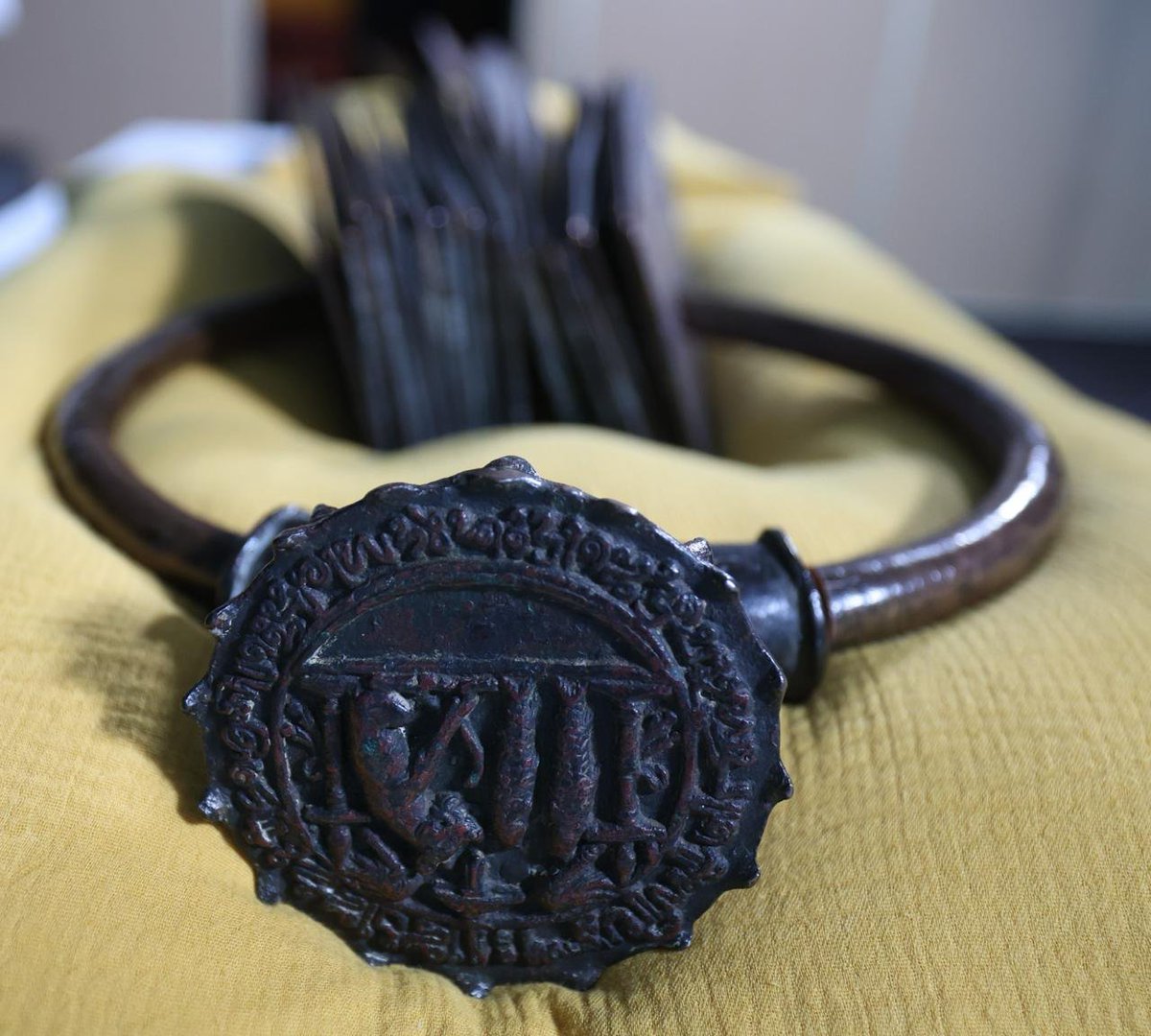
Chola Copper Plates dating back to the 11th Century will be repatriated to India from the Netherlands. Took part in the ceremony for the same in the presence of Prime Minister Rob Jetten.
The Chola Copper Plates are a set of 21 large plates and 3 small plates and largely contain texts in Tamil, one of the most beautiful languages of the world. They relate to the great Rajendra Chola I formalising an oral commitment made by his father, King Rajaraja I. They also showcase the greatness of the Cholas. We in India are immensely proud of the Cholas, their culture and their maritime prowess.
I thank the Government of the Netherlands and Leiden University in particular, where the Copper Plates were kept since the mid-19th century.
@MinPres