Introducing e-means, an algorithm beating k-means in 10x fewer epochs.
With order of magnitude wall-clock speedups, e-means is released in FAISS and needs no hyperparameter tuning beyond k. It is robust to various scales and datasets. Still skeptical ? Just try e-means [1/10]🧵
#1 in Chances Created since Bruno Fernandes joined Manchester United:
136 - Bruno Fernandes 25/26
119 - Bruno Fernandes 22/23
114 - Bruno Fernandes 23/24
95 - Bruno Fernandes 20/21
91 - Bruno Fernandes 24/25
90 - Trent Alexander-Arnold 21/22*
*89 - Bruno Fernandes 21/22
The league changes year to year, the style of the league adapts, yet he remains at the forefront of excellence.
Introducing Hyperagents: an AI system that not only improves at solving tasks, but also improves how it improves itself.
The Darwin Gödel Machine (DGM) demonstrated that open-ended self-improvement is possible by iteratively generating and evaluating improved agents, yet it relies on a key assumption: that improvements in task performance (e.g., coding ability) translate into improvements in the self-improvement process itself. This alignment holds in coding, where both evaluation and modification are expressed in the same domain, but breaks down more generally. As a result, prior systems remain constrained by fixed, handcrafted meta-level procedures that do not themselves evolve.
We introduce Hyperagents – self-referential agents that can modify both their task-solving behavior and the process that generates future improvements. This enables what we call metacognitive self-modification: learning not just to perform better, but to improve at improving.
We instantiate this framework as DGM-Hyperagents (DGM-H), an extension of the DGM in which both task-solving behavior and the self-improvement procedure are editable and subject to evolution. Across diverse domains (coding, paper review, robotics reward design, and Olympiad-level math solution grading), hyperagents enable continuous performance improvements over time and outperform baselines without self-improvement or open-ended exploration, as well as prior self-improving systems (including DGM). DGM-H also improves the process by which new agents are generated (e.g. persistent memory, performance tracking), and these meta-level improvements transfer across domains and accumulate across runs.
This work was done during my internship at Meta (@AIatMeta), in collaboration with Bingchen Zhao (@BingchenZhao), Wannan Yang (@winnieyangwn), Jakob Foerster (@j_foerst), Jeff Clune (@jeffclune), Minqi Jiang (@MinqiJiang), Sam Devlin (@smdvln), and Tatiana Shavrina (@rybolos).
@mabrrramsky@grok find me real customer stories for opendoor.
If possible, find it for a BBB complaint filed by a seller on 14th Jan 2026 when Opendoor gave them a $4549 roof reduction
@ExtremelyHarsh What tools are you talking about? We start every game with 5-6 liabilities. These players make direct, transition football look like a ringa-ringa roses at their nan’s house. Hard for Erik to survive but he isn’t the elephant in the room.
@ExtremelyHarsh It’s not his fault the players are donuts. Casemiro at CB - 4/5 CBs injured. This is our 20th defensive pairing this season? What’s that count at? Any club w similar numbers? Back to back FA cup finals and you blame him?
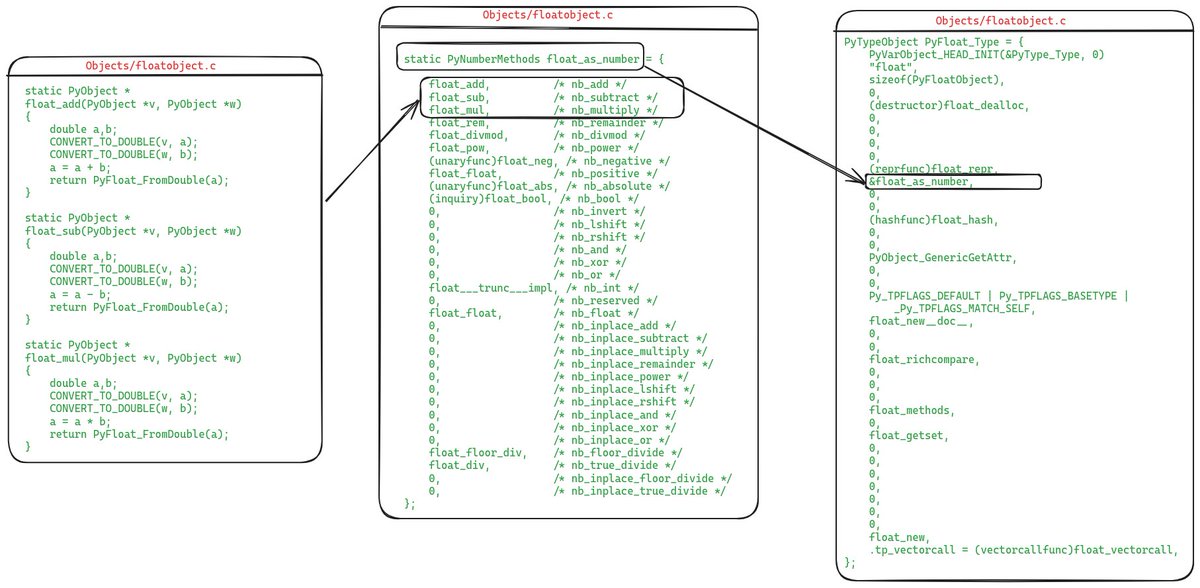
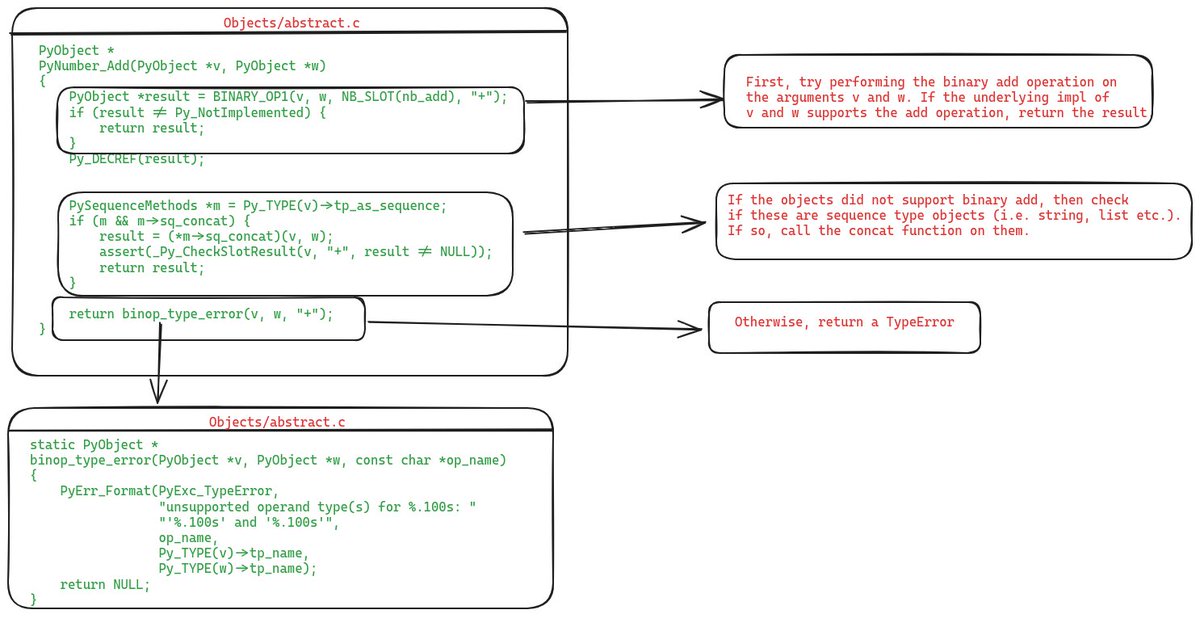
"a + b", this one line of Python code executes thousands of lines of C behind the scenes. My latest article explains what goes on in the CPython runtime to execute this seemingly simple operation. You will learn about:
- Dynamic dispatch implementation in CPython
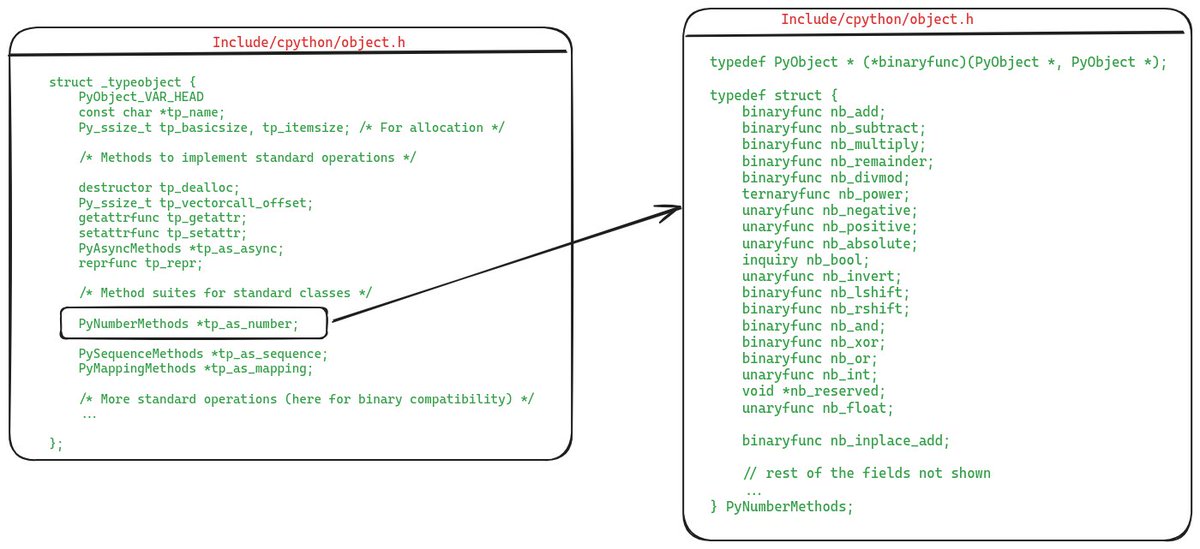
- What is the abstract object interface in CPython and its role in dynamic dispatch
- What is the PyTypeObject struct and its role in the CPython runtime
- How the various types in CPython implement operators and make them available to the runtime for dynamic dispatch to work.
- And, look inside the implementation of the float type to understand this more concretely.
The article includes 13 annotated code listings from CPython with all the explanations. Check it out: https://t.co/ttxZN8K2SC