This new paper is probably the most prominent example to date of how linking genetic variation to cell-level, rather than tissue-level, gene expression can transform the interpretation of GWAS signals.
The study generates a single-cell eQTL resource from intestinal biopsies and blood samples from 421 individuals, including 125 with inflammatory bowel disease (IBD)👇
1/n What fraction of the human genome is essential for cellular viability?
Excited to share our preprint that explores this question by combining an unusual CRISPR system, phage promoters, and thousands of deletion launchpads.
@sudpinglay@JShendure
https://t.co/rTO1MyFv3q
Rare variant study of blood lipids (>1 million people) generalizes well across ancestry groups (r²~0.9), suggesting that rare variants aren't affected by the same portability issues as PRS.
https://t.co/SMlxlazGtV
A multimodal perturbation atlas of 1,000 pooled CRISPR knockouts in A549 cells, profiled by fluorescence microscopy (39 live, 13 fixed markers), label-free phase imaging of the same live cells, and single-cell RNA sequencing (scRNA-seq)
Totaling ~57 million single-cell profiles
Preprint: https://t.co/8akaS91MfU
Excited to share some of my PhD work out today in @NatureCancer! Integrating bulk and single-nucleus genomic approaches, we identify distinct determinants of survival and acquired resistance to ICB versus standard chemoradiation in glioblastoma. https://t.co/EqeJLUvbou
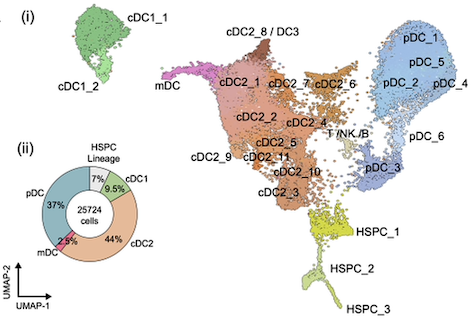
Decades of research have revealed the intricacies of how dendritic cells (DCs) function, but fundamental questions remain about how this group of cells develops in humans and how this process goes awry in disease. A thread on our new work! (1/9)
https://t.co/9hgDt3r8n1
We have fully open sourced our binder design protocol, which generates nanomolar affinity scFvs.
The code here implements a faithful reproduction of the pipeline described in the paper, which is exactly what was used to produce our designs.
Check it out here: https://t.co/CDH6SPo7d3
As happened with cardiovascular disease, human genetics can revolutionize drug development in other fields with limited therapeutic options.
Endometriosis affects 10% of women causing pain and infertility and we still have no efficacious pharmacotherapy.
A new GWAS leveraging data from 14 biobanks including >50,000 endometriosis cases reports 58 total associated loci (27 previously unreported) offering a rich resource for exploring therapeutic hypotheses.
SPLICECRAFT v1.0 IS LIVE!!!!!!!!!!!!
Open your terminal and type in "pipx install splicecraft" if you want to try it out, then spam "splicecraft update" often as I push updates frequently. A labor of love for the community I adore. Enjoy! 💚
I'm so excited to show the world what we've been working on the for the past months!! I'm going to highlight some of the fun results from this paper that I find particularly exciting.
1/5
Cell identity is written in the proteome, not in the DNA, and not always in the RNA. Out on bioRxiv today: The first cell type-resolved, MS-based proteomic atlas of the human body.
https://t.co/5RJ0nVoQ81
Today we're announcing ESMFold2, an open scientific engine to power prediction, design, and discovery across protein biology.
The new model delivers state of the art performance on protein interactions, especially antibodies, a critical modality for therapeutics.
We have designed and validated miniprotein binders and single chain antibodies across five therapeutic targets that are important in cancer and immunology. We are seeing very high success rates, and affinities at levels consistent with therapeutic activity.
We’re also releasing an atlas of 6.8 billion proteins, and 1.1 billion predicted structures.
ESMFold2 is built on a state of the art language model that has been trained on billions of protein sequences.
A world model of protein biology emerges through language modeling.
We’ve used the techniques of mechanistic interpretability developed to understand large language models to understand the concepts ESM uses to represent proteins.
The model’s representation space has a compositional organization of features across scales, levels of complexity, and abstraction, that reflects and mirrors the understanding of protein biology developed through a century of empirical science.
This understanding emerges without prior knowledge, just from language modeling of protein sequences.
Language models are becoming a powerful substrate to understand and program biology.
The design of protein interactions is one of the most fundamental problems in biophysics, and has critical implications for the discovery of new medicines. A simple gradient based search with the model was able to discover high-affinity protein binders.
I'm excited by the potential this has to accelerate basic science and the understanding of proteins. And especially for the new avenues it opens up for therapeutic design and medicine.
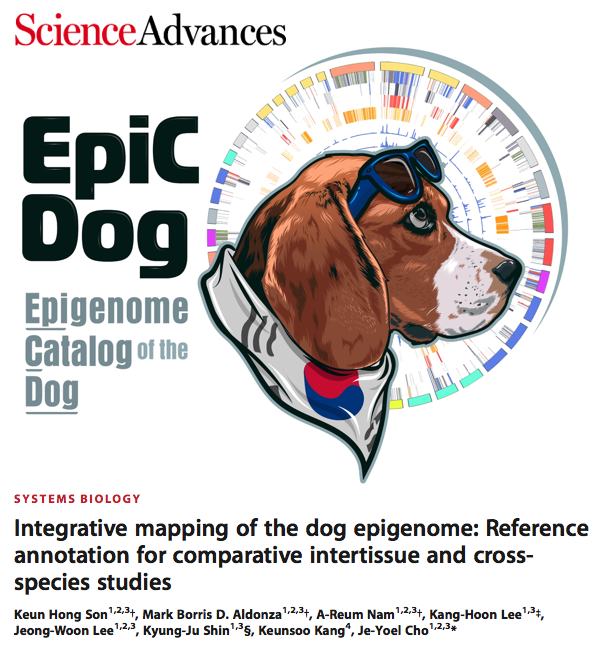
Beautiful short Nature Methods N&V “Teaching an old dog new cells” led by J Linder & D Kelley. Also on scooby, pushing seq2func models toward true cell-state–specific reg modeling 🧬
Fitting disc here at CSHL with Anshul & others on this next frontier
https://t.co/N1j7AbVZu9
Going from the discovery of epigenetic silencing of CTCF insulators https://t.co/Qyhnk32yKq to aberrant E-P looping https://t.co/RCzXjfZDPB to a successful clinical trial https://t.co/lcO3fZHRj9 all from Brad Bernstein's lab
Looks like a very useful R package for the analysis of morphological evolution on phylogenies:
"We introduce MorphSim, an R package for simulating discrete morphological characters specifically designed for total- evidence and tip- dated phylogenetic analyses..."
Most human 'recessive' disease genes may not actually be evolutionarily recessive - heterozygous LOFs in these genes have measurable effects on phenotypes and selection.
https://t.co/2TLdOyD9R6
Our paper is finally out in Cell! Years of work on one of biology's most beautiful tissue clocks, and finding an intrinsic oscillator that helps organize tissue dynamics. From my PhD work at @LongCai_Lab, with Shosei Yoshida and Ben Simons!
🧵(1/10)
https://t.co/fRFxG3rbo2