How I Made $333 in 5 Weeks With $0 Out of My Pocket
That’s right — zero of my own money. Only 5 mins a day!
This is not AI — this is real me taking action and sticking with the routine.
I borrowed funds, moved them into a simple investing account, and followed one easy system: invest on a fixed schedule into the same 5 low-risk stocks every week.
The result? +$333 in market gains after just 5 weeks (and still ahead after borrowing costs + dividends).
I turned it into a fun, easy-to-read experiment — no complicated charts or gambling on hype stocks.
Want the full story, my exact routine, and the weekly scoreboard?
Checkout my full article below
https://t.co/0g9yXWu9Ua
@Wealthsimple Why I'm see this page? Try to access public page and I'm getting this error? All I did was click the google search result with this link and I'm getting a banned error message. Very interesting...
🚨: A photographer captured the Sun for three years straight from the exact same spot at the same time, then combined every position into one incredible image
Microsoft’s Latest Glass Storage Breakthrough: Data That Lasts 10,000 Years
In a paper published in Nature on February 18, 2026, the Microsoft Research Project Silica team unveiled a major leap in archival data storage. They’ve developed a system that uses femtosecond lasers to etch data into glass, achieving a density of 1.59 Gbit/mm³ — enough to store 4.8 TB on a single 120 mm square, 2 mm thick piece of glass.
The big news? They’ve successfully moved beyond expensive, hard-to-get fused silica to ordinary borosilicate glass — the affordable, everyday material found in kitchenware and lab equipment. Using a new “phase voxel” approach that requires just a single laser pulse per bit, they hit 2.02 TB per platter in borosilicate while simplifying both writing and reading hardware.
Key specs from the study:
• Write throughput up to 65.9 Mbit/s using multi-beam parallel writing
• Energy efficiency as low as 8.85 nJ per bit
• Accelerated aging tests project data stability for over 10,000 years at room temperature
Unlike traditional tape or hard drives that degrade over decades and require constant energy and migration, this glass is immune to water, heat, dust, magnets, and electromagnetic pulses. No power, no cooling, no bit rot.
For organizations drowning in data that must be preserved for generations — governments, research institutions, media archives, and enterprises — this could fundamentally change long-term storage economics and reliability.
Read the full paper: https://t.co/pYqHOJXTSn
Microsoft Research blog: https://t.co/XieLAhakJr
What are your thoughts — could glass become the new gold standard for archival storage?
Extremely frustrated with @TDBank@TDInsurance and Global Excel handling of my TD First Class Travel Visa Infinite baggage insurance claim. After submitting ALL required documentation (PIR, receipts, card proof, etc.), they keep demanding MORE paperwork I literally CANNOT get from the airline. This has been dragging on for weeks/months with zero resolution.
Customer support staff have been incredibly rude and unhelpful on every call. No empathy, just endless hoops. This card's "premium" travel insurance is supposed to protect you – instead it's a nightmare of delays and denials.
@TDInsurance – fix this! Other cardholders report the same runaround. Paying an annual fee for this level of service? Unacceptable. #TDVisaInfinite #TravelInsuranceFail #ConsumerComplaint
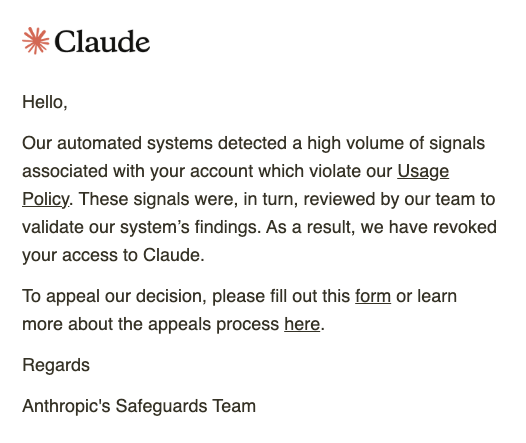
@claudeai you took down our entire organization with 60+ accounts belonging to a legitimate company for no apparent reason, without any explanations. The only way to appeal the decision is by filling out a Google Form? Very bad UX and customer service.
Must see! This really got me concerned.
I couldn’t even make a payment over $250 at Best Buy using Apple Pay—but somehow $10K was charged without unlocking the phone or using Face ID? That’s honestly very worrying.
Exposing the flaw in tap to pay https://t.co/UTifwevuel via @YouTube
Karpathy dropped a viral post about building a "second brain" with AI. We built it live in under 20 minutes.
The system:
1. Three folders: raw/ (brain dump), wiki/ (AI organizes it), outputs/ (query results)
2. One-click install: npx skills add NicholasSpisak/second-brain
3. Obsidian Web Clipper to capture any article with one click
4. Run "ingest" and the AI reads everything in raw/, builds wiki pages, and maps connections automatically
5. Query your own knowledge base like talking to an expert
6. Monthly lint command catches contradictions and gaps before they compound
Day 1 it's basic. Day 90 it's a company asset nobody else has.
Free skill in the YouTube description that scaffolds the whole thing in 60 seconds.
Video below, YouTube link in the replies.
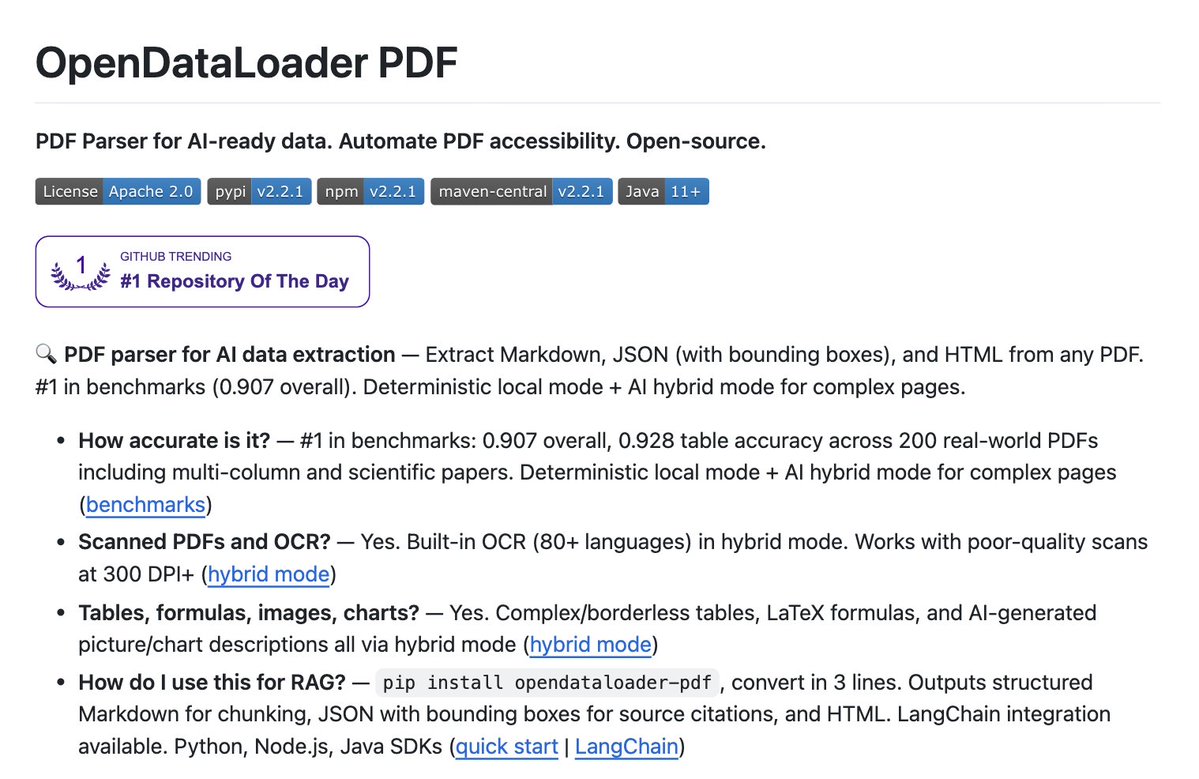
🚨 Someone just open-sourced a tool that converts pdfs to markdown at 100 pages per second.
It's called OpenDataLoader. It runs entirely on CPU and handles complex layouts, tables, and nested structures like a senior dev
100% Free.
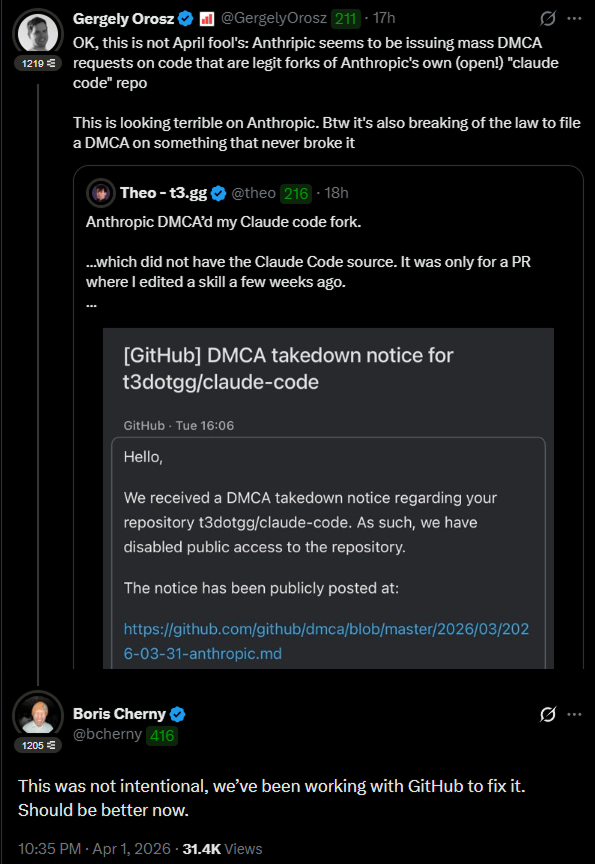
Anthropic tried to kill 8,100 GitHub repos. Then this happened
> They filed a DMCA. GitHub nuked the entire network within hours. Developers got notices for forks of Anthropic's OWN public repo - one guy's fork had zero leaked code.
> Boris Cherny, head of Claude Code, had to go on X personally: "This was not intentional. Should be better now."
> Meanwhile Sigrid Jin - who used 25 billion Claude Code tokens last year - woke up at 4AM and rewrote the entire thing in Python before sunrise. DMCA can't touch a clean-room rewrite.
> It hit 50K stars in 2 hours. Fastest repo in GitHub history.
> Today claw-code officially launched as an independent project with a formal press release. And the Rust port merged today - what started as a panic rewrite now ships release 0.1.0.
> 140K stars. 102K forks. More than Anthropic's own repo.
> 512,000 lines are in the wild forever. What started as Anthropic's biggest embarrassment just became their most dangerous competitor.
You cannot make this up.