84 years ago today, a pilot running out of fuel made a decision that won the Pacific War. Most Americans have never heard his name.
June 4, 1942. Six months after Pearl Harbor, Japan's navy is undefeated. Four of the carriers that burned Pearl, Akagi, Kaga, Soryu, and Hiryu, are steaming toward Midway to finish off the US Pacific Fleet.
At 7:52 AM, Wade McClusky launches from USS Enterprise leading 32 Dauntless dive bombers. Here's the detail nobody mentions: McClusky is a fighter pilot. He'd been given the air group weeks earlier and had barely flown a dive bomber in combat. Now he's leading every SBD the Enterprise has at the most important target in the Pacific.
9:20 AM. He arrives at the intercept point where the Japanese fleet is supposed to be.
Empty ocean. Nothing for miles.
The Japanese had turned. Nobody knew where. And now McClusky owns the worst math problem in naval aviation: his fuel is bleeding away, and every minute he keeps searching, he condemns more of his own pilots to ditch in open water where nobody will find them.
Doctrine is clear. Turn back.
McClusky keeps going. He works a search pattern, squeezing miles out of dying fuel tanks.
9:55 AM. Far below, a single Japanese destroyer is cutting a white scar across the ocean at flank speed. It's the Arashi, racing to rejoin the fleet after depth-charging the American submarine Nautilus. Think about that. A failed sub attack is about to give away the entire Japanese navy.
McClusky reads the wake like an arrow and follows it.
10:02 AM. The horizon fills with the entire Japanese strike force. Four carriers, their decks crammed with planes being refueled and rearmed. Fuel lines snaking everywhere. Bombs stacked in the open.
And here's the miracle: the sky above them is empty. Minutes earlier, American torpedo squadrons had attacked at sea level and been annihilated. Torpedo 8 lost all 15 planes. One survivor, Ensign George Gay, watched what came next while hiding under his seat cushion in the water. Those doomed pilots dragged every Japanese fighter down to the waves. The door upstairs was wide open.
10:22 AM. McClusky pushes over from 14,500 feet. Both squadrons follow him down onto Kaga. It's actually a mistake, doctrine said split the targets, but Lt. Dick Best catches it mid-dive, pulls out with two wingmen, and goes after Akagi alone. His single bomb pierces the flight deck into the packed hangar. It's enough.
By 10:28, Kaga, Akagi, and Soryu, the third hit simultaneously by Yorktown's bombers, are floating infernos. Six minutes. Three carriers that attacked Pearl Harbor, gone. Hiryu follows them to the bottom that evening.
The cost of McClusky's gamble was real. Many Enterprise bombers never made it home, some shot down, others swallowed by the sea when their tanks ran dry. McClusky himself was jumped by two Zeros on the way out, took five bullets through his shoulder, and still flew his shot-up Dauntless back to the Enterprise.
Admiral Nimitz said McClusky's decision "decided the fate of our carrier task force and our forces at Midway." Japan never won another major battle.
One borrowed pilot. One destroyer's wake. One choice to keep flying when every gauge said go home.
30 anos.
Por 30 anos o PC foi a mesma coisa: Intel ou AMD dentro, GPU do lado, e torce pra não travar.
A NVIDIA acabou com isso numa keynote.
RTX Spark. Primeiro chip deles para computador pessoal. CPU, GPU e memória num único silício. ARM, 3nm, 1 petaflop de IA local.
Num laptop de 14mm.
Rodou Forza Horizon 6 e 007 First Light no palco a 100 FPS em 1440p. Fora da tomada. Sem throttling. No Windows.
O número que muda tudo: roda modelos de IA de 120 bilhões de parâmetros sem cloud. Sem API. Sem assinatura. Seu agente de IA mora na sua máquina. Ligado 24 horas. Só seu.
O PC não é mais uma tela com teclado. É uma estação de IA pessoal.
This has quietly been a miracle month in medicine.
In the last 5 weeks we’ve got news on:
- retatrutide, the triple agonist GLP-1 from Lilly, basically melting fat and body-wide inflammation at record levels
- RevMed’s new pancreatic cancer drug showing unprecedented abilities to extend life
- small trial of a one-and-done PCSK9 gene editing therapy for slashing LDL cholesterol
- Mayo’s AI-assisted radiology showing vastly improved cancer detection
- this new therapy for metastatic solid tumors
This stuff is at varying levels of evidence. Retatrutide is ~100% on its way, other stuff needs more clinical trial data. But put it together and we’re maybe on the verge of majorly reducing the mortality of heart disease and cancer, the two leading causes of death in America.
Codex is blowing my mind rn. Every Friday, I use Claude Code to triage/answer WhatsApp, SMS, and emails with a variety of skills. Somehow Opus 4.8 couldn't do what I was doing with 4.6 so I tried the Codex app.
It was significantly faster and better quality. I think it's not the app itself, (even if the Gmail connector is amazing) it’s the model. GPT-5.5 is remarkable.
Really surprised (in a good way) Never Tell Me The Odds survived that overpressure wave.
Now for the rebuild of the pad. Remember, they were already planning to build a new one at the old LC-11 area, so we might see two new sets of pad towers rising at the same time.
Long before @NASAAdmin lead NASA he was personally cheering on the industry after painful losses. the night after Ship 36 RUD'ed, Rook was there at Starfactory with several pallets of Dominos, taking over the cafeteria and personally giving all of us pizza.
I am grateful for his continued support.
The ending of INTERSTELLAR (2014) could’ve easily stopped after the Murph reunion, but Nolan gives Cooper one last mission. Cooper quietly heading back across the stars to find Brand is such a hopeful final note.
All personnel are accounted for and safe. It’s too early to know the root cause but we’re already working to find it. Very rough day, but we’ll rebuild whatever needs rebuilding and get back to flying. It’s worth it.
We made our OpenClaw release evidence repo public.
Every release now has durable CI, performance, memory, install, and validation evidence you can inspect directly.
Example from 2026.5.27: https://t.co/ZonERQfeMj
We uncovered something far bigger than I ever expected. After seeing coordinated false attacks against the Utah data center project, we brought in an advanced data science team to trace where the content was coming from and the results were shocking. What we found led back to organized networks, political activist groups, and funding trails tied to massive international entities. We dug through IRS 990 filings, tracked IP data from around the world, and uncovered what appears to be a coordinated campaign targeting energy and data center projects across multiple regions.
I shared 90 pages of evidence with federal law enforcement and raised concerns directly with contacts at the White House. This isn’t speculation. The filings, funding records, dates, and connections are documented. There’s a coordinated PR war happening around energy infrastructure and data centers, and we’re not going to ignore it.
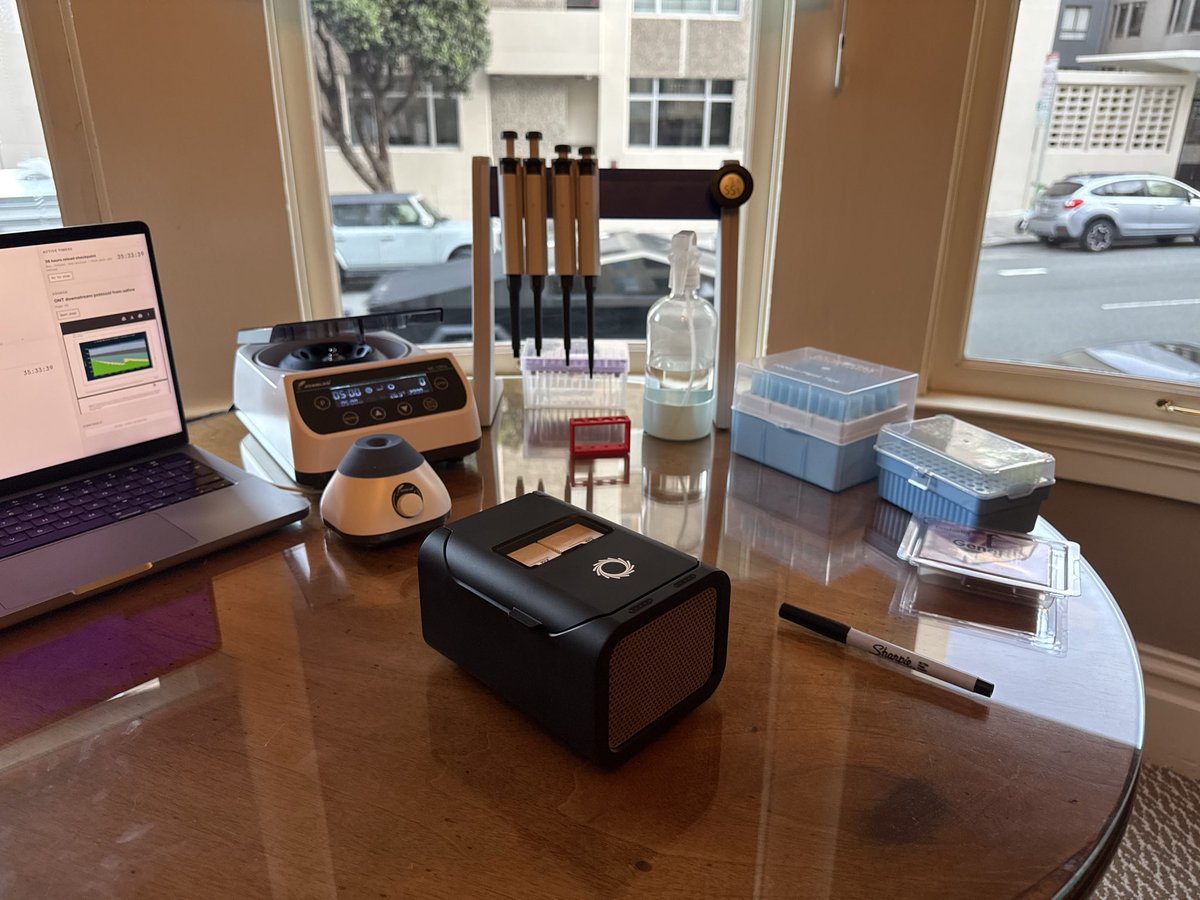
I just sequenced a human genome to 30× coverage entirely at home.
As far as I know, this is the first time this has been done.
I didn’t step foot in a lab once. Every step - from saliva collection, to running the sequencer - took place in a single room with a dining table + kitchenette.
Six weeks ago, I had never done wet lab biology before.
I used an Oxford Nanopore P2 Solo - the only commercially available sequencing device portable enough to do 30x human genome sequencing at home.
Biggest takeaway - I could build something that combined software, hardware, and molecular biology far faster than I thought was possible.
I can name >100 specific instances where AI helped me solve a technical problem that would previously have blocked me because I lacked access to a domain expert.
For example: how do I save my sequencing run when my DNA extraction yield is 4x lower than I need it to be, and I have this limited set of reagents to hand?
To make this work, I had to navigate multiple disciplines:
- writing software to monitor sequencing runs and orchestrate remote GPU infra for basecalling
- learning + executing 5 hour long molecular biology protocols
- building a hardware device to quantify DNA concentration
Apologies for the hyperbole, but I feel super lucky to be living in 2026.
A few weeks ago I decided to sequence a human genome to 30x at home.
Then I actually did it. And I did it really quickly.
That water clarity is an engineering decision, and the math behind it is wilder than the video.
Roman aqueducts ran on gravity alone. No pumps, no pressure systems. Engineers carved channels with a gradient so shallow it borders on absurd. The Pont du Gard in southern France drops 2.5 centimeters over 275 meters. That's roughly the thickness of a coin over the length of three football fields. They surveyed that accuracy with plumb lines and wooden leveling instruments.
The clarity you're seeing is a direct product of flow velocity. Too steep and the water erodes the channel walls, picks up sediment, turns brown. Too flat and it stagnates. Roman engineers targeted a slope of about 20 centimeters per kilometer, which kept the water moving fast enough to stay fresh but slow enough to stay clear. Before the water reached the city, it passed through multi-chamber settling tanks where velocity dropped near zero. Suspended particles sank. Clean water flowed out the top into the next chamber. Repeat three or four times.
Pliny specified the minimum slope in writing. Vitruvius published the exact mortar ratio for hydraulic cement: one part lime to two parts volcanic ash for underwater work. The pozzolana from Pozzuoli reacted with water to form a calcium-aluminum-silicate compound that actually gets stronger the longer it sits submerged. Modern concrete degrades in water. Roman concrete bonds with it.
Scale the whole system and it gets harder to process. Eleven aqueducts fed Rome at its peak. Combined output: roughly 1 million cubic meters of water per day. That works out to about 250 gallons per person for a city of one million. Modern New York delivers about 125 gallons per person per day. Ancient Rome had access to double the per capita water supply of the largest city in the United States, running entirely on slope and stone.
The Trevi Fountain in Rome is still fed by one of them. Two thousand years, same source, same gravity, same water.
The annual Pentecost tradition (today!) at Rome's Pantheon is a moment of extraordinary beauty.
It occurs every year on the seventh Sunday after Easter. At noon, after the Holy Mass, thousands of rose petals are dropped through the oculus of the mighty dome.
As the petals fall, a choir sings "Veni Sancte Spiritus," known as the Golden Sequence, a masterpiece of sacred Latin poetry.
This is to celebrate the descent of the Holy Spirit on the Virgin Mary and the Apostles.
The rose petal ritual likely dates back to 607 AD when the pagan temple became a Christian church.
Tell codex to maintain a scratch-log while it works on bigger refactors with decisions it had to make, tradeoffs, review fixes, so later on you can read through which tradeoffs the agent made, what you forgot to specify etc.
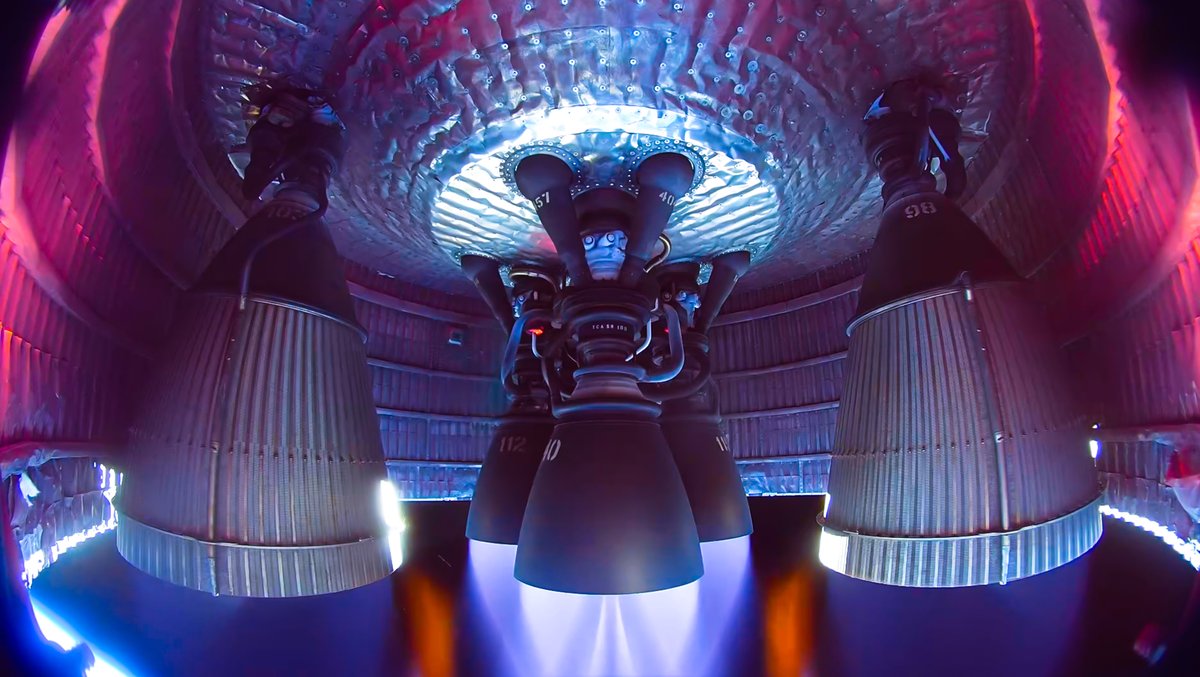
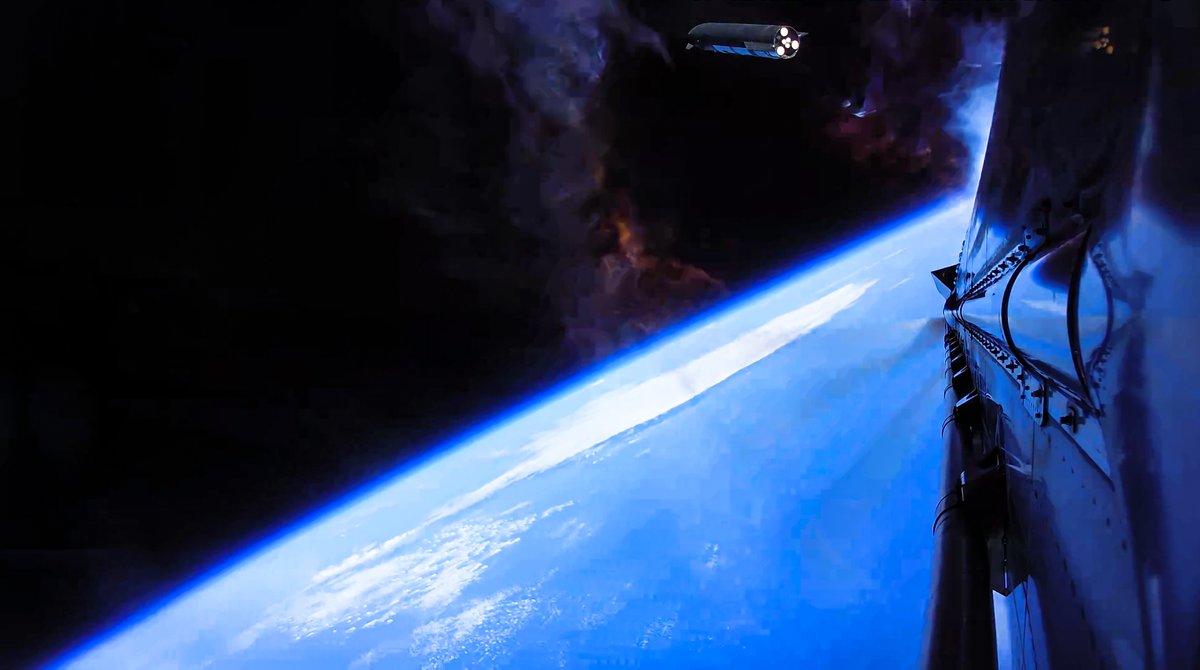
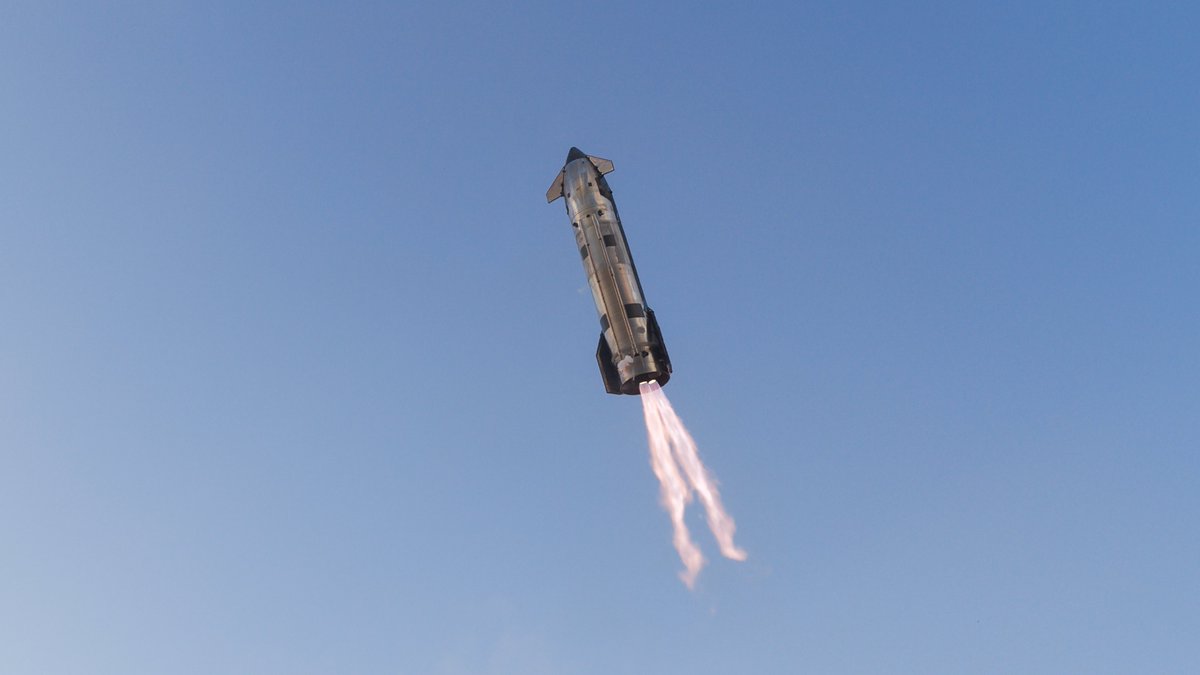
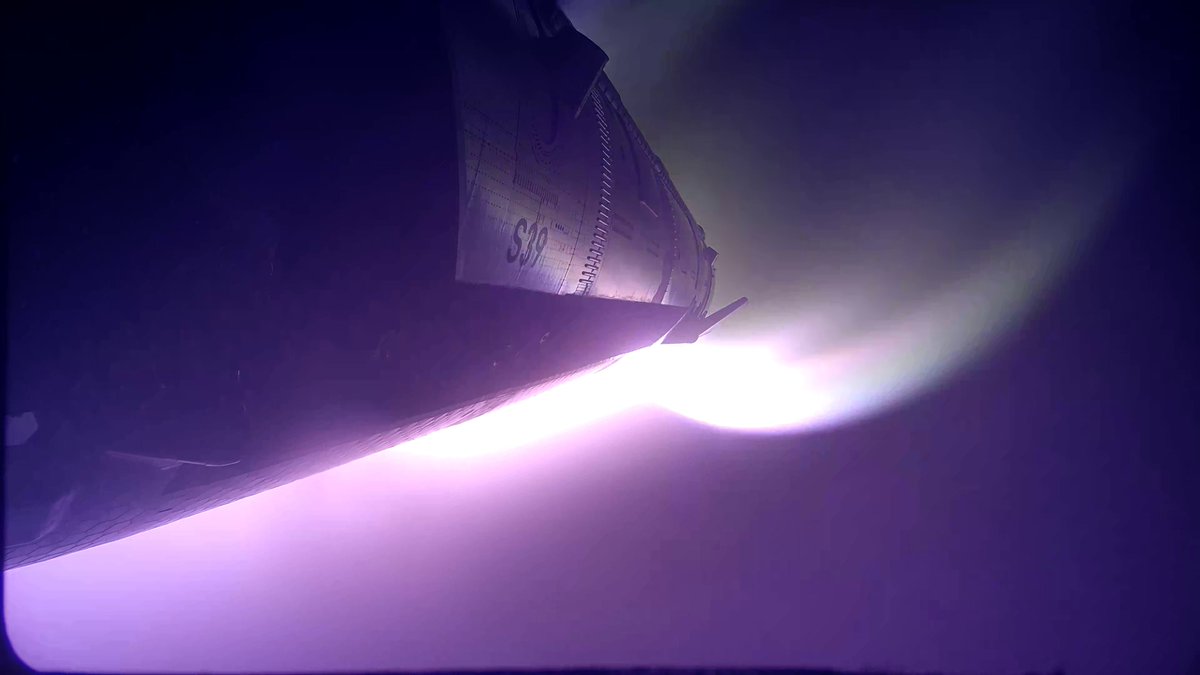
Onboard views from Starship and Super Heavy V3, which are equipped with upgraded cameras capable of streaming 4K video through every phase of flight via @Starlink