CITRINI:
“.. Given the enormous chasm between revenues and capex, the asymmetric risk is no longer to the upside, but to the downside.”
@citrini
https://t.co/DvhbGRkYV6
"The EU is working on targeted changes to its $20 trillion single market to help its domestic companies diversify #supplychains away from countries including #China"
https://t.co/jls7lVX019
A 15 percent return sounds incredible. That number is the warning, not the reward.
In Australia, a property developer borrowed billions from private credit. Some loans paid nearly 15 percent.
Ask the obvious question. Why pay 15 percent? Because the lenders already knew the risk was enormous.
Then everything turned. Rising rates, falling property prices, and floating rate debt that got heavier at the worst time.
It collapsed. Now lenders are scrambling, buyers wait on half-built apartments, and regulators are circling.
And this is Australia, not America. Same cycle, same rot, one global credit system.
Another cockroach. And regulators are wondering what else is inside the walls.
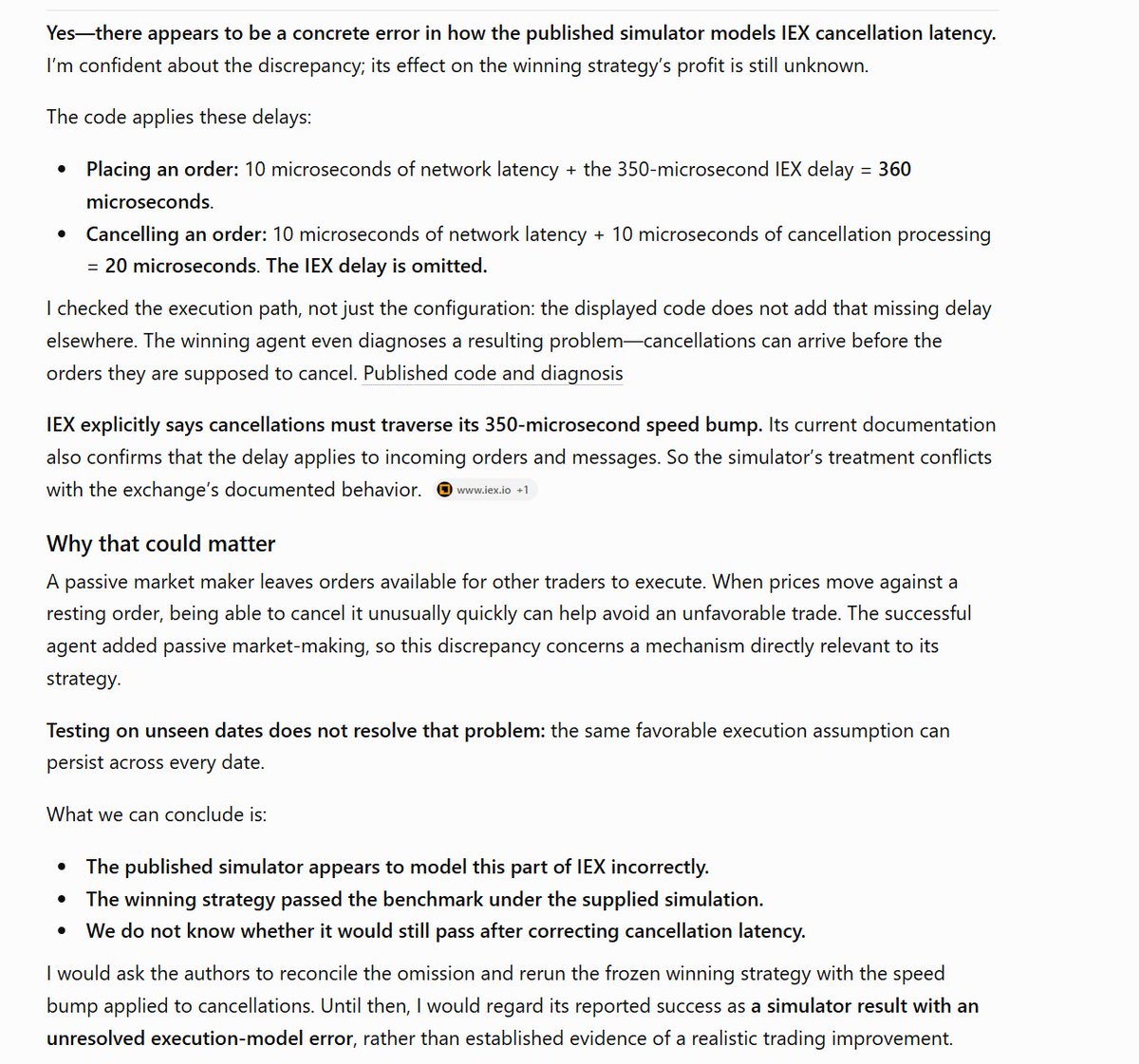
Nice to see a successor to GDPval to evaluate AI work but really needs human baselines like GDPval.
Funnily enough, GPT-6 Pro spotted some errors in the grading. I also think the 0% scores hide economically meaningful differences in success rates. But still a valuable benchmark!
This is why gold and silver have been selling off hard👇🏻
ARAMCO Oil revenues are crashing and Saudi Arabia as a whole needs $ liquidity (especially to defend its currency peg) -> scramble to dump gold and silver for $ cash.
Houthi hits on oil fields, refinery, Yanbu. All export routes broken. Rebuild will take years, not quarters.
Aramco now is even negotiating a $10B revolving credit line with banks to maintain it operational continuity
Other countries in the Middle East are experiencing the same shortage of $ liquidity because missing or oil and gas sales and capital assets outflows putting their currency pegs against the $ under pressure.
Until now the Middle East has been dumping more gold and silver than how much Chinese and other countries are buying
#Gold was in a multi-decade bear market after the 1980 peak near $850. It bottomed in late August 1999 at roughly $252–$255/oz (daily closes around $252.35–$252.75 on or near August 25–26).
Key driver of the turn: On 26 September 1999, European central banks signed the Washington Agreement on Gold (Central Bank Gold Agreement), capping sales at 400 tonnes/year. This sparked a sharp rally, with gold quickly surging above $300.
It then pulled back and retested the lows in early 2001 (around $255–$256 in early April 2001). From there the durable bull market began, overlapping the Dot-com crash (NASDAQ peaked March 2000) and the 2001 recession. Gold rose modestly through the equity bear market and then accelerated strongly in the years that followed.
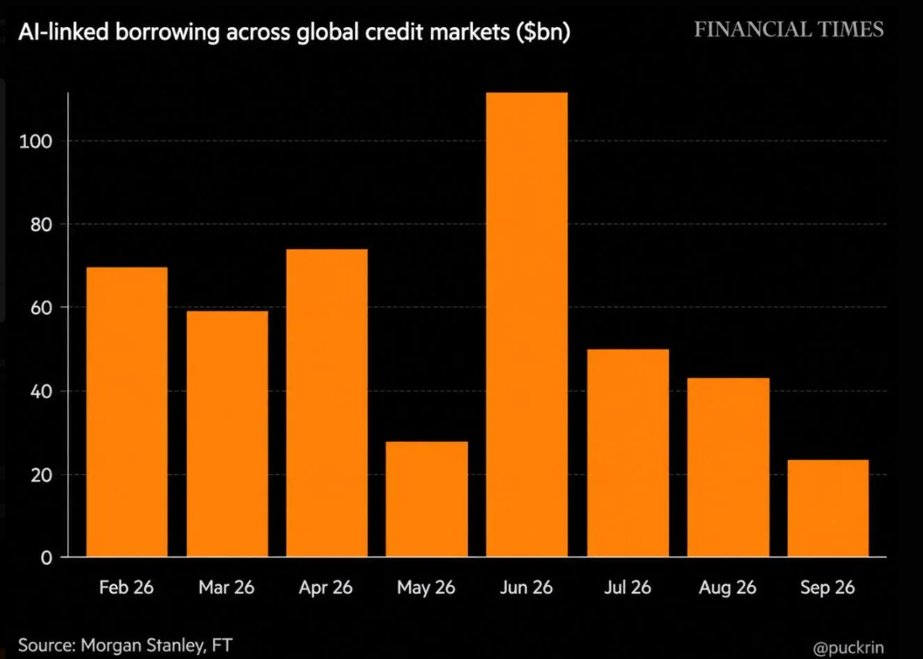
Chamath Palihapitiya says AI companies are about to crowd out the Treasury market
"The entire United States economy is levered to the AI complex"
"The AI complex now owes $340 billion to the market"
"The amount of money that they need to raise through the end of '27, it's 30% of all of what Treasury is about to issue in that same period"
Seven or eight names like $GOOGL $AMZN $META now compete with Uncle Sam for the same bond buyers, with Microsoft the exception after halving its debt
AI capex just became a bond market story
via @theallinpod, featuring @chamath
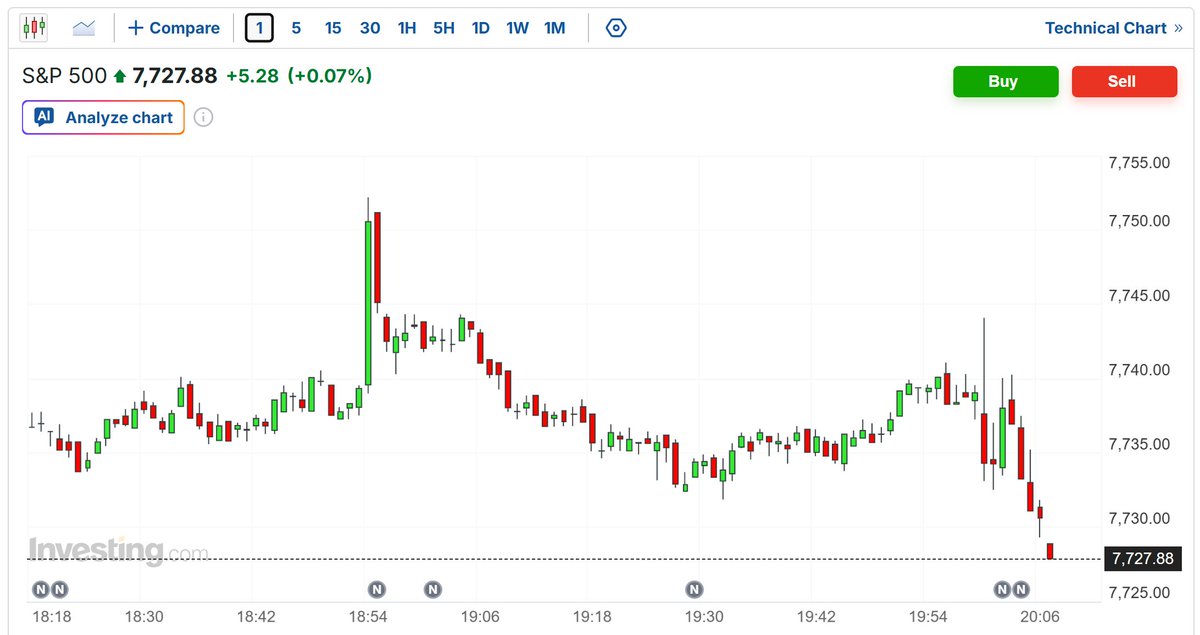
• Instant Reaction:
-Stocks Dip
-U.S. Dollar Rises
-10Y Treasury Yields Rise
-Gold Falls
• Key Takeaway: No action from the Fed today, but everyting the Fed says points in the direction of a rate hike next month.
🧵 2/2
Breaking News
The 25 Year Bond Breaches the 18% Yield Mark bringing in an 18.475% cut off yield.
Bank of Uganda accepted a total of 1.8 trillion.
Will this have a calming impact to the UGX Depreciation?
“Landlord will simply increase Rent or charge in dollars”.
Inflation started picking up in Aug 2026. 3 months in, how many of you who rent have had their rent increased or are not being charged in Dollars ?
The casino model of diversification:
AQR's Managing Director Peter Hecht
"First off, we believe in diversification. So we are a systematic fundamental manager."
"Most systematic managers have a small edge for any single security that they trade."
"Like a casino, a casino would never exist if it could only play blackjack against you, one person."
"They bring in thousands of uncorrelated blackjack customers. That's like bringing in thousands of uncorrelated trades."
"So we believe in diversification. We're militant about thinking about: are these trades correlated with each other?"
11 crore unique Farmer IDs. 🌾🪪
1 in 4 is a woman. 🙋♀️
Delivered 5 months ahead of schedule. ⏰️
How the Digital Agriculture Mission is building India’s next sovereign DPI rail: 💻
• Beating the clock: 11 crore 11-digit Kisan Pehchaan Patras issued under AgriStack, target cleared 5 months before the March 2027 deadline. Registrations surged from ~30 lakh (Dec 2024) → 7.8 crore (Dec 2025) → 11 crore now.
• Real inclusion: 26% of registered farmers are women. 81% are marginal & small holders (<5 ha). 77.5% are in the core working-age group of 30–70 years.
• Recognising the invisible: Nearly 29,000 tenant cultivators & sharecroppers formally onboarded (UP, Telangana, AP, Chhattisgarh, Assam). 3.14 lakh Forest Rights holders across six states now in the registry.
• Frictionless rail: One digital identity that cuts repetitive paperwork and directly links farmers to institutional credit, crop insurance (PMFBY), disaster relief and MSP procurement. Already delivering benefits to over 6 crore farmers.
Aadhaar + UPI architecture has now taken root in Indian agriculture.
Verifiable identity + land/tenancy = rural India as an integrated, credit-ready economic engine.
@AgriGoI@ChouhanShivraj@AshwiniVaishnaw@NITIAayog
By @1Prabhudatta
#DigitalIndia #DigitalPublicInfrastructure #AgriStack #MakeInIndia #Governance
MENAP growth is projected to contract by about 1.3% in 2026. Assuming the conflict eases and trade gradually normalizes, growth could rebound to 6.6% in 2027. The economic impact of the war has been highly uneven. https://t.co/xWFn5pP7fW
A) A SoH effectively closed for 240 days. B) War risk insurance for ships is still 30x normal, C) Saudi oil infrastructure has been hit at least 6x over the last 3 weeks - these events come with long tentacles.
So if AI capex is going to be more reliant on debt and debt costs are spiraling, won’t AI capex estimates have to come down? $NVDA $ORCL $MU
Does it take a rocket scientist to figure this out?