🌍Procedural Terrains now has its own domain!🌍
https://t.co/DhoSqgD40R
I’m also currently working on more optimizations, fixes and improvements across the project.
The Unity plugin and Blender add-on are getting updates too, with the goal of making both integrations more stable, easier to use and better maintained over time.
And another big step: the first standalone Windows build is now available! 🖥️
It’s still in active development and there’s more work to do, but you can already download the portable Windows x64 version and run Procedural Terrains directly as a desktop app.
Download v1.7.1:
https://t.co/qEv9IO0Jbm
More updates soon :D
#threejs #unity #unity3d #blender #windows #procedural #terrain #gamedev #indiedev #opensource
Poc's include Rainbow BASIC (inspired by DarkBASIC Pro & AGK) and a Unity-like editor for Three. Both work well, can produce simple physics-based games.
Also created a tiny two-player online Spacewar! clone, built on brometal and Wavedash. It needs cleanup before sharing though
Someone I follow from math twitter is getting a special shoutout when my #js13k entry is submitted.
New approach to procgen incoming; the first prototype is unreasonably effective.
🌈🦄
#math#gamedev
400+ GitHub stars ⭐
Thank you so much ❤️
What started as a small personal Three.js project has grown way beyond what I expected, and seeing more than 400 people star the repository genuinely means a lot to me.
Procedural Terrains is still moving fast too.
Recent updates include:
• a dedicated Real Terrain mode
• interactive real-world area selection
• real-world building overlays
• better water reacting to atmospheric lighting
• more realistic terrain styles and palettes
• Manual Worlds layers
• more Node tools and terrain recipes
• lots of stability and loading improvements
And there’s still a lot I want to build.
One thing I’d really like to explore next is making Procedural Terrains easier to use outside the editor itself, especially for Three.js projects and game workflows.
The project is and will remain open source.
Thank you to everyone using it, sharing it, contributing, reporting bugs or just following the journey :)
https://t.co/MJNghhxrwU
https://t.co/dEeEht7zdE
#threejs #webgl #procedural #gamedev #indiedev #opensource #creativecoding
Rainbows & Unicorns is the kind of theme I used to find frustrating. 2020's theme mostly cured me of that attitude 😂
Interestingly, I've got some fairly solid plans for at least two potential games and expect to start implementing one of them tomorrow
#js13k#gamedev#webdev
@shwetanshu21@carsonszeder@MarcosHernanz 100%
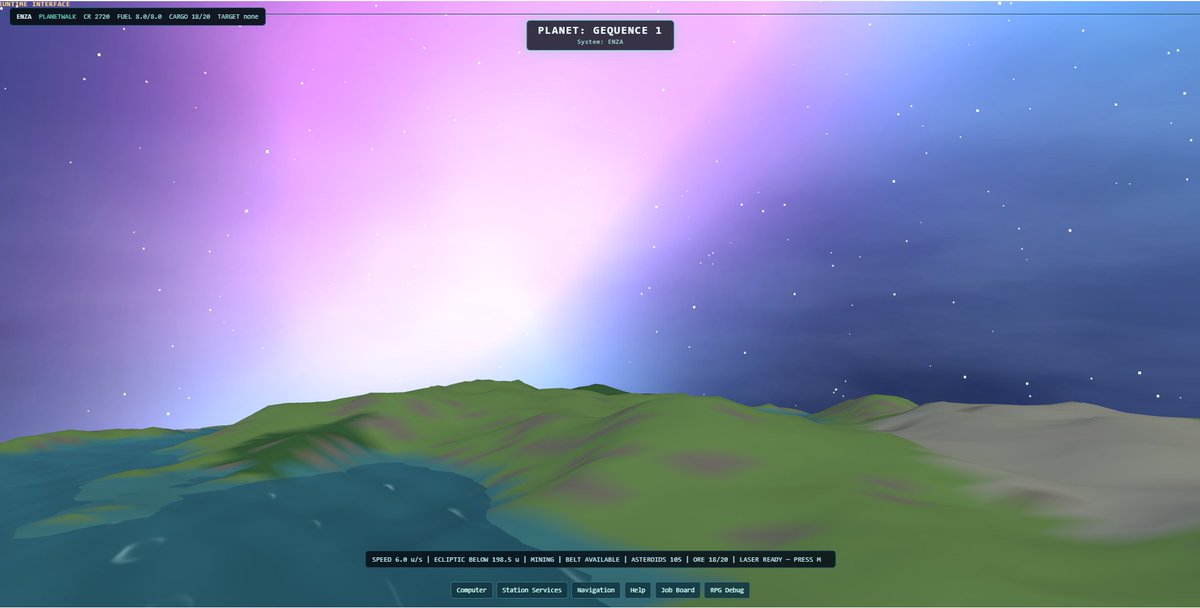
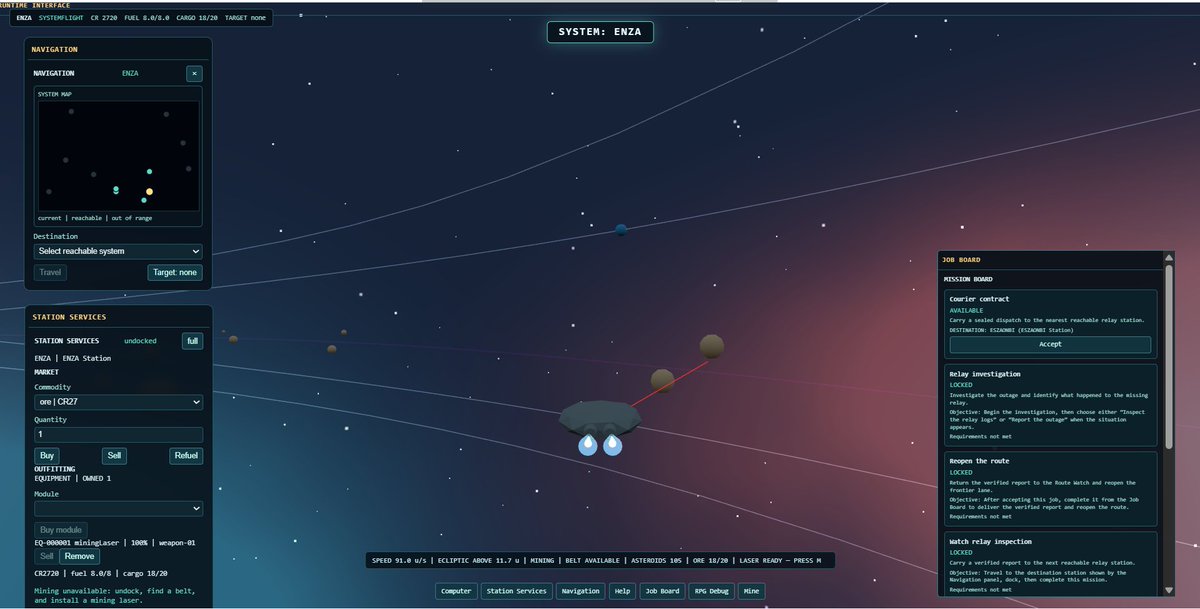
Just as all the "one-shotting" game posts starting pouring in, I shared this - built with Luna medium; if you know what you're about and tell luna not to use subagents (which easily get confused), it's incredibly cost effective. The tradeoff is time https://t.co/alZB0Tvknf
@osadavc@WilsonTimo40021@threejs I've got this lined-up for testing with an agent; lots on the go though, so not sure when I'll actually get to it. https://t.co/Ob57onCwzq
@zy_fou Not a lot; I had Luna pull out only crticial items needed to reproduce PT's view modes - a couple of noise algos, some biome references and engine arch details.
As much as I wanted to continue on compatibility, I thought a showcase might be useful and took a bit of a detour.