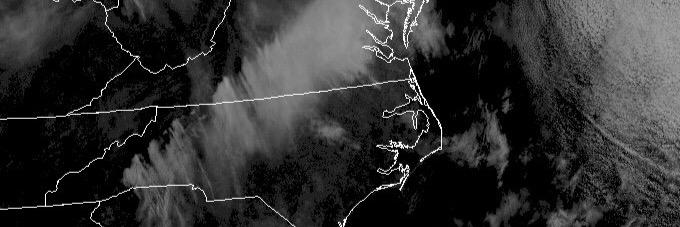
The AWC has officially added mountain wave turbulence to its turbulence product suite!
Following the April 30 launch, the first GAIRMET with the mountain wave tag was issued on May 4. This enhancement provides pilots & dispatchers with more precise data for safer flight planning.
Heads up: upgrade for https://t.co/F9eMGR93dw scheduled for next week includes changes to the altitude & time sliders plus several new features. Video summary: https://t.co/QR4HVUdlvl. Full list of changes: https://t.co/jCXK4QvrN7 #avgeeks#aviation
Liftoff.
The Artemis II mission launched from @NASAKennedy at 6:35pm ET (2235 UTC), propelling four astronauts on a journey around the Moon.
Artemis II will pave the way for future Moon landings, as well as the next giant leap — astronauts on Mars.
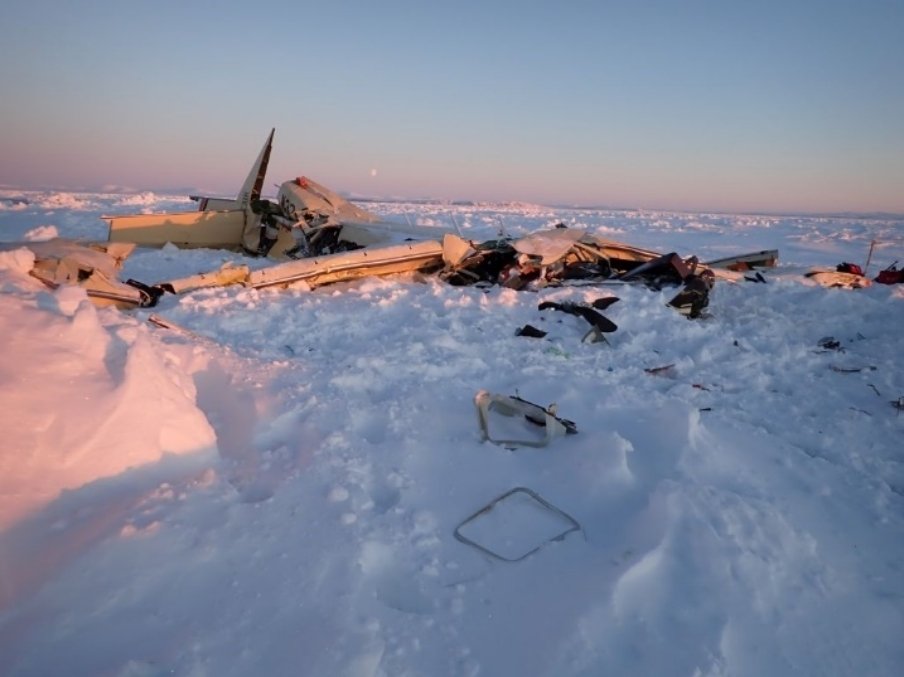
NTSB opens public docket for its ongoing investigation of the Feb. 2025 crash of a Bering Air Cessna 208B airplane near Nome, Alaska. Docket contains factual information only; analysis, probable cause & contributing factors will be determined at the conclusion of the investigation. Docket: https://t.co/tY0FOhCe0s
Investigation page: https://t.co/ogjUvesOM9
NEW INTERNATIONAL FLIGHT ☘️ We’re turning green with excitement today! @AerLingus is taking RDU travelers nonstop to @DublinAirport (DUB) starting April 13, 2026!
Flights to Ireland will operate five times weekly aboard an Airbus A321 XLR. Tickets are on sale now.
@wxrjm We used this while over there just 2 weeks ago… scroll backward for “observations”… the forecast doesn’t work too great… but can at least interpolate using observations some..
https://t.co/AFke7vDTBW
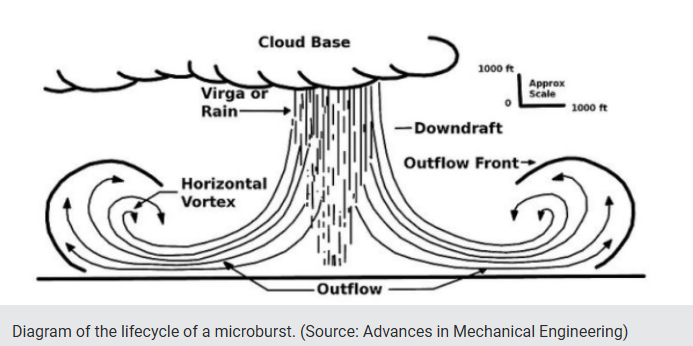
NTSB issues two new safety recommendations to the FAA to improve wind detection capabilities at Salt Lake City International Airport and other Part 139 airports: https://t.co/WeiElcLIAu
We need to explore the claim that "Three once-in-a-lifetime flooding events this last week" is exceptional. I would argue that it's not.
Annual Recurrence Intervals (ARIs) for flooding are *badly* misunderstood. I'm seeing many headlines about multiple 1-in-1000 year events, without an understanding of what that statistically means.
Hopefully this can help clarify:
ARI's are probabilistic, and location dependent. They can be calculated for individual water gauge stations, or individual grid cells on a map.
For example:
- A 1-in-100 year event means that there's a 1% chance of a flood to that level every year, at that exact location.
- A 1-in-1000 year event means that there's a 0.1% chance of a flood to that level every year, at that exact location.
These ARIs do NOT represent the flood probabilities of a region or the whole country. It is ONLY for the exact gauge station or grid cell.
Take North Carolina and the flooding at Chapel Hill last week. Some grid cells per NWS MMRS exceeded the 1-in-1000 ARI for rainfall totals in 24hrs. This means that *for that city block* in Chapel Hill, that much rainfall only had a 0.1% chance of occurring that year. This does NOT mean that the whole state of North Carolina has a 0.1% chance of that rainfall amount. If you look at a broad region, the %s are much, much higher.
Let's look at the larger regions.
There are approximately 11,000 water level gauge stations in the United States. Because there are so many, there's actually a 99.99833% chance* that at least one station will reach the 1-1000 ARI somewhere in the country in a year. Broken down further into weeks, there's a 19.07% chance* that somewhere in the country will reach the 1-1000 ARI in a given week.
*assuming independent operation, and no seasonality.
To summarize: there is a 20% chance that *somewhere* in the country will see a 1-in-1000 event in any given week.
If you apply the same math to the ~500 gauges in North Carolina, there's ~40% chance that somewhere in the state will see a 1-in-1000 event in any given year.
These are EXTREMELY approximate calculations. In real statistical assessments, variables of station relationships (non-independent gauges along the same river systems) and seasonality (summer is warmer and rainier) need to be added. My point is simply this: 1-in-1000 year events across the country are MUCH MORE LIKELY than once every thousand years. It is STATISTICALLY LIKELY to have a number of them in a year, or even a week in the summer.
Very basic math via the local AI is attached below so you can check my work. Again, I'm not trying to make any concrete scientific claims here, or point out exact regional probabilities. I just want to help people understand that, while unfortunate, three 1-in-1000 year events in a week is not as extreme as it may seem.
Teenage boys are going absolutely nuts in movie theaters during the new Minecraft Movie, throwing popcorn in the air and even bringing live chickens into the theater.
This is the film crushing Snow White at the box office right now.
The fans go nuts when Jack Black's character yells "Chicken Jockey," which is a rare baby zombie that rides on the back of a chicken in Minecraft.
"It’s way too funny. It’s been a total blast. I’m just laughing my brains out every time someone sends me a new video," said director Jared Hess.
The Minecraft Movie is the biggest opening of 2025 so far, crushing Snow White.
It made $301 million globally in the opening weekend compared to Snow White's opening weekend of $86.1 million.
The final technical report on Hurricane #Helen has been released by NOAA. If you'd like to read the report the link is right here. https://t.co/jYwdXpMCPL
NHC has released preliminary highlights of our forecast performance in the Atlantic basin for 2024's tropical cyclones. We are still in the process of finalizing analyses of the storms, and the full verification report will be available later this spring.
https://t.co/PJaD76r0WE
NTSB to hold a media briefing at 2:45 p.m. ET today on its investigation into yesterday’s mid-air collision involving a PSA Airlines Bombardier CRJ700 airplane and a Sikorsky H-60 military helicopter near Ronald Reagan Washington National Airport. Briefing will be held at the historic lobby in Terminal 1 at DCA.