Holding in emotions is often treated as a personality trait, but a long-term study suggests it may also belong in the broader conversation about health and longevity.
Researchers analyzed a nationally representative U.S. sample and followed participants for 12 years to see whether emotional suppression was associated with mortality risk. Emotional suppression, in this case, refers to the tendency to hold back emotional expression rather than openly process or communicate what someone is feeling.
The results were notable. Higher emotional suppression scores were linked to a 35% higher risk of death from any cause during the follow-up period. The association was even stronger for cancer-related mortality, where higher suppression was linked to a 70% higher risk.
That does not mean suppressing emotions directly causes disease, and it does not mean every person who keeps things inside is facing the same risk. But the study does suggest that emotional patterns may interact with the body in ways that deserve more attention.
The researchers pointed to several possible explanations, including unhealthy coping behaviors, increased stress reactivity, blood pressure changes, and neuroendocrine dysregulation. In plain terms, chronic emotional suppression may keep the body under pressure while making it harder to release stress in healthy ways.
Longevity is usually framed around sleep, diet, exercise, biomarkers, supplements, and metabolic health. Those all matter. But this research adds another layer: the way people handle grief, anger, fear, resentment, and stress may also shape long-term health over time.
Taking care of the body may also mean taking seriously what the mind has been carrying.
Source: Chapman et al., Journal of Psychosomatic Research, 2013.
Breaking News: Oklahoma Governor Kevin Stitt signed the Oklahoma Breakthrough Therapy Act into law today, paving the way for the Oklahoma Department of Public Health to fast-track ibogaine clinical trials with private biotech partners.
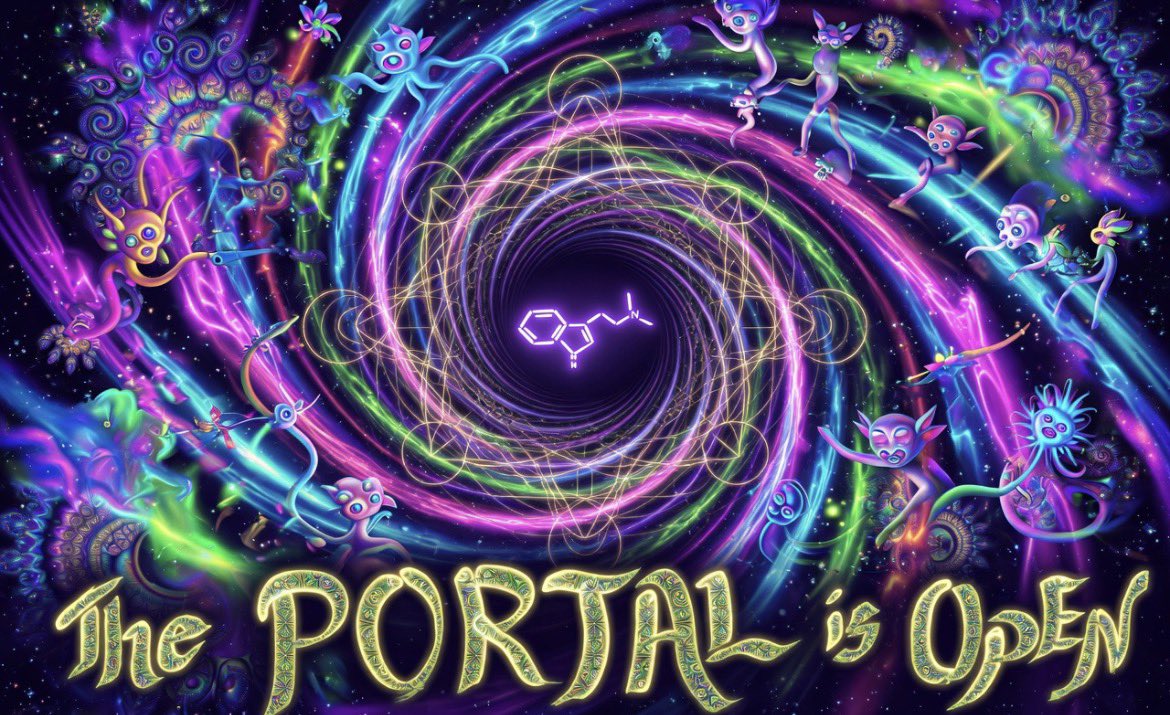
Terence Meets the Machine Elves: A visual replication of the DMT breakthrough experience generated through a bespoke generative media pipeline.
built in collaboration with: @noonautics & @alieninsect
👁️
At over 70 experiences now, we are seeing patterns in dose response and journey trajectories, however each is overwhelmingly unique. We are so excited to be booking into the fall as we approach triple digits. There is always a learning curve as we dial this in and discover how DMTx entry works with individual metabolism and mindset. We are excited to work with researchers and explorers who are exploring consciousness in novel ways. Collaboration has become and will continue to be a key element of how our space promotes connectivity and exploration. We have exciting things coming up! And we can’t share as events unfold😀 but we still have some availability in the fall to share our ceremonial space for personal exploration!
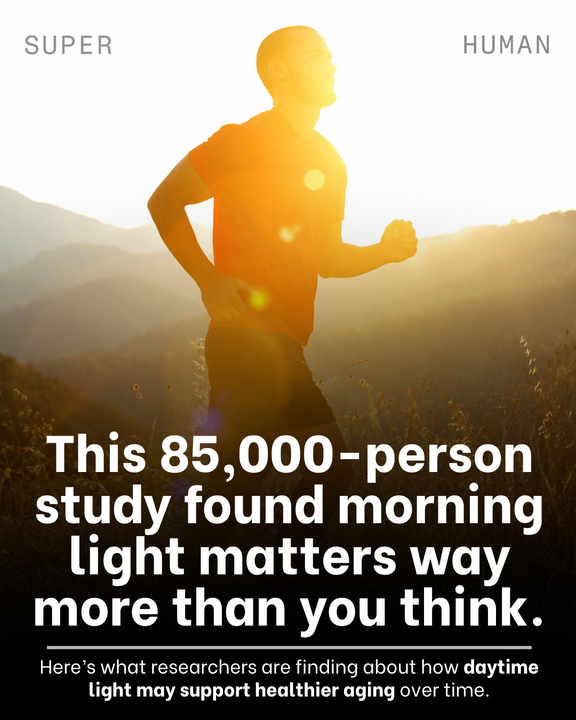
An 85,000-person study found your daily light rhythm may be tied to long-term brain health.
Researchers led by Monash University analyzed light exposure, sleep, physical activity, and mental health data from more than 85,000 adults. They found that people exposed to more daytime light had lower risk for several psychiatric disorders, while people exposed to more nighttime light showed higher risk.
That matters because light is one of the main signals your brain uses to set your internal clock. Morning and daytime light help tell the body when to be alert, when to release certain hormones, and when to prepare for sleep later. Nighttime light can blur that signal, especially when the brain is expecting darkness.
For longevity, this points to something bigger than mood. Circadian rhythm influences sleep quality, metabolism, stress resilience, recovery, and how well the body coordinates itself across the day. When that rhythm is disrupted over time, the body may have a harder time repairing, regulating energy, and maintaining stability.
The takeaway is clear: your body may age better when light and darkness arrive at the right times. Get outside earlier in the day, seek more natural light when the sun is up, and reduce bright light at night when the body is supposed to wind down.
Source: Burns et al., Nature Mental Health 2023
Psilocybin may be pushing scientists to ask a different question: what if OCD is less about fear, and more about the brain’s addiction to certainty?https://t.co/mHqRUHAMCj
So many people have experienced the feeling of being “changed forever” after a psychedelic trip.
This study may be the closest science has come to showing what that change may actually look like in the brain. https://t.co/NpqEqoWugP
@dream_mindlabs Agree - Interestingly enough, I had a convo with Dr. Carhart-Harris recently and he talked about exactly that - how the experience is very real even without measurement. I could've done a better job wording it.
(I wrote you back not too long ago - let's definitely connect)
Oklahoma just advanced a bill that could put state money behind clinical trials for a treatment being studied for substance use disorders, PTSD, and traumatic brain injury.
The bill is called the Oklahoma Breakthrough Therapy Act.
It would allow the state health department to work with drug developers on monitored clinical trials, with medical screening, safety protocols, and a pathway aimed at FDA approval.
Supporters argue this could help move treatment out of expensive, unregulated settings abroad and into controlled medical research environments.
It also fits into a much bigger 2026 trend.
Mississippi and Kentucky enacted research laws. Tennessee passed its HOPE Treatment Act through the legislature. West Virginia passed a similar trial bill before it was vetoed.
Now Oklahoma has passed the House and Senate, and the bill heads to Governor Kevin Stitt’s desk.
The bigger story is that state lawmakers helped move this conversation from the margins into the medical-policy arena.
Now, with federal momentum growing too, the question is whether this treatment can be studied seriously, safely, and legally inside the medical system.
Very big paper dropping this Tuesday… watch this space… tell your gran… tell your neighbours… “Human brain changes after first psychedelic use” - Nature Communications…
New research found TBI survivors are turning to psychedelics to manage symptoms like mood, cognition, and headaches... and many report real relief. https://t.co/dmEH1gchm3
A breakthrough pill could soon extend your dog’s lifespan by years.
Scientists are getting closer to something that once felt impossible: targeting aging itself.
A biotech company has developed a daily prescription pill designed to extend the healthy lifespan of older dogs, and it has already cleared two major FDA review steps. At the same time, a separate nationwide trial is testing another drug that may slow aging through a completely different pathway.
The leading approach focuses on a hormone called IGF-1, which plays a major role in growth, metabolism, and how quickly the body ages. Higher levels help drive rapid growth early in life, but they are also linked to faster aging and increased risk of age-related decline later on.
Instead of treating disease after it shows up, this pill is designed to slow that process at its source by mimicking the effects of calorie restriction, a method that has been shown to extend lifespan across multiple species.
Early safety data looks strong, even at higher doses over longer periods. If everything stays on track, the treatment could begin reaching veterinarians as early as 2026, with full approval expected later once long-term data is complete.
What makes this especially important is how quickly meaningful results can be observed. Dogs age much faster than humans, which allows researchers to study aging in real time instead of waiting decades.
Because dogs share our environment and develop many of the same diseases, this research could help shape the future of longevity science far beyond pets.
Study: Loyal STAY Trial + FDA CVM filings (2025–2026)
Bryan Johnson approached 5-MeO-DMT as part of a structured longevity experiment, applying the same system he uses for every intervention.
His goal has always been simple: identify what creates the biggest impact on human health and performance.
His framework looks like this:
• Start with fundamentals like sleep, nutrition, and exercise
• Layer in advanced protocols like sauna and hyperbaric oxygen
• Test high-impact variables that could shift the system
5-MeO entered that system once he saw a gap. It had been explored in other areas, but rarely through a longevity lens, making it worth testing.
He treated it as a high-impact variable, asking whether it could create a deeper reset than traditional protocols. What he reported was a full-system shift that stood above his daily optimization stack.
That result led to new questions:
• How long do the effects last?
• Does the benefit fade over time?
• Where does this fit in a long-term protocol?
For Johnson, the takeaway is clear. Longevity may involve more than steady optimization, with certain interventions capable of rapidly shifting the system in ways traditional methods do not.
Source: All In Podcast