What’s that one thing you have always wanted to understand about money, but never really asked?
It could be anything, investing, saving, property, debt, side income, or just how to manage your finances better.
Drop your questions below. Over the next few days, I will go through them and share answers, or bring in people who actually know what they are talking about to give proper insights.
Feel free to share this too. The goal is to make money more conversational, more open, and actually useful.
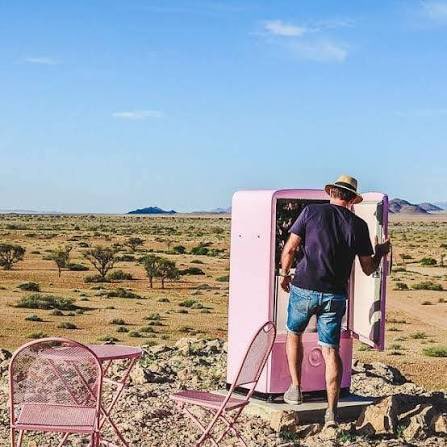
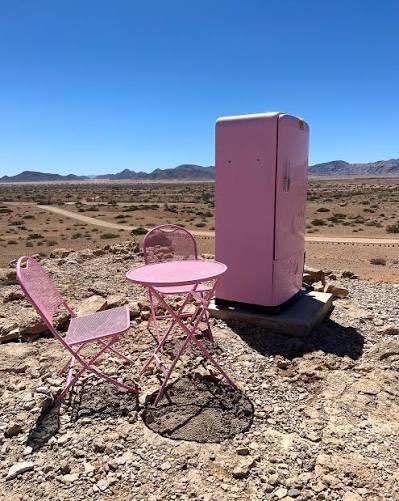
While Nigeria is struggling with electricity, There is a working pink fridge in the middle of the Namib Desert, and it’s stocked with cold drinks for passing tourists. Namibia is not your mates please 🇳🇦
Cricket Namibia have quietly built one of the smartest cricket infrastructures in the Associate world.
Two international grounds, HP Oval and Namibia Cricket Ground, right next to each other.
Currently hosting U19 CWC games and set to host next year’s CWC.
All built with roughly $4M.
Peak governance and Serious intent to grow the game. @CricketNamibia1 👏
Many South Africans believe that “The Law” is made by Parliament—that the people they vote into office are the ultimate lawmakers in a democratic Republic. This is not true.
Yes, Parliament passes laws, the executive signs them, and various institutions give them effect. But “The Law”—the jurisprudential system that governs us—is not under democratic control.
South Africa is a judicial supremacy, a constitutional order where unelected judges have the final say on the laws of the land. This is not rule of law; it is rule by judges. And we should name it for what it is: a judicial dictatorship.
South Africa follows a hybrid common law system, deeply influenced by British traditions. In such systems, case law—not statute—forms the foundation of legal interpretation. Because the courts set legal precedent and interpret the law, they don’t merely “apply” it; they shape, define, and create it.
In South Africa’s context, this role of the judiciary is compounded by the fact that the Constitution is the supreme law, and the Constitutional Court is its priesthood. Parliament may pass legislation, but the judiciary decides whether that legislation lives or dies.
Let’s imagine a majority of voters support a political party that promises to amend the Constitution, say, the property clause in Section 25, in order to redress apartheid-era dispossession. They win two-thirds of the seats in Parliament and push through the amendment through legal and constitutional channels. Everything has followed the will of the people.
But then, a well-resourced interest group that stands to lose property or power challenges the amendment in court. And here’s the kicker: the Constitutional Court may strike down a constitutional amendment—yes, an amendment to the very Constitution it claims to be upholding by declaring it “unconstitutional.”
This is not a hypothetical danger; it is a real one. That’s how a handful of unelected judges can override the will of millions of voters. This is called a “constitutional democracy.” But what does that term really mean?
In an interview, Advocate Muzi Sikhakhane offers a powerful critique of this very phrase. He argues that it’s no accident “constitutional” comes before “democracy.” The adjective modifies the noun, meaning it’s not a democracy in the full sense, but a specific type, a constrained one.
“There’s a reason,” he notes, “why the system is not called ‘democratic constitutionalism.’” According to Adv Sikhakhane, this is because so-called “constitutional democracies” are structured around a deep mistrust of majorities. They are designed to restrict the power of democratically elected governments, limiting what the majority can do, even when acting through legal means.
In his words, “constitutional democracy distrusts majorities.”
But if the terms were reversed to “democratic constitutionalism”, then the priority would be different: democracy would come first, and the Constitution would follow as its expression.
In democratic constitutionalism, “You first accept that the majority is an important component for protection,” Adv Sikhakhane contends. Crucially, he links this formulation to the racial history of postcolonial societies like ours.
“Liberal democracies use ‘constitutional democracy’ because they are not trusting of Black majorities that emerge from the colonial political setup,” he argues. In other words, constitutional supremacy serves as a tool to manage and neutralise the democratic aspirations of the formerly colonised.
This is not unique to South Africa. In Kenya, Zambia and Ghana, attempts to undertake radical land reform or nationalise key industries were routinely shot down by courts citing “constitutional violations”—often under pressure from donor countries or foreign investors.
Courts in these contexts did not stand as shields for the poor, but as guards for elite property rights.
To this end, South Africans are taught to worship this domination by the judiciary as sacred. The media, legal elite and academic class warn us never to “attack the judiciary” or cause a “constitutional crisis.” Criticism of judicial overreach is treated as heresy, especially coming from African political voices.
The public has been indoctrinated to believe that politicians, particularly Black ones, are inherently corrupt, while judges are incorruptible sages beyond political influence.
This is obviously a myth. Judges are not angels. They are people, and they operate within political and class contexts. To imagine they are immune to bias, ideology, or pressure is wilful naiveté.
Let’s take a concrete example. In 2017, under Public Protector Thuli Madonsela, the North Gauteng High Court affirmed that her office had the power to direct other organs of state:
“There is nothing in neither the Public Protector Act nor the Ethics Act that prohibits the Public Protector from instructing another organ of state to conduct a further investigation...” —Judge President Dunstan Mlambo.
In 2020, under Public Protector Busisiwe Mkhwebane, the same court—led again by Judge Mlambo, ruled that: “The Public Protector Act and the NPA Act are clear that she has no power to direct the NDPP to investigate any criminal offence...”
What changed? The law? No. What changed was the Public Protector—from one admired by elites to one relentlessly discredited. So, too, did the court’s tone and conclusions shift. Consistency, it seems, is optional—and legal “reasoning” bends toward political convenience.
Legal apologists will throw sand in our eyes with some Latin, toss around “stare decisis” and hide contradictions behind academic jargon. But the plain truth is clear: judges are not neutral, and the law is not a fixed object—it is a battleground.
So what is the alternative? Parliamentary supremacy.
In a real democracy, elected representatives, not courts, must have the final say. The people must be sovereign, not judges cloaked in legalism.
This does not mean abandoning protections for the vulnerable. But we must distinguish between oppressed minorities (racial, gendered, sexual) who need protections, and elite minorities (Apartheid beneficiaries, corporations, landed interests) who need limits.
Failing to make that distinction allows the privileged to mask their advantages as rights, and courts to act as guardians of inequality.
Elite minorities, cite a concept they call the “tyranny of the majority” to justify why those who could not win elections are somehow a vulnerable minority needing protection.
Except, this American language of minority protection was originally designed to shield elites from redistribution by suppressing majority rule. (See James Madison, in Federalist No. 10).
The US Constitution itself along with its South African counterpart were crafted as counter-majoritarian documents, intended to protect wealth and privilege rather than foster democracy.
As political theorist Sheldon Wolin argued, modern democracies risk becoming “inverted totalitarianisms”—systems where elite minorities dominate marginalised majorities under the disguise of democratic procedure.
This is what is happening in South Africa. The courts are (ab)used to uphold property rights, shielding private interests and disciplining populist challenges to privilege.
The concept of “minority rights” is frequently hijacked to defend the interests of the privileged few, while majority demands are dismissed as populism or mob rule.
Furthermore, South Africa has elevated the judiciary into a priestly caste, above criticism, above democracy, above accountability. This is not a safeguard. This is authoritarianism in legal robes.
As Adv Muzi Sikhakhane’s critique reveals, “constitutional democracy” is not a neutral or innocent term—it is a legal-political mechanism built to protect certain interests against democratic transformation. It is designed to secure stability for the few, not justice for the many.
Unfortunately, the current system has made Parliament a mascot. Ministers continue to pose, MPs pretend to debate, but the real power lies with unelected judges who cannot be voted out and who face no meaningful public scrutiny.
Until the people confront this imbalance and reclaim democratic sovereignty, South Africa will remain a democracy in name only—a Republic ruled not by its people but by its robes.
To claim true democratic sovereignty, South Africans must reject judicial supremacy not in favour of chaos, but in favour of accountable people-driven government, one where no institution, not even the judiciary, stands above the people.
I don’t know who needs to hear this but talk to your younger siblings from VTSs looking for internship.
1. They must drop the entitlement,companies don’t need them. They need the companies.
2. There are hardly “internship positions”. There is no such a thing in MSMEs.
Lots of people chuckling but nobody suggesting an answer, at least in language that normies can understand.
US government doesn't really print money, because printing money is irresponsible. If US government just printed money, it would go straight to inflation, and not 5% but more like 50% or even 500% or even 5000% per year. They wouldn't be able to do it for a very long time.
So what does US government do? It sells bonds (debt). It borrows money. That debt is bought by other countries or by Americans who have extra money. Why do they buy US government debt? Because it is safe and gives interest. It's like putting the money in a a bank or CD only better. Mainly because it is safe. Who would you rather lend money to, US or Serbia?
Take China: China gets a lot of dollars from the US for its exports to the US. Some of it is used to buy American products, but, as we know, China exports more to the US than it imports. So it has extra dollars. What is it going to do with those dollars? It buys US debt, because it gets some interest on it then. Otherwise it would just sit in the bank doing nothing.
So far so good.
But what happens if there are not enough buyers for US government debt AS HAS BEEN HAPPENING REGULARLY SINCE 2008.
Does the US government say "oh shucks, I guess we'll just have to spend less?" Of course not.
Enter the Federal Reserve, or the US Central Bank. They just buy up whatever debt nobody else wants. Where does the Federal Reserve gets the money to buy that debt? They don't. They print it.
You see, it is not the US government that prints money, it is the Federal Reserve that prints money. And they are not part of the US government. Who are they? They are a private bank. What? Yes. Wait. That doesn't make any sense.
Well, that's why this guy is confused.
So what if the Federal Reserve goes bankrupt? Why would they go bankrupt? They can just print money forever.
So this is all one giant scam? Yeah, the biggest scam of all scams. So why do people participate in this scam? Like China? Well, China kind of does the same thing. For one, two China benefits from it. Americans buy lots of stuff from China, that's jobs. But what does China do with the dollars they are just pieces of paper? It goes and buys a gold mine in Serbia with the dollars. Why would Serbia give China a GOLD MINE in exchange for some dollars? Because Serbia can use dollars to buy oil from Saudi Arabia. So what does Saudi Arabia do with the dollars?! It buys US debt, silly.
It's a Ponzi Scheme!
Ok, lots of people will tell you this story, but they will forget to mention one important thing: there are several billion humans going to work every day working for 8 hours or so. Working. Creating value (products and services). And so total value of everything in the world is increasing every day. There are new buildings and roads and chairs and cars and noodles and milk and YouTube videos and mobile phones and computers and people are able to get back to work because someone has cured them from a disease.
This is why it's not really a Ponzi Scheme. Money is circulating and new money is constantly being added, but real value and assets are also constantly being added. There is real input to the scheme, human labor. Just think, there is more STUFF in the world today than 100 years ago. That's why there are also more dollars in the world.
So what is the problem then? The problem is that the world economy, specifically the US economy, is borrowing more than it is going to able to pay back and that it is producing. If you want to borrow money, you have to prove you can pay it back. Some people can borrow more, some less. Elon Musk can borrow more money than me. US can borrow more money than Serbia. But can Elon Musk borrow 10 trillion dollars? No, not even Elon Musk can borrow that much money because he will never make that much money in his entire life, but he can borrow maybe 30 billion dollars.
US is borrowing more than it will be able to pay back and even more than there is extra dollars out there to buy what it demands (that's why Federal Reserve has to "buy" it: print money).
The problem is that printing money (by US government via the Federal Reserve) leads to inflation. High inflation = high interest rates. High interest rates depress economy => producing less => fewer taxes collected => more money printed => higher inflation. It's a downward spiral. Is US government then at least SPENDING less? Oh no, they are increasing spending. The worse it gets, the more money US is spending.
How does this end? It ends in hyperinflation and collapse of the dollar. Nobody will want to buy US debt anymore because US is irresponsible. The trust will be lost. Hell, better to buy Serbia's debt than US debt at that point, or even better China's or Russia's.
So why doesn't the US just stop spending so much? Like all these wars at least. Why doesn't a drug addict just stop taking drugs, don't they see they are destroying their health and will probably one day die of it? It's an addiction. And feeling of entitlement. When you are rich and on top of the world for so long, you cannot just one day say, oh well, I guess I have to tighten my belt a bit and live more modestly. Who me? Elon Musk? Now have to give up my private plane and fly commercial, economy class?
@mvenaani 1. How will govt ensure the country grately benefit from the recently discovered oil and gas resources?
2. How are we fairing when it come to securing our own energy needs?
3. How successful have govt efforts to promote entrepreneurship been and how can they improve?
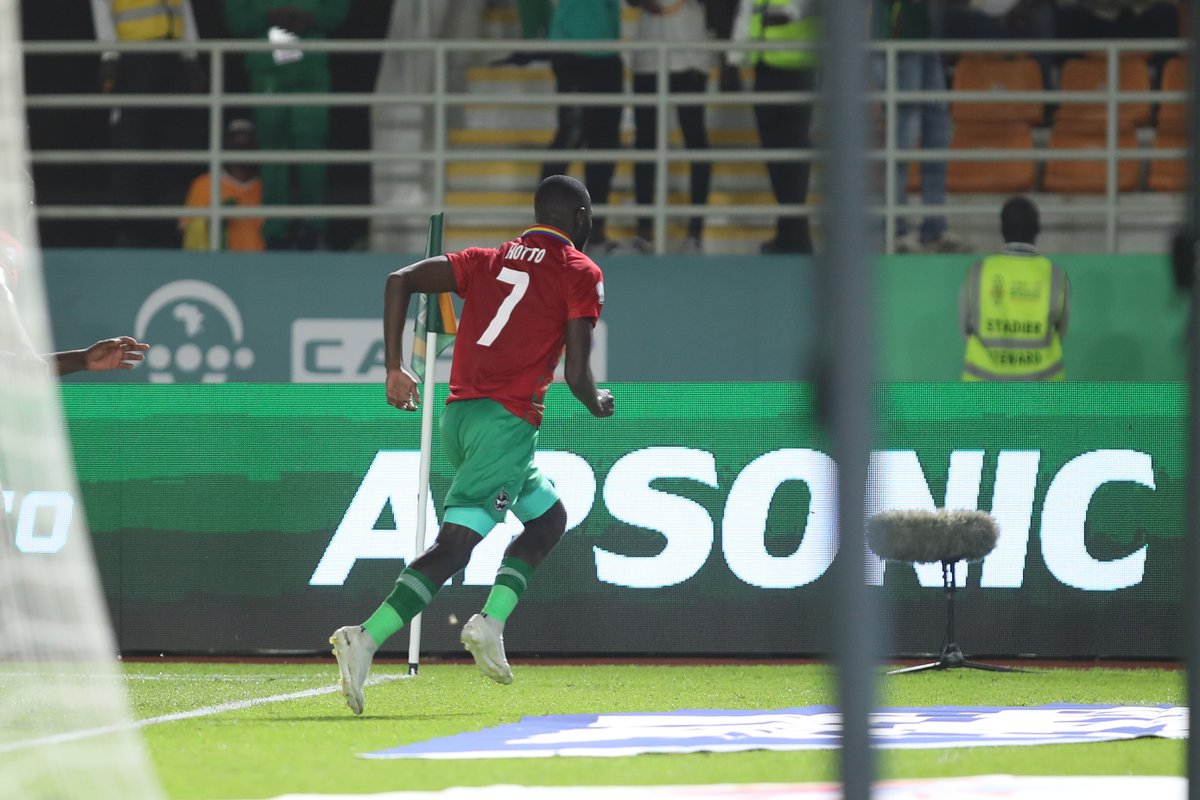
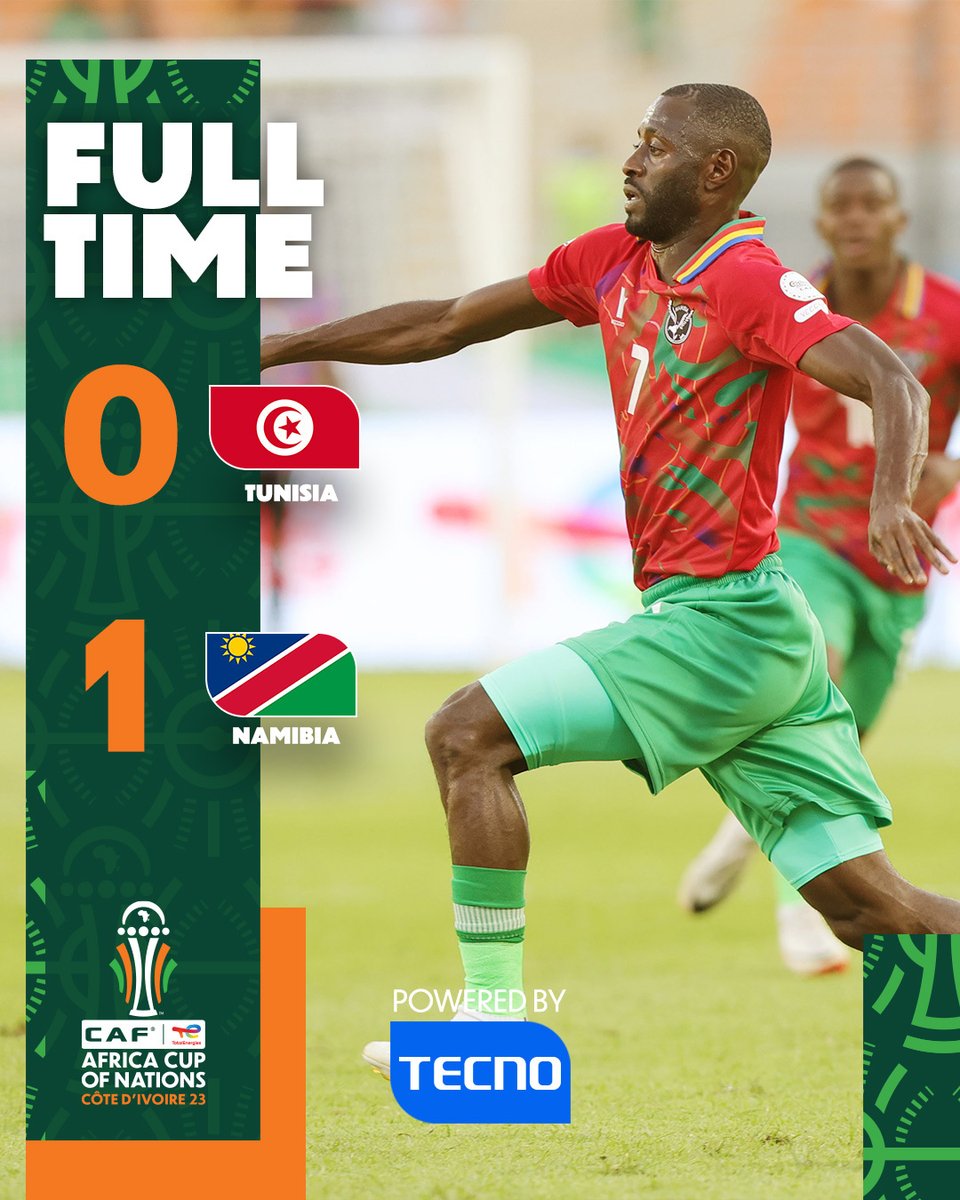
Join us again for the Namibia vs Mali afcon game tomorow at the City of Windhoek Parking on Independence Avenue and enjoy the game on the big screen in the open air. The DJ will get you in the mood with the hottest music from 17:00 while waiting for the game to kick off at 19h00.
Namibia are the least-talked about of all 20 teams about to play in the Rugby World Cup. Yet few have so proud a history, ready to be wielded against Italy on Saturday. So who are Namibia, which players should we look out for, and why are they so exciting?
https://t.co/UT3GJphTzQ
Some criticizes me for not talking about the negative aspect of China, thus invalidating all my opinions.
Well, there are numerous aspects I would like my country to improve upon
🧵
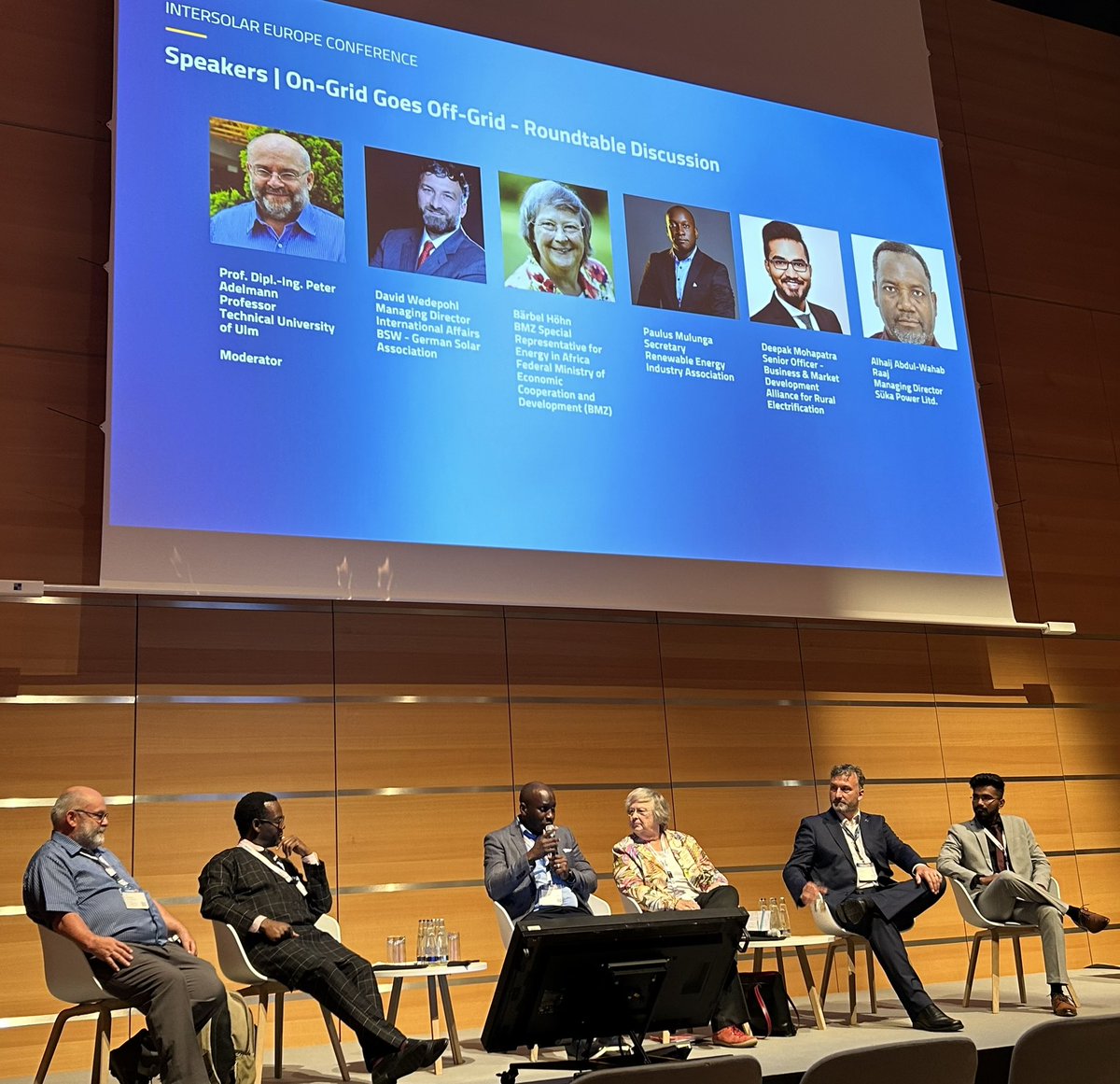
Today, we are at the Intersolar Europe Trade Fair, which is the world's leading exhibition and conference for solar technology taking place place at the International Congress Center (ICM) in Munich, Germany.
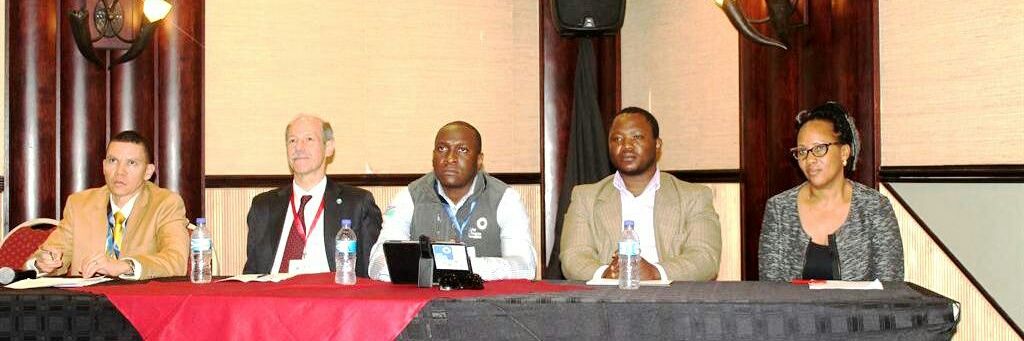
Mr. P. Mulunga, Secretary & member of the Supervisory Board of the Namibian Renewable Energy Industry Ass., participates in a roundtable discussion @ the Intersolar Trade Fair, Munich. Mr. Mulunga emphasised on the importance of off-grid solutions especially for the rural areas.
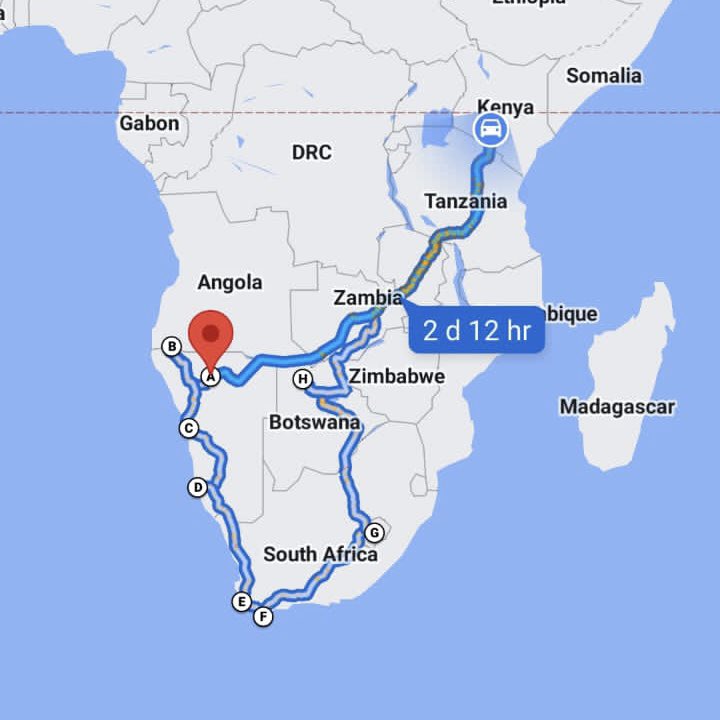
Nairobi to Cape Town by road. We travelled across six countries (visa-free!) and had the most incredible time. An unforgettable trip!
Hopefully this 🧵 inspires you to make the trip and explore our beautiful continent, Africa because it is an incredible place.