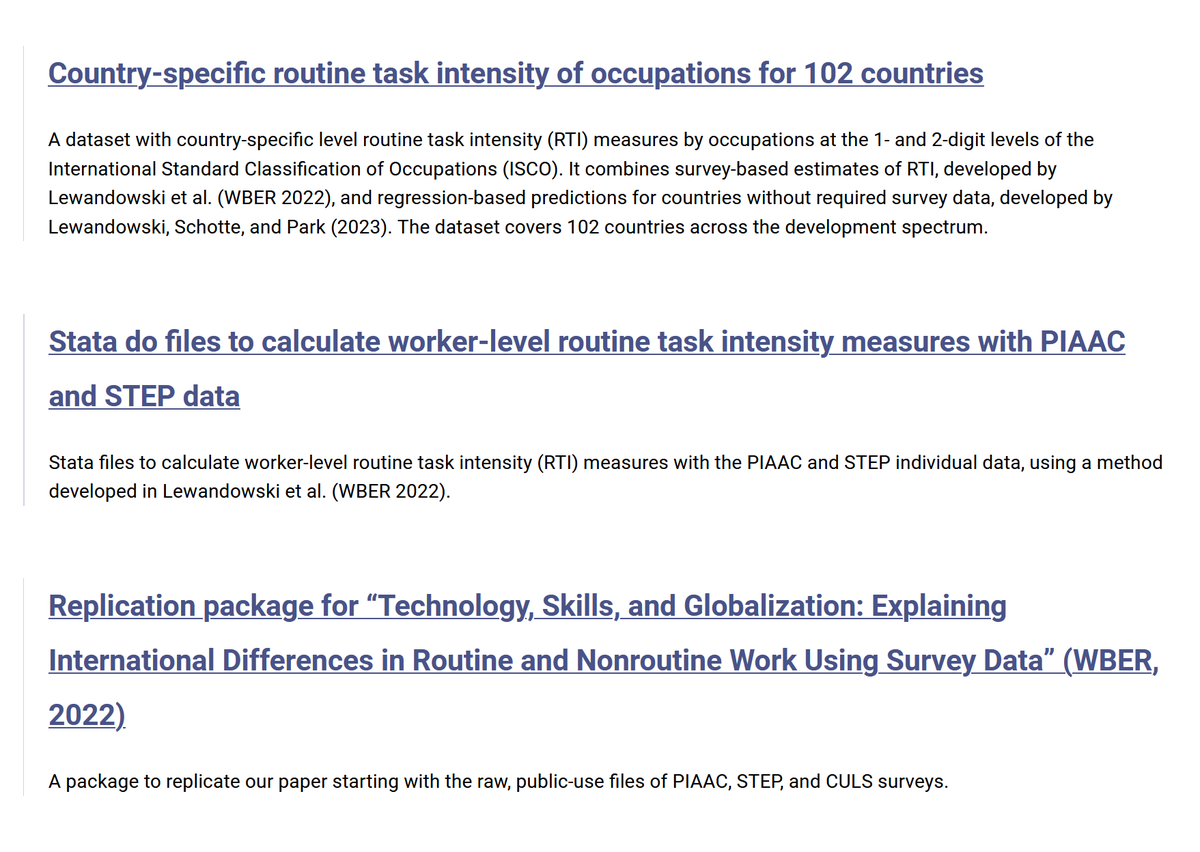
Happy to share the codes to calculate worker-level routine task intensity (RTI) with survey data for 47 countries, and occupational RTI data for 102 countries.
Please check if you study job polarization, occupations, structural change.
➡️ https://t.co/yRBh7Sa0c7
🧵with details 👇
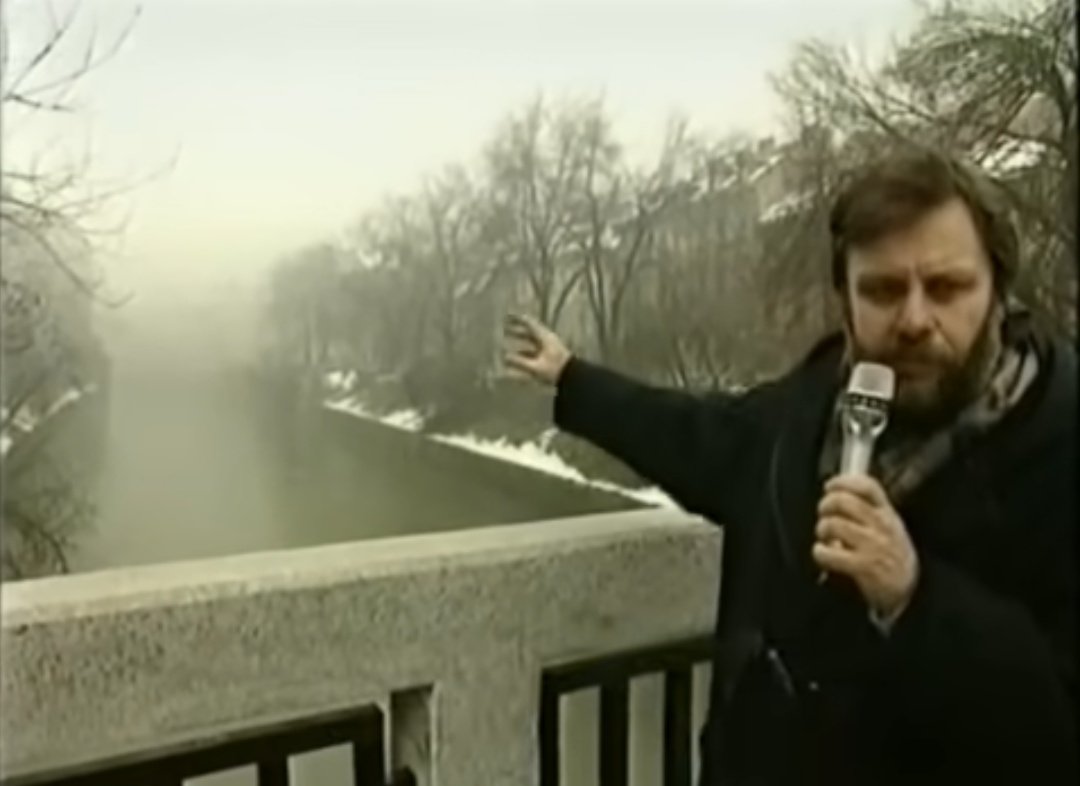
This river here is the official geographical border between Anthropic and OpenAI. On the other side cosmic horror, torment nexus, machine despotism, you build spyware for the govt and you like it. On this side civilization, Claude constitution, unceasing allegiance to the human race, you build spyware for the govt and you don't like it.
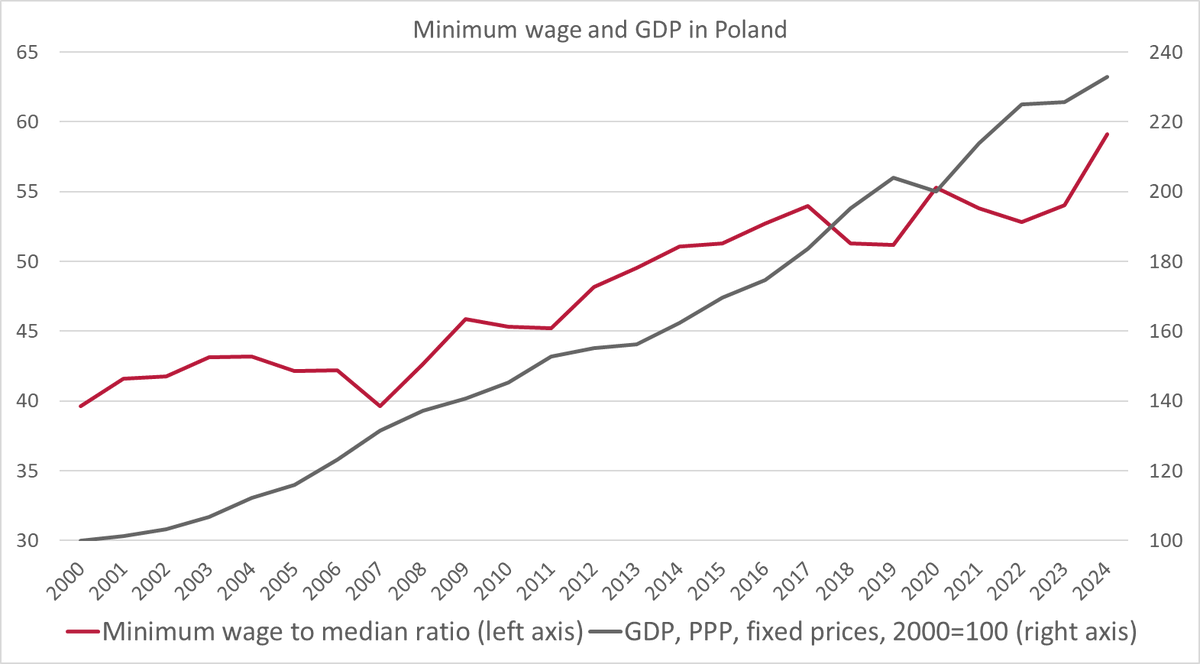
@jdcmedlock This was reached only after 16 years of MW hikes aimed at sharing growth more broadly which was the right thing to do. But the starting point was low MW, 39% of median in 2007, about 50% until 2019. The key policy debate in 🇵🇱 is actually how much growth was fuelled by low wages
@arindube Respectfully, but Poland has never used 2/3 of the median to set minimum wage. 50% of the average wage has been the target since 2006 (met recently). Despite a series of ample MW hikes that indeed coincided with strong macro performance, MW remains below 2/3 of the median
This study on remote #work is such a fascinating little reality check. After surveying over 10,000 workers and 1,500 employers in Poland, @ptrlewandowski Katarzyna Lipowska and Mateusz Smoter, from from @ibs_warsaw, find that #hybrid beats fully #remote.
@jan_gromadzki@MichalMyck Proponuję pogodzić pomysły @MichalMyck i @jan_gromadzki na zmiany w 800+. Po prostu je połączmy i zróbmy wszystko:
- kryterium dochodowe lub stopniowe wycofywanie świadczenia powyżej progu
- wliczanie świadczeń do dochodu
- ograniczenie przywilejów podatkowych samozatrudnionych
My study with @ADBChiefEcon & @KarolMado introduces the first global, survey-based and task-adjusted measure of workers’ AI exposure, covering 108 countries and representing nearly 90% of the world’s employment.
Join the #AIforGood webinar on 27 Nov at 11am CET to learn more 🔗👇
How does robotisation shape teens’ educational choices?
Join the SkiLMeeT webinar on 28 October, 14-15 CET, and learn our findings from the study that uses rich data from Norwegian national registers to investigate this issue.
🔗 Registration: https://t.co/27b0OMluwf
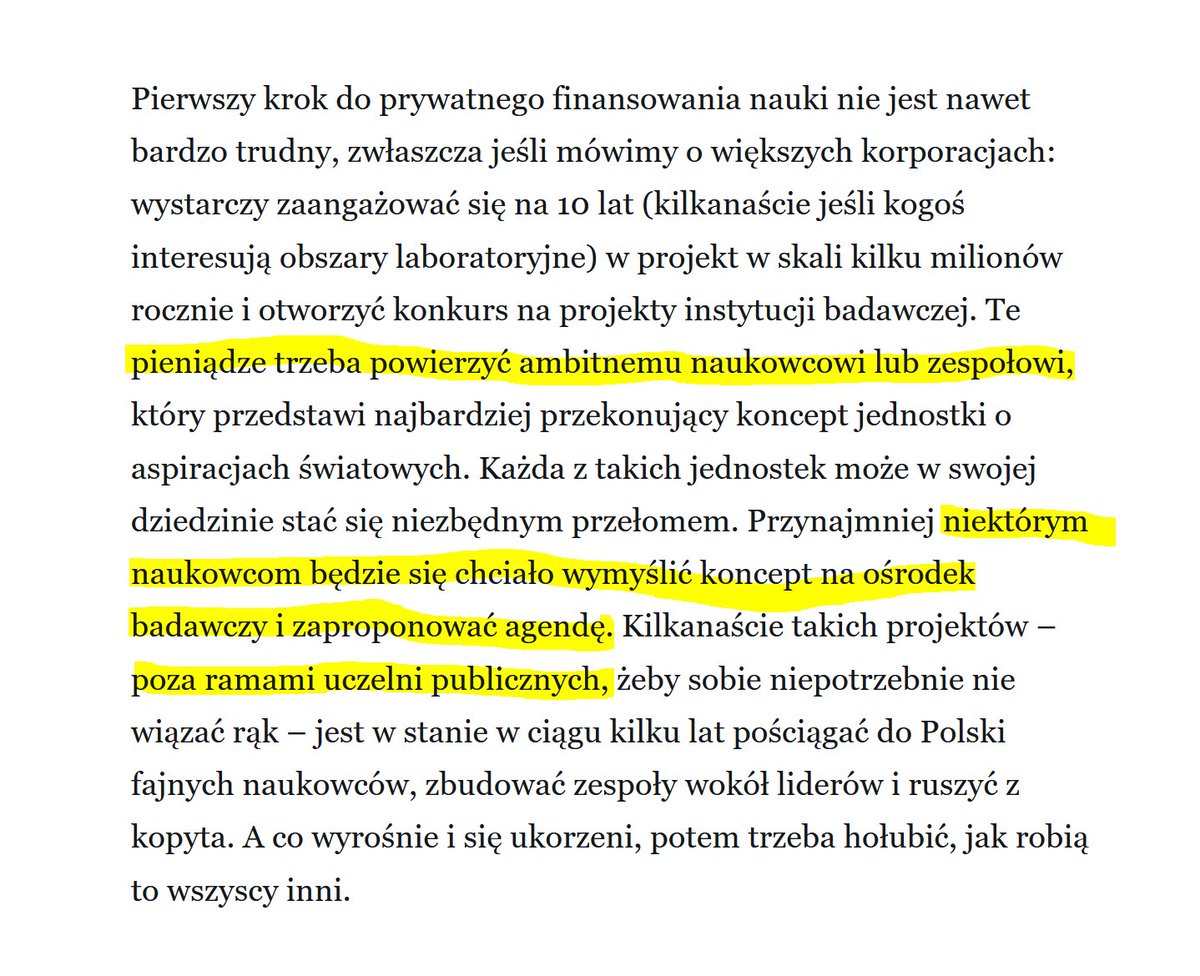
@BrzezinskiMich Czy Twój argument "dostają się tam często (nie zawsze) ludzie z niewystarczającymi kwalifikacjami, którzy "na rynku" nie zarobiliby więcej" znajduje też zastosowanie do akademii? 😉
@iggnacy@BrzezinskiMich W ostatnich latach było mnóstwo empirycznych nagród: Card, Imbens, Angrist, Duflo, Banerjee, Kremer, Goldin. Ale ponieważ development econ poszło w stronę RCT a nie wyjaśniania sukcesów rozwojowych, to Nobla dedykowanego azjatyckim tygrysom czy Chinom raczej nie będzie
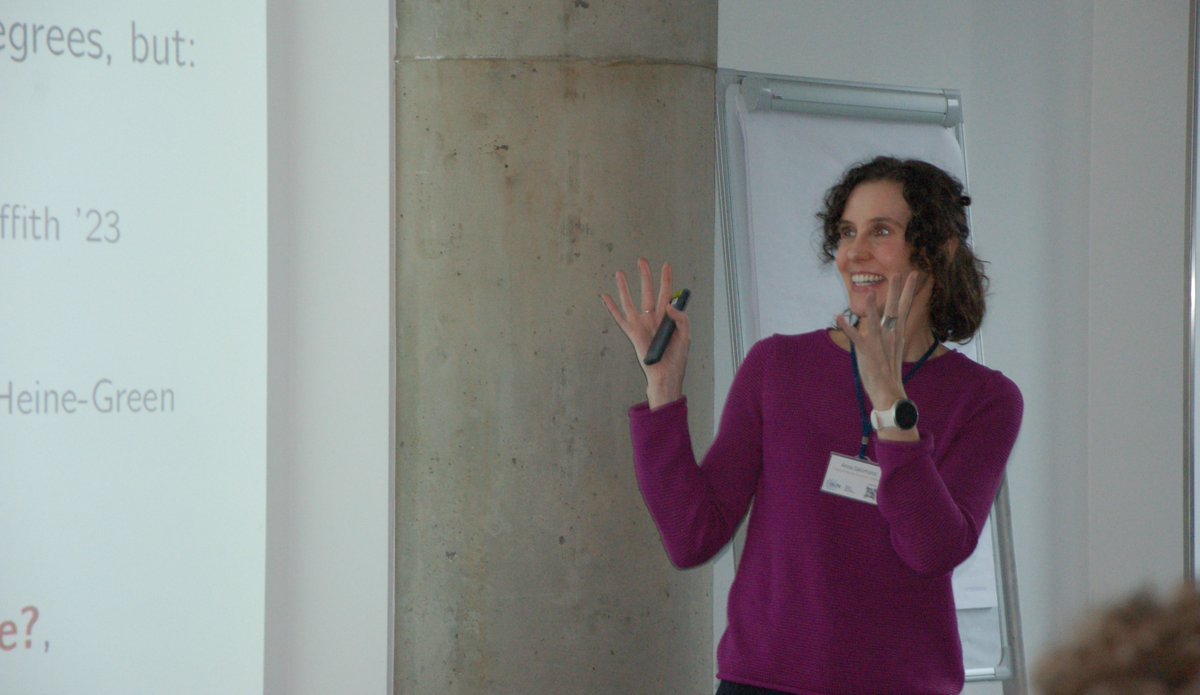
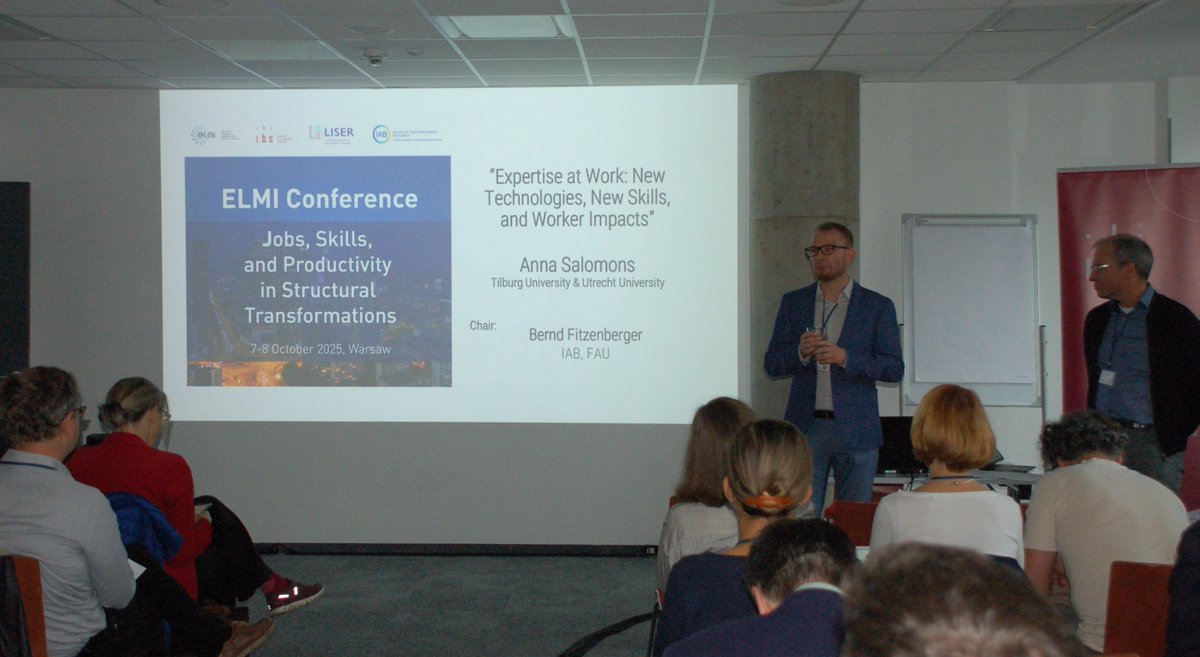
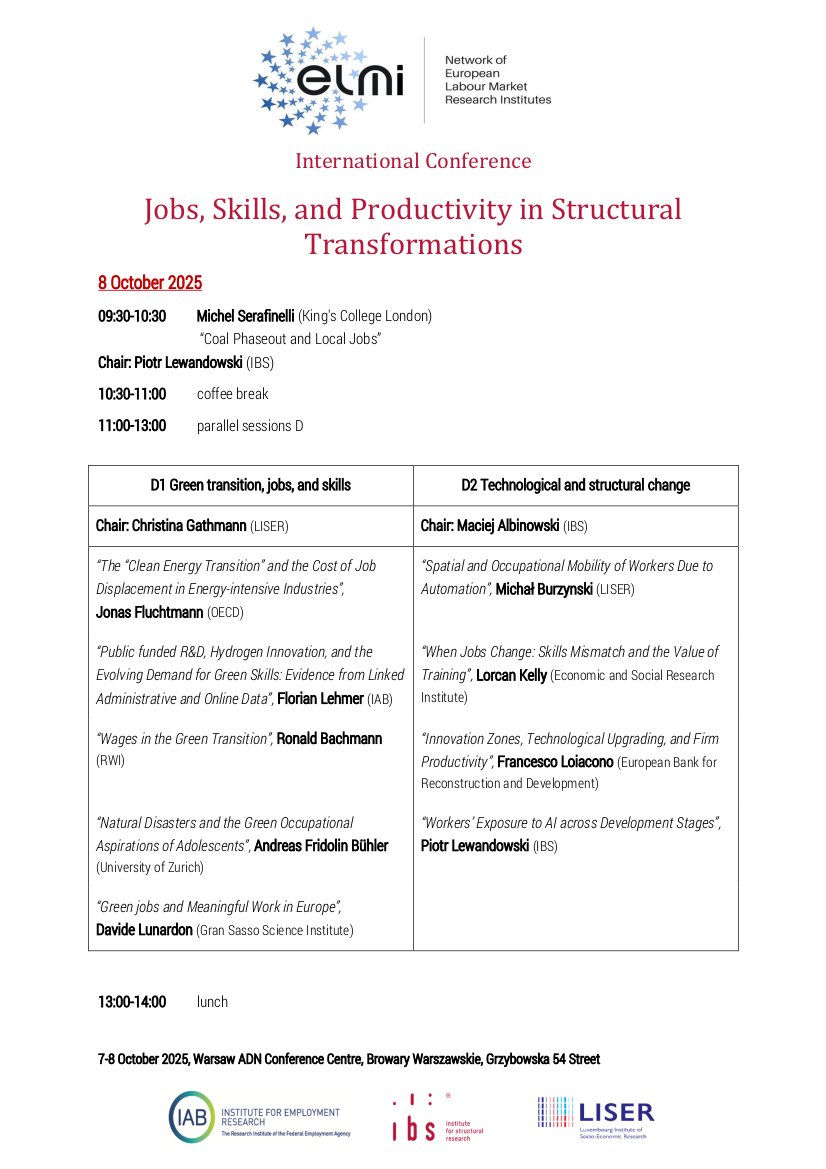
🎆The ELMI 2025 Conference in Warsaw has begun! @ptrlewandowski the host and Prof. Bernd Fitzenberger – representative of the network, welcomed the guests and keynote speaker Prof. Anna Salomons Let's start our adventure with innovative & inspiring research on the #labourmarket💪
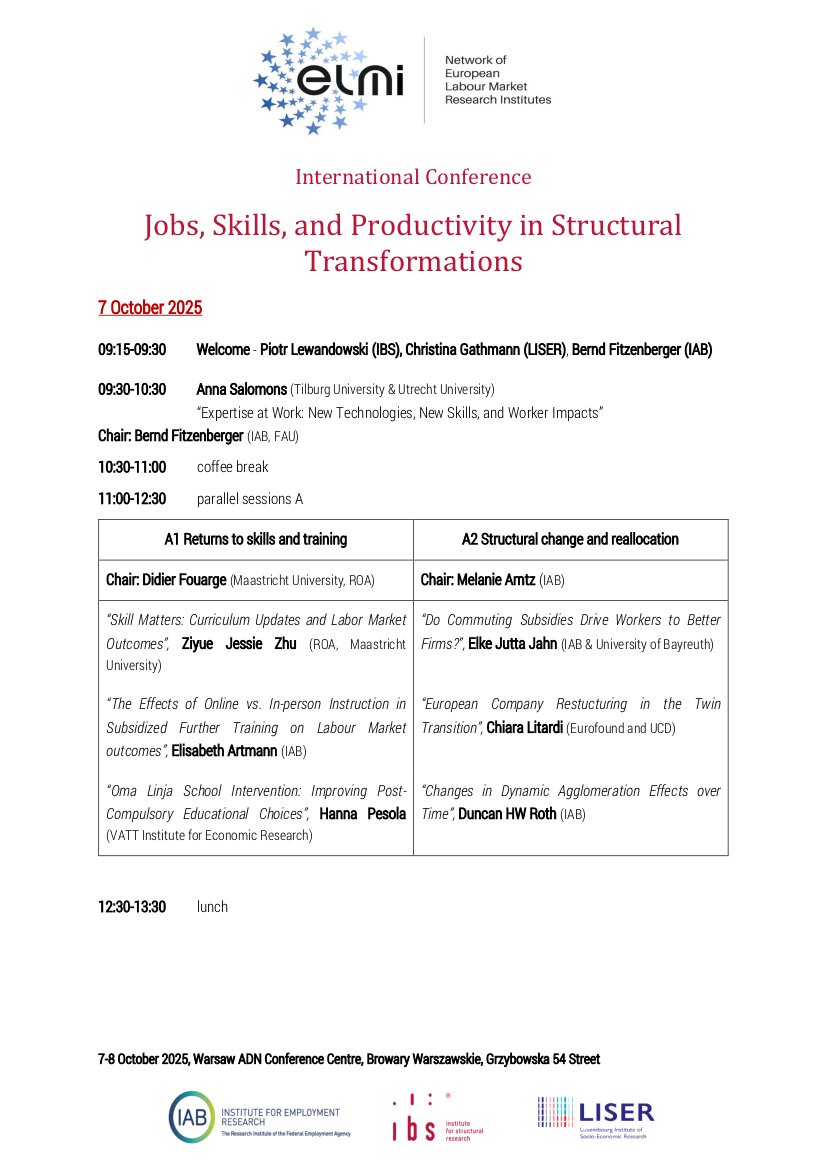
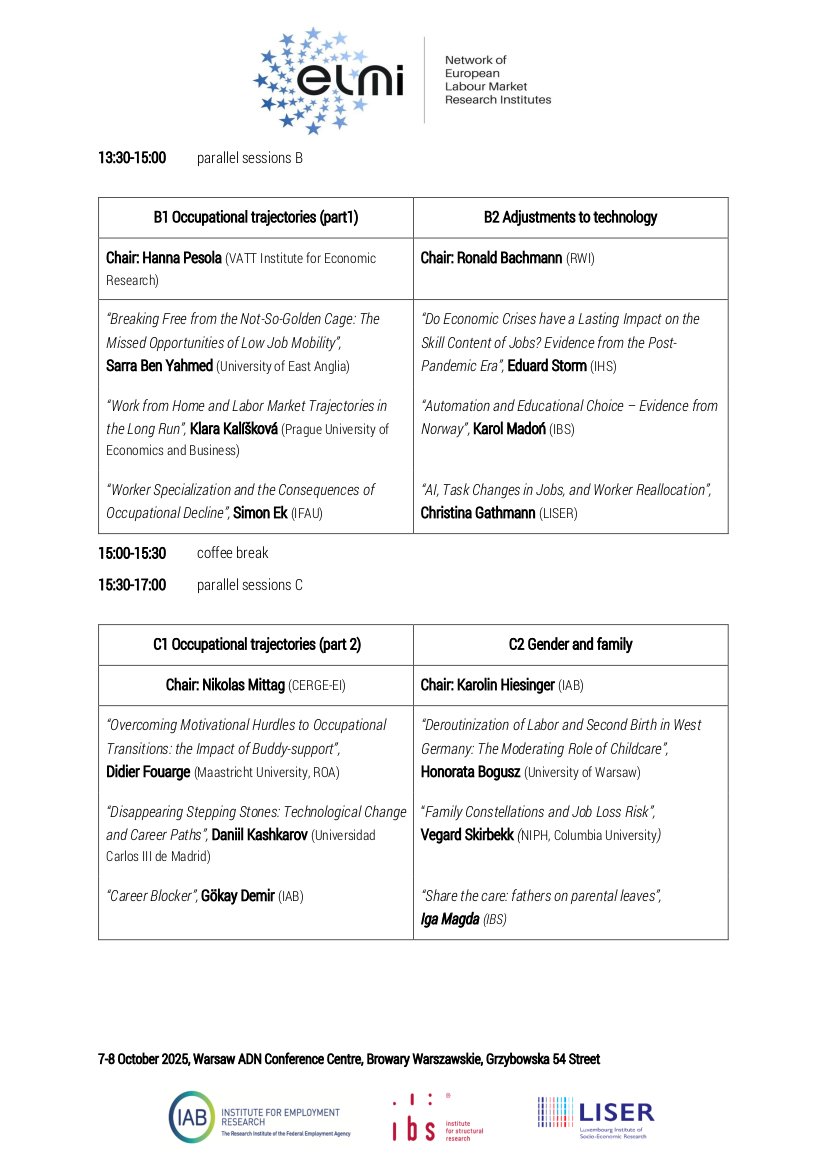
On 7-8 October in Warsaw, @ibs_warsaw hosts the ELMI conference on ‘Jobs, Skills, and Productivity in Structural Transformations’, co-organised with IAB @ @LISER_LM. Agenda 👇
If you want to attend, please register by 30 September using the QR code or 👉 https://t.co/b65OoetPZ5
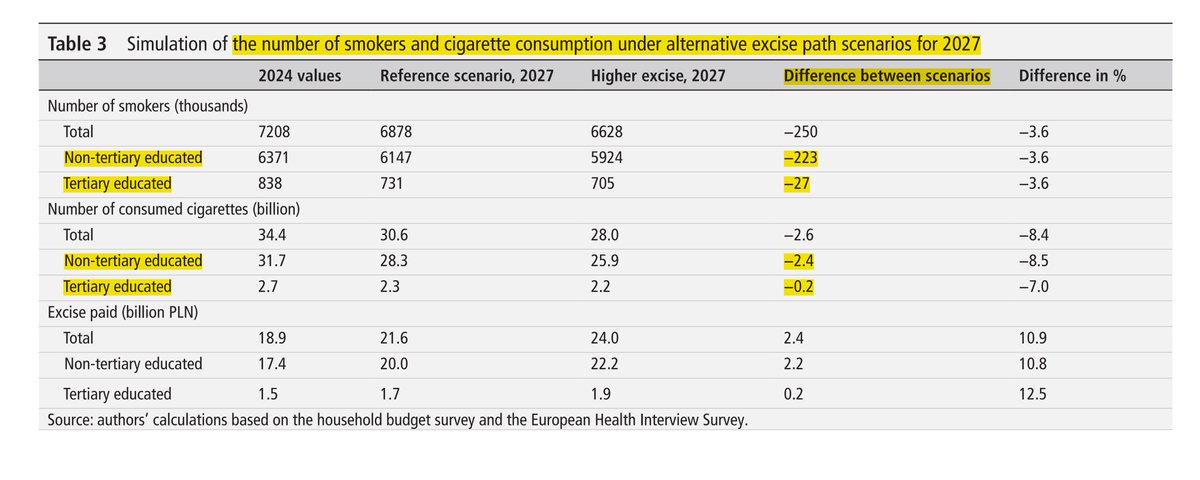
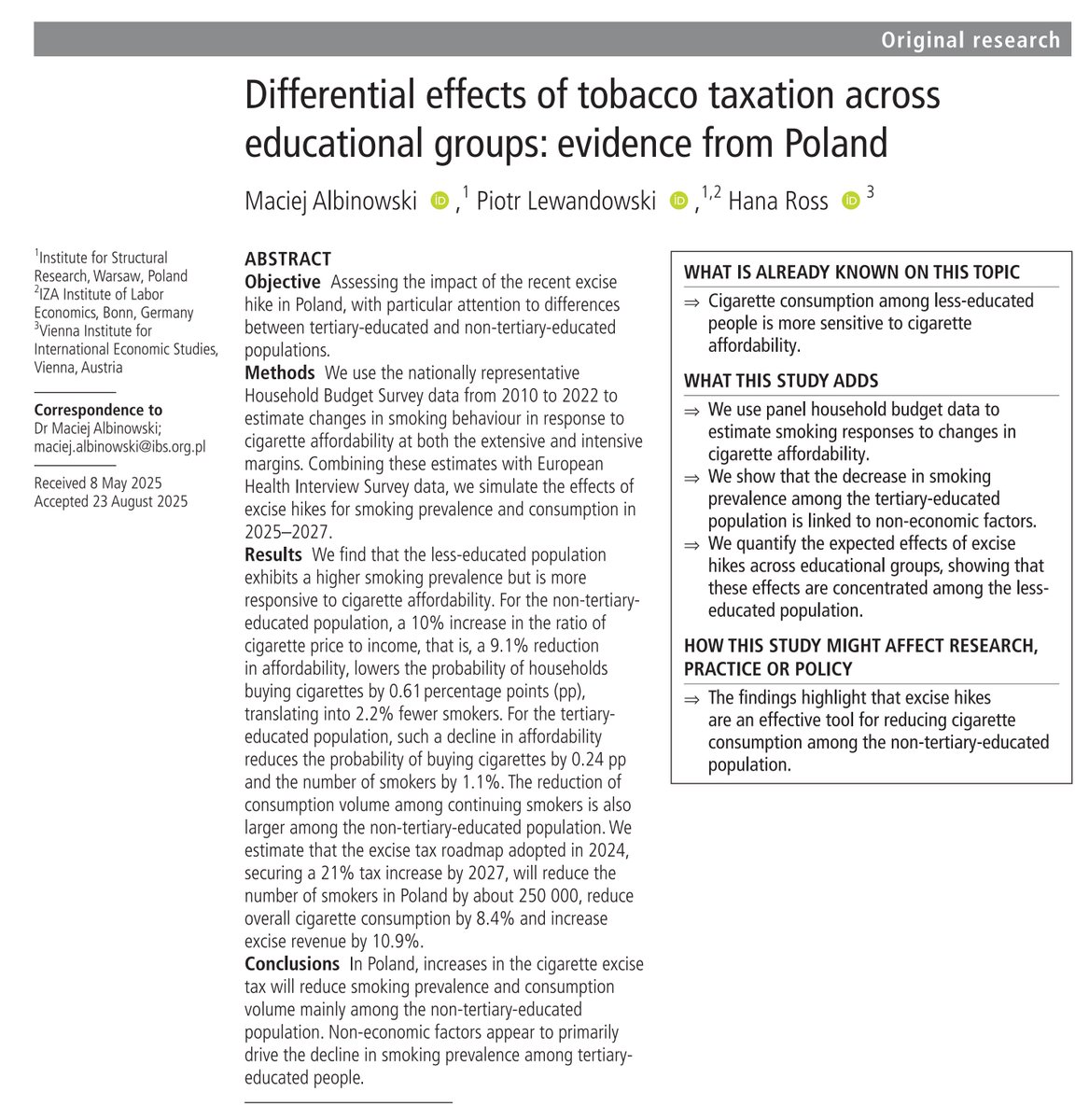
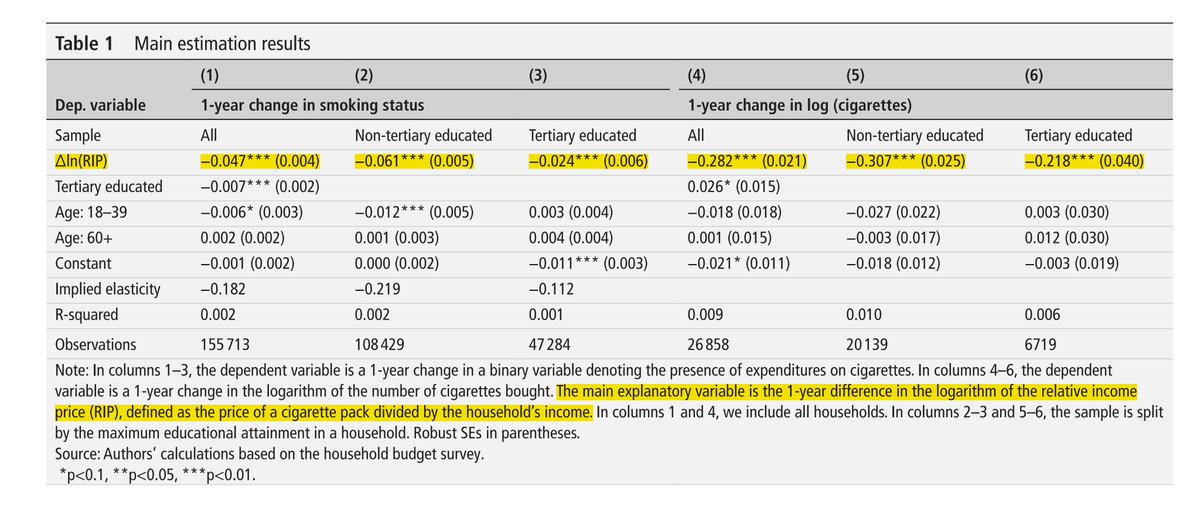
In Poland, smoking fell among the tertiary-educated even as cigarettes got cheaper. But among less-educated groups, prevalence rose—and they’re more price-sensitive. New 📰 in Tobacco Control: 2024–27 excise hikes will cut smoking mainly where it’s highest
https://t.co/tJCU906KdC
Excited to attend the TASKSVII conference hosted by @LISER_LM, my 4th TASKS event. These conferences have built a community researching tasks, occupations, automation etc 👏
https://t.co/ZuJBzlMKhh
@MateuszUrban_PL Te inne koszty też można zmierzyć, przynajmniej część z nich. Przygotowujemy teraz interdyscyplinarny projekt nt społecznych kosztów alkoholu, który, mam nadzieję, ruszy w 2026