JPMorgan CEO Jamie Dimon just released the 35-min edited version of the 90-min master class he gave to 400 of his top executives.
- complacency, arrogance and bureaucracy kill companies.
he explains exactly how to fight all three.
35-min and you'll learn the management playbook of the CEO
who has run America's largest bank for 20 years.
bookmark - the most practical management lecture from Wall Street.
🚨 BREAKING: Claude can now write legal contracts like NDAs, freelance agreements, and LLC paperwork better than $800/hour corporate lawyers.
Here are 12 prompts that replace $15,000 in legal bills:
(Save this before it disappears)
I now understand how electricity is priced better than 99% of people after watching this video
2 minutes well spent, watch this ex-Citadel simply explain the power market
Pedagang mobil bekas itu punya insting.
Mereka bisa bedain mana pembeli yang polos, mana yang ngerti barang. Dalam 30 detik pertama.
Lo dateng, elus-elus bodi, duduk di jok, terus nanya "AC-nya dingin gak mas?"
Dalem hati mereka udah senyum. Mangsa empuk. Mark up Rp 15 juta.
Tapi coba lo dateng langsung jongkok di depan mobil, raba celah antar panel, buka kap mesin, cabut dipstick, senter kolong.
Pedagangnya langsung keringat dingin.
The framing of “we’ve only explored 5% of the ocean and it’s terrifying” has it backwards. We know exactly why a massive tuna is cruising an oil platform.
Offshore oil platforms are the most productive marine fish habitats ever measured. A 2014 PNAS study found that California’s oil platforms produce more fish biomass per unit area of seafloor than any other marine ecosystem on record. Fish densities around platforms run 20 to 50 times higher than open water. Each platform supports over 10,000 fish. A 2024 North Sea study found elevated fish densities extending kilometers from platform structures.
The mechanism is straightforward. Steel legs and crossbeams create vertical reef structure in areas that are otherwise flat, featureless ocean floor. Barnacles, mussels, and sponges colonize within months. Small fish follow. Predators follow the small fish. The 500-meter vessel exclusion zones around active platforms mean zero commercial fishing pressure for decades. These rigs become accidental marine protected areas.
Congress recognized this in 1984 with the National Fishing Enhancement Act. Over 420 decommissioned Gulf of Mexico platforms have been converted to permanent artificial reefs through Rigs-to-Reefs programs. Louisiana fishermen visit rig sites on 75% of their recreational trips.
And that tuna is almost certainly not 18 feet long. ROV cameras without stereo-calibrated lenses are notorious for size estimation errors. Parallax distortion and wide-angle curvature make eyeball measurements from single-camera ROV footage wildly unreliable, which is why serious marine biology studies now require dual-camera systems with in-situ calibration boards.
The ocean isn’t hiding monsters from us. We accidentally built them a sanctuary and then sent a robot camera to check the plumbing.
In pre-production for Margin Call (2011), the film had a tiny $3.5 million budget. Irons and the rest of the A-list cast took massive pay cuts because they were so impressed by the precision and "Shakespearean" quality of the dialogue.
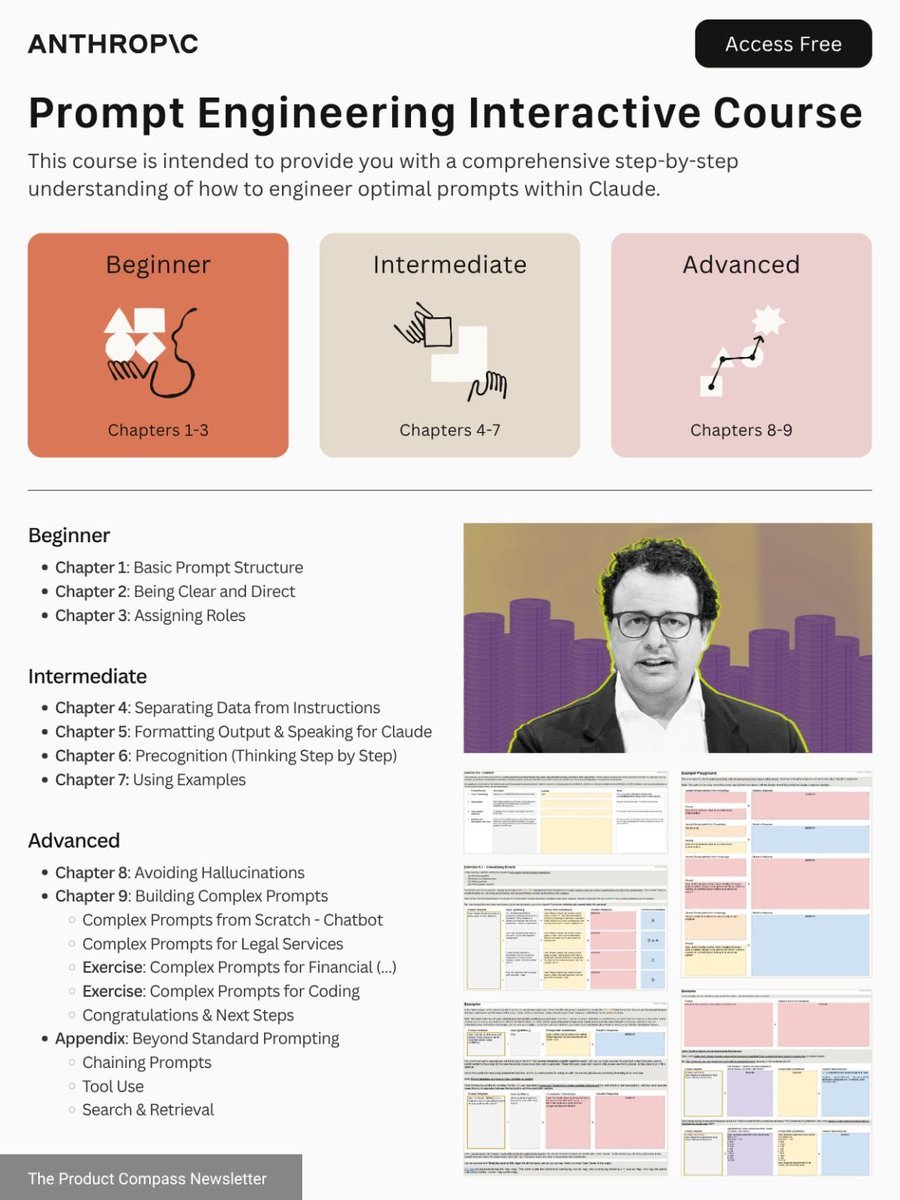
Anthropic Academy just dropped FREE AI courses that could replace a $10,000 degree.
$0. No catch. No gatekeeping.
Here are 6 AI courses that could separate you from everyone else in 2026:
Buat yang gak berkecimpung di tech utamanya AI, beliau ini bukan sembarang beliau wkwk gini info sederhananya untuk non-IT.
Openclaw (product dia) join ke OpenAI (ChatGPT).
Kemarin (15 Feb 2026) Peter resmi gabung OpenAI! Sam Altman bilang "Dia genius, ide-idenya luar biasa soal AI." OpenClaw tetep hidup sebagai proyek open-source yang didukung OpenAI, biar makin banyak orang bisa pakai AI pembantu yang aman & gampang.
Peter Steinberger ini asal Austria yang uda pensiun duluan, tapi balik lagi gara-gara kesel gak ada AI agent beneran berguna. Dia bikin OpenClaw (awalnya Clawdbot/Moltbot) cuma dalam 1 jam doang! 🦞 Idenya simpel banget, chat biasa di WA/Telegram, tapi AI-nya langsung kerjain tugas beneran, seperti pesen tiket pesawat, nyalain lampu rumah, atau pantau kamera CCTV.
Ternyata.. proyeknya meledak! wkwkwk
Ribuan orang coba dalam hitungan minggu, jadi proyek open-source paling cepat naik daun di GitHub. Semua gratis, terbuka, siapa aja bisa ikut kembangin. Pokoknya kayak punya super apps di HP, tanpa ribet buka banyak aplikasi.
Inti dati intinya gini.. hobi bikin bikin apps → viral → sekarang dibantu raksasa AI.
Di masa depan mungkin kita punya AI agent pintar yang beneran bantu kehidupan (mungkin y wkwk).
BREAKING: Claude is insane for market research.
I reverse-engineered how top consultants at McKinsey, Goldman Sachs, & JP Morgan use it.
The difference is night and day.
Here are 12 insane Claude Opus 4.6 prompts they don't want you to know (Save for later)
Below is why Konoha’s decision to raise (i) the minimum free float threshold from 7.5% to 15% and (ii) the disclosure threshold for share ownership from 5% to 1% still does not work, and why it does nothing to resolve MSCI’s underlying concerns.
The core problem is that both reforms confuse visibility with substance. Raising the free float threshold assumes that the market’s weakness lies in insufficient distribution. In reality, the weakness lies in the nature of that distribution. Shares classified as “public” are often not economically independent. They may be held across multiple names, but those names can remain aligned through family ties, financing arrangements, informal understandings, or nominee structures. As a result, the reported float increases, but the amount of stock that can genuinely trade without coordinated behavior does not. Liquidity remains thin, and prices remain structurally fragile.
Because of this, a higher free float requirement does not force real selling to independent buyers. Controllers do not relinquish control; they fragment it. If a structure can manufacture a 7.5% artificial float, it can manufacture 15% simply by adding more accounts and more transfers that never meaningfully touch the open market. The rule raises compliance costs and administrative complexity, but it does not improve market integrity.
Lowering the disclosure threshold to 1% suffers from the same flaw. It generates more information, but not more truth. Disclosure captures size, not coordination. Ten aligned holders sitting just below the 1% threshold remain invisible as a controlling bloc. The market sees dispersion, while control remains concentrated. Without systematic aggregation of related parties and a serious look-through to beneficial ownership, disclosure becomes a data exercise rather than a governance tool.
This is precisely why these measures fail to address MSCI’s concerns. MSCI does not assess markets on formal compliance with free float percentages or disclosure thresholds. It assesses investability. That means effective free float, liquidity depth, price continuity, and the ability for large institutional investors to enter and exit positions without materially distorting prices. A stock can meet a 15% free float requirement on paper and still be practically uninvestable if daily trading value is negligible and price formation is dominated by internal circulation rather than independent demand.
From MSCI’s perspective, fragmented nominee holdings do not improve market accessibility. They often make it worse. They create the appearance of breadth while masking the absence of genuine liquidity. This is why MSCI continues to flag concerns around liquidity concentration, market depth, and accessibility for foreign investors. These are structural and behavioral issues, not disclosure issues.
In fact, the reforms risk increasing systemic fragility. Higher free float targets raise the visible market capitalization that must be supported, often encouraging more price maintenance activity. Lower disclosure thresholds incentivize further fragmentation of holdings to remain below reporting lines. The market appears more compliant, but it becomes more brittle.
The conclusion is straightforward. The underlying issue remains unchanged. Konoha is attempting to solve a control problem with percentages and a credibility problem with disclosure. MSCI is asking a different question entirely: can global capital enter, trade, and exit at scale without artificial constraints? Until regulation addresses effective float, beneficial ownership, and real liquidity, the answer will remain no, regardless of how the rules are rewritten. Unsurprisingly, several foreign active managers that I know have already begun applying 30–40% valuation discounts to Konoha equities, echoing the experience of South Korea and Japan before their respective market reforms.
How "conglos" have gamed this system?
If time permits tomorrow, I'll drop a case study illustrating this disconnect clearly. Consider a Konoha-listed data centre company with a market capitalization of roughly US$28bn and a reported free float comfortably above 15%. On paper, it satisfies every regulatory requirement. In practice, it trades less than US$60,000 a day. At that level of turnover, the effective free float is not measured in percentages, but in basis points.
The price history only deepens the inconsistency. The stock rose more than 750-fold from its early-2021 starting point to its peak and, even after pulling back, still trades at a price-to-earnings ratio above 400 times. Yet there is no meaningful secondary market, no depth, and no independent price discovery. What exists instead is a stock whose valuation implies global-scale institutional demand, while its liquidity profile suggests the opposite. This gap between reported float and tradable reality is not a technical footnote. It goes to the heart of market credibility.
Ricky Ho
Claude Opus 4.5 is s genius prompt engineer.
The main skill is explaining your goal clearly
My workflow is this:
> I need to solve [TASK]. Research best practices and breakdown how to solve the problem in its first principles.
> As an expert prompt engineer, generate a prompt based on the information you gave.