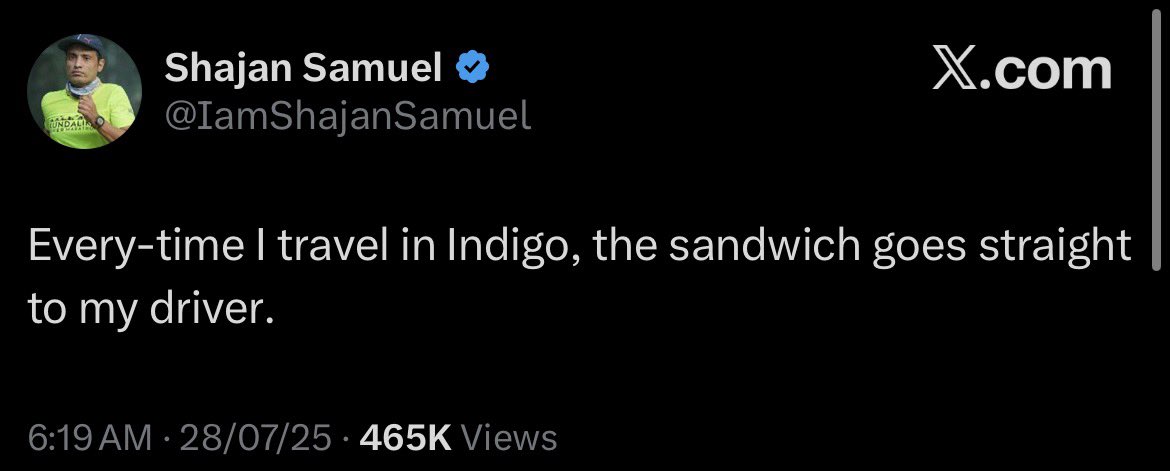
Elite activism is ordering coconut water which some poor sod sells in 115 degree weather, and another poor sod puts his life on line to get it to your mansion’s door in 10 minutes, and then get scolded by a little prince about plastic straws..
In a country such as India, this could be a disaster, if the right anti-abuse systems are not set up by WhatsApp.
Imagine receiving a message from warikoo / awarikoo / ankurwarikooo / ankur_warikoo / a_warikoo / ankurwarikooofficial etc etc - soliciting money.
1. Most people don't understand verified status (even if and when it is launched)
2. Cannot be verified through calling the phone number (because username = privacy)
I have fought a legal case against Meta's lack of attempt to bring down AI-generated ads showing my face, luring people into investment WhatsApp groups. I understand how massive this scam is and how easy it is in our country to execute it.
So forgive me, if from a public figure's standpoint, this features raises some serious concerns.
This is an unbelievable piece of work by Sarthak and something that requires amplification.
Let me explain what he found, in simple terms.
Sarthak is a Class 12 student from the 2025-26 batch, one of the 17 lakh students whose answer sheets went through CBSE's new On-Screen Marking system.
He spent days reading through CBSE's evaluation tenders, scraped all 576 tenders CBSE has issued, and tracked how the rules changed across three versions of the same tender.
The core finding is that the company that won the contract to scan and grade 17 lakh students' answer sheets is Coempt Eduteck.
Coempt used to be called Globarena Technologies. Globarena was the company behind the 2019 Telangana intermediate exam disaster, where software failures led to 3.8 lakh students getting wrong or missing marks, and 23 students died by suicide.
A government committee found systemic failure and negligence. Six months later, Globarena rebranded to Coempt Eduteck.
So a company with that track record won a contract to handle 17 lakh CBSE students. Sarthak's investigation is about how the rules were rewritten to let that happen.
The tender was issued three times.
> First tender, February 2025. It existed, then disappeared from the public GeM portal. Sarthak scraped all 576 CBSE tenders and this one was missing from the archive entirely.
> Second tender, May 2025. Four companies applied including TCS and Coempt. All four failed the technical evaluation. Cancelled.
> Third tender, August 2025. Coempt won. Between the second and third tender, a series of rule changes happened, and every single one made it easier for Coempt to qualify.
Here is what changed, one by one.
01. The old rules disqualified any company with a history of abandoning work, failing to complete contracts, or financial weakness. The new rules deleted this clause entirely. Coempt's Telangana history stopped being a barrier.
02. The old rules disqualified any company that was "blacklisted earlier." The new rules changed this to "currently blacklisted." Because Globarena rebranded after Telangana, removing the word "earlier" effectively erased their past.
03. The rules required Rs 50 crore average turnover over three years. Coempt's exact average came to Rs 50.86 crore. They cleared the bar by less than 1%. Earlier, a smaller company had asked CBSE to lower the bar to Rs 30 crore for fairer competition. CBSE refused. So the bar was kept high enough to block small players, but sat exactly low enough for Coempt to scrape through.
04. Software maturity is measured on the CMMI scale, 1 to 5. The old rules required Level 5. The new rules dropped it to Level 3. Coempt is a Level 3 company.
05. The cooling-off period for engaging retired CBSE officials was cut from two years to one. This makes it easier to use recently retired insiders to influence the process.
06. The old rules required experience with large projects of at least 5 lakh students each. The new rules removed the student count and counted cumulative answer-book volume across small projects instead. Coempt has many small fragmented university contracts. This helped Coempt and hurt TCS.
07. The old rules required bidders to own their own data centre and disaster recovery centre on Indian soil. The new rules allowed third-party MeitY-empanelled cloud hosting. Coempt runs on AWS and Azure. This helped Coempt and hurt TCS, which owns its own data centres. It also means student data is no longer on sovereign, Indian infrastructure.
08. The old rules required the bidder to own or control the complete source code of its software. The new rules deleted this. Coempt's platform runs on Microsoft's proprietary IIS, which they don't own.
09. A last-minute corrigendum, issued right before bid submission, removed CBSE's own power to blacklist the firm if its software failed catastrophically. So even a Telangana-scale failure couldn't get Coempt banned from future government tenders.
10. The penalty structure shifted from punishing mistakes to punishing delays. The old rules fined the vendor for wrong scanning, merged pages, and unscanned books. The new rules dropped those and instead levied Rs 50,000 per day for delays. This incentivises rushed scanning over accurate scanning.
11. The old rules had a hard accuracy threshold, error rate not to exceed 0.5%. The new rules removed this number entirely.
12. The old rules specified proper book and robotics scanners. The new rules just say "sufficient scanners." The definition was vague enough that, as Sarthak notes, the scanning could be done with a phone on a stand.
13. On the security side, the contract required a VAPT (vulnerability and penetration test) certified by CERT-In before go-live, and a restricted beta phase before launch. The system clearly wasn't restricted, because the other researcher, Nisarga, was able to access it and find vulnerabilities four days before go-live. So the mandatory security audit appears to have been bypassed.
These are more than a dozen rule changes, all between the failed tender and the winning tender, all pushing in the same direction, all benefiting the one company with the worst track record in the field.
The security holes Nisarga found last week now have an explanation. The system was built by a vendor that was specifically allowed to skip the security certification, the source code ownership, the data sovereignty, and the quality thresholds the original rules demanded.
Following things need to happen immediately;
1. An immediate CAG audit of the tender process.
2. A parliamentary debate on the topic.
3. An independent investigation into
> Why the first tender vanished?
> Why the disqualification clauses were deleted?
> Why the turnover bar was held exactly where it was?
> Why the security level was dropped?
> Why the blacklisting power was removed at the last moment?
Sarthak, this is genuinely exceptional investigative work. Far better than most journalists with full resources ever manage. Take a bow. :)
This is it.
Everything learned spending millions on longevity.
From: Your Immortal Unc and Auntie.
To: Our Immortal nieces and nephews.
0. Sleep is the world's most powerful drug.
1. Be in your bed for 8 hours
2. Same bedtime every night, any time before midnight
3. Don’t eat right before bed
4. Calm foods for dinner
5. No screens 1 hour before bed
6. Avoid added sugar (be aware it’s in everything)
7. Avoid all things in an American convenience store
8. Avoid fried foods
9. Shoes off at the door
10. Eat whole foods, particularly veggies fruits nuts legumes berries
11. Walk a little after meals or air squats
12. Get your heart rate high routinely
13. Lift heavy things
14. Stretch daily
15. Water pik, floss, brush, tongue scrape, morning and night
16. Make an effort to drink water
17. Get sunlight when you wake up (UV is low)
18. Protect skin in midday sun
19. Stand up straight
20. See at least one friend once a week
21. Avoid plastic where you can (in all things)
22. Circulate air in rooms
23. When stressed, breathe, learn to calm your body
24. Go to the dentist
25. Avoid sitting for long times
26. Protect your hearing, the world is too loud
27. Alcohol is bad for you
28. Finish coffee before noon
29. Avoid bright lights after sunset
30. If obese, look into a GLP
31. Sleep in a cold room
32. Texting while driving is dangerous
33. Turn off all notifications
34. Limit social media use
35. Don’t smoke anything
36. If you struggle to sleep, read a physical book before bed
37. 1 hour before bed have a calm wind down routine: bath, read, light walk, listen to music
38. The body is a clock and loves routine. Have a daily morning and evening schedule.
39. Avoid long distance travel where you can
40. Baby steps first: incorporate new things slowly
41. Do less… most things don’t work.
Bonus points if you get your blood checked.
Start here, it will change your life.
Rajeev Jain, CEO, Bajaj Finance, on Q3 Concall on the Impact of AI –
“AI listened to 2 Cr calls, converted voice to text, and gave us data. Text-to-data conversion happened for 5.2 lakh customers. As a result, we generated 100,000 new offers for which we did not have information earlier.
“This capability did not exist in Q1 and Q2. It just got deployed. We’ll be able to listen to 100 million calls next year,” said Jain. He added that loan disbursements through AI-powered call centres stood at about Rs 1,600 crore. That’s ~ 10% of the Rs 16,545 Cr of disbursals in Q3FY26
Data converting -- data from those calls led to another INR 325 crores of volumes. So, this is just our first attempt.
Over the next six months, Bajaj Finance plans to invest heavily in its agents. The company expects to have more than 800 autonomous agents across sales, operations, HR, IT, risk, and DMS in the next fiscal.
Similarly, in terms of 100% of videos are now generated by us using AI, 100% of banners are generated using AI, 2.7 lakh videos were generated, and 1.2 lakh banners were generated. At the customer engagement level, we have 11 AI text BOTs that are live that engage with the customer. So rather than sending dumb SMSs for 11 products now, we have an AI text BOT, which allows you to engage, interact, and respond to your queries.
The company has 26 products. All 26 will be live between April and May'26. So, there will be no communication that we'll be sending, which will not have a -- whether service or sales, which will not have a conversational BOT embedded in it.
At the branch and point of sale, existing customers face match that we're doing, we did 46 million face matches to ensure this is the same customer, if it's an ETB customer who had actually principally come in, giving us much better control over identity.
Customer onboarding in terms of document -- ensuring that auto-fill of the document happens, whether it's a PAN card or an Aadhaar. There are 43 such documents that the company has now mapped, which an image extracts with a 95% - 96% accuracy and populate data in our platforms, delivering significant productivity for our employees.
Auto quality check of documents is now 41%. As we sharpen the model, it will take us to between 85% and 90% over a period of the next 15-odd months
On technology development, we are clearly seeing between 25% - 45% efficiencies emerging in terms of the development process, depending on whether it's a legacy platform, then the benefit is much lower, or rather, I would say, none. But if it's a digital infrastructure, then the efficiencies can be as high as 45% - 47%. So significant work is being done.
Src – Q3 Concall, no reco
There's a rule by the RBI. If you have 50% of your assets are "financial assets" (including mutual funds, shares etc but FDs are ok) and "financial" income is more than 50% (dividends, capital gains, interest etc but not FD interest)
Then you were supposed to register with the RBI as an NBFC.
This creates a problem for a "friends and family" fund structure created as a company. You can pool in money together, and use that to invest - in startups, in public markets, in bonds, whatever. But since most of the income and assets are financial, you need registration with RBI as an NBFC!
What RBI has done today is to remove that requirement if you're less than 1000 cr. in assets, and don't have any customer interface or take money from the public. Great to create new funds that are primarily pooled family or friend vehicles in India.
This will eventually create competition of us, as a mutual fund, but I would say this: let a 1000 fund managers bloom.
India doesn't have as many privately held funds as we should. Our family offices usually invest in each family member's name, separately, because a collective investment would trigger NBFC clauses. A few people that come together to invest shouldn't have to do something as gargantuan as an RBI registration.
Very progressive. Early stages yet. But it will benefit the investment attitude in the country.
If you used to work at Zomato, whether you chose to move on, or I was the one who asked you to leave, this is for you.
I know that for many of you, Zomato didn't have the environment, or the leadership you needed at the time. But I know for sure, that you loved being at Zomato, and it is quite possible that you never felt like home anywhere else since you left.
We have over four hundred people at Eternal today in their second or third stints. Many of them are doing their best work now. Maybe because they've grown, but also because the company has grown. We are more organised, a little less chaotic, and hopefully, I've learned a few things along the way too.
If you haven't reached out because you think the door is closed, or because you think I'm holding onto the past, I'm not. I want you back.
There is so much to build at Eternal. We are today, a family of companies. Zomato, Blinkit Quick-Commerce, Blinkit Ambulances, District, Hyperpure, Nugget, and Feeding India. We need people who already know what good looks like here, and who care enough to fight for it. There is no better person for that than someone who has been here, left, grown, and wants to come back.
You might say that Eternal is not going to be the same, because I am not the CEO anymore. But ask yourself a question. Did titles ever matter at Eternal? I am still very much here, and I'd love for you to be a part of this next phase of Eternal.
If you feel like you have unfinished business here, please don't overthink it. Write to me at [email protected]. The Gurgaon pollution is still a bug, but being at Eternal is the feature. Let's talk and find a role that fits your life as it is today.
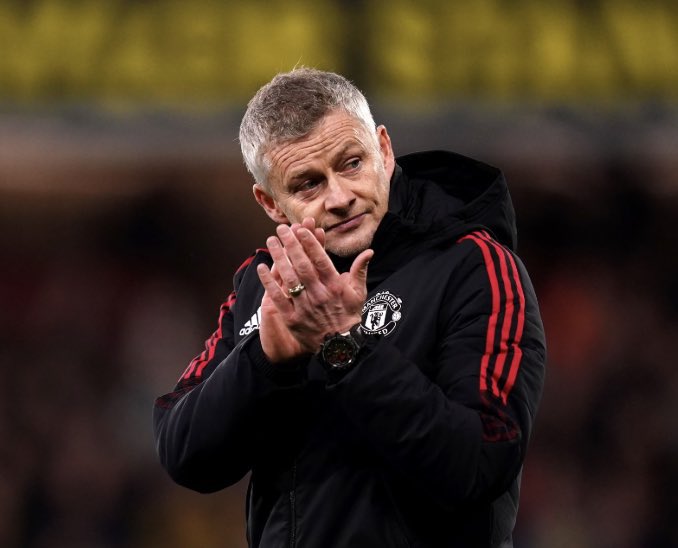
🚨🇳🇴 Ole Gunnar Solskjær has shown interest in taking Manchester United job as caretaker manager, regardless of contract length.
Man United, taking their time to assess candidates for the job.
Darren Fletcher will be interim manager this week.
➕🎥 https://t.co/b15UuScYZS
Beyond insurance, we’ve added other forms of support where gaps are most visible. (5/5)
1. Period rest days of 2 days per month for women delivery partner
2. Support in filing income tax returns (95,000 delivery partners leveraged this)
3. Access to a gig-variant of National Pension Scheme (54,000 delivery partners enrolled in PRAN under NPS, enabling long-term retirement savings)
4. SOS Service for immediate support in case of emergencies, including accidents, vehicle breakdown, theft etc.
Gig workers GET welfare benefits AND long term support. (4/5)
In 2025, Zomato and Blinkit spent over ₹100 crore on insurance coverage for delivery partners. These premiums are borne entirely by us, and the benefits are administered with record speed without any fuss.
Coverage includes:
1. Accident insurance with coverage of up to INR 10 lakh:
2. Medical insurance with coverage of INR 1 lakh plus OPD coverage of INR 5,000
3. Loss of pay insurance of up to INR 50,000
4. Maternity insurance with coverage of up to INR 40,000
Quick commerce’s 10-minute promise DOES NOT put pressure on gig workers, and it DOESN’T lead to unsafe driving. Why? (3/5)
The most common concern is that faster delivery promises translate into pressure on delivery partners to drive unsafely. That isn’t how the system operates.
Firstly, delivery partners are not shown customer-facing time promises. There is no “10-minute timer” or countdown in the delivery app.
10 mins or faster deliveries are primarily due to our stores being closer to customers and not by higher speeds on the road.
In 2025, the average distance travelled per order on Blinkit was 2.03 km. Average driving time was ~8 minutes, which implies an average speed of ~16 km/h.
On Zomato, where delivery times are longer, average driving speeds in 2025 were ~21 km/h.
As you can see, average driving speeds are broadly similar across Zomato and Blinkit: 10 vs 30 min delivery time is not affected by driving speed.
Road safety, I agree, remains one of the hardest challenges in any logistics ecosystem. Which needs to be solved with shared responsibility across road builders, rule enforcers, customers and delivery partners alike, regardless of the platform they work with.
Delivery partners are not overworked on our platforms. (2/5)
In 2025, the average delivery partner on Zomato worked 38 days in the year and 7 hours per working day, reflecting true gig style participation rather than fixed schedules. Only 2.3% of partners worked more than 250 days in the year. Demanding full-time employee benefits like PF, or guaranteed salaries for gig roles doesn’t align with what the model is built for.
Delivery partners are not assigned shifts or geographies. They determine when to log in and log out, and their area of work in a specific city. Partners also have the freedom to add or remove a desired work area based on their preferences. Once a partner opts into a gig, the only expectation is availability for the duration of that gig; beyond this, there are no participation requirements.
This shows that gig work is a reliable source of secondary income for delivery partners which is available to them all 365 days of the year. It is used as a flexible, stop-gap earning option, not a long-term lock-in.
Flexibility isn't incidental to the gig model, it is the whole point.
Facts below (1/5):
In 2025, average earnings per hour (EPH), excluding tips, for a delivery partner on Zomato were ₹102.
In 2024, this number was ₹92. That’s a ~10.9% year-on-year increase. Over a longer horizon also, EPH has shown steady growth.
Most delivery partners work for a few hours and only a few days in a month. But if someone were to work for 10 hours/day, 26 days/month, this translates to ~₹26,500/month in gross earnings. After accounting for fuel and maintenance (~20%), the net earnings for the partner are ~₹21,000/month.
Note: Earnings per hour are calculated on total hours logged in, including the time when the partner might be waiting to receive an order. Earnings per “busy hour” will be higher but that’s not the right metric to look at.
On top of this - delivery partners earn 100% of tips given by customers. The average tip per hour in 2025 on Zomato was INR 2.6 and in 2024 was INR 2.4 per hour. Tips are transferred instantly, with zero deductions. We absorb the payment gateway processing cost ourselves. About 5% of the orders get tipped on Zomato; 2.5% on Blinkit.
It will be useful to check on the Blinkit app how far the store is from your home. In my case it is 400 metres. That is how I get the delivery in under 10 mins. The riders are not forced to take risks. Very often they are on transport that cannot go at speed and very often they do not even go onto a main road
Last one on this topic, and I have been holding this in myself for a while.
For centuries, class divides kept the labor of the poor invisible to the rich. Factory workers toiled behind walls, farmers in distant fields, domestic help in backrooms. The wealthy consumed the fruits of that labor without ever seeing the faces or the fatigue behind it. No direct encounter, no personal guilt.
The gig economy shattered that invisibility, at unprecedented scale.
Suddenly, the poor aren't hidden away. They're at your doorstep: the delivery partner handing over your ₹1000+ biryani, late-night groceries, or quick-commerce essentials. You see them in the rain, heat, traffic, often on borrowed bikes, working 8–10 hours for earnings that give them sustenance. You see their exhaustion, their polite smile masking frustration with life in general.
This is the first time in history at this scale that the working class and consuming class interact face-to-face, transaction after transaction. And that discomfort with our own selves is why we are uncomfortable about the gig economy. We want these people to look our part, so that the guilt we feel while taking orders from them feels less.
We aren't just debating economics. We are confronting guilt. That ₹800 order might equal their entire day's earnings after fuel, bike rent, and app cuts. We tip awkwardly, or avoid eye contact, because the inequality is no longer abstract. It's personal.
Pre-gig era, the rich could enjoy luxury without moral discomfort. Labor was out of sight. Now, every doorbell ring is a reminder of systemic inequality. That's why debates explode. It's not just policy. It's emotional reckoning. Some defend the system (“they choose it”), others demand change (“this isn't progress, its exploitation”).
And here’s the uncomfortable twist: the unsaid ask of clumsy ‘solutions’ isn’t dignity. It is about returning to invisibility.
Ban gig work and you don’t solve inequality. You remove livelihoods. These jobs don’t magically reappear as formal, protected employment the next day. They disappear, or they get pushed back into the informal economy where there are even fewer protections and even less accountability. Over-regulate it until the model breaks, and you achieve the same outcome through paperwork instead of slogans: the work evaporates, prices rise, demand collapses, and the people we claim to protect are the first to lose income.
And then what happens?
The rich get their old comfort back. Convenience returns without faces. Guilt dissolves. We go back to clean abstractions and moral posturing from a distance. The poor don’t become safer, they become invisible again: back in cash economies, back in backrooms, back in shadows where regulation rarely reaches and dignity isn’t even debated.
The gig economy just exposed the reality of inequality to the people who previously had the luxury of not seeing it. The doorbell is not the problem. The question is what we do after opening the door.
Visibility is the price of progress. We can either use this discomfort to build something better (which we keep doing continuously as delivery partners are our backbone), or we can ban and over-regulate our way back into ignorance. One of those choices improves lives. The other simply helps the consuming class feel virtuous in the dark.