The Purple Saturdays Movement Honors Heather Barr as “Brave and Militant” Advocate for Afghanistan Women:
The Purple Saturdays Movement, an inspiring protest movement driven by the bravery and resilience of Afghanistan women, has recently praised the work of Heather Barr, the deputy director of the Women’s Rights Division at Human Rights Watch. In a bold and historic move, the movement has conferred upon Barr the honorary title of “brave and militant” for her tireless dedication to amplifying the voices of Afghanistan women and fighting for their rights on a global scale.
Emerging in response to the escalating restrictions imposed on women in Afghanistan, the Purple Saturdays Movement symbolizes defiance, solidarity, and hope. Comprising courageous Afghanistan women who refuse to accept the systemic oppression they face, the movement has become a beacon of resistance against gender-based injustice. The color purple, long associated with women’s movements worldwide, signifies dignity and perseverance, themes central to the group’s activism.
Heather Barr has earned international respect for her advocacy for women’s rights, particularly her work in bringing global attention to the plight of women and girls in Afghanistan following the Taliban’s return to power. As a leading figure at Human Rights Watch, Barr has been relentless in documenting the human rights violations Afghanistan women face, from restrictions on education and employment to the broader erasure of their presence in public life. Her reports, articles, and public commentary have been instrumental in galvanizing international pressure on the Taliban and encouraging global solidarity with Afghanistan women.
In their statement, the Purple Saturdays Movement expressed their gratitude for Barr’s steadfast commitment to justice. “Heather Barr has shown not only her commitment to human rights but also her courage and militancy in standing alongside Afghanistan women in one of their darkest times. Her work is a testament to the power of advocacy and the global sisterhood that binds women together in their fight for equality,” the statement read.
The movement also highlighted the importance of solidarity across borders, emphasizing that women worldwide play a critical role in amplifying the struggle of Afghanistan women. In praising Barr, the Purple Saturdays Movement underscored their commitment to forging alliances with women’s rights defenders across the globe.
The Purple Saturdays Movement’s recognition of Heather Barr as “brave and militant” is a powerful reminder of the critical role global allies play in the fight for women’s rights. It also reflects the unwavering strength of Afghanistan women, who, even under the harshest conditions, continue to inspire and lead movements for justice.
As the movement grows in strength and visibility, its alliance with international advocates like Barr signals hope for a future where Afghanistan women can reclaim their rightful place in society, free from oppression. Together, they are proving that the fight for equality is not bound by borders—it is a global movement fueled by shared determination and the belief in a better tomorrow.
#Right_Justice_Freedom
@heatherbarr1
The Brave Women of the Purple Saturdays Movement:
On August 17, 2021, a courageous chapter in the struggle for women’s rights in Afghanistan began with the founding of the Purple Saturdays Movement under the leadership of Maryam Marouf Arwin . What started as a small and determined initiative quickly grew into a powerful force, spreading its influence across several provinces of Afghanistan. Women from diverse backgrounds joined the movement with fervor, painting its mission with their resilience and determination.
The Purple Saturdays Movement became a beacon of hope and defiance in a nation grappling with the resurgence of the Taliban regime. Despite facing the ever-present threat of arrest and violence, these brave women raised their voices for rights, justice, and freedom. Their protests, conducted with unparalleled courage, stood as an unyielding challenge to the Taliban’s systematic oppression of Afghanistan women and girls.
A Movement of Sacrifice and Strength
Operating under extreme conditions, the Purple Saturdays Movement faced significant challenges. Financial resources were scarce, and international support was limited. Yet, the women of this movement persevered, driven by the urgency to expose the atrocities committed by the Taliban. Their relentless efforts not only resonated within Afghanistan but also captured the attention of the global community.
Through hundreds of documents, testimonies, and evidence, the Purple Saturdays Movement revealed the Taliban’s crimes to the international stage. Their work forced the United Nations, human rights organizations, and the broader global audience to confront the harsh realities faced by Afghanistan women. Despite these accomplishments, the cost was high. Members of the movement were arrested, silenced, and targeted by the Taliban for their defiance.
International Impact
The Purple Saturdays Movement was not just a local initiative; it became a symbol of resistance and a call to action for the world. By breaking through the barriers of silence and fear, these women ensured that the Taliban’s actions would not remain hidden. The movement became a critical voice for those who could no longer speak for themselves, shining a light on the dire human rights abuses in Afghanistan.
A Struggle That Continues
Today, the Purple Saturdays Movement remains steadfast in its mission. Its protests and advocacy continue to push for an end to the Taliban’s systemic crimes against women and girls. The movement also demands the establishment of a legitimate and lawful government that recognizes the rights of all Afghanistan .
The journey of the Purple Saturdays Movement is a testament to the strength, resilience, and bravery of Afghanistan women. Their struggle is far from over, but their message is clear: they will not stop until justice and freedom prevail.
#Right_Justice_Freedom
@SR_Afghanistan@unwomenafghan@EUinAfghanistan@EUCourtPress@heatherbarr1@LinaRozbih@faiq_naseer@Fawziakoofi77@azadahrm@ArezaoNaiby@DrAlema@GissouNia@KarimKhanQC@sahraakarimi@QueraltPe@sarahadams@ZarminaParyanii@ZahraJoya@SkyYaldaHakim@parwananijrabi
“Right, Justice, and Freedom”: A Slogan of Resistance Against the Taliban’s Crimes in Afghanistan :
In the shadow of the Taliban’s oppressive rule, a powerful slogan has emerged, resonating deeply within the hearts of the Afghanistan people: “Right, Justice, and Freedom.” This phrase has evolved from a whispered expression of hope into a widespread symbol of resistance, spreading from limited circles to the streets and roads of Afghanistan. It is a testament to the unyielding spirit of a nation that refuses to bow to tyranny and injustice.
The Taliban’s regime has plunged Afghanistan into darkness, characterized by human rights violations, suppression of women’s rights, and relentless violence. This regime thrives on fear and oppression, yet the people of Afghanistan have shown that they are not willing to remain silent. The slogan “Right, Justice, and Freedom” embodies their collective cry for dignity and a better future, free from the crimes and injustices inflicted by the Taliban.
As the slogan spreads across the nation, painted on walls and written on banners, it carries a powerful message: the people of Afghanistan will not forget. They will not allow the Taliban’s crimes to be normalized or ignored. This movement calls on every citizen to take part, to use their voices, and to ensure that the streets of Afghanistan become a canvas for hope and resistance.
The power of this movement lies in its simplicity and unity. By painting the streets with “Right, Justice, and Freedom,” Afghanistan are reclaiming their public spaces as symbols of defiance and solidarity. Every slogan painted is a reminder that the people of Afghanistan stand together against oppression.
To all Afghanistan : let your voices be heard. Pick up a brush, a pen, or a can of paint, and join this movement. Write these words on every wall, every street, and every road. Show the world that the crimes of the Taliban will not be hidden or forgotten. Together, let us ensure that Afghanistan’s streets reflect the courage and resilience of its people.
The struggle for “Right, Justice, and Freedom” is not just a slogan; it is a call to action, a beacon of hope, and a step toward reclaiming the future of Afghanistan.
#Right_Justice_Freedom
Afghanistan Women Applaud ICC Arrest Warrants Against Taliban Leaders, Call for Global Support :
Under the banners of right, justice, and freedom, Afghanistan women have welcomed the International Criminal Court (ICC)’s decision to issue arrest warrants for the leader of the Taliban and several of its ministers. This move marks a significant step toward accountability for the widespread human rights violations committed under the Taliban regime, particularly against women and girls.
A Cry for Justice
Since the Taliban’s return to power in August 2021, Afghanistan women have faced systematic oppression, with severe restrictions placed on their rights. The group has banned women from education, employment, and public life, enforcing policies that many legal experts describe as gender apartheid. Afghanistan women have tirelessly fought against these injustices, risking their safety to demand their basic human rights.
The ICC’s decision to issue arrest warrants against Taliban leaders is seen as a historic moment for Afghanistan women. It signals to the world that crimes against humanity, including gender-based persecution, will not go unpunished. Women’s rights activists have hailed this move as a step toward international recognition of their suffering and a potential pathway to justice.
A Call to the International Community
Despite this legal action, Afghanistan women recognize that justice is far from complete. They are urging the United Nations (UN) and global leaders to stand with them, not just in words but through concrete actions. They are calling for:
• Stronger international pressure on the Taliban to end gender-based oppression.
• Increased humanitarian aid specifically directed to Afghanistan women and girls.
• Legal and diplomatic efforts to hold Taliban leaders accountable on a global scale.
Many Afghanistan women emphasize that justice is not just about legal proceedings—it is about restoring their rights, freedoms, and dignity. They believe that if the international community genuinely supports them, it must go beyond symbolic gestures and take real, impactful measures.
Hope Amid Struggle
For Afghanistan women, the ICC’s arrest warrants bring a glimmer of hope in an otherwise dark reality. While challenges remain immense, this development reinforces their belief that justice is possible. Their voices continue to echo on global platforms, reminding the world that Afghanistan’s women will not be silenced—and that their fight for freedom, dignity, and equality is far from over.
The question now remains: Will the world truly stand by Afghanistan women, or will justice remain an unfulfilled promise?
#حق_عدالت_آزادی
#Right_Justice_Freedom
Standing Against Darkness: The Call for Rights, Justice, and Freedom :
Over the past three years, Afghanistan women have proven that they will never succumb to oppression or accept isolation. In the face of suppression, discrimination, and the systematic deprivation of their fundamental rights, they have stood firm and made a real impact. With unwavering courage and relentless determination, they have continuously raised their voices to the world, demonstrating the unbreakable strength of their resolve.
However, today—more than ever—Afghanistani women urgently need genuine support from the international community. They expect the United Nations, Islamic countries, and all human rights defenders to go beyond statements and empty promises. Afghanistani women call on the world not to grant the Taliban any legitimacy and to refrain from normalizing their oppressive rule under the guise of engagement.
As protesting women, we demand concrete and effective measures against the Taliban and in support of Afghanistani women. We believe that targeted sanctions, the refusal to recognize the repressive regime, and unwavering support for women's resistance in Afghanistan are the minimum actions the international community must take in good faith. Silence and indifference equate to complicity in oppression.
#Right_Justice_Freedom
#حق_عدالت_آزادی
This video features Maryam Sadat, a member of the Purple Saturdays Movement.
Date: January 29, 2025
The Taliban’s Escalating Atrocities and the International Community’s Catastrophic Inaction :
Over the past three years, the Taliban have not only imposed a deeply entrenched system of structural discrimination against Afghanistan women and committed grave crimes against humanity, but they have also continued their campaign of oppression and revenge with alarming speed and brutality. This includes conducting hundreds of extrajudicial executions—among them women and children under the age of 18—inflicting severe and inhumane torture, enforcing forced displacement, and carrying out targeted killings of thousands of civilians, particularly in Parwan, Kapisa, Panjshir, and other provinces in northern and northeastern Afghanistan. These systematic crimes, many of which remain unreported in the media, exemplify the Taliban’s persistent policy of widespread human rights violations, ethnic cleansing, and state violence against Afghanistan citizens—especially women, vulnerable ethnic groups, and religious minorities.
However, the catastrophic inertia and blatant abdication of responsibility by the international community, the United Nations, and its Assistance Mission in Kabul (UNAMA) have enabled the Taliban to escalate these crimes with impunity.
We call upon the United Nations, Amnesty International, the International Criminal Court, and the global community to take immediate and decisive action against these atrocities—particularly extrajudicial killings, forced displacement, war crimes, and the systematic torture and execution of civilians. It is imperative that an impartial, transparent, and justice-driven international criminal investigation be conducted without delay.
We are deeply concerned about the appalling conditions of Taliban-run prisons, particularly the notorious detention centers under the Taliban’s intelligence agency, where thousands of innocent individuals—targeted solely based on their ethnicity and language—are held captive and subjected to inhumane torture. Urgent and rigorous international oversight of these facilities is essential.
With the rallying cry of Right, Justice, Freedom, we urge the people of Afghanistan not to be intimidated by the Taliban and to rise against their illegitimate, mono-ethnic, misogynistic regime—one that has cynically weaponized Islam and Sharia as tools of domination and repression.
#Right_Justice_Freedom
Purple Saturdays Movement
Date: January 31, 2025
جنبش شنبههای ارغوانی، با انتقاد از سکوت جامعهی جهانی در برابر نقض حقوق بشر در افغانستان میگوید به اندازهی که «طالبان در نقض حقوق بشر با سرعت و قساوت عمل کردهاند، جامعه جهانی با انفعال فاجعهبار و مسئولیتگریزی آشکار در دفاع از آن تعلل» ورزیده است.
این جنبش با نشر اعلامیهای تاکید کرده است که در بیش از سه سال گذشته، گزارشهای متعددی از سوی نهادهای بینالمللی و فعالان حقوق بشر در مورد محدودیتهای گسترده بر زنان، سرکوب مخالفان و وضعیت امنیتی در افغانستان منتشر شده؛ اما جهان همچنان در برابر این وضعیت سکوت کرده است.
بیشتر بخوانید:
https://t.co/IJ7t4RoJsB
#خبرگزاری_بانوان_افغانستان
Jihad al-Nikah: A Tool of Domination and Sexual Slavery Disguised as Religion:
Jihad al-Nikah is a term that has been used in recent years by extremist groups such as ISIS, al-Qaeda, and the Taliban. This concept, which has no roots in any authentic Islamic texts, is exploited by these groups to justify the sexual abuse of women. According to this perverted ideology, women are obliged to make themselves available to "strengthen the morale of the fighters."
The Taliban and the Abuse of Women in the Form of Jihad al-Nikah
After the Taliban regained control of Afghanistan, numerous reports emerged indicating that the group had forced girls and women into marriages with its fighters. In some areas, Taliban commanders have demanded that families hand over their daughters to members of the group, threatening severe punishment if a family objects.
Some of these women are as young as 13 or 14 years old and are married off to older Taliban fighters without their consent. These forced marriages are not only a clear violation of human rights but also transform women into sex slaves for the fighters. These Taliban practices for bear a striking resemblance to the crimes committed by ISIS in Iraq and Syria, where Yazidi women were sold as war booty and raped.
The Goals Behind Jihad al-Nikah in Afghanistan
The Taliban’s use of Jihad al-Nikah is not merely an individual crime but also serves specific objectives:
- Social Control: By forcing women into marriages, the Taliban deprive them of any social, educational, or professional activities, exercising complete control over their lives.
- Recruitment of Fighters: The Taliban use this method as an incentive to recruit new forces, enticing young fighters with the promise of access to women.
- Repression of Women: This policy places women in a position where they are unable to protest or resist. Women forced into marriage often find themselves unable to oppose the Taliban due to social and family pressures.
- Weakening the Family Foundation: Through these actions, the Taliban are undermining the family institution in Afghanistan and plunging local communities into fear and distrust.
The International Community's Response to the Taliban's Crimes
Despite the publication of numerous reports regarding the forced marriages and sexual slavery of Afghanistan women, the international community has not demonstrated a serious and decisive response. Some countries have made their humanitarian aid conditional upon respect for women's rights, but this pressure has had little impact on the Taliban's policies. Human rights organizations have repeatedly called on the United Nations to conduct an independent investigation into violations of women's rights in Afghanistan; however, the Taliban do not permit inspectors to enter.
Jihad al-Nikah, whether as an official policy or as an arbitrary act by Taliban fighters, reflects the misogynistic and extremist nature of the group. Afghanistan women are currently enduring one of the most challenging periods in their history. If the world remains silent about these crimes, the Taliban will continue to oppress and abuse women.
The question now is: will the international community take action against this organized sexual slavery, or will it persist with its passive policies?
Image: Press conference with the participation of women from 34 provinces of Afghanistan
Date: August 2, 2021
Organizer: Human Rights Organization #AWCSWO
Purple Saturdays Movement Demands UN Action on Terrorist Designations :
The Purple Saturdays movement has intensified its protests, urging the United Nations (UN) to take decisive action in identifying and listing terrorist organizations. The activists claim that the UN has been slow and ineffective in formally recognizing groups such as the Taliban, ISIS, and other militant organizations as terrorist entities. Their campaign, marked by public demonstrations and online activism, aims to pressure international authorities into creating a comprehensive and authoritative global list of terrorist groups.
Calls for a Global Terrorist List
Currently, various countries and organizations, such as the United States, European Union, and India, maintain their own lists of terrorist organizations. However, the UN itself does not have a single, universally recognized terrorist list. The Purple Saturdays movement argues that this lack of coordination weakens global efforts to combat terrorism, allowing certain extremist groups to operate with political legitimacy in some regions while being banned in others.
A spokesperson for the movement stated:
“It is shocking that the UN, the very body meant to ensure global peace and security, has failed to establish a proper list of terrorist groups. The world needs a single, unified approach to counterterrorism, and we demand that the UN wake up from its slumber and take action immediately.”
The Case for Recognizing the Taliban and ISIS
The Taliban, which seized power in Afghanistan in 2021, remains a controversial entity. While many nations, including the United States and the European Union, impose sanctions on the group, the UN has not formally designated it as a terrorist organization. Similarly, ISIS (Islamic State of Iraq and Syria) is widely recognized as a terrorist group by individual nations, but the UN’s system of targeted sanctions does not explicitly list it under a universal terrorist designation.
The Purple Saturdays movement argues that by failing to officially label such organizations as terrorist groups, the UN indirectly legitimizes their existence, making it more difficult to coordinate international efforts against them.
Growing Pressure on the United Nations
With protests spreading across different countries, the Purple Saturdays movement is gaining attention from political leaders and human rights organizations. Many experts agree that a standardized UN terrorist list could improve intelligence-sharing, strengthen international sanctions, and prevent funding for extremist groups.
The movement has also launched a global petition, calling on the UN Security Council to take action. They demand a clear, transparent process for classifying terrorist organizations based on internationally accepted definitions of terrorism.
Will the UN Respond?
Despite mounting pressure, the United Nations has not issued an official response to the Purple Saturdays movement. Experts suggest that political considerations and diplomatic complexities may be preventing the UN from making a decisive move. Some member states have differing views on certain groups due to geopolitical interests, making it difficult to reach a consensus.
However, with public pressure growing, the UN may soon be forced to address the issue. Whether or not it takes action, the Purple Saturdays movement has made one thing clear: the global fight against terrorism requires clarity, consistency, and immediate action from the international community.
#Right_Justice_Freedom
The Purple Saturdays Movement Delivers Plaque of Appreciation to the International Court, Calls for Taliban Arrest Warrants :
In a bold and symbolic act of resistance, members of The Purple Saturdays Movement have officially handed over a plaque of appreciation to the International Court in recognition of its efforts toward justice. The movement, known for its unwavering fight against oppression, has also made a sincere and urgent plea for the court to issue arrest warrants against all Taliban ministers, district governors, and commanders responsible for widespread crimes and human rights violations.
A Symbol of Gratitude and Determination
The plaque represents more than just appreciation—it is a statement of solidarity with all victims of the Taliban’s oppressive rule. The brave fighters of The Purple Saturdays Movement risked their safety to ensure that this message was delivered to the international legal body, demonstrating their commitment to justice, accountability, and the fight against tyranny.
Urgent Call for Taliban Accountability
The Taliban’s leaders, including ministers, district governors, and military commanders, have been accused of severe human rights violations, including gender-based violence, extrajudicial killings, suppression of free speech, and systemic persecution of women and minorities. The movement has strongly urged the International Court to take swift and decisive action by issuing arrest warrants for these individuals, ensuring they face justice for their crimes.
The Global Demand for Justice
This plea is not just from The Purple Saturdays Movement—it echoes the voices of millions who have suffered under Taliban rule. The international community, human rights organizations, and activists worldwide have continuously documented and condemned the Taliban’s brutal actions. However, there is an urgent need for concrete legal action to hold them accountable on an international level.
A Defining Moment for Justice
The delivery of this plaque serves as a powerful reminder that oppression will not go unchallenged. The world is watching, and the International Court has a historic opportunity to take a stand against impunity. By issuing arrest warrants for Taliban leaders, the court would send a clear message that crimes against humanity will not be tolerated.
The Purple Saturdays Movement remains resolute in its fight for justice, and their courageous efforts continue to inspire countless others. The international legal system must now respond with decisive action—because justice delayed is justice denied.
#Right_Justice_Freedom
@EUCourtPress@heatherbarr1@SR_Afghanistan@unwomenafghan@EUinAfghanistan
The Taliban’s Hostage Politics: Blackmailing the International Community with Afghan Women’s Rights
Since taking over Afghanistan in August 2021, the Taliban has methodically dismantled women’s rights, using Afghan women and girls as bargaining chips to extract concessions from the international community. By systematically erasing women from public life—banning them from schools, workplaces, and even public spaces—the Taliban is not just enforcing their oppressive ideology but also weaponizing the fate of Afghan citizens to pressure the United Nations (UN) and global powers for recognition and financial aid.
A Calculated Strategy of Oppression
The Taliban’s restrictions on women are not just about enforcing their extremist interpretation of Islam; they serve a larger political purpose. Each new restriction—whether it be banning girls from secondary education, forbidding women from working with NGOs, or restricting their movement without a male guardian—is a calculated move. These policies force the international community into a dilemma: either negotiate with the Taliban and risk legitimizing their rule or maintain pressure and watch Afghan women suffer.
The group’s actions make it clear that they view Afghan women as pawns in their broader game of international blackmail. By holding women’s rights hostage, they attempt to force the UN and Western nations to engage with them on their terms. The Taliban’s demands often include the unfreezing of Afghanistan’s financial assets, lifting of sanctions, and international recognition—all while they continue to oppress their people.
The UN’s Dilemma and the International Response
The UN and other international organizations are in a difficult position. While they condemn the Taliban’s policies, they must also find ways to deliver humanitarian aid to the millions of Afghans suffering from economic collapse and food insecurity. The Taliban exploits this situation by imposing restrictions on aid groups and barring women from participating in humanitarian work, knowing that international donors will struggle to operate without female staff. This tactic forces organizations to choose between suspending aid operations—harming ordinary Afghans—or negotiating with the regime.
Despite widespread condemnation, the Taliban remains unmoved by diplomatic pressure. The international community has issued statements, imposed sanctions, and held meetings, yet the situation for Afghan women continues to deteriorate. Even Muslim-majority nations, including those with conservative values, have criticized the Taliban’s policies as un-Islamic. However, the group remains defiant, leveraging their control over Afghanistan as a tool to extract concessions.
The Fate of the Afghan People: A Hostage Crisis
The Taliban’s strategy of blackmail extends beyond women’s rights. The entire Afghan population is effectively being held hostage by the regime’s refusal to engage constructively with the world. Millions face hunger, poverty, and lack of access to healthcare and education, yet the Taliban continues to prioritize its quest for legitimacy over the well-being of its citizens.
By blocking educational and economic opportunities for half of the population, the Taliban is ensuring that Afghanistan remains trapped in a cycle of poverty and dependency. This deliberate sabotage of the nation’s future is not just a tragedy for Afghan women—it is a crisis for the entire country.( 1/2 )
تشکری زنان معترض اعضای جنبش شنبههای ارغوانی از کابل از دادگاه کیفری بین الملی و تاکید بر تشدید اقدامات محدودکننده علیه گروه طالبان و تأیید درخواست صدور حکم بازداشت هبتالله آخندزاده، رهبر طالبان، و عبدالحکیم حقانی، رئیس دادگاه عالی این گروه با شعار، حق، عدالت و آزادی :
ما از درخواست صدور حکم بازداشت هبتالله آخندزاده و عبدالحکیم حقانی، رهبر و رئیس دادگاه عالی این گروه، توسط دادگاه جزایی بینالمللی (ICC) با قاطعیت حمایت و استقبال مینماید؛ و این اقدام مثبت را که منتج به ایجاد ترس و نگرانی عمیق در میان طالبان گردیده است، حائز اهمیت در تحقق عدالت بین المللی و پاسداری از ارزش های حقوق بشری، بويژه حقوق زنان و دختران افغانستان میداند. اما رهبران گروه طالبان باید بدون تفکیک به "خوب" و "بد" مورد پیگرد قانونی قرار گیرند و ما خواهان صدور حکم بازداشت و محاکمه سایر رهبران طالبان، بویژه سراجالدین حقانی، وزیر امور داخله، مولوی نداء محمد ندیم، وزیر تحصیلات عالی، محمد خالد حنفی، وزیر امر بالمعروف و نهی عن المنکر و مولوی عبدالحکیم شرعی وزیر عدلیه گروه طالبان هستیم که در کنار ارتکاب گسترده جنایت علیه بشریت، با طراحی و عملیاتی سازی صدها حمله انتحاری و انفجاری دستشان به خون هزاران انسان بیگناه، از جمله زنان و کودکان آلوده است.
با توجه به تحریم و ممنوعیت سفر رهبر و رئیس دادگاه عالی طالبان به خارج از کشور، جداً نگران هستیم که درخواست صدور حکم بازداشت مقامات طالبان عملی نگردیده و حالت نمادین بخود گیرد، بناء ما از دادگاه جزایی بینالمللی، قضات و کشور های عضو این دادگاه میخواهیم با تدوین مکانیزمهای عملی و مؤثر، زمینه تطبیق این حکم و محاکمه رهبران گروه طالبان را فراهم سازند.
ما خواهان افزایش اقدامات محدود کننده و تحریمهای اقتصادی و مالی از جمله اجرای قطعنامه ۱۲۶۷ شورای امنیت سازمان ملل متحد علیه گروه طالبان هستیم، و از دادگاه جزایی بینالمللی (ICC) میخواهیم که نتنها حکم مصادره و ضبط اموال و دارایی رهبران طالبان را در کشور های مختلف، بویژه پاکستان صادر نماید، بلکه از قضات این دادگاه میخواهیم تا بدون تاخیر و تلف زمان، حکم بازداشت رهبر و رئیس دادگاه عالی این گروه را تایید و رسما حکم بازداشت آنها را نیز صادر نمایند.
در کنار اینکه توقف فوری جنایات و چرخه ظلم طالبان علیه مردم افغانستان، بویژه علیه زنان نیاز اساسی است، باید به خاطر داشت که حقوق زنان افغانستان تنها حق آموزش نیست و نباید حقوق و آزادی های آنها، تنها به حق آموزش یا یک لقمه نان خلاصه سازی شود؛ زیرا این خود به نحوه دیگر، باج دهی به طالبان و جفا بزرگ در حق زنان افغانستان است.
ما خواهان توقف تعامل با طالبان هستیم و از جامعه جهانی میخواهیم تا نشستهای مرتبط به افغانستان، بویژه در مورد زنان افغانستان را بدون حضور نمایندهگان واقعی زنان، بطور اخص زنان داخل کشور، که در بیشتر از سه سال گذشته در خط نخست نبرد علیه طالبان بیشترین قربانی را پرداخته اند؛ برگذار نکنند.
ما از همه کشور ها و سازمان های اسلامی که در بیشتر از سه سال گذشته هیچ گام جدی و تاثیرگذار علیه گروه طالبان برنداشته اند و حتا در برخی مواقع دست به سفیدنمایی طالبان زده اند، میخواهیم تا زیر نام تعامل، از این گروه حمایت ننمایند و با گام های عملی، منسجم و معنادار، آپارتاید جنسیتی علیه زنان افغانستان را به رسمیت بشناسند و علیه طالبان فتوا صادر نمایند.
گروه طالبان در بیشتر از سه سال گذشته ثابت نموده اند که "تغییرپذیر و انعطافپذیر نیستند"، از اینرو، ما خواهان سرنگونی حکومت خودخوانده طالبان هستیم و جهت پایان مرگ تدریجی مردم افغانستان، بویژه زنان، اقوام آسیبپذیر و اقلیت های مذهبی، شکل گیری نظام و حکومت مشروع، دموکراتیک و غیرمتمرکز را، به عنوان بهترین بدیل حکومت خودخوانده طالبان؛ نیاز مبرم میدانیم.
From Kabul, Afghanistan
Thank you ICC for standing with Afghanistan women!
#حق_عدالت_آزادی
#right_justice_freedom
این تصویر مرتبط به اعضای جنبش شنبههای ارغوانی است.
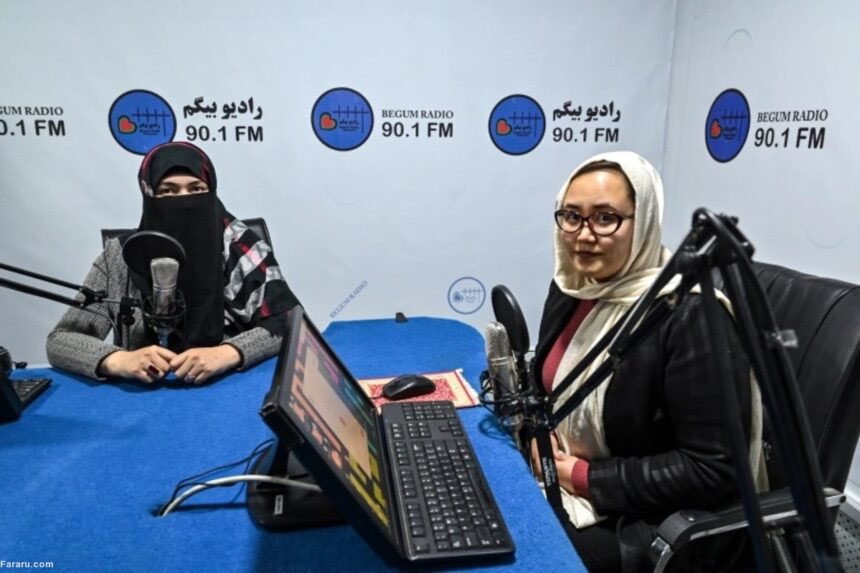
Taliban Silences Women’s Voices: Radio Begum Shut Down in Kabul :
In yet another oppressive move against Afghanistan women and girls, the Taliban has shut down Radio Begum, a women-run radio station in Kabul. This station was a rare platform where female journalists and activists could raise their voices in a country where women’s rights have been systematically dismantled since the Taliban’s return to power in 15 August 2021.
A Voice for Women, Silenced
Radio Begum was one of the few remaining spaces where Afghanistan women could express themselves, share information, and discuss issues affecting their lives. The station provided educational programs, news, and discussions about women’s rights, making it a beacon of hope for many who have been left voiceless under the Taliban’s rule. However, the regime, known for its harsh and regressive policies against women, has now silenced this vital platform.
Since retaking control, the Taliban has imposed severe restrictions on women, banning them from education beyond elementary school, preventing them from working in most sectors, and limiting their public presence. Shutting down Radio Begum is part of a broader campaign to erase women from public life entirely.
A Systematic Attack on Women’s Rights
The closure of the station is not an isolated incident. It is part of the Taliban’s systematic attack on women’s rights. Over the past two years, Afghanistan women have faced:
• Education Bans: Girls are not allowed to attend secondary school or university.
• Workplace Restrictions: Women have been barred from most jobs, including those in NGOs and international organizations.
• Public Space Limitations: Women cannot travel long distances without a male guardian and are required to wear strict Islamic dress.
• Crackdown on Media: Female journalists have been forced out of their jobs, and independent media outlets have been shut down or censored.
The Taliban’s justification for these actions often relies on their extreme interpretation of Islamic law, but their policies have been widely condemned by the international community.
The International Response
The shutdown of Radio Begum has sparked outrage among human rights organizations, media watchdogs, and international bodies. However, condemnation alone has done little to change the Taliban’s course. Sanctions, diplomatic pressure, and humanitarian aid conditions have been suggested as ways to push back against the regime’s gender apartheid.
Women in Afghanistan continue to resist in whatever ways they can, despite the dangers. Secret schools operate to educate girls, underground networks help women access employment opportunities, and digital platforms provide alternative means of communication. However, the closure of Radio Begum is a stark reminder of the shrinking space for women’s voices in Afghanistan.
What Can Be Done?
To support Afghanistan women, the international community must:
1.Increase Pressure on the Taliban: Governments and organizations must impose targeted sanctions and diplomatic measures to demand the restoration of women’s rights.
2. Support Afghanistan Women Journalists: Provide financial and technical assistance to help them continue their work through online platforms or from exile.
3.Amplify Afghanistan Women’s Voices: Media outlets worldwide should continue reporting on Taliban oppression to keep global attention on the crisis.
4.Ensure Safe Exit for At-Risk Women: Countries should facilitate asylum and resettlement programs for female journalists, activists, and educators in danger.
The closure of Radio Begum is a tragic loss for Afghanistan women, but their fight for rights and dignity continues. The world cannot afford to look away.
#Right_Justice_Freedom
@amnesty@unwomenafghan@SR_Afghanistan@hrw@HRF@heatherbarr1@RepTimBurchett @ABaerbock
Thousands of Women Imprisoned Under Taliban Rule: The Urgent Call for International Action :
Recent leaked documents indicate that at least 1,400 women are currently imprisoned in Taliban-controlled detention centers across Afghanistan. However, the Purple Saturdays Movement estimates that the actual number exceeds 2,000, as the figures from many provinces—especially remote areas—remain undisclosed. The Taliban deliberately conceals the true number of female prisoners, raising concerns that these women are being subjected to systematic abuse, including sexual exploitation.
The Hidden Crisis in Taliban Prisons
Since their return to power in August 2021, the Taliban have imposed increasingly severe restrictions on women’s rights. Women have been barred from education, employment, and public life. Those who resist—activists, journalists, former government employees, and even ordinary citizens who defy the Taliban’s oppressive decrees—are arrested and detained under vague or fabricated charges.
However, the full extent of female imprisonment remains unknown. Reports indicate that Taliban authorities avoid transparency, making it difficult to verify the true number of incarcerated women. Many of these women are held without trial, legal representation, or access to their families. Disturbingly, allegations suggest that female prisoners face sexual violence and other forms of inhumane treatment in Taliban-controlled facilities.
Purple Saturdays Movement Demands International Intervention
The Purple Saturdays Movement, an Afghanistan women’s rights organization, has called on the United Nations (UN) and the international community to launch an immediate investigation into all Taliban-run women’s prisons. Despite repeated warnings, global institutions have failed to take decisive action.
“We have repeatedly warned the international community and the United Nations, but we have not achieved any positive results,” the Purple Saturdays Movement stated in response to the leaked reports.
Without urgent international intervention, thousands of women will continue to be subjected to unjust imprisonment, abuse, and possible sexual violence under the Taliban regime. The movement demands:
1. An independent investigation into all Taliban-controlled women’s prisons.
2.Transparent reporting on the true number of female prisoners.
3.The immediate release of all unlawfully detained women.
4.Accountability for Taliban officials involved in human rights violations.
Will the World Act?
Despite mounting evidence of Taliban atrocities, the global response has been largely passive. International governments and human rights organizations must go beyond statements of condemnation and take concrete action to hold the Taliban accountable.
Afghanistan women are not only being erased from public life—they are being systematically silenced, imprisoned, and subjected to horrific abuses. The world cannot afford to ignore their suffering. It is time for the UN and global leaders to act before more women disappear into the Taliban’s prisons, possibly never to be seen again.
#Right_Justice_Freedom
@SR_Afghanistan@unwomenafghan@UNGeneva@amnestysasia@hrw@IS_HumanRights@heatherbarr1@EUCourtPress@EUinAfghanistan@eu_echo@sarahadams @ABaerbock @ZahraJoya @KathyHa67044449 @Fawziakoofi77@LinaRozbih@Lena_Reiner@PreetKGillMP@C_AB_
The Tragic Reality of Afghanistan Women Under Taliban Rule :
The United Nations Office for the Coordination of Humanitarian Affairs (OCHA) reports that 600 women die for every 100,000 births in Afghanistan. This staggering maternal mortality rate is not just a health crisis—it is a direct result of the Taliban’s oppressive policies that have stripped women of their rights, especially in education and healthcare. The Taliban’s systematic exclusion of women from society has led to countless tragedies, and yet, the international community and the United Nations have failed to implement effective measures to protect Afghanistan women.
The Taliban’s War on Women’s Rights
Since the Taliban’s return to power in 2021, Afghanistan women have faced relentless repression. They have been banned from universities, barred from working in NGOs, and prohibited from many aspects of public life. The consequences of these restrictions are particularly devastating in the health sector. With women forbidden from studying medicine, Afghanistan is experiencing a severe shortage of female doctors and midwives. This has left countless Afghanistan women without access to life-saving maternal healthcare, contributing to the country’s alarmingly high maternal mortality rate.
The Taliban’s oppression is not just about denying education; it is about silencing women altogether. Afghanistan women are now prisoners in their own country, forced to endure discrimination, abuse, and a lack of basic rights. They are denied their most fundamental freedoms, including the ability to seek medical care, which is often restricted due to the absence of female healthcare professionals.
International Failure and the Disappointment of Afghanistan Women
Despite the clear evidence of the Taliban’s crimes against women, the international community and the United Nations have failed to take meaningful action. Statements of condemnation and symbolic sanctions have done little to change the reality on the ground. Afghanistan women, who once hoped for global support, now feel abandoned. They have protested, raised their voices, and called for action, but their cries have been met with indifference.
The United Nations, despite its mandate to protect human rights, has been ineffective in addressing the crisis. The Taliban continues to operate with impunity, violating women’s rights on a daily basis while facing no real consequences. The failure of the international community to implement strong, decisive measures has only emboldened the Taliban and worsened the suffering of Afghanistan women.
A Call for Urgent Action
The world cannot continue to ignore the plight of Afghanistan women. Governments, human rights organizations, and international institutions must take decisive action to hold the Taliban accountable. This includes imposing stricter sanctions, increasing diplomatic pressure, and providing direct support to Afghanistan women through underground education and healthcare initiatives.
Afghanistan women are not asking for sympathy—they are demanding justice. The international community must rise to the occasion and take concrete steps to support them. The continued neglect of their suffering is not just a failure of policy; it is a moral failure. The world must act now before more Afghanistan women lose their lives due to oppression and inaction.
#Right_Justice_Freedom
@unwomenafghan@SR_Afghanistan@UN@UNGeneva@unafghanistan@EUinAfghanistan@Europarl_EN@heatherbarr1@C_AB_ @ABaerbock @LinaRozbih@ZHassani7@imWaheedFaizi@otunbayeva@sarahadams@SkyYaldaHakim@vonderleyen@HealthPolicyW@ActuElles
Soraya Roshan: A Tireless Advocate for Education and Women’s Rights :
Championing Education in Afghanistan ;
Soraya Roshan is a dedicated activist in the field of education and a committed member of the Purple Saturdays Movement, a global initiative advocating for Afghanistan women’s rights. She has been a vocal critic of the ongoing educational apartheid imposed on women and girls in Afghanistan, condemning the systemic denial of their fundamental right to learn.
With unwavering determination, Roshan has consistently emphasized that the world must not tolerate or normalize the oppressive policies that have stripped millions of Afghanistan girls of their future. She calls upon the international community to take decisive action, ensuring that Afghanistan women regain access to education—a right that should never be compromised.
The Crisis in Afghan Women’s Education
Since the Taliban’s return to power in 2021, Afghanistan women and girls have faced extreme restrictions, including bans on secondary and higher education. This systematic exclusion has not only shattered the dreams of countless young women but has also set Afghanistan back decades in terms of progress and development.
Roshan firmly believes that education is the cornerstone of any just and prosperous society. She argues that denying half of Afghanistan’s population access to knowledge is not just a violation of human rights but also a deliberate attempt to erase women from public life.
The Purple Saturdays Movement: A Symbol of Resistance
As an active member of the Purple Saturdays Movement, Roshan has been at the forefront of global protests and advocacy campaigns. The movement, recognized for its symbolic use of the color purple, seeks to keep international attention on the plight of Afghanistan women. Through protests, social media campaigns, and policy advocacy, the movement pressures world leaders to take concrete steps in support of Afghanistan women’s rights.
Roshan has consistently urged policymakers, human rights organizations, and global education leaders to move beyond statements of condemnation and take real action. She believes that the international community has a moral obligation to support Afghanistan women in their fight for justice and equality.
A Call to Action
Soraya Roshan’s message is clear: The world must not become desensitized to the suffering of Afghanistan women and girls. The continued deprivation of their right to education should not be normalized or ignored. She calls on governments, activists, and ordinary citizens to raise their voices, demand accountability, and support initiatives that provide alternative educational opportunities to Afghanistan girls.
Through her tireless activism, Soraya Roshan remains a beacon of hope, reminding the world that the fight for education and women’s rights in Afghanistan is far from over.
#Right_Justice_Freedom
@heatherbarr1@SR_Afghanistan@unwomenafghan@amnestysasia@amnesty_de@EUinAfghanistan@EUCourtPress