Absolutely absurd! I hereby offer @elonmusk a million dollar bet against his prediction that Optimus will be better than the best humans in surgery by the end of the decade.
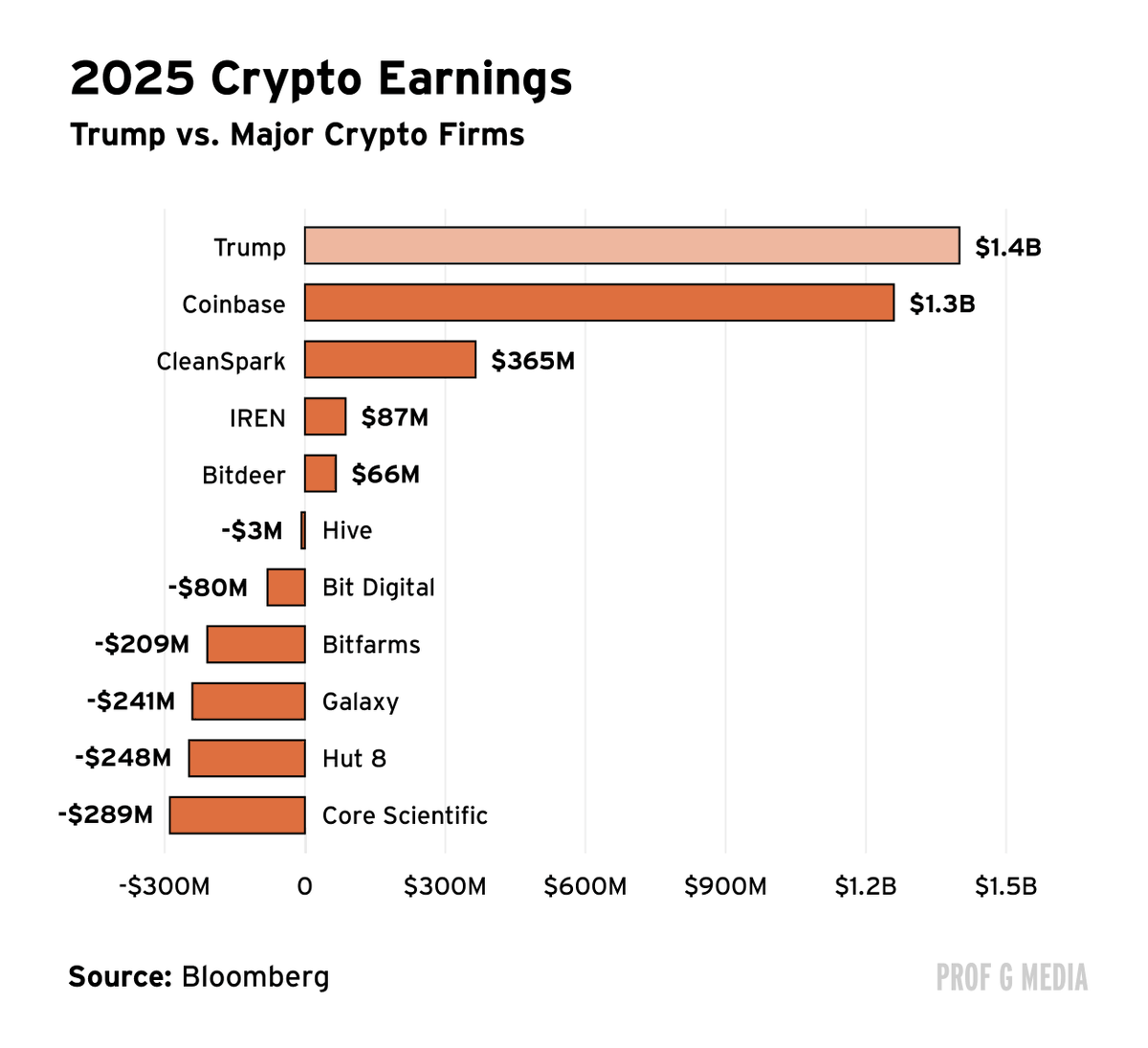
Trump stole $1.4 billion from U.S. households last year via a Ponzi scheme known as Trump Coin.
In doing so, he made more money on crypto than any of the nation's largest crypto firms. This is what a corrupt regime looks like.
@Grady_Booch Do you believe that consciousness is computable, without an integral quantum element? Do Roger Penrose’s arguments hold any water these days?
POTUS is absolutely right. Whoever provides secure and safe passage of commercial vessels through the Strait of Hormuz should be compensated for this service.
Iran has always been the GUARDIAN of the Strait and will remain so FOREVER.
20% is of course too much. We will be fair
In 1884, the English Rugby Football Union insisted that since they had invented the game, they could say what the rules were and that Scotland had no grounds for complaint that England had broken them. And that is why World Rugby is based in Dublin, not England.
wild to see a somewhat disgraced politician comment on the technical side of AI as if he has any idea about the underlying computational questions.
and of course he dwells at the bottom of Paul Graham’s pyramid of argument, with a bunch of emoji rather than any sort substantive argument whatsoever.
There’s a famous Usenet story about a programmer (Mel) who refused higher level abstractions.
It was the late 1950s, and even in that era, Mel was…well today we’d call him a boomer.
Mel only wrote in raw hexadecimal. He didn’t approve of compilers, and refused to use optimizing assemblers.
"You never know where it's going to put things”, he said.
Everyone else in the company was moving on to FORTRAN, and they didn’t understand why Mel was so stubborn about using new tools. He *loved* self-modifying code.
“If a program can’t rewrite its own code”, he asked, “what good is it?”
Mel eventually left the company, and other engineers were tasked with understanding what was left.
Mel’s hand-optimized routines always beat the assemblers; but some of it looked absolutely bizarre.
One engineer took ~2 weeks to understand why there were loops with no exit condition…yet the program worked fine.
I won’t spoil all the details, you should really read it, it’s short. But it’s a fantastic piece on “what defines a real programmer?”…which is becoming increasingly relevant in this vibe-coded era.
I strive to understand computers as deeply as Mel! If we aren’t careful, we’re going to lose the “Mels” of this world to time.
That’s part of why I go so deep in my youtube videos. I hope that younger viewers are genuinely fascinated by the inner workings of our machines, instead of handing everything off to higher abstractions.