I think schools have made a category error with feedback.
We measure what the teacher produced because it is easy to inspect: comments, codes, stamps, sheets.
But feedback is not the information given. It is what the pupil is able to do with it. 🧵
A BBC interviewer asked a Nobel physicist the simplest question in the world: why do two magnets push each other apart. He refused to answer it. What he did instead is the best seven minutes on thinking ever filmed.
The man is Richard Feynman, at home in 1983, no blackboard, no notes, sitting in an armchair.
He does not dodge because he cannot answer. He dodges because he wants you to see what the question is actually asking. So he takes an ordinary sentence, that a woman slipped on the ice and broke her hip, and starts asking why, and every answer opens another why, until the ground gives way.
Then he turns it around on the interviewer with a question about ice that sounds trivial and is not.
The point he arrives at is the uncomfortable one. Every explanation is only a translation into something you already accept without explanation. Magnets have no such translation. There is nothing more familiar than magnetism to reduce magnetism to, which is why every answer you were given at school was a picture, not a reason.
It matters more now than it did in 1983. Any tool will hand you a fluent answer in a second. Knowing which questions actually have a bottom is the part that is still yours.
One question. Seven minutes. It is in the video.
@SoLInTheWild I think the biggest hurdle is the nuance of having a difficulty that’s remains desirable i.e. accessible whilst still taking into account the variances in the classroom.
@SoLInTheWild I think Dunlovsky also talks about the negative impact of having the first retrieval too soon, saying a long-lag of 30 days is most desirable.
For no reason at all, here are 5 cool things about Vikings:
1. Vikings didn’t call themselves “Vikings.”
The word viking meant “piracy” or “freebooting voyage” in Old Norse and was something one would do.
“Bjørn is going on a viking.”
@dperkinsed Meaning making is part of the encoding process and schema building. Easier if learning in an L1 but greater cognitive cost if learning in an L2/L3. Recall and transfer then becomes more difficult.
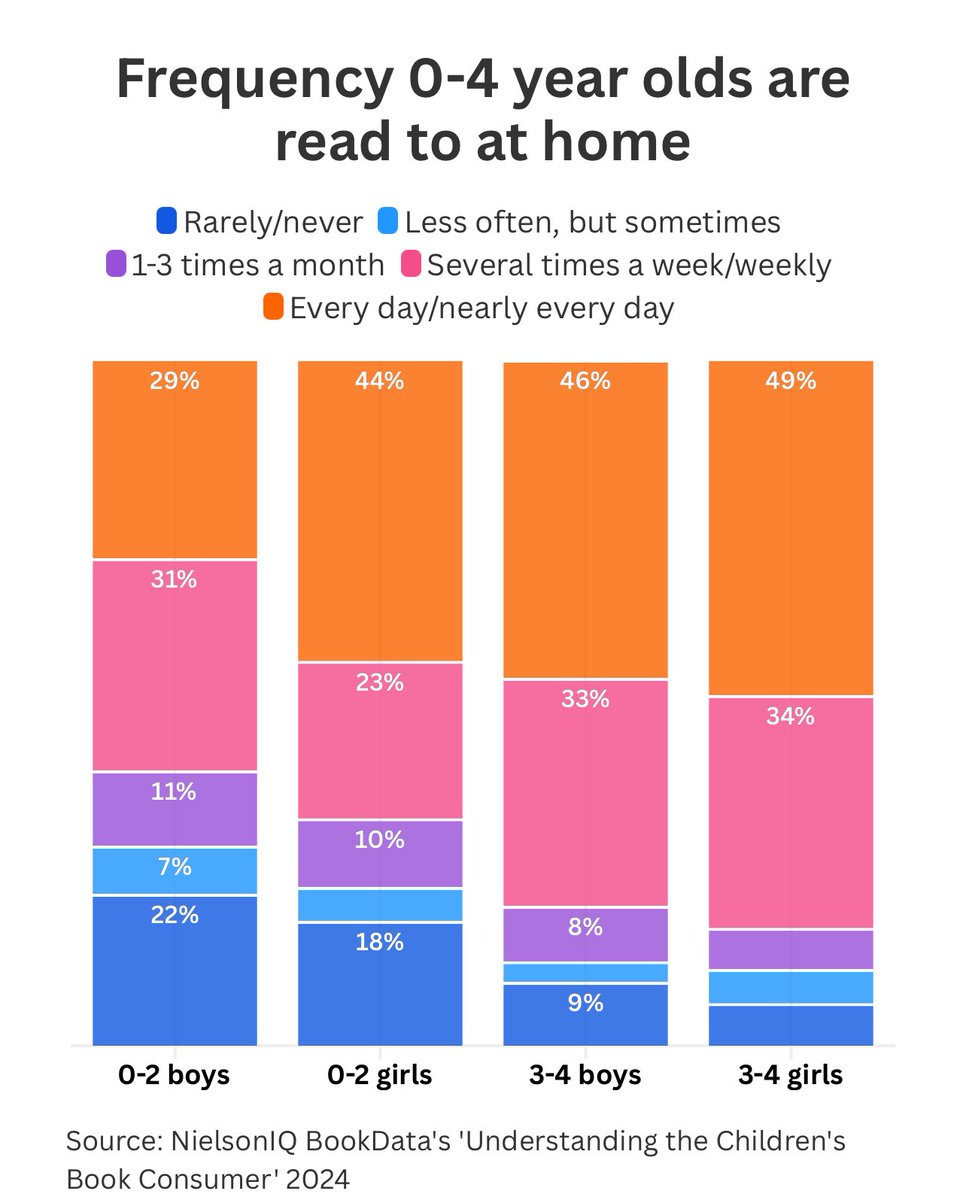
Only 41%, of children between the age of zero to four are being read to every day, “a decline of nine percentage points from 2019 and 15 percentage points in 2012.”
We are definitely not messaging the importance of early reading to families.
1/ Not all retrieval practice is equal.
A 2025 study compared two modes most teachers use without thinking about them.
The difference in outcomes is worth knowing. 🧵
@drakmog@Doug_Lemov@PepsMccrea@Josh_CPD@Barker_J They don’t though. There’s a presumption they all have the same schema - which they don’t. Also doesn’t account culture and bilingualism, in terms of encoding, storing and retrieval.
@olicav I think it’s the scientific language that feels like it adds specificity, but the whole concept is based on a something that can’t be proven: how much info can any one person hold? Also, almost nothing about the impact of culture on memory i.e. encoding, storing and retrieval.
Talking point: is learning the same for different cultures? Should T&L practice take into account geography when applying “best practice”? What do you think is the impact of western pedagogy on non-western leaners?
I’ve created a bespoke GPT called ‘Educate’ to aid in Lesson and Unit creation. It draws from different taxonomies to help create challenging lessons, and differentiated activities. Check it out.
https://t.co/gaNWqHVmHG
#Educate#GPT4#Learn