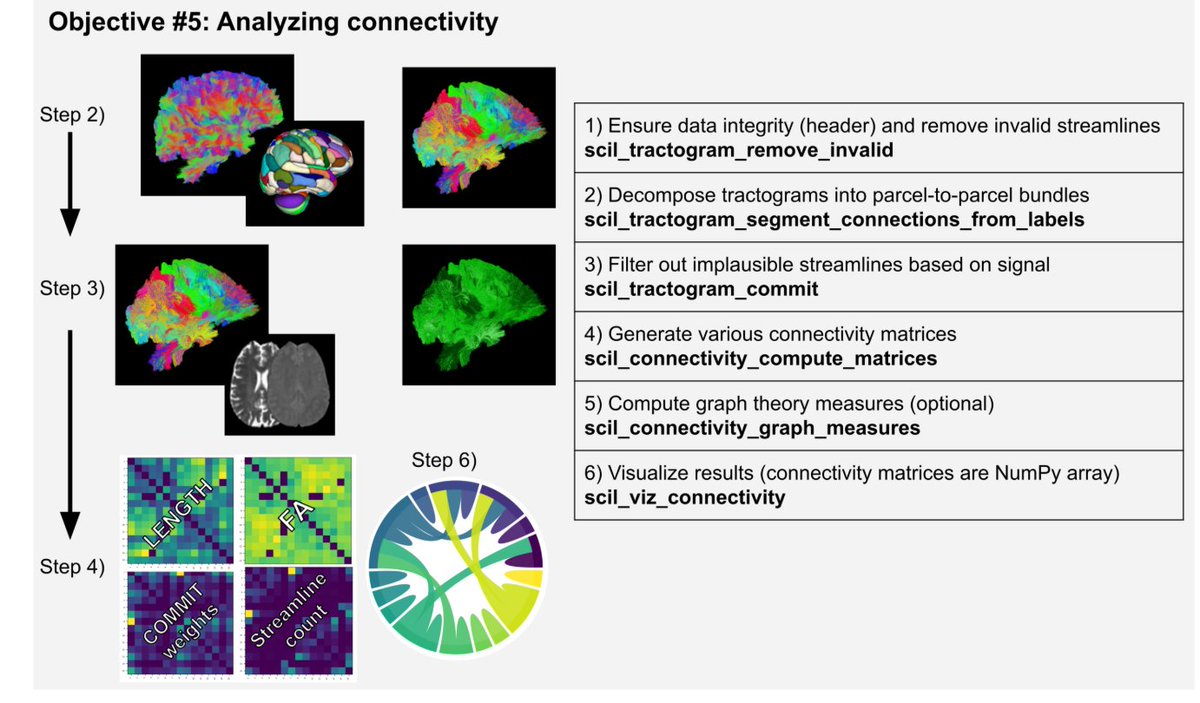
We’ve released the EEG database “JapanEEG” to support the advancement of non-invasive speech decoding BCI.
We hope it will serve as a foundational resource for researchers in this field.
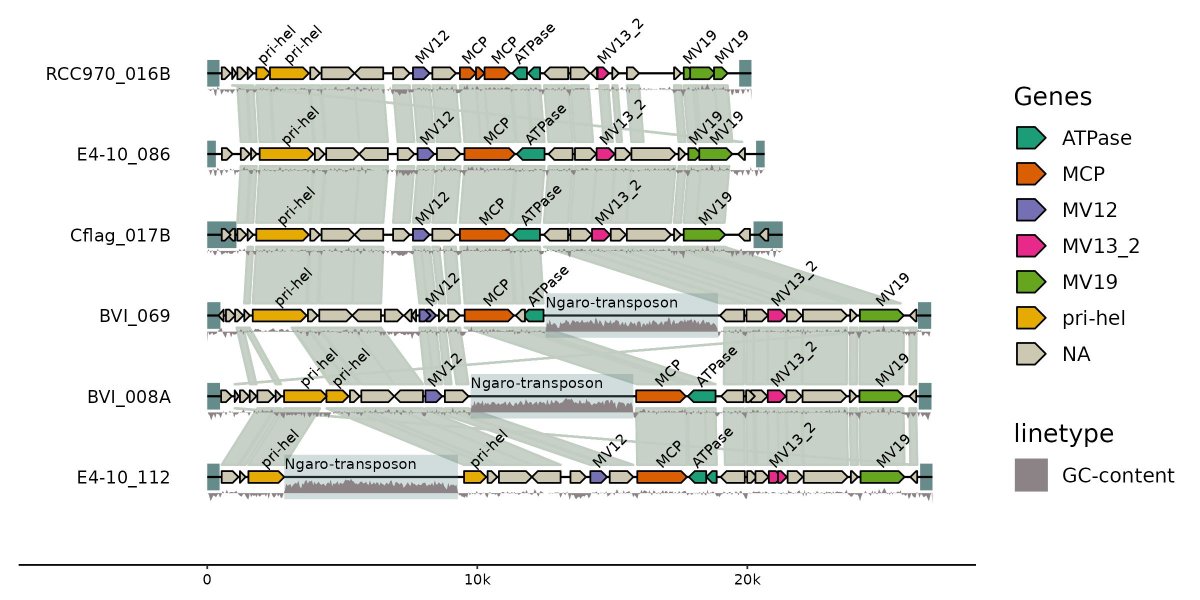
Visualize genomic data with ease using gggenomes, an R package that extends ggplot2 to handle and display genomic information intuitively. Whether you’re comparing genomes, analyzing features, or showcasing synteny, gggenomes provides the tools you need to turn complex genomic data into clear, informative visualizations.
Why use gggenomes?
✔️ Genomic-focused visualizations: Specifically designed for handling genomic data, including features, alignments, and comparative analysis.
✔️ Versatile and modular: Create detailed and layered plots for diverse genomic scenarios with flexibility for customization.
✔️ Built on ggplot2: Leverages ggplot2’s familiar framework, making it easy for users to adapt and enhance their visualizations.
The example visualization shown here is taken directly from the gggenomes GitHub repository, demonstrating how it transforms genomic data into compelling plots: https://t.co/FzE2wNzHeP
Curious to learn more about creating data visualizations in R and using tools like ggplot2 and its extensions? Check out my online course, "Data Visualization in R Using ggplot2 & Friends!"
Further details: https://t.co/ztlEzoEDWv
#tidyverse #statisticsclass #RStats #database #datavis #R #ggplot2 #Python #VisualAnalytics
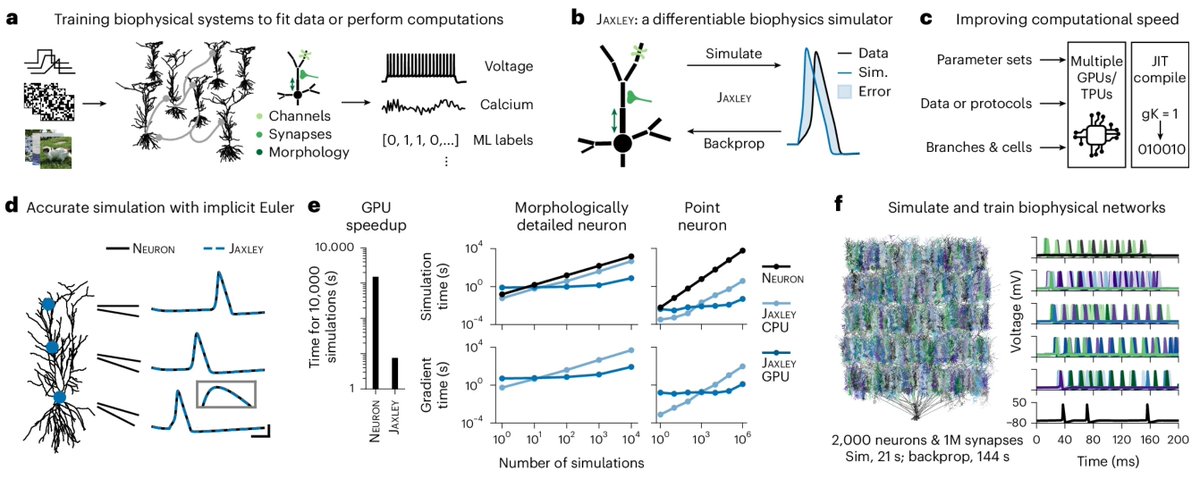
Behold Jaxley: differentiable simulator for biophysical neuron models, written in the Python library #JAX, because we needed something more than #tensorflow.
Imagine a sweet RNN models with Hodgkin–Huxley-type neurons 🧠
https://t.co/mkZ6S5FQaK
#neuroAI
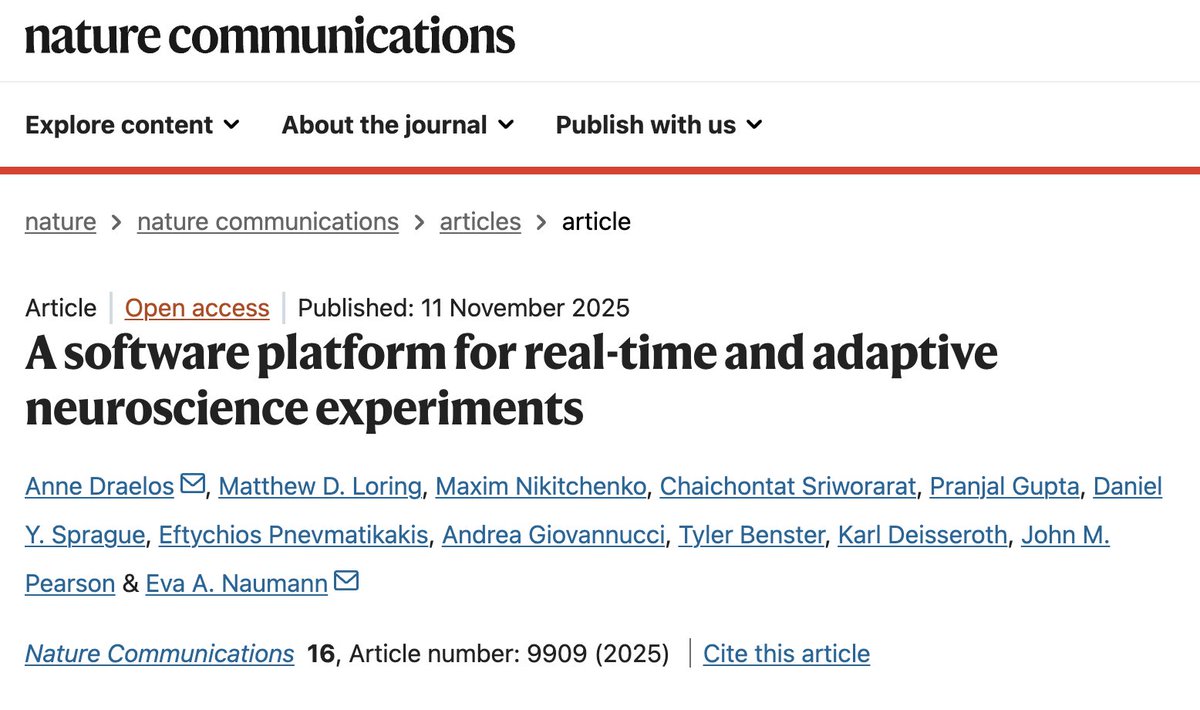
Real-time neuroscience: closing the loop between data and experiment
In many neuroscience experiments, data are collected first and analyzed later. Neural activity is recorded, behavior is tracked, and only after the experiment ends do we learn which neurons were important, which stimuli were informative, or which perturbations would have revealed something new. By then, the experiment is over—and the opportunity to adapt is gone.
Anne Draelos and coauthors introduce "improv", a software platform designed to make experiments adaptive. Instead of separating data collection from analysis, improv allows the experiment to respond to the data as they arrive. Imaging, behavioral tracking, modeling, and stimulation control all share a live memory space, so models can be updated continuously and used to guide the experiment in real time.
This means the experiment can ask smarter questions as it unfolds. While recording from the zebrafish brain, improv can estimate which neurons respond to motion and immediately target them with optogenetic stimulation. While observing spontaneous behavior and neural activity, it can identify latent variables linking the two and adjust the experiment to probe them further. During electrophysiology in motor cortex, it can learn the evolving neural trajectory and predict where it is heading, opening the door to precisely timed interventions.
The core idea is simple: analysis becomes part of the experiment, not something that happens after it. By closing the loop, improv turns experiments into dynamic conversations with the brain, where hypotheses can be updated continuously and causal tests can be performed when they are most informative.
This points toward a new generation of neuroscience experiments—faster, more efficient, and more interactive—where the limiting factor is no longer how much data can be recorded, but how intelligently it is used in real time.
Paper: https://t.co/wfpns7O2si
🧠 Join us for the next edition of the DIPY Workshop!
🗓 March 16–20, 2026 | 100% Online
5 days of hands-on learning on preprocessing, reconstruction, tractography, advanced analytics, and much more.
Registrations now open → https://t.co/WDDBrAgH0m
#DW2026#Neuroimaging#MRI
(1/3) We are releasing SuperSynth, a neural network for simultaneous segmentation, T1/T2/FLAIR synthesis+super resolution, and atlas registration of any brain MRI scan (including low-field, ex vivo, single hemispheres). You can find it in @FreeSurferMRI :
https://t.co/rwfwvzcJx3
🎯Meet PlanTUS: a fast, open-source tool to pick where to place a transducer for transcranial ultrasonic stimulation (TUS) on an individual head – before you run heavy simulations.
Paper: https://t.co/M75XwcQ1UM
Code & instructions: https://t.co/yWrVXNIBzm
Automated optogenetic control of hundreds of cells in parallel. Each cell is individually steered, collectively acting as a "tissue printer". Preprint & code out!
The brain uses orthogonal sub-dimensions in neural space as communication channels.
This is a great new paper using Neuropixels from ~6500 neurons on 8 cortical and deep regions in mice.
Simplifying the space helps a lot to understand the idea.
Here is my toy model and notes:
A vital and very enjoyable component of my academic work is teaching students at all levels how to extend the frontiers of knowledge. So I’m pleased to announce a set of Jupyter notebook tutorials organized around our ideas for “physics of behavior”: https://t.co/AVGHOj7ueS
This GitHub repo is a gold mine for EVERY data scientist!
DS Interactive Python repo has interactive dashboards to learn statistics, ML models, and other DS concepts.
Topics include PCA, bagging & boosting, clustering, neural networks, etc.
Fully open-source and free!
🏁 Big news from #Cogitate!🏁
We’re proud to deliver the 1st part of our promised open multimodal dataset:
iEEG data from n=38, across 3 centers, collected under a unified protocol.
📄Paper: https://t.co/9DpisL7SLl
📀Data: https://t.co/x3eEmOWRxS
💻Code: https://t.co/AYP6QMiMvF
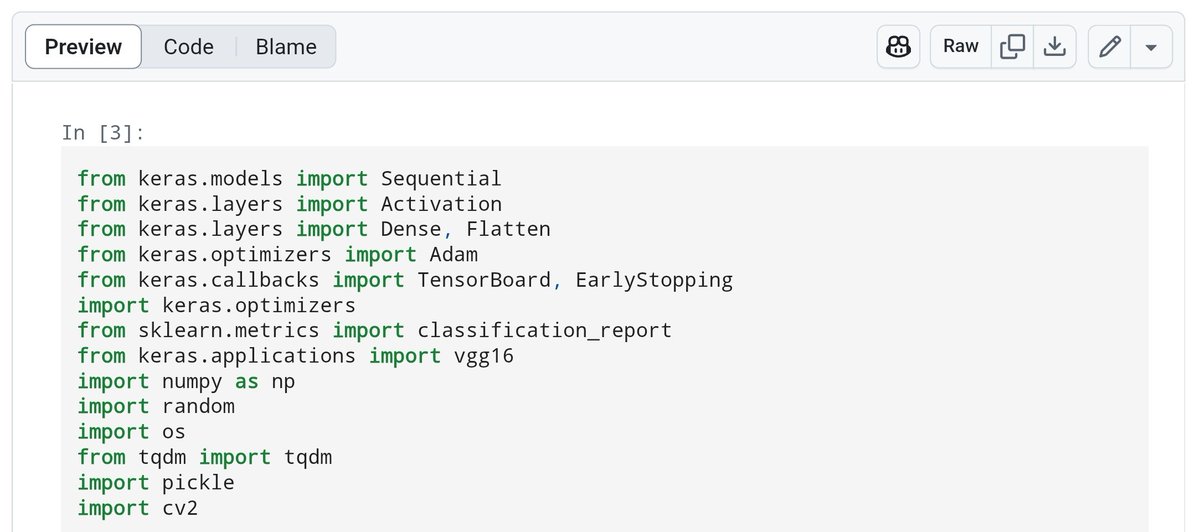
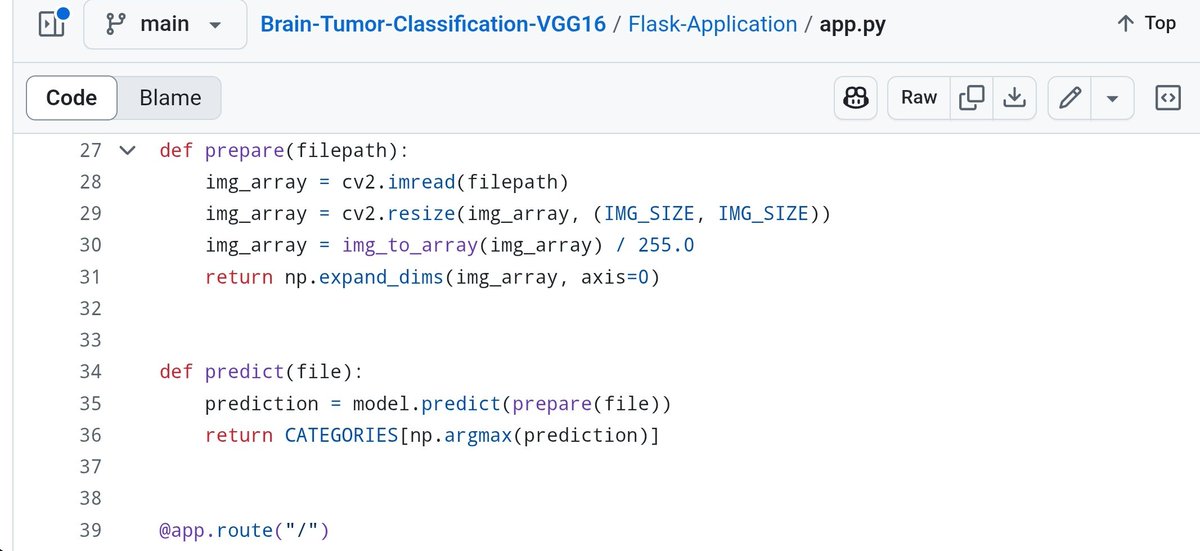
Excited to share one of my latest projects: Brain Tumor Classification using VGG16 and training on real medical imaging dataset to predict tumors.
All built with #Python and its powerful libraries + #Flask for an interactive demo.
The link of repository:
https://t.co/ajMGfxjDZ7
🎨🧑🎨 Looking for a tool to visualize subcortical/thalamic data in 2D? Check out this python-based package I put together (subcortex-visualization on PyPI) + a guide to create your own custom atlas meshes and vector graphics! All feedback/tips welcome 😊
https://t.co/eUPfQj1U7a