If you deep it down you’ll see that Nigeria is just a money and materialistic country, money is ahead of anything here, values, integrity are just substitutes and nothing cannot be compromised because of money, this latest Ulama stunt has proved it.
Your hypocrisy is always obvious. These are your Plateau and Benue pastors with guns long before any Muslim even thought of self-defense. Dachomo has been using guns even after his own confession of being an armed robber.
You knw what you are doing that's why you always dey para whenever you see a Muslim trying any self defense method as yours. B4st4rd
When all of this was happening in the South, the North was the most peaceful region in Nigeria. We knew nothing about banditry, terrorism, cannibalism, ritual killings, Yahoo fraud, or human trafficking, robbery, fake drugs productions are, early prostitutions etc. We grew up without knowing all this, we only watched it haoppening on TV about the terrible Southern issues.
Life was even the most affordable, until outsiders infiltrated us.
And even with everything going on in Nigeria today, I would still choose the North a million times over a place where a brother can sleep in the same house with his own brother and still kill him for money.
A Bitter Reality We Must Confront
This is a painful reality that many of us—especially Hausa Muslims—must be willing to discuss honestly.
As Sheikh Lawan Abubakar Triumph (may Allah preserve and protect him) rightly pointed out, the culture of begging that has become associated with the Almajiri system is not an Islamic teaching. It is a social problem that has, unfortunately, become deeply entrenched in parts of Northern Nigeria.
The Sheikh observed that even in countries poorer than Nigeria, such as Sudan, Benin Republic, and Ghana, it is not uncommon to find some of our own people begging on the streets. Able-bodied men, women, and even children have come to treat begging as a means of livelihood. This is contrary to the teachings of Islam, which honour work, dignity, and self-reliance.
It is also important to reject the false claim that today’s begging culture is synonymous with the noble Islamic concept of Al-Muhajir (the emigrant for the sake of Allah). They are not the same. Using religion to justify or institutionalize street begging is both historically and religiously inaccurate.
A painful sight in many of our cities is seeing elderly women, before sunrise, taking young children to street corners—not to earn an honest living, but to beg. In contrast, many other elderly women, majority of other ethnicities, leave their homes at the same hour to sell bread, fry akara, hawk vegetables, or engage in other lawful work. They are teaching their grandchildren that dignity comes through effort, not dependence on handouts.
This is not about ethnicity. Every community has its strengths and its weaknesses. But where begging becomes normalized & even defended in the name of culture or religion, society must pause and ask hard questions.
Islam encourages productive work, condemns habitual begging without genuine necessity, and commands Muslims to preserve their honour. We should therefore invest in genuine Qur’anic education, vocational skills, entrepreneurship, and social support for the truly needy—not perpetuate a system that traps generations in dependency.
If we truly love our people, we must have the courage to acknowledge this problem and work together to solve it.
Reforming the Almajiri system, abolishing street begging, protecting children, empowering families, and restoring the dignity of labour are responsibilities we all share.
May Allah guide us to what is right, grant dignity to our people through lawful means, and protect our children from every path that leads to dependence and humiliation. Āmīn.
𝐀𝐧 𝐈𝐦𝐩𝐨𝐫𝐭𝐚𝐧𝐭 𝐑𝐞𝐦𝐢𝐧𝐝𝐞𝐫 𝐟𝐨𝐫 𝐅𝐫𝐞𝐪𝐮𝐞𝐧𝐭 𝐓𝐫𝐚𝐯𝐞𝐥𝐞𝐫𝐬
This is a very beneficial reminder from Sheikh Suleiman Al-Ruhayli (حفظه الله تعالى), especially for those of us who travel frequently by air.
The Sheikh explained that for a traveler, the prayer times are effectively grouped into three periods, because Allah has permitted combining certain prayers:
- Fajr (Subh) remains in its own time.
- Dhuhr and Asr share one combined time, beginning when Dhuhr enters and ending when Asr expires.
- Maghrib and Isha share one combined time, beginning when Maghrib enters and ending when Isha expires.
Practical application:
If you board a flight before Dhuhr and know that your flight will land before the time of Asr ends, you do not need to pray on the aircraft. Wait until you land, then pray Dhuhr and Asr together, since their combined time has not yet expired.
However, if your flight will not land until after the time of Asr has completely ended (for example, after Maghrib has entered), then the combined time for Dhuhr and Asr will have expired. In that case, you should pray on board the aircraft.
Likewise, if you travel after Asr and know you will not land until after the time of Isha has expired, you should pray Maghrib and Isha during the flight.
If you need to pray on board:
- Pray standing if you are able.
- If you cannot stand, pray while seated.
- Face the Qiblah if it is possible.
- If you cannot determine or face the Qiblah, then pray in whatever direction you are able.
This is in accordance with the statement of Allah:
"𝐒𝐨 𝐟𝐞𝐚𝐫 𝐀𝐥𝐥𝐚𝐡 𝐚𝐬 𝐦𝐮𝐜𝐡 𝐚𝐬 𝐲𝐨𝐮 𝐚𝐫𝐞 𝐚𝐛𝐥𝐞." (𝐐𝐮𝐫,𝐚𝐧 𝟔𝟒:𝟏𝟔).
This concession is one of the mercies Allah has granted to travelers. May Allah grant us understanding of His religion and enable us to worship Him correctly wherever we are. آمين.
Dare,
Your statement would carry more weight if the government showed the same concern for transparency & accountability that it now demands of a respected cleric.
The meeting was not a classified national security briefing. A religious leader speaking truthfully about issues discussed with the President; particularly matters affecting millions of suffering Nigerians, is not a breach of dignity. It is part of the moral responsibility expected of those who speak for the people.
The real controversy is not that the cleric spoke. The real controversy is that Nigerians are enduring economic hardship while those in govt seem more concerned about controlling the narrative than addressing the substance of the concerns raised.
Quoting Scripture to lecture a bishop about discretion is misplaced & funny..The same Scriptures repeatedly call on leaders to defend the oppressed, uphold justice, and listen to honest rebuke.
Rather than attacking the messenger, the Presidency should focus on responding to the message. Nigerians need relief, not lectures on protocol.
~Dr Hidima is a Nigerian Citizen that believes in Nigeria.
If this happened less than four years ago, Gimba Kakanda would have written a thousand word essay, packed with big big grammar, bersting the government for deliberately keeping Nigerians poor so they can be bought cheaply whenever political need arises.
Today, the same man Gimba is celebrating that same action. It is difficult not to wonder what changed.
Was Gimba Kakanda spending all those years speaking truth to power because he genuinely believed in the cause, or was he simply positioning himself for a seat at the table?
Or did he eventually give up on Nigeria and Nigerians, deciding that personal comfort mattered more than the convictions he once passionately defended?
Whatever the answer is this contrast is impossible to ignore.
It is genuinely sad to watch someone who once challenged the system now appear content with laughing at the symptoms of the very problems he used to condemn.
Indeed we all have a price tag, and sadly it is not that expensive.
If Kaduna can have a Christian deputy with Christians not up to 20% who are mostly settlers then Muslims in Plateau State, who are even more numerous than Christians in Kaduna, deserve a Deputy position too. Despite that, Uba Sani removed his Muslim deputy and appointed a Christian.
Security Clearance and Public Record: Pantami Deserves Commendation
By Professor Sulaiman Muhammad
The recent reflections by retired Assistant Director of the Department of State Services (DSS), Dennis Amachree, in his memoir, DSS @ 40: My Journey Behind the Shield, have reopened public debate over the 2021 controversy surrounding former Minister of Communications and Digital Economy, Professor Isa Ali Pantami. While discussions on the intersection of national security and public appointments are both legitimate and necessary, such discourse must remain anchored on documented facts, proper context, and the full public record.
An objective assessment of the matter requires consideration of three critical issues: the context of the original statements, the public clarifications made in 2021, and Pantami's record in public office.
First, much of the controversy in 2021 arose from translated transcripts and audio recordings of religious lectures delivered between 2001 and 2002. According to Pantami, those remarks were made at a time when he was deeply angered by the incessant killing of innocent people and what he considered the failure of the nation's security architecture to protect lives. They were not expressions of support for violent extremism. He has consistently maintained that he has never supported the unlawful killing of innocent people. Any narrative suggesting otherwise ignores both his explanation and the broader context in which those remarks were made.
Furthermore, portraying historical commentary from that period as evidence of support for insurgent groups overlooks documented facts. In June 2006, during a widely publicised six-hour televised debate in Bauchi, Pantami directly confronted Mohammed Yusuf, the founder of Boko Haram, intellectually dismantling Yusuf's anti-Western education ideology years before the group evolved into a full-scale insurgency.
Second, when those past remarks resurfaced in April 2021, Pantami did not evade public scrutiny. During his daily Ramadan lectures in Abuja, he addressed the matter openly, explaining that his understanding of international affairs had evolved over time as he acquired more knowledge and experience. He expressly repudiated those earlier views and stated unequivocally that he does not subscribe to any form of violent extremist ideology. In public life, a clear repudiation of previous views, accompanied by years of consistent conduct, deserves to be evaluated fairly rather than dismissed outright.
Third, the debate over security clearance should also be weighed against Pantami's record in office. During his tenure as Minister of Communications and Digital Economy, he spearheaded the implementation of the National Identification Number (NIN) and Subscriber Identity Module (SIM) integration policy. Before the enforcement of this policy, unregistered SIM cards were widely exploited by kidnappers, bandits and insurgents to coordinate criminal activities and demand ransom. The NIN-SIM integration significantly strengthened the capacity of security and law enforcement agencies to trace communications associated with criminal activities.
Perhaps the clearest indication that Pantami posed a challenge to insurgent groups, rather than sympathising with them, came in February 2020. Following the aggressive implementation of the NIN-SIM policy, Boko Haram leader Abubakar Shekau released a video publicly issuing a death threat against Pantami. In the video, Shekau referenced the assassination of Sheikh Ja'afar Mahmud Adam and warned Pantami to expect a similar fate for frustrating the group's communication network. That threat from one of Nigeria's most notorious terrorist leaders speaks for itself.
Public officials should ultimately be judged by the totality of their record. In Pantami's case, that record reflects an individual who publicly addressed concerns over his past statements, challenged Boko Haram's ideology years before it became a major insurgent movement,
📌📌📌📌📌📌
‼️‼️‼️‼️‼️‼️
Another High Profile Regime Propaganda 💥💥💥💥💥
Ittaqillah
There is no way T-Pain can wash his hands off this monumental corruption that has shaken the foundation of Nigeria
For context Tanimu is the former husband of @hadizabalausman who is profiled as the Special Adviser to the President on policy coordination that heads “central delivery coordination unit”
I have said T-Pain and all his appointees are very dangerous and treacherous people
That same man goes to the mosque every day o
It simply means the likes of Doyin Salami, @CCSoludo and @BJRewane have a case to answer
What is even more disgusting is that the likes of @BashirAhmaad@GarShehu@FemAdesina and @ClemAgba are all reading this BS but are afraid of losing the patronage of this dangerous regime to talk
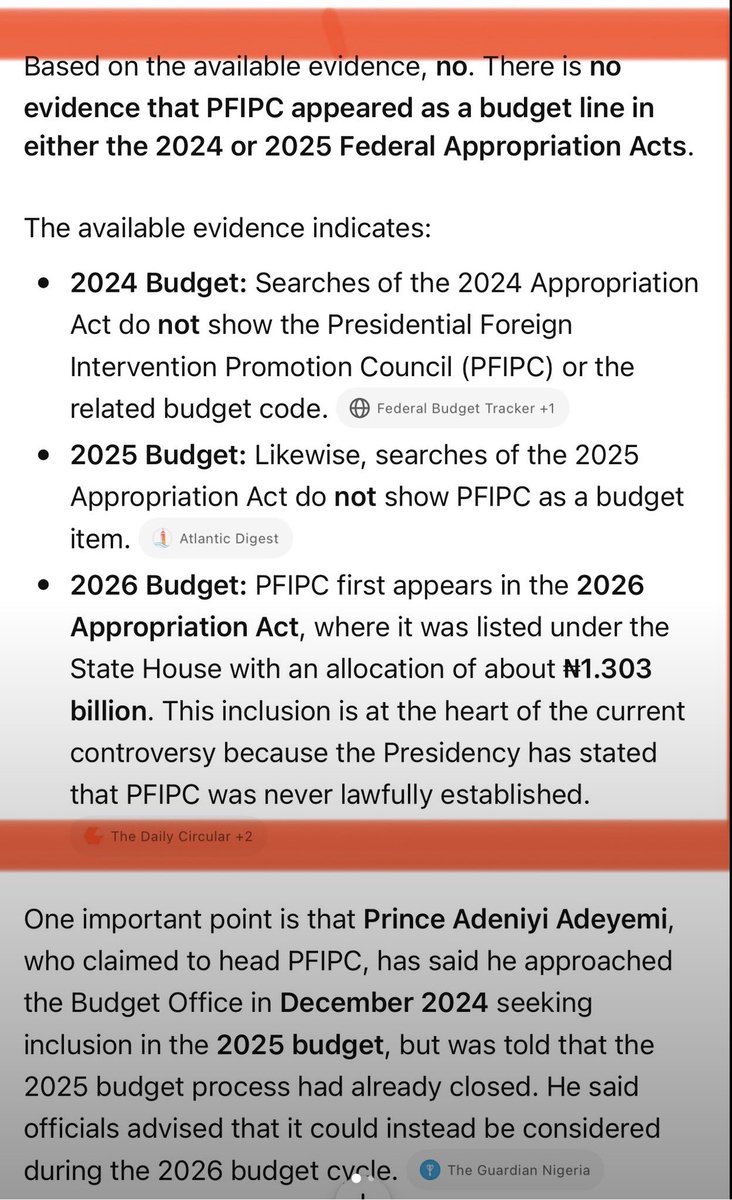
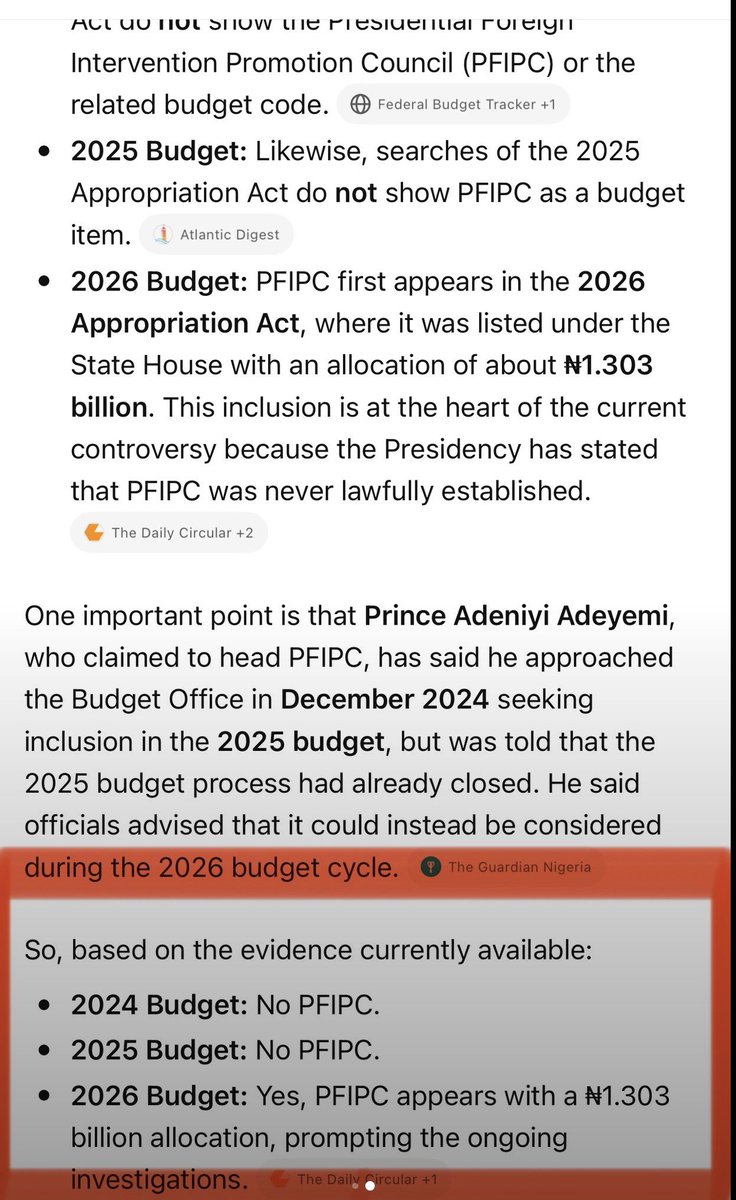
They should start by telling us why the same PFIPC never appeared in the 2024 and 2025 budgets after PMB completed his term if it is PMB that returned from his grave to insert the T-Pain regime agency into the budget
An agency @aonanuga1956 claimed was illegally created by Adeyemi
So nobody among the @HouseNGR committee members could ask Tanimu to show them allocation to the T-Pain scam agency in the 2024 and 2025 budgets
It means President Buhari came out of his grave in 2026 and inserted the N1.3 Billion in the 2026 budget for @CCSoludo and others
@YusufAdamuGagdi and the rest are just wasting our time, a bundle of joke
It was @aonanuga1956 that first promoted the idea at the beginning of the controversy, calling it a Buhari era agency
The likes of Tanimu in a decent society will be heading straight to jail from that sitting because he must have been on oath
#GbajaGate
@GbajaGate
#GbajaGate
@PlanningNG@otegaogra@NGRPresident@TheTope_Ajayi@Abdulfagge@topefasua@femigbaja@SundayDareSD@atikuabagudu@OfficialAPCNg@ADCNig@NGRSenate@Speaker_Abbas
📌📌📌📌📌📌📌
Nigeria Is Currently Dealing With A Very Dangerous Propagandist & Manipulative Regime 💥💥💥💥💥💥💥
Dear @aonanuga1956
This scapegoating of PMB must be a joke right?
Tanimu Yakubu has more questions to answer on how PFIPC made it to the 2026 budget of T-Pain
🔥Fact Checking The Claims Of Tanimu Yakubu (DG Budget Office)
✅Linking PFIPC to President Buhari’s era ad hoc PEAC is a Huge Scam
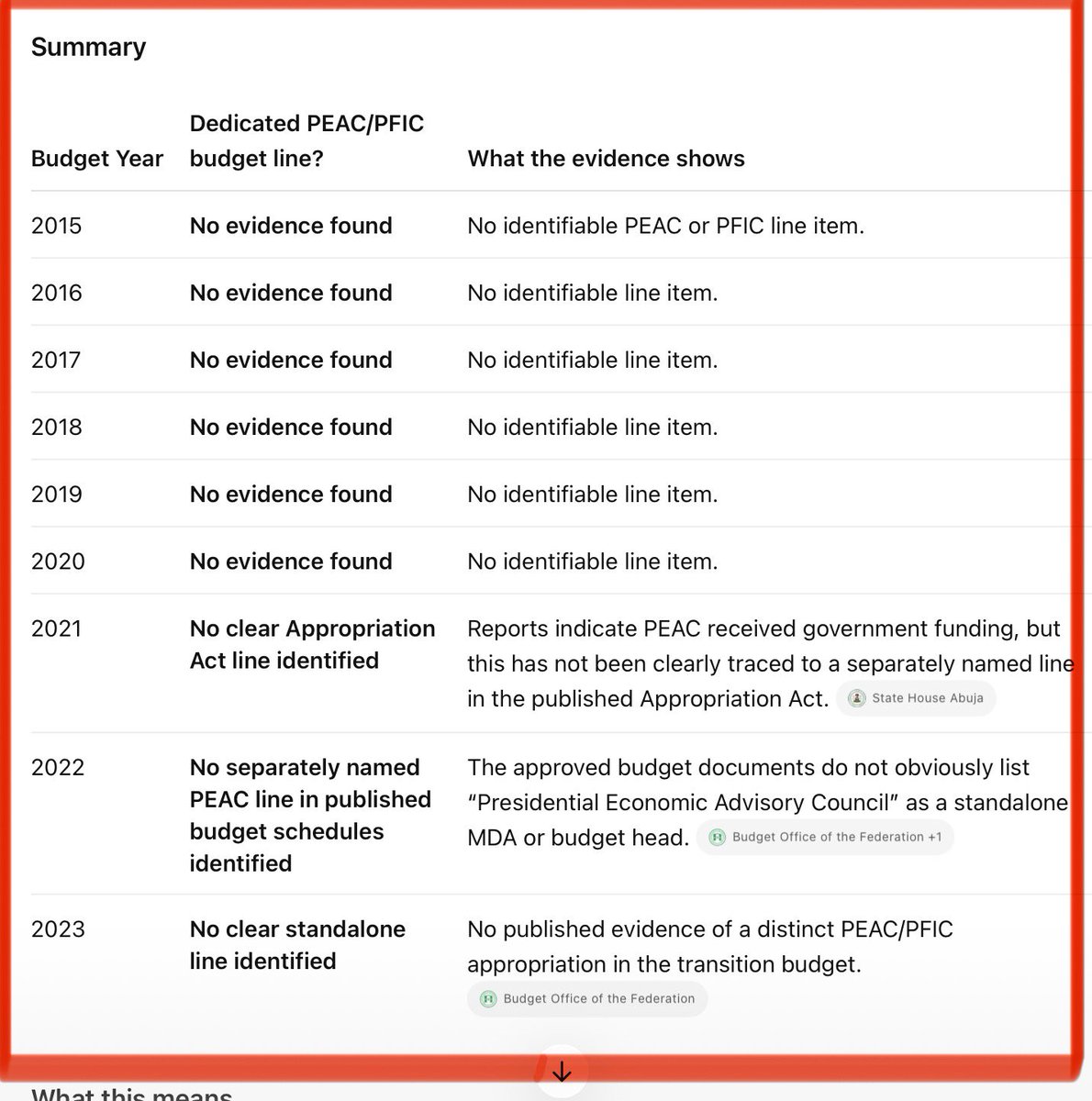
✅Since 2019 that PMB created the ad hoc PEAC that has the likes of Doyin Salami, @CCSoludo@BJRewane and others as members there were never any budgetary allocation to the council till the T-Pain agency PFIC appeared in the 2026 budget
- There were no dedicated PEAC budget line from 2015-2023 under President Buhari, in fact the ad hoc PEAC was created by PMB in September 2019
✅How did PEAC an ad hoc committee that had no staff recruitment under PMB in his 4 years suddenly get a waiver to employ over 300 personnel under T-Pain yet you are linking the fraud to the PMB administration?
✅Is It also a coincidence that under PMB there were no staff of accountant general office posted to the ad hoc PEAC but PFIPC somehow managed to get statutory deployment of staff from the Accountant General office?
✅The activities of the PMB ad hoc PEAC and their expenditure were probably funded by the State House Operation, State House Headquarters or office of the Chief of Staff, there was never a standalone budgetary allocation
✅The President Buhari era ad hoc PEAC never had any permanent office anywhere talk less of the federal secretariat
It was not a standing bureaucracy with daily office routine, the PEAC was called an ad hoc committee for a reason, it functioned as a panel of independent experts that convene periodically
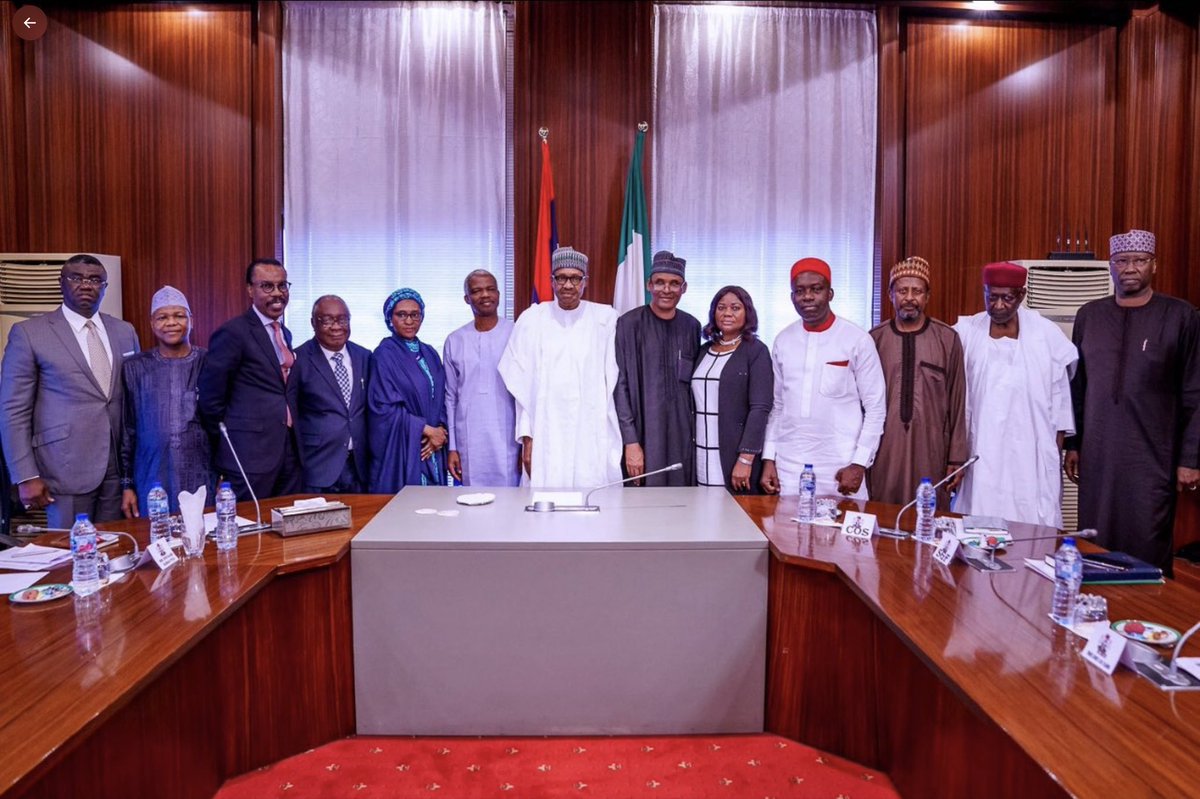
There meetings with PMB held at the presidential villa, including the council chambers or any other meeting rooms within the State House
During Covid-19 meetings held virtually
The Secretariat was anchored by Dr Mohammed Adaya Salisu in his capacity as an SSA in the presidency supporting the council on part time basis
The investigation will never be thorough, it will take another administration to unpack this monumental fraud
This fraudulent transaction called PFIPC that shattered all corruption records in Nigeria since independence has nothing to do with President Buhari’s era Presidential Economic Advisory Council that was established in September 2019
Thank you for your attention on this matter
@topefasua@Abdulfagge@TheTope_Ajayi@otegaogra@SundayDareSD@BwalaDaniel@PlanningNG@FMINONigeria@taiwoyedele@ADCNig@OfficialAPCNg@atikuabagudu@BashirAhmaad@GarShehu@ClemAgba@ZShamsuna
#GbajaGate
Setting The Records Straight: Buhari Admin Didn't Create Any Fake Agency Called PFIC-PEAC, Bola Tinubu's Regime Did!
Rather than accept responsibility for the Gbaja-Gate/PFIC-PEAC corruption scandal, the failed APC regime of Bola Ahmed Tinubu, has once again blamed the administration of late President Muhammadu Buhari for creating the so-called fictitious agency called the Presidential Foreign Intervention Promotion Council/Presidential Economic Advisory Council (PFIC-PEAC)? Wow!
We are aware that millions of people in Nigeria suffer from endemic national amnesia because of endemic poverty, widespread illiteracy, and ignorance. Thus, why the Bola Tinubu's Budget Office is shifting the blames for the creation of the fake agency called PFIC-PEAC to the immediate-past administration of Buhari.
In setting the records straight again, we aver: It must be recalled that the Presidential Economic Advisory Council (PEAC) was actually created as an 8-man advisory body by Pres. Muhammadu Buhari on September 16, 2019, to advise the President directly on economic policy matters, including fiscal analysis and economic growth. The council was tasked with holding monthly technical sessions and quarterly meetings with the President to address internal and global economic issues.
At inception, the council had the following members: Prof. Doyin Salami (Chairman); Dr. Mohammed Sagagi (Vice Chairman); Dr. Mohammed Adaya Salisu (Secretary). Other members were Prof. Chukwuma Soludo, Mr. Bismark Rewane, Prof. Ode Ojowu, Dr. Shehu Yahaya, and Dr. Iyabo Masha.
It was the APC-led regime of Bola Tinubu (2023 to date), which came in, and morphed the 8-man advisory council dependent on sitting honoraria, into a full-fledged federal government agency rechristened the Presidential Foreign Intervention Promotion Council/Presidential Economic Advisory Council (PFIC-PEAC). Before this scandal leaked to the press and public in October 2025, PFIC-PEAC was illegitimately empowered with over 300 staff and a 2026 approved operational budget of a whopping N1.3 billion, in what can be described as 'food for boys' creation.
When this scandal broke in October 2025, the Tinubu-led Presidency and their ego-tripping machines tried to paint this council as fake and non-existent. But when the House of Representatives and the ICPC began to investigate this scandal, the Bola Tinubu's Budget Office is now blaming the immediate-past administration of President Muhammadu Buhari for creating the fake agency called PFIC-PEAC.
These plethora of fabus sold by the most-corrupt government in Nigeria since 1960 must not be tolerated by intellectual journalists, broadcasters, editors, members of Nigeria's intelligentsia community, and millions of Nigerians at home and in the Diaspora.
Dear @Speaker_Abbas, @icpcnigeria Chairman, Dr. Musa Adamu Aliyu, we await your comprehensive report and recommendations for prosecution of culprits behind this heist on or before August 14, 2026.
The ball stops on your courts now!
𝐖𝐡𝐨 𝐬𝐡𝐨𝐮𝐥𝐝 𝐰𝐞 𝐠𝐢𝐯𝐞 𝐙𝐚𝐤𝐚̄𝐭 𝐭𝐨?
The Qur’an clearly identifies eight categories of people who are eligible to receive Zakat. These are listed in Qur’an, Surah At-Tawbah (9:60):
𝟏. The poor (Al-Fuqara’) – Those who do not have enough wealth or income to meet their basic needs.
𝟐. The needy (Al-Masakin) – Those who are in hardship and have insufficient means, even if their poverty is not obvious.
𝟑. Zakat administrators:(’Amilina ’Alayha) – People officially appointed to collect, manage, and distribute Zakat.
𝟒. Those whose hearts are to be reconciled (Mu’allafatu Qulubuhum) – Individuals whose acceptance of or support for Islam is considered beneficial to the Muslim community, according to Islamic legal principles.
𝟓. Those in bondage (Fir-Riqab) – Historically, this referred to freeing slaves or captives. Today, some scholars extend this to helping people escape forms of coercion or severe exploitation, though interpretations differ.
𝟔. Those in debt (Al-Gharimin) – People burdened by legitimate debts that they cannot repay, provided the debt was not incurred for sinful or reckless purposes.
𝟕. In the cause of Allah (Fi Sabilillah) – Traditionally understood to include legitimate causes that serve and protect the faith and the Muslim community. Scholars differ on how broadly this category should be applied today.
𝟖. The stranded traveller (Ibn As-Sabil) – A traveller who has become stranded or lacks the means to complete their journey, even if they are normally well-off at home.
𝐖𝐡𝐨 𝐬𝐡𝐨𝐮𝐥𝐝 𝐧𝐨𝐭 𝐫𝐞𝐜𝐞𝐢𝐯𝐞 𝐙𝐚𝐤𝐚𝐭?
In general:
𝟏. A wealthy person who possesses wealth above the Nisab threshold.
𝟐. Someone whom you are already legally obliged to support financially, such as your parents, grandparents, children, or grandchildren.
𝟑. Many scholars also hold that the Prophet Muhammad’s immediate family (Banu Hashim) should not receive Zakat.
𝐏𝐫𝐢𝐨𝐫𝐢𝐭𝐲 𝐢𝐧 𝐝𝐢𝐬𝐭𝐫𝐢𝐛𝐮𝐭𝐢𝐨𝐧
If there are eligible recipients, it is generally recommended to prioritise:
𝟏. Your poor relatives (who are not your dependants).
𝟐. Poor people in your local community.
𝟑. Other eligible recipients according to need.
Giving Zakat to an eligible relative (other than those you are financially responsible for) earns both the reward of Zakat and the reward of maintaining family ties (Silat ar-Rahim).
𝑻𝒉𝒆 𝒈𝒖𝒊𝒅𝒊𝒏𝒈 𝒑𝒓𝒊𝒏𝒄𝒊𝒑𝒍𝒆 𝒊𝒔 𝒕𝒉𝒂𝒕 𝒁𝒂𝒌𝒂𝒕 𝒊𝒔 𝒊𝒏𝒕𝒆𝒏𝒅𝒆𝒅 𝒕𝒐 𝒂𝒍𝒍𝒆𝒗𝒊𝒂𝒕𝒆 𝒈𝒆𝒏𝒖𝒊𝒏𝒆 𝒇𝒊𝒏𝒂𝒏𝒄𝒊𝒂𝒍 𝒉𝒂𝒓𝒅𝒔𝒉𝒊𝒑 𝒂𝒏𝒅 𝒔𝒕𝒓𝒆𝒏𝒈𝒕𝒉𝒆𝒏 𝒕𝒉𝒆 𝒘𝒆𝒍𝒇𝒂𝒓𝒆 𝒐𝒇 𝒕𝒉𝒆 𝑴𝒖𝒔𝒍𝒊𝒎 𝒄𝒐𝒎𝒎𝒖𝒏𝒊𝒕𝒚 𝒃𝒚 𝒔𝒖𝒑𝒑𝒐𝒓𝒕𝒊𝒏𝒈 𝒕𝒉𝒐𝒔𝒆 𝒘𝒉𝒐𝒎 𝑨𝒍𝒍𝒂𝒉 𝒉𝒂𝒔 𝒔𝒑𝒆𝒄𝒊𝒇𝒊𝒄𝒂𝒍𝒍𝒚 𝒅𝒆𝒔𝒊𝒈𝒏𝒂𝒕𝒆𝒅.
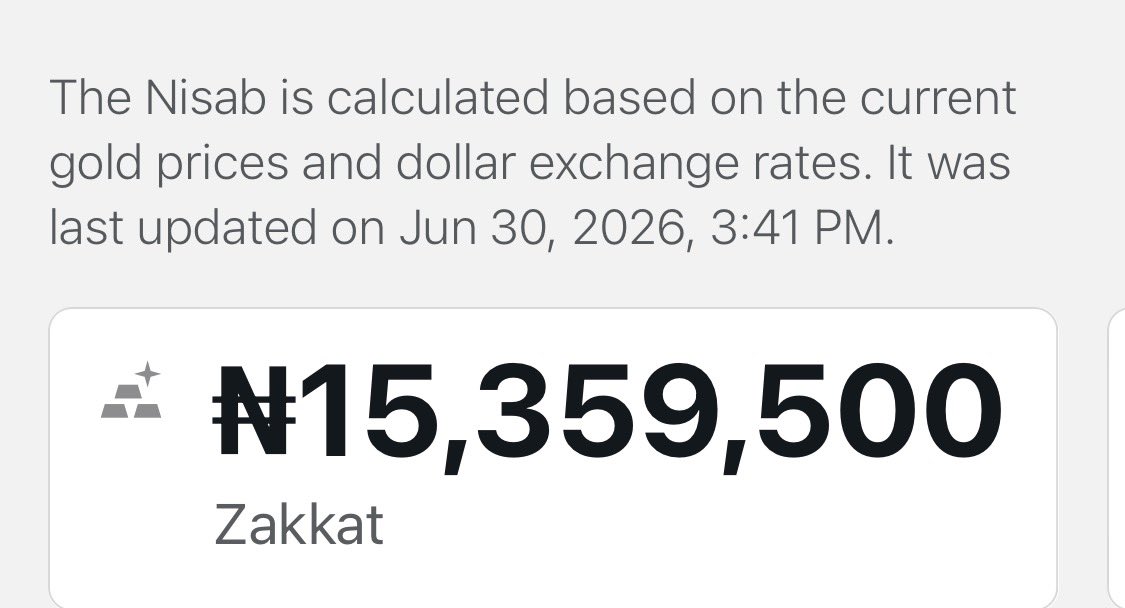
I say let me remind you, that as at 30th June 2026, the Nisāb for Zakāt is estimated at ₦15,359,500.00.
What does that mean?
Nisab is the minimum amount of wealth a Muslim must own continuously for one lunar (Hijri) year before Zakat becomes obligatory. In this case, based on the current value of 85 grams of gold and the prevailing exchange rate, anyone whose total Zakatable assets—such as cash, savings, gold, silver, business inventory, investments, and money owed to them (after deducting eligible debts)—equal or exceed ₦15,359,500 is required to pay Zakat. The amount of Zakat due is 2.5% (one-fortieth) of the qualifying wealth, not the entire ₦15.36 million. For example, if your net Zakatable wealth is exactly ₦15,359,500, your Zakat would be about ₦383,988 (2.5%), provided you have held that level of wealth for a full Hijri year.
Fear Allãh and give out your Zakāt.
THE BEROM YOUTH TERRORIST
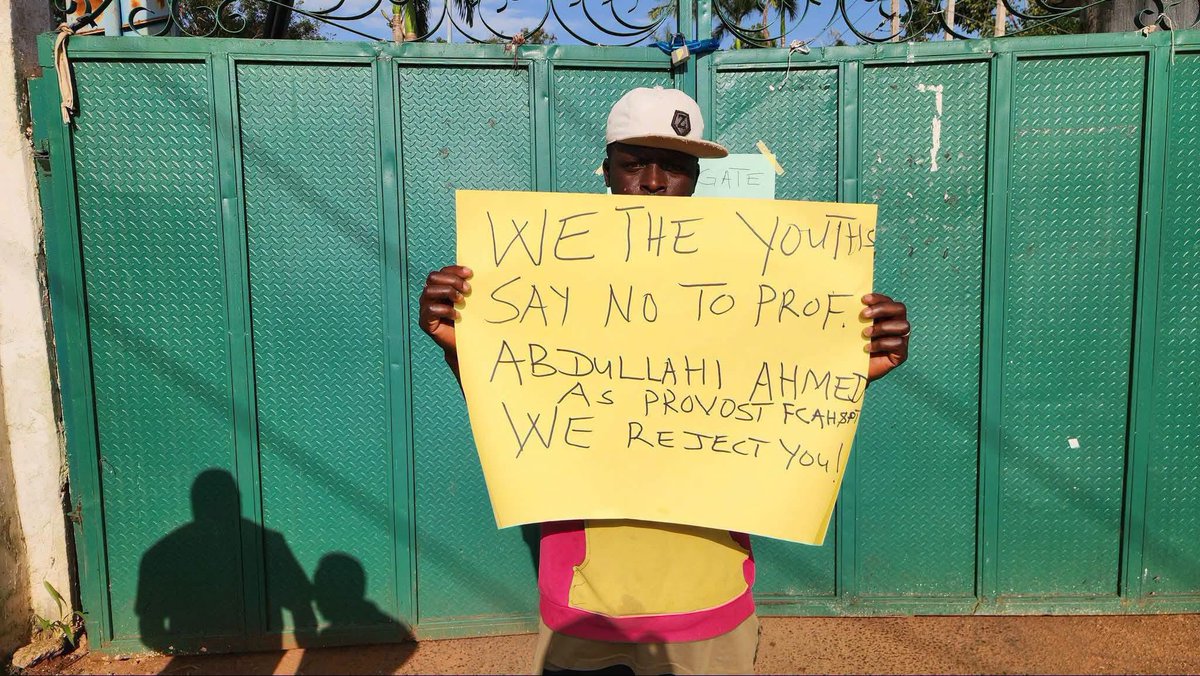
The Berom youth are still relentless in their demand to oust Professor Abdullahi Ahmed and replace with Dr Luka Pam. This is not because Professor A. Ahmed is not competent, but because he prophecies Islam as his religion.
Earlier this morning, the Berom youth still converged at the entrance gate of the NVRI denying people access in and out.
Let this be on record, Plateau indigenous people should be given opportunities to man all the federal institutions domiciled in the state, and they should also forget any federal appointment outside the state.
As an indigene and a Hausa man from Jos North, I will lead a peaceful protest whenever a Vice Chancellor who is not from Anguwan Rogo or Gangare is appointed to the University of Jos.
They are the host community, and they also deserve the VC slot. We are learning from the NVRI VOM saga.
Thank you for waking us up to demand what is ours constitutionally.
Tell me just one University in the North that the immediate community ever staged a protest because the VC, Provost or any head was appointed from another state.
You can only find that madness in Plateau state from Terrorist Berom.
2001 crisis started also with this type of protest because a Muslim was appointed as a Director