Quantum speed limits for information and coherence https://t.co/QMYbvsU5Np w/ Brij Mohan & Arun K Pati
We determine speed limits on informational measures, namely von Neumann entropy, maximal information, & coherence of quantum systems evolving under dynamical processes.
Fundamental limitations on the device-independent #quantum conference key agreement https://t.co/Ht0uRc1vA8 w/ Karol Horodecki & Marek Winczewski.
We provide bounds on the optimal rate at which trusted users can distill conference key against quantum adversary.
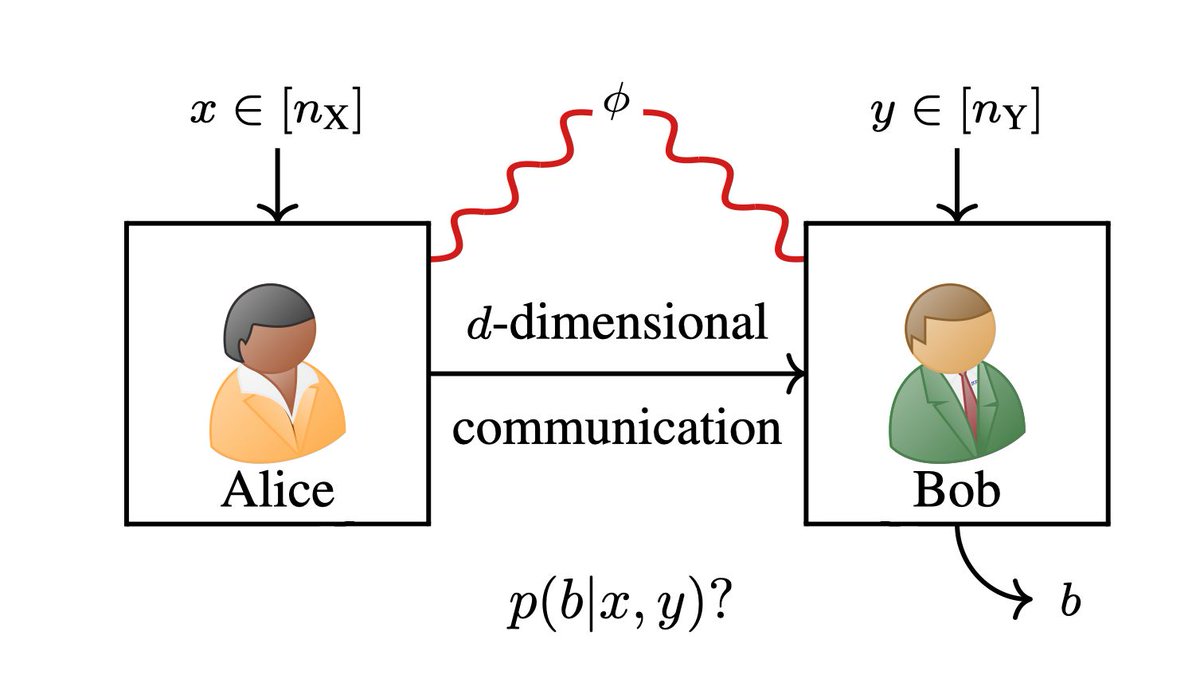
Entanglement-assisted communication protocols are analyzed, deriving optimal bounds for the correlations established between two parties that exchange messages in the presence of noise. @iqoqivienna@ULBruxelles
https://t.co/SRCvwPvCzJ
New preprint “Entanglement in prepare-and-measure scenarios: many questions, a few answers” from Jef Pauwels, Armin Tavakoli, Erik Woodhead and Stefano Pironio now on arXiv: https://t.co/e7el43PggD #quantum
Our work gives quantum #thermodynamical meaning to the majorization relation on the set of nonincreasing vectors due to Hoffman.
The prospect of this work is a general resource-theoretical framework for the extractable work via #quantum operations going beyond thermal operations
Upper bounds on device-independent quantum key distribution (DI-QKD) rates in static and dynamic scenarios. https://t.co/dBuW2qVa8g, w/ @Eneet1 and Karol Horodecki.
#Quantum#Cryptography#DIQKD
We introduce QPV protocols that are practically secure: they only require single-qubit states from each of the verifiers, yet their security is broken if adversaries sharing impractically large number of entangled qubits employ teleportation-based attacks
https://t.co/4e9yycbuTm
New paper published in Quantum: “Quantum advantage from energy measurements of many-body quantum systems” by Leonardo Novo, @queenofquanta and @RaulGarciaPatr1 https://t.co/EZhNwYJDUQ
New preprint "Correlations in entanglement-assisted prepare-and-measure scenarios" by Armin Tavakoli, Jef Pauwels, Erik Woodhead and Stefano Pironio now on arXiv (https://t.co/Tm2iBivMjv). #quantum
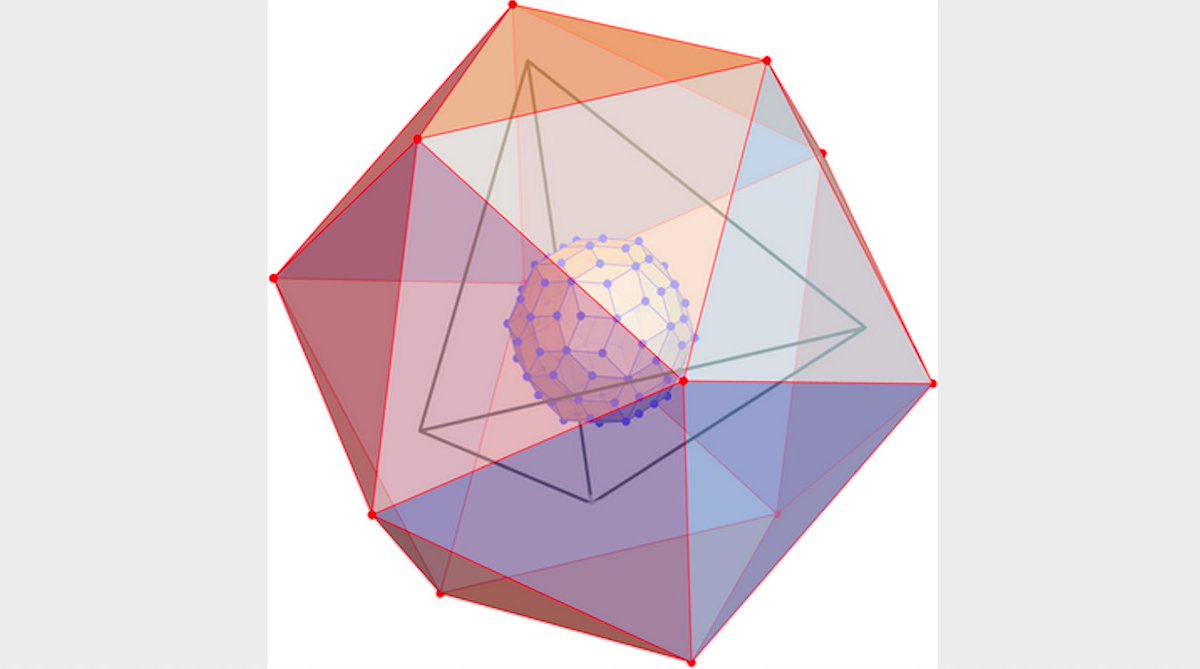
A deeper investigation shows how the shapes of an operational theory's state and effect spaces determine whether the predictions of the theory admit of a classical (noncontextual) explanation. @quaintum@eliewolfe@Perimeter@QuantInfoULB@ictqt
https://t.co/qwy4hS9ZVo
Partial order on passive states & Hoffman majorization in quantum thermodynamics: https://t.co/RSutrkpjzQ w/ @singhuttam & Nicolas Cerf.
Our main goal in this work is to explore a theory of quantum thermodynamics in the absence of a thermal heat bath.
Recent preprint by Leonardo Novo (QuIC, @ULBruxelles) & Sofia Ribeiro (@DurhamQlm) explores how Floquet engineering can be used in the continuous-time quantum walk framework to simulate graphs with increased connectivity and/or complex couplings.
https://t.co/mg5EIBelne
Paper titled "Quantum Speedup for Graph Sparsification, Cut Approximation and Laplacian Solving", by Simon Apers (QuIC ULB, CWI & INRIA Paris) & Ronald de Wolf (QuSoft, CWI) will be presented at the 61st Annual IEEE Symposium on the Foundations of Computer Science (#FOCS2020).
They provide a continuous-time quantum walk based algorithm that can find a marked vertex on any ergodic, reversible Markov chain quadratically faster than classical random walks.
Paper titled "Finding a marked node on any graph via continuous-time quantum walks" by @shantanav_c, Leonardo Novo and Jérémie Roland has been published in @PhysRevA.
https://t.co/jE9JoIzVL4