Quiero anunciar que he dejado de pertenecer a @MovistarPlus , una empresa a la que he estado vinculado durante 36 años, exactamente desde el 15 de septiembre de 1990. Ha sido la empresa de mi vida, le tengo y tendré siempre un aprecio de gratitud familiar.
@VortiX_93 Debe seguirlo desde el 2017.
De hecho, yo por esa época estaba acabando el Máster y llevaba como un año desconectado, pero mi entorno de SC2 hablaba de la gran esperanza no coreana...un tal Serral.
Cuando me enteré de que era finlandés, pensé que se reían de mí.
Ya disponible el episodio 567 de CB:
Cara A
-El gran intercambio biótico americano
-La diversidad lingüística a través del Holoceno
Cara B
-Cristal de tiempo fotónico basado en plasmones
-La Estrella de Tabby ¿Dips independientes o recurrencia orbital?
https://t.co/z9r9jGYrLT
El próximo miércoles 3/6 sale a la venta, publicado por el sello Planeta, "Horizontes de la civilización", con el transgresor subtítulo "Una mirada optimista al futuro de nuestra especie". Parte del precepto radical y casi herético de que podemos mirar al futuro con optimismo >
FOR THE FIRST TIME IN 53 YEARS, THE KNICKS ARE NBA CHAMPIONS 🏆
New York defeats San Antonio 4-1 in the NBA Finals, capturing their third championship in franchise history!
Happy 195th Birthday to James Clerk Maxwell! Today we celebrate the Scottish genius James Clerk Maxwell (1831–1879), one of the greatest physicists in history and the man who fundamentally changed how we see the universe.Maxwell achieved what is often called the second great unification in physics — after Newton united the heavens and Earth under gravity. His crowning achievement was the elegant theory of electromagnetism. Through his famous equations, he revealed that electricity and magnetism are two sides of the same force. He showed these fields ripple through space as waves, calculated their speed… and discovered it exactly matched the speed of light. Light itself, Maxwell realized, is an electromagnetic wave.That single insight unified electricity, magnetism, and optics — and laid the groundwork for radio, television, radar, Wi-Fi, and countless modern technologies.But Maxwell didn’t stop there.He pioneered statistical mechanics, treating gases as swarms of countless molecules in chaotic motion. The Maxwell distribution he derived still describes how molecular speeds are spread out at any given temperature — bridging the microscopic world of atoms with the everyday properties of matter like pressure and https://t.co/wIdtrZVfr2 1861, working with photographer Thomas Sutton, Maxwell created the world’s first permanent color photograph — a tartan ribbon — by combining red, green, and blue light. He essentially proved that all colors we see can be made from just three primary ones, laying the foundation for modern color photography and imaging.He also solved one of the era’s great puzzles: Saturn’s rings. Using mathematics, Maxwell demonstrated that a solid ring would be torn apart by gravity. Instead, he concluded the rings must be made of countless small particles orbiting independently — a prediction spectacularly confirmed by spacecraft over a century later.Einstein kept Maxwell’s portrait on his wall alongside Newton and Faraday. On the 100th anniversary of Maxwell’s birth, Einstein described his work as “the most profound and the most fruitful” change in our understanding of reality since Newton.From electromagnetic waves to the statistical nature of matter and the science of color, Maxwell’s ideas continue to shape physics, engineering, and our daily lives more than 195 years after his https://t.co/wNYOGa6WiK, we remember him as one of the true giants — standing shoulder to shoulder with Newton and Einstein in the pantheon of science. Happy Birthday, James Clerk Maxwell!
🧬🤯 Dos veces en un mes… y dos veces toca reescribir lo que dábamos por sentado en biología molecular.
Durante más de 60 años nos enseñaron el llamado Dogma Central: la información genética fluye de ADN ➡️ ARN ➡️ proteína.
Sí, ya conocíamos excepciones como la transcripción inversa, pero había una idea que parecía intocable: que una proteína pudiera servir de molde para sintetizar ADN de novo, sin usar ADN ni ARN como plantilla.
Pues bien… zasca. Y por partida doble. 😮
Primero llegó DRT3, un sistema de defensa bacteriano frente a fagos, en el que el componente Drt3b utiliza su propia estructura proteica como molde físico para generar secuencias repetitivas de ADN.
Y apenas unas semanas después, aparece DRT7, una proteína completamente distinta que también es capaz de dirigir la síntesis de ADN de novo mediante un mecanismo independiente. 🔬
¿Qué significa esto?
Que, al menos en ciertos sistemas bacterianos, las proteínas pueden influir directamente en la secuencia de ADN que se genera, algo que hasta hace muy poco parecía incompatible con nuestra visión clásica del flujo de la información genética.
📚 Esto no significa que todo lo que sabíamos estuviera “mal”, pero sí que la biología real vuelve a demostrarnos que es mucho más creativa, flexible e ingeniosa que nuestros esquemas de libro.
Y además, estos hallazgos vienen del estudio de la guerra microbiana ⚔️🦠: sistemas de defensa bacterianos evolucionados para combatir virus. Una vez más, investigar cómo bacterias y fagos se enfrentan entre sí acaba revelando principios fundamentales de la vida.
🚀 Aunque por ahora estos descubrimientos están limitados a contextos bacterianos muy específicos, abren puertas muy interesantes en:
🧪 biología sintética
✂️ edición genética
🧬 nuevas formas de entender la herencia y la programación molecular
En resumen: dos hallazgos en un mes que no “destruyen” el Dogma Central, pero sí lo obligan a ampliarse y a aceptar que la biología molecular todavía guarda sorpresas enormes.
Y eso, sinceramente, es fascinante. 🔥
📖 Figiel, M. et al. (2026). Antiviral reverse transcriptase–primase synthesizes protein-templated DNA. bioRxiv preprint.
DOI: 10.64898/2026.04.18.719102
You’re cordially invited to Sir David Attenborough’s 100th birthday bash at the Royal Albert Hall
Kirsty Young presents David Attenborough’s 100 Years on Planet Earth on Friday 8 May on #iPlayer and BBC One
Full details ➡️ https://t.co/nbnf2ZtcDK
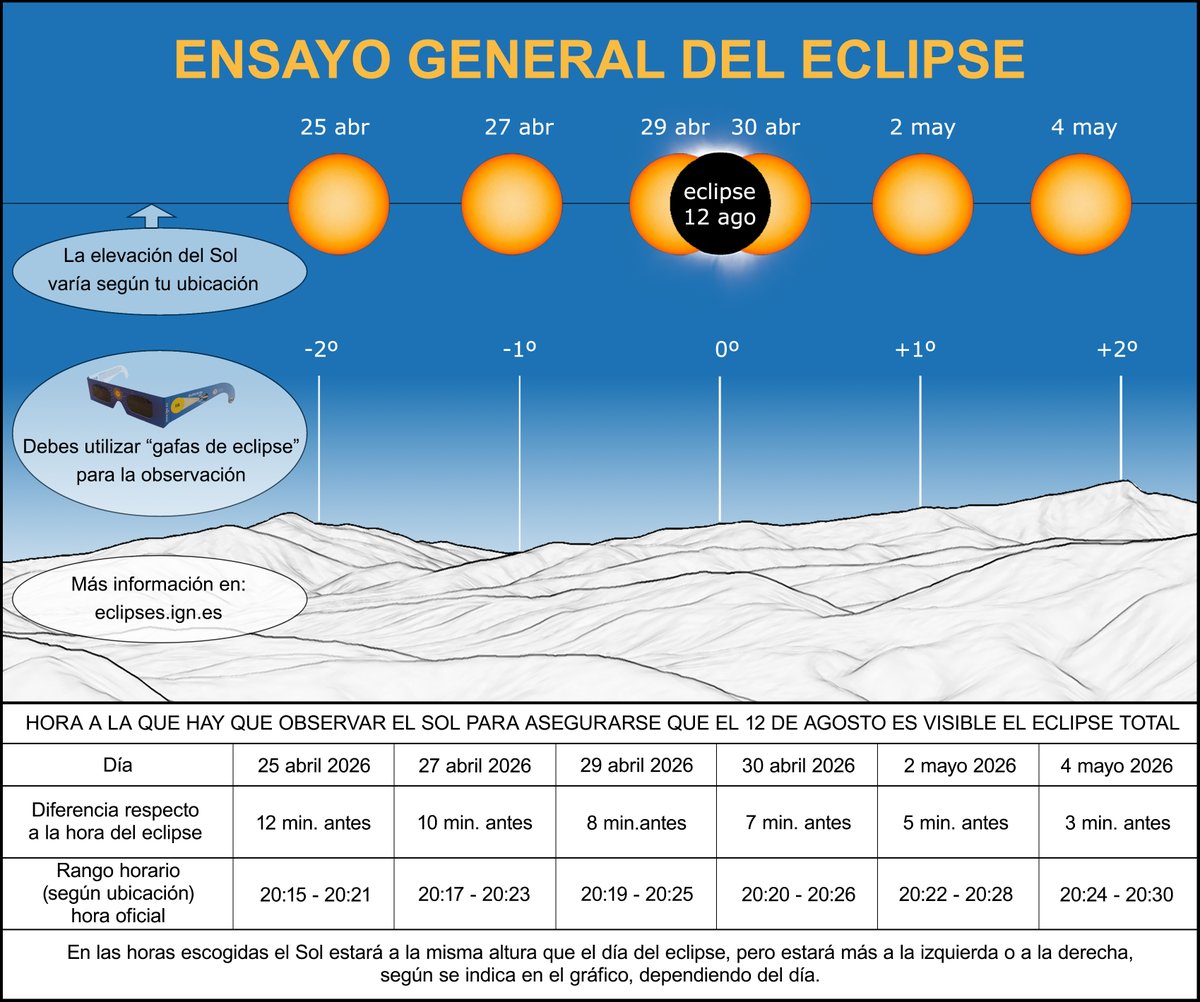
Para poder observar el eclipse total del próximo 12 de agosto, no solo tienes que estar en la franja de totalidad, tienes que poder ver el Sol sobre el horizonte. Puedes comprobar si eso es posible en tu localidad haciendo una prueba en los próximos días. Abajo lo explicamos.
Ya está disponible el ep. 554 de Coffee Break:
Cara A:
-Papers de broma del 1 de abril
Cara B:
-Señales humanas de hace 40,000 años
-Neuronas artificiales impresas
SETI ¿Lo hemos estado haciendo mal todo este tiempo?
-Transporte de antimateria en CERN
https://t.co/z9r9jGYrLT
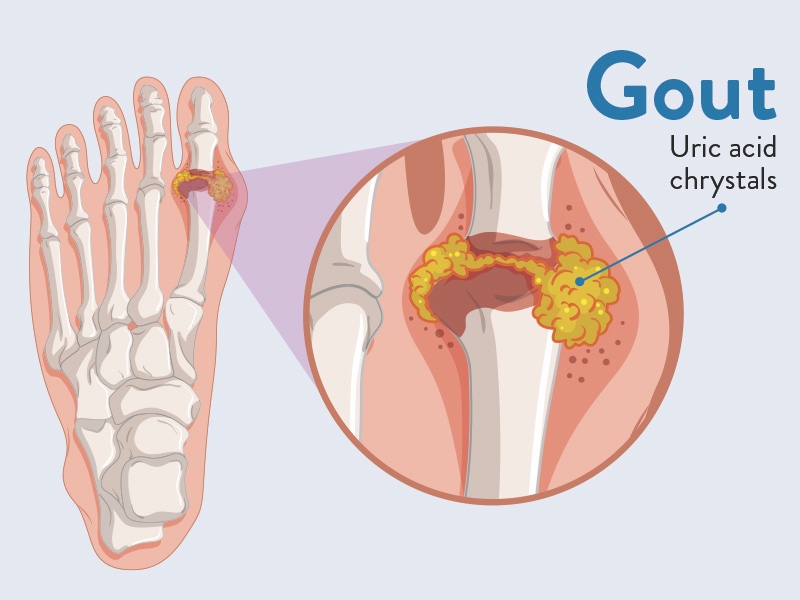
How many times have you heard, read—or even said—that gout is caused by “uric acid crystals accumulating in the joints”?
It is a convenient image.
Visual.
Intuitive.
And, in a strict mechanistic sense, misleading.
What is often overlooked is that the central player is not uric acid per se, but urate, its ionised form at physiological pH. In plasma and tissues, uric acid exists predominantly as monosodium urate. And crucially, the joint is not a test tube: concentrations, ionic strength, and pH rarely favour the formation of the large, well-defined crystals we associate with urinary sediment.
Instead, what emerges are microscopic, often transient crystalline or subcrystalline structures, sometimes below the threshold of classical detection. Yet their biological impact is disproportionate.
Here is the key shift in perspective.
Urate behaves as a DAMP (Damage-Associated Molecular Pattern). These are endogenous molecules that signal “danger” to the immune system, not because they are foreign, but because they appear in the wrong place, at the wrong concentration, or in the wrong context.
Extracellular urate can be sensed by innate immune cells, especially macrophages.
Upon uptake, urate triggers activation of the NLRP3 inflammasome, a cytosolic multiprotein complex that acts as a molecular switch for inflammation. This leads to caspase-1 activation and the maturation and release of IL-1β, one of the most potent pro-inflammatory cytokines.
From there, the cascade amplifies.
Neutrophils are recruited. Vascular permeability increases. The joint becomes a confined inflammatory niche. Pain, swelling, and erythema are not the passive consequence of “crystal deposition”—they are the result of a highly orchestrated innate immune response to a perceived danger signal.
Interestingly, the requirement for large crystal formation is minimal. The immune system does not need macroscopic structures; it responds to physicochemical cues and particulate signals at the micro- and nanoscale.
At its core, gout is not a problem of precipitation in the classical chemical sense—it is a problem of immunological interpretation.
Urate is not just a metabolite.
Under certain conditions, it becomes a message.
And the joint, exquisitely sensitive to that message, responds with inflammation.
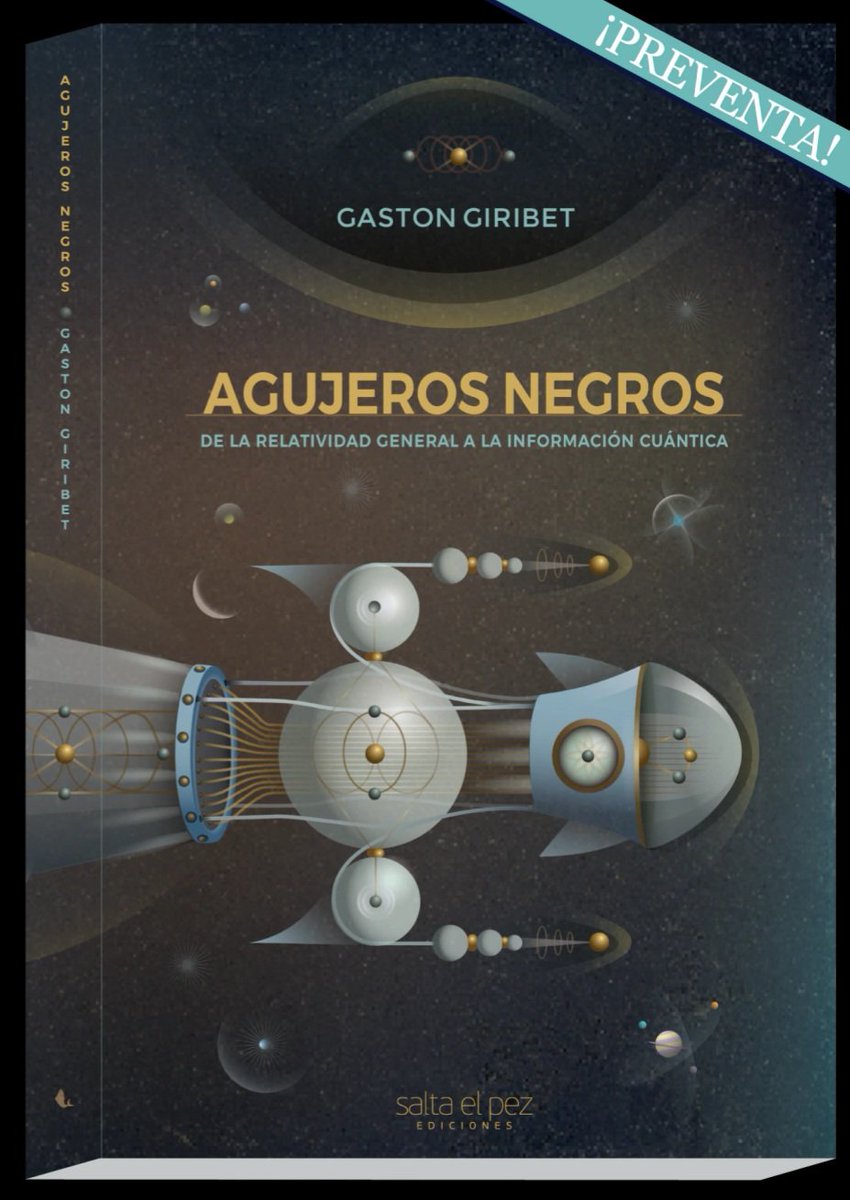
Estoy feliz de anunciar la publicación del libro de divulgación en el que estuve trabajando. Su título es "Agujeros Negros: de la relatividad general a la información cuántica".
Saldrá publicado por @PezSalte en abril, pero ya se encuentra en preventa con descuento en
@drafteados@JmCalderon@ADaimiel Sergio: La ilusión del que gana su primer Tour.
Cade: Sigo en la cresta del éxito.
Jose: La incredulidad.
Antoni: El que se retira ante un all-in con cartas ganadoras.
The Moon will look extra large tomorrow.
On the night of November 5, 2025, the full Moon will reach its closest point to Earth all year – making it the biggest and brightest full Moon of 2025. Known as a “supermoon,” this happens when the Moon is both full and near its closest point to Earth in its orbit.
That orbit isn’t a perfect circle; it’s an ellipse.
So sometimes the Moon is closer (perigee), and other times it’s farther (apogee). During this supermoon, the Moon will be just 221,817 miles (356,980 kilometers) away. That’s about 17,000 miles (27,000 kilometers) closer than when it's farthest from us.
The result? The Moon will appear up to 14% larger and 30% brighter than a typical full Moon – especially noticeable as it rises above the eastern horizon just after sunset.