Open-weight models are essential to a healthy AI ecosystem. Together with others across our industry, we are outlining a path for open-weight models to strengthen American competitiveness and expand economic opportunity, while protecting national security. https://t.co/Tr0sAzAxTD
“Geniuses only.”
Nivi: To me, the missing ingredient in most people’s recruiting is intolerance. You should really just treat every employee in the company, including yourself, as an enemy agent that’s trying to destroy the company by bringing mediocre talent into the business. It’s unfortunately just the nature of human nature.
Naval: My co-founder and I have a new criterion in our company: “Geniuses only.”
It’s a harsh word, but it sets a very high bar. You can just look around for who’s not a genius. The only way you’re going to attract geniuses—whatever that term means to you—is by having a company full of geniuses.
And if someone’s not a genius, then either you’re transitioning into the phase where you can no longer hire geniuses and you just need to scale up for whatever reason, or you can just show that person the door because you hired them prematurely for the kind of company you’re trying to build.
Now, this is very difficult.
You’re lucky if you can hire one genius a month. You as a founder have to identify them and do whatever it takes to recruit them and motivate them. So it’s inherently self-limiting. Given that a person probably isn’t going to stick around your company for more than three, four, five years—although in some great companies, people stick around for decades—at that attrition rate you’re talking about a 30 to 50 person company.
But if you can even assemble a team of 10 geniuses, you’re way ahead of everybody else. At most companies—the successful ones—the founders, and maybe a few early people are at the genius level. But in the urge and the rush to scale, that gets drowned out too quickly.
A couple reflections on the quantum computing breakthrough we just announced...
Most of us grew up learning there are three main types of matter that matter: solid, liquid, and gas. Today, that changed.
After a nearly 20 year pursuit, we’ve created an entirely new state of matter, unlocked by a new class of materials, topoconductors, that enable a fundamental leap in computing.
It powers Majorana 1, the first quantum processing unit built on a topological core.
We believe this breakthrough will allow us to create a truly meaningful quantum computer not in decades, as some have predicted, but in years.
The qubits created with topoconductors are faster, more reliable, and smaller.
They are 1/100th of a millimeter, meaning we now have a clear path to a million-qubit processor.
Imagine a chip that can fit in the palm of your hand yet is capable of solving problems that even all the computers on Earth today combined could not!
Sometimes researchers have to work on things for decades to make progress possible.
It takes patience and persistence to have big impact in the world.
And I am glad we get the opportunity to do just that at Microsoft.
This is our focus: When productivity rises, economies grow faster, benefiting every sector and every corner of the globe.
It’s not about hyping tech; it’s about building technology that truly serves the world.
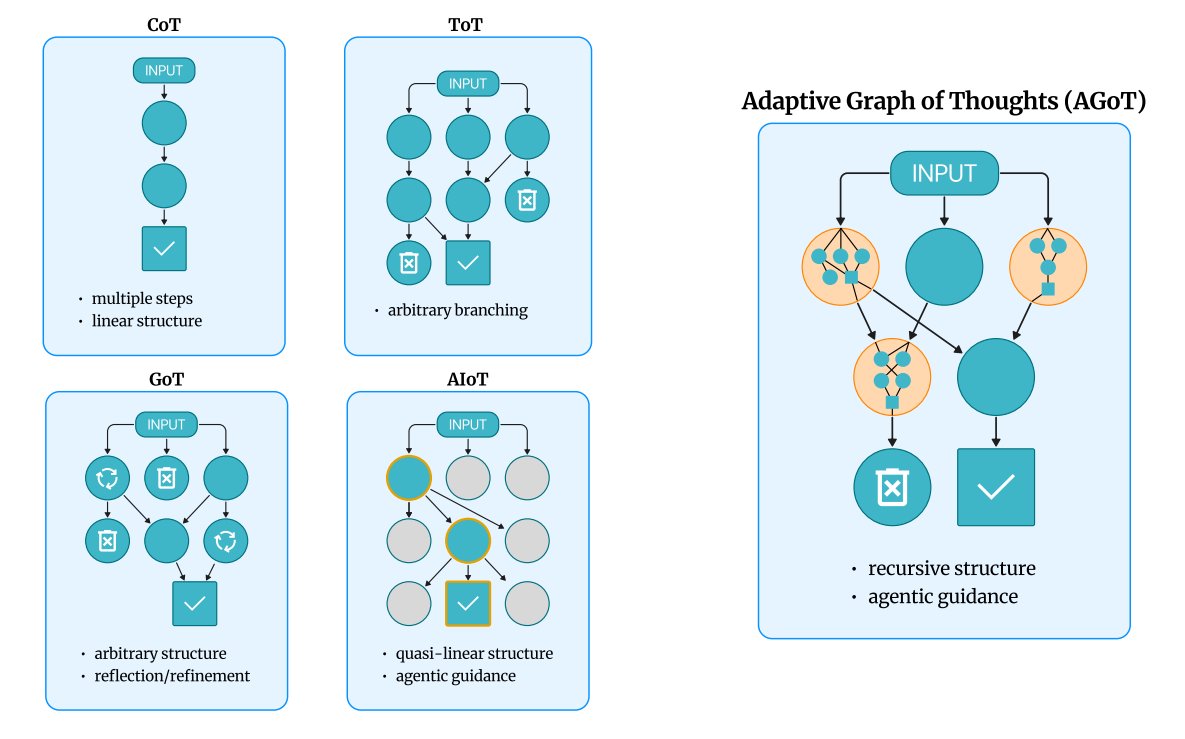
Adaptive Graph of Thoughts (AGoT) unifies the strengths of chain, tree, and graph paradigms into one framework.
It improves performance by up to 46.2%, expanding reasoning only on necessary subproblems, without extra training or heavy computation.
Here's how it works:
.@VP@JDVance gave a brilliant and optimistic speech at the Paris AI Summit today. He made clear that America will remain the leader in AI, free of excessive regulation, ideological bias and censorship, while also supporting a pro-worker growth path.
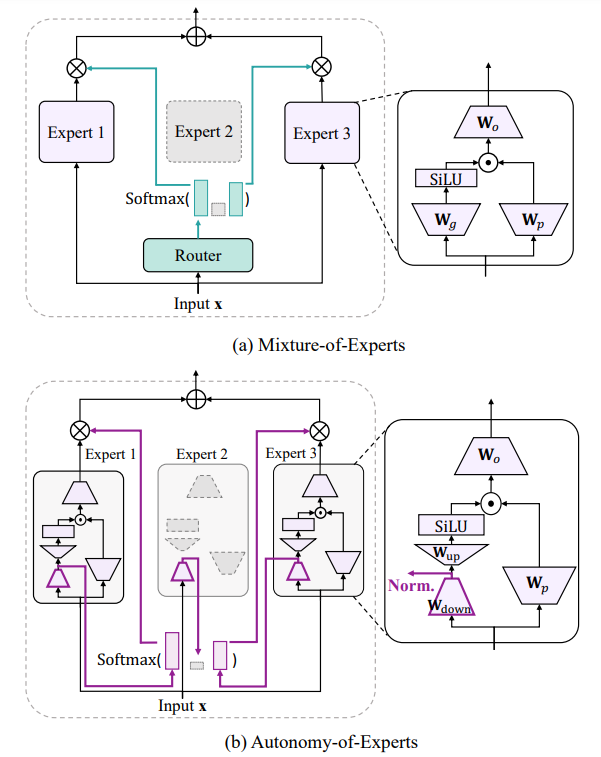
Autonomy-of-Experts (AoE) flips the script of Mixture-of-Experts (MoE).
It eliminates the central router that assigns tasks.
Instead, the experts themselves decide if they’re the right fit for a given input, because they "know" better what they are good at.
Here are the details:
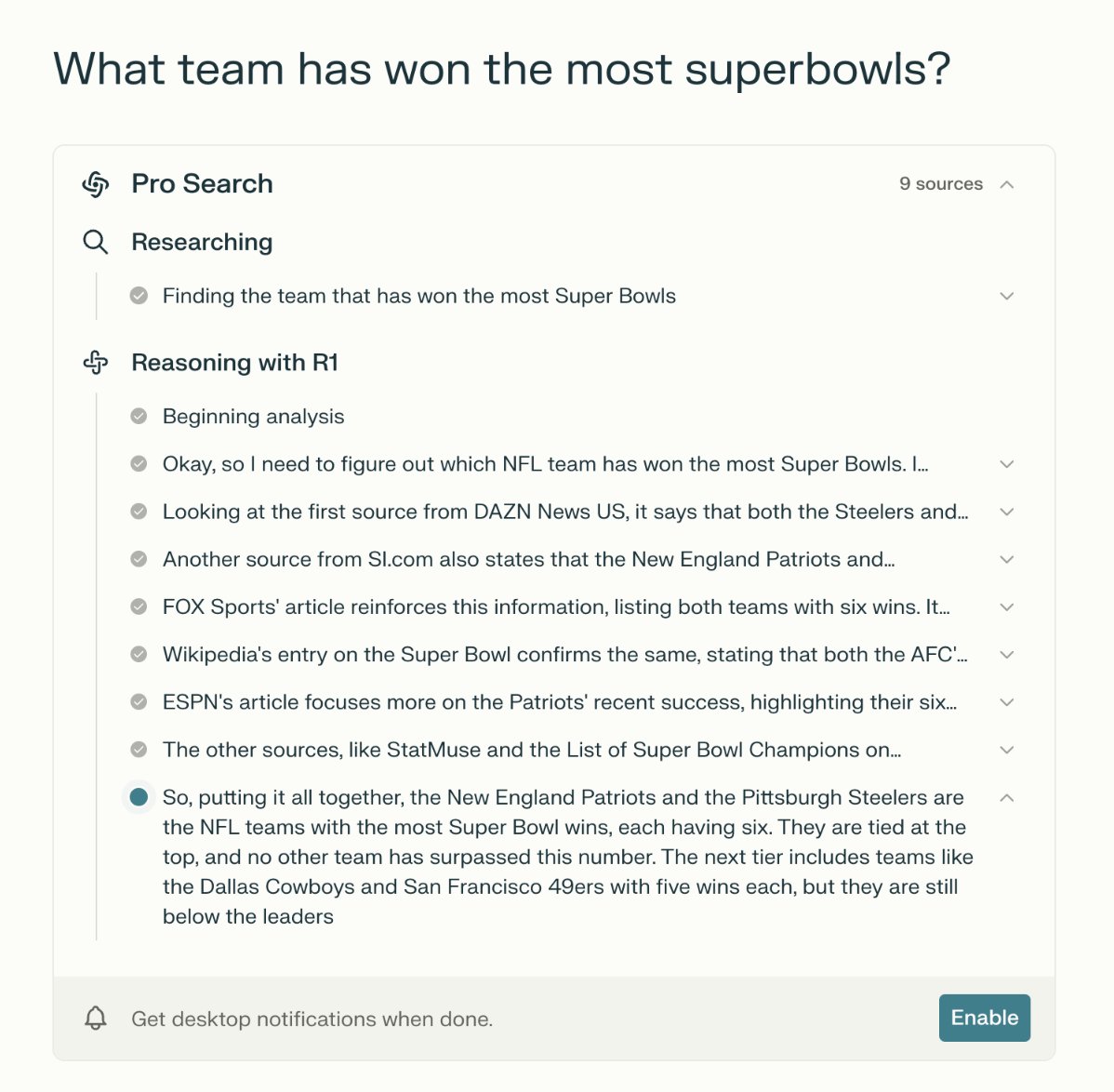
DeepSeek R1 is now available on Perplexity to support deep web research. There's a new Pro Search reasoning mode selector, along with OpenAI o1, with transparent chain of thought into model's reasoning. We're increasing the number of daily uses for both free and paid as add more capacity during the day. Stay tuned!
.@GoogleAI proposed a Chain-of-Agents (CoA) framework that uses multiple AI agents working together to reason through long texts.
It outperforms RAG and full-context processing by up to 10%!
Here's how CoA works:
1. Worker agents handle different parts of the text and share their insights to the next agent.
2. A manager agent combines these insights into a final, coherent output.
Details below:
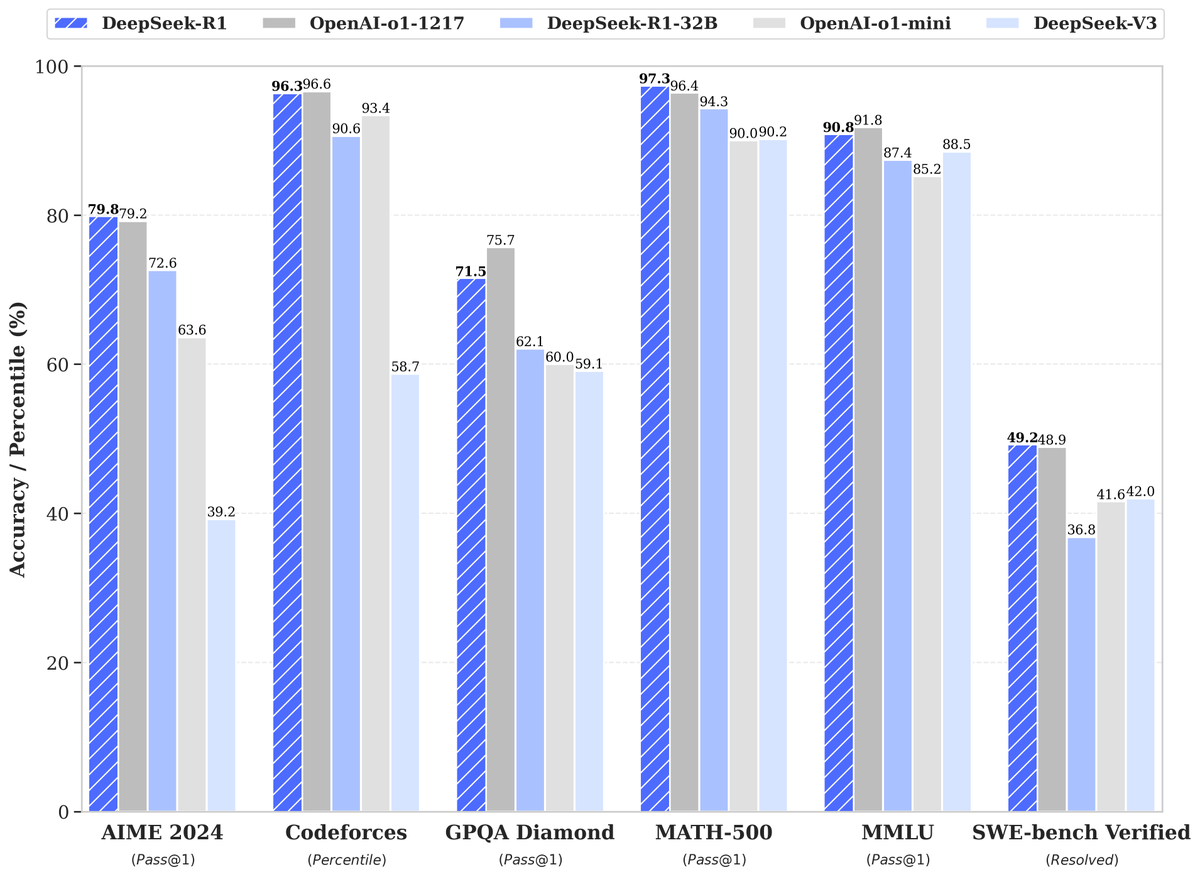
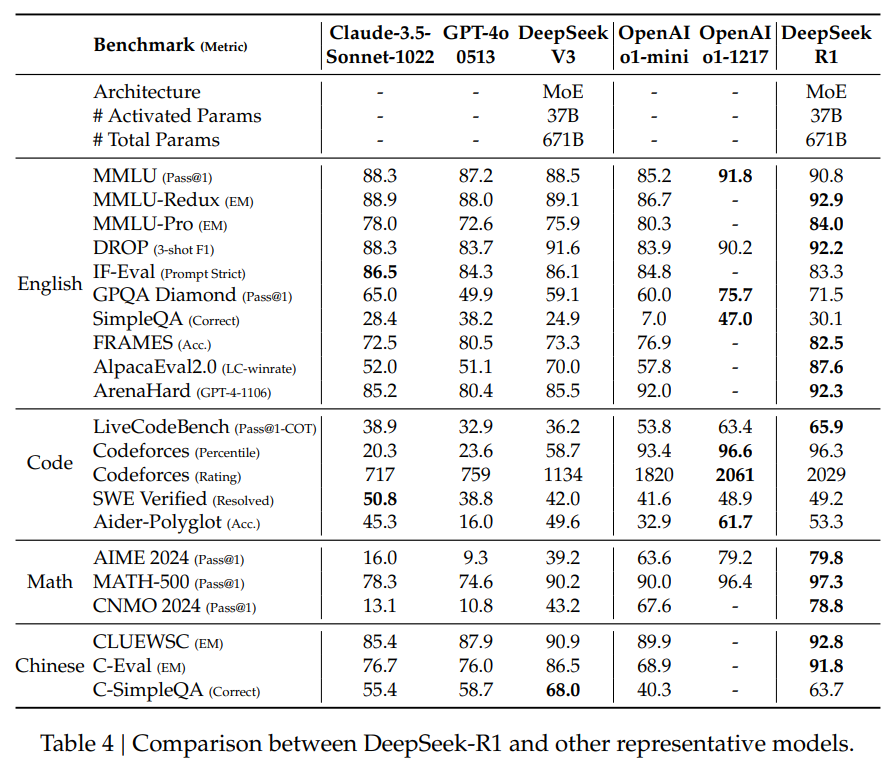
🚀 DeepSeek-R1 is here!
⚡ Performance on par with OpenAI-o1
📖 Fully open-source model & technical report
🏆 MIT licensed: Distill & commercialize freely!
🌐 Website & API are live now! Try DeepThink at https://t.co/v1TFy7LHNy today!
🐋 1/n
Intelligent digital avatars are helping boost efficiency and enhance customer loyalty 📈 🤝
See how various industries are designing and deploying AI agents with avatar and speech features: https://t.co/DucRkAnyGo
#agenticAI#digitalhumans
We see Willow as an important step in our journey to build a useful quantum computer with practical applications in areas like drug discovery, fusion energy, battery design + more. Details here: https://t.co/dgPuXOoBSZ