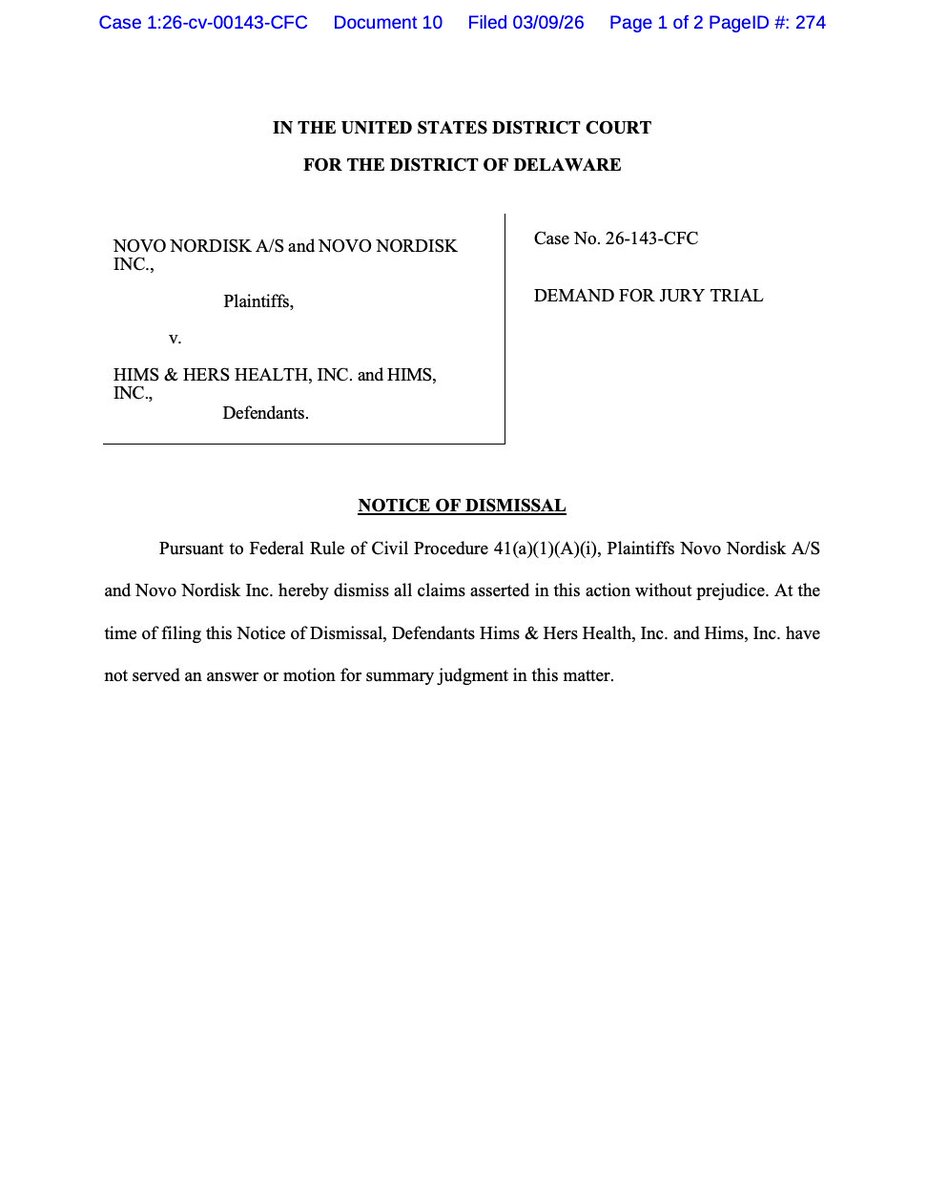
Today, the FDA moved towards bringing regulatory clarity on peptide therapy. At Hims & Hers, we believe innovation in longevity care must be guided by safety, transparency, and clinical excellence.
Read our statement from Dr. Pat Carroll: https://t.co/vDul6nPpbe
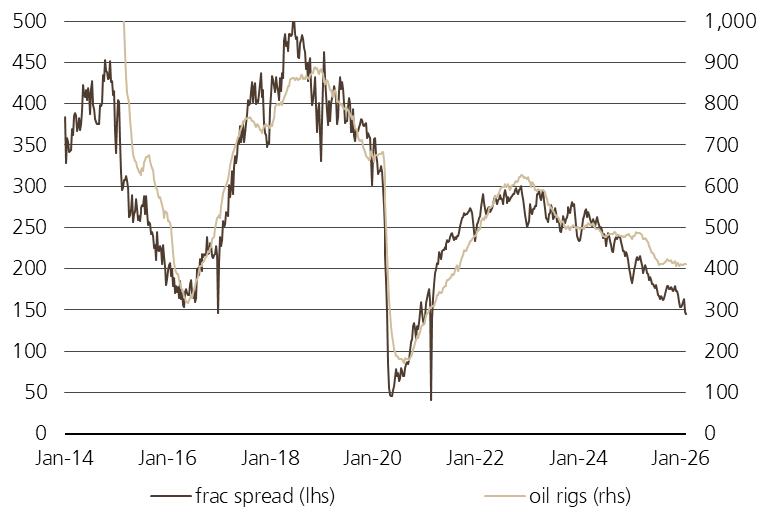
There is a near-perfect correlation between US oil prices and US CPI inflation, as shown in our below analysis.
As WTI crude surges above $112/barrel, we believe the US economy is bracing for 3.5%+ CPI inflation, particularly if current prices persist through April.
Asset owners will be the only winners in the long-run.
I have a secret to share
After your first $2–$3 million, a paid off home and a good car, there is no difference in quality of life between you and Jeff Bezos. Both of you have limited amount of time on earth; you have twice if not more than Jeff, so you are richer than him. A cheeseburger is a cheeseburger whether a billionaire eats or you do.
Money is nothing but a piece of paper or a number in your app. Real life is outdoors.
Become financially independent; that’s usually 2–3mil. Have good food. Enjoy the relations. Workout. Sleep well. Call your parents. That’s all there is to life. Greed has no end.
Repeat after me: Time is the currency of life. Money is not.
Sooner you figure this out, happier you will be.
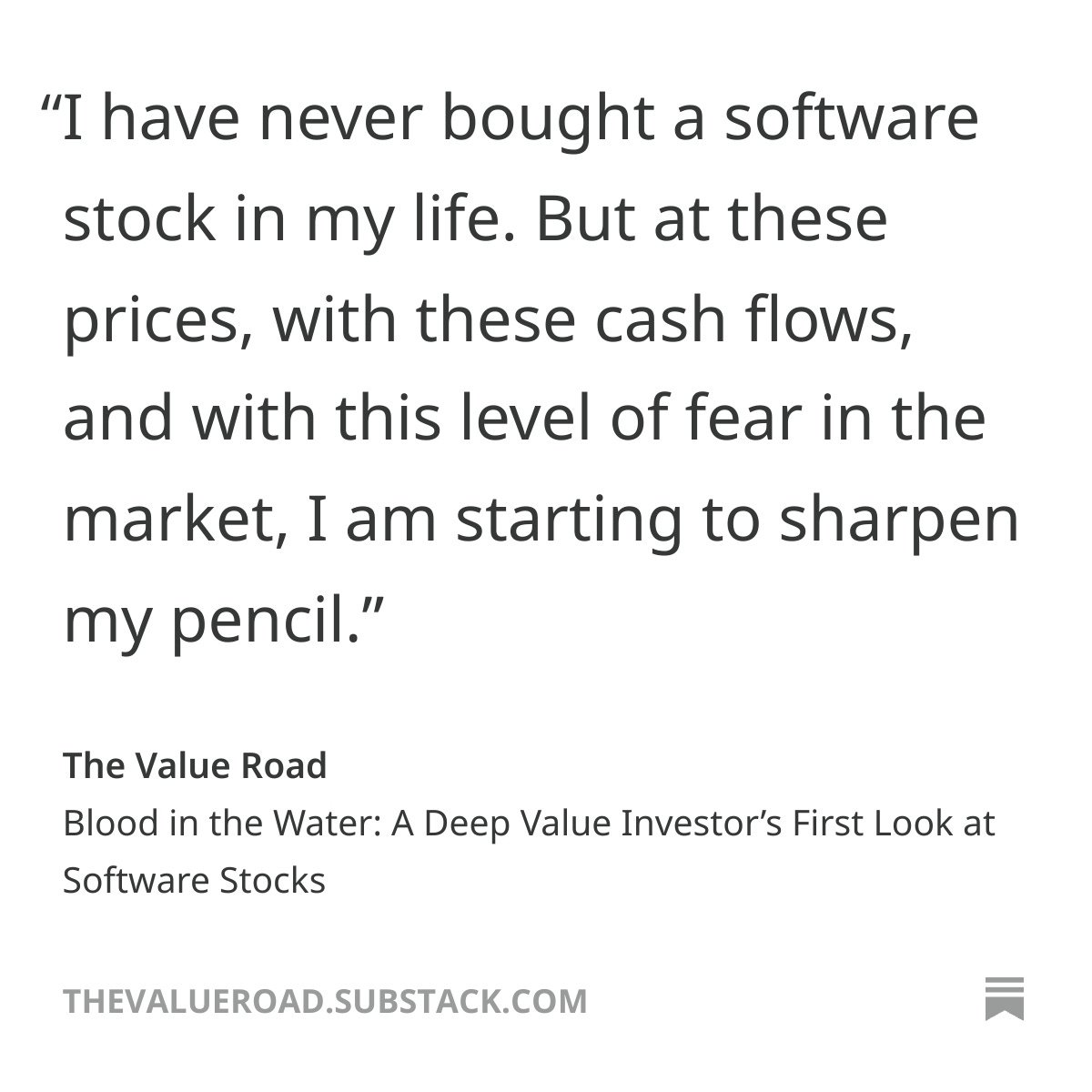
I've spent years buying ugly, cheap, unloved microcaps. Never once touched a software stock. They were always way too expensive. No margin of safety. I'd look at 40x revenue multiples and move on.
For the first time in my career, I'm paying attention.
AI fears have absolutely cratered software stocks. The narrative flipped overnight from "every software company is an AI beneficiary" to "every software company is an AI victim." Multiples that were 15-20x revenue are now 4-6x. Some lower. Names down 50-70% from highs.
I'll be honest, the bears have a point. AI is taking a blowtorch to the traditional software moat. Switching costs, network effects, integration complexity, all diminished. I'm not going to pretend otherwise.
But a narrower moat does not mean zero terminal value.
There's a long, profitable history of buying melting ice cubes. Tobacco stocks in the early 2000s. Newspapers at the trough. Print directories. Everyone priced them for death. The ones that managed the decline intelligently made their investors a fortune. If you pay 3x free cash flow for a business declining 5% a year, you do very well for a very long time.
These software companies are still generating enormous free cash flow. Enterprise customers don't rip out systems they spent years and tens of millions implementing because a startup showed a good demo. That's not how procurement works.
And here's what the market is really missing, these aren't buggy whip manufacturers. They're software companies. They have the engineers, the data, the domain expertise, and the distribution to adopt AI faster than anyone. AI doesn't just threaten them. It lets them cut costs and expand margins dramatically.
A startup can build a great product. But getting past enterprise security reviews, procurement teams, and support requirements? That takes the distribution infrastructure incumbents spent decades building.
For years software was wildly overvalued. Now it's priced like every customer churns next quarter and cash flow goes to zero. The truth is in the middle. It always is.
When a deep value microcap guy starts sharpening his pencil on software stocks, either I've lost my mind or the prices have finally come to me.
I'm betting it's the latter.
Dwarkesh asks Dario a fantastic question relating to how he is so bullish on AGI yet so conservative on data center build out - Dario has an amazing take on this:
Dario Amodei details the staggering financial risk of the AI race, explaining that if growth continues at 10x a year, a company could be looking at a $1 trillion revenue run rate by the end of 2027. He notes that to support this, a firm might buy $5 trillion worth of compute.
However, he highlights a "ruinous" dilemma: if that revenue is even slightly lower than projected. specifically if it comes in at $800 billion instead of $1 trillion the company would collapse. He explains that if you are off by just a year or if the growth rate drops to 5x, "there's no force on earth, there's no hedge on earth, that could stop me from going bankrupt" after committing to that level of spend.
Because of this, Amodei argues that "behaving responsibly" means not just "yoloing" hundreds of billions of dollars. He suggests that some competitors may not have "written down the spreadsheet" and don't fully grasp the existential risks they are taking with these massive, unhedged bets on infrastructure.
@HasanKhxnx I am not suicidal. I eat healthy food. The brakes on my car and truck are in good shape. I practice good trigger discipline and never point a gun at anyone, including myself. There are no deep pools of water on my farm and I’m a pretty good swimmer.
Example
If in 2020, a $100 premium covered $80 of used care, leaving $20 in insurance earnings
But in 2025, a $200 premium covered $190 in care, leaving just $10 in earnings
Premiums doubled, but profits dropped
The spike reflects rising healthcare costs, not higher insurance
Are you betting that breadth won't lead price higher?
We very well could chop more in February, but bigger picture, to see A/D lines breaking out historically has = price will follow.
Nice one from @FrankCappelleri this AM.
Big Tech is sacrificing buybacks for AI CapEx:
Combined buybacks by Amazon, $AMZN, Alphabet, $GOOGL, Microsoft, $MSFT, Meta, $META, and Oracle, $ORCL, plunged to $12.6 billion in Q4 2025, the lowest since Q1 2018.
Share repurchases have declined -74% since the ~$48.0 billion peak seen in 2021.
Amazon has not bought back a single stock since Q2 2022, redirecting capital into AI infrastructure.
Meta slashed share repurchases to a combined $3.3 billion in Q3 and Q4 2025, down from $33.5 billion in 2021.
At the same time, Alphabet cut buybacks to $17.0 billion, nearly HALF the $30.6 billion spent in the same period in 2024.
CapEx is all that matters.