18 tips to make practices better
This is a great time of year to re-evaluate your practices. Great teams have effective and efficient practices. Here are some practical tips that could make your practice better...
1. Find as many ways as possible to play the game
Kids may play basketball, baseball, soccer on their own…but they will never play 11 on 11 tackle football on their own. They need the practice time to get better at football. Limit drills that don’t involve playing the game.
2. Give each period a focus
Every period (indy, group, team) needs a focus. Write it on the practice script and make sure you got better. Example: Working counter – make sure you work bouncing a squeezing DE. If nothing else, get better at that before the period is over. These small wins will compound, and you will get much better at more than 1 thing.
3. Warmup playing the sport
The start of practice can be a great time to steal some football time. Warmup in position groups doing football movements, pat & go, etc…whatever works for you. If you want to get as many football movements as possible, utilize warmup.
4. Use 2 huddles when possible
If you have the capability, use 2 huddles as much as you can. Right after 1 huddle runs the play, the other runs a play while 1st huddle is regrouping. This gets young guys reps without taking away from the 1st team.
5. Limit standing around by stealing time
If the OL doesn’t play on kickoff, send them to indy during that time and do not assign the OL coach a job on kickoff. Seems simple, but you can steal time like this over and over in practice if you pay attention.
6. Base plans on what you plan to run/see
So much time is wasted on practice running plays you likely won’t even call in the game. Use data for down/distance, hash, and plays to determine what you will practice. Practice what you know you will see (defense) or call (offense) as much as possible.
7. Utilize post-practice
If you want to steal some time, have the players do the post-practice stretch while the Head Coach gives the “post-practice” talk (players are not usually listening much anyway) and then end practice in your individual groups doing some extra work.
8. Use headsets
Utilize your headsets in practice. This allows the coaches to communicate, coach on the run, and practice will be more efficient. Dust those headsets off on days that aren’t Friday and see if it helps.
9. Use your terminology
Kids do not understand football like you do. Quit trying to get them to understand it. When talking to the OL in a drill, tell them the play you are running when working that movement rather than the technical terms. You need them to learn your scheme.
10. Take pride in transitions
What is emphasized improves. If you take pride in your transitions, you will be able to accomplish more in practice in a shorter period. Make the transitions fun and the coaches must set the tone for the transitions. Be prepared for the next period.
11. Create a clear, concise practice manual
The Head Coach should lay out all responsibilities pre- and post-practice as well as how each period should run. There should be no guessing as to what each coach should be doing during all parts of practice. Have a plan, write it down.
12. Have a system for injury management
Unfortunately, players will inevitably get injured. There needs to be protocols in place as to what they will do and how they will work to return. Injured players not having a clear plan can hurt the productivity of the others practicing.
13. Limit the monologues
Coach on the run. If you must stop practice over and over, you probably need to video and show the video later to the people making you slow down. Kids learn by doing much more than you stopping practice and preaching.
14. Organize scout teams
Take some time and have organized scout teams. This is some of the best work you can do before practice to make practice go smooth. Have “starters” and “backups” at each position on the scouts and post them for the players to know where to go..
15. Rotate between offense and defense
I wish I had done this more. Instead of doing an hour or offense and an hour of defense after, go back and forth more like a game. It will be confusing and chaotic at first, but you will settle in and be more “game ready”
16. Finish with enthusiasm
Practice can be monotonous at times. Make sure to find a way to finish with enthusiasm. The players need to leave excited about the time they invested in practice and looking forward to what the future holds with the team.
17. There are no extra points for the longest practice
While this list is long, your practice should not be. Be aware of people’s time. Use the things on this list and more to make your practices efficient so you can get the kids home to their families, homework, jobs, etc.
18. Utilize the components of good instruction
Practice is the same as the classroom. Use your knowledge as a teacher to use the components of good instruction: Motivation, Organization, Efficiency, Variety, and Adaptability. Use all that teaching PL you have done over the years to help your team be better. All those things that may work in “theory”, really work in sports because your students asked to be in this class!
**Giveaway**
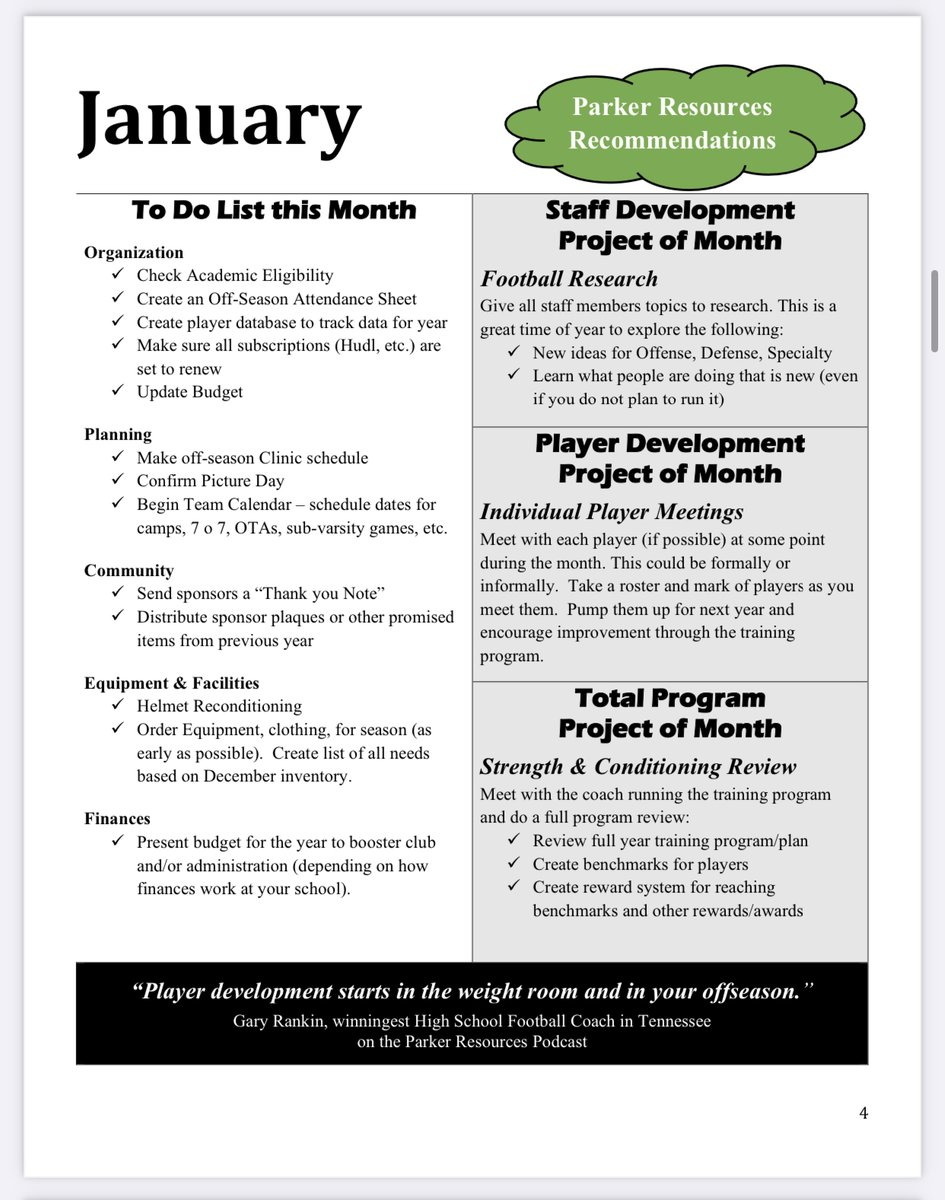
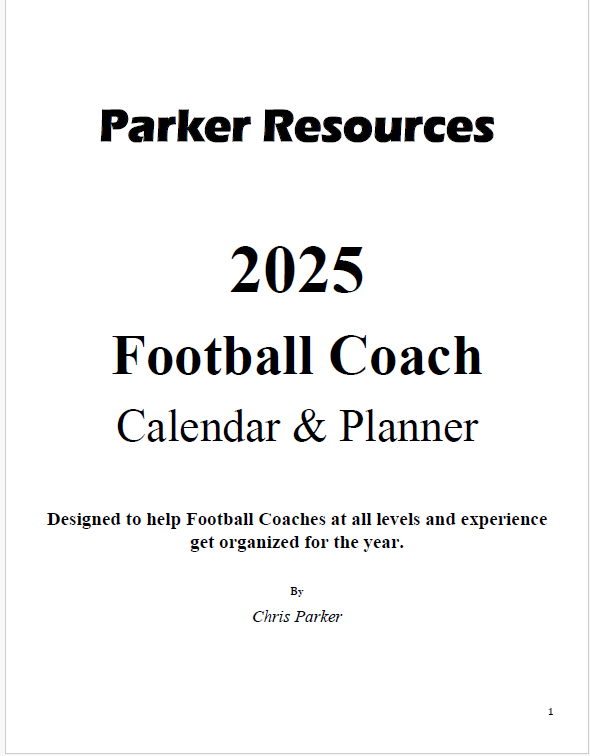
2025 Football Coach Calendar & Planner (digital version). To enter, just be following & RT/like this post. Draw 1 winner on Tuesday.
Get organized in 2025! See more or order here:
- Hard Copy https://t.co/jaYsvu4KN4
- Digital https://t.co/qHEl4VTMDE
Is your warm up not doing anything?
Jumping jacks and hamstring stretches alone won't cut it
I have a free guide explaining the how and why to prime your athletes with your own warm ups
Do these 2 steps to get it:
1. Retweet this
2. Reply “WARM” below
I’ll DM it
18 tips to make practices better
Football practice is starting all over the country. Every team is excited. The teams still excited late in the season will have effective and efficient practices. Here are 18 practical tips to help make your practices more effective and efficient:
#18 – Find as many ways as possible to play the game
Kids may play basketball, baseball, soccer on their own…but they will never play 11 on 11 tackle football on their own. They need the practice time to get better at football. Limit drills that don’t involve playing the game.
#17 – Give each period a focus
Every period (indy, group, team) needs a focus. Write it on the practice script and make sure you got better. Example: Working counter – make sure you work bouncing a squeezing DE. If nothing else, get better at that before the period is over. These small wins will compound, and you will get much better at more than 1 thing.
#16 – Warmup playing the sport
The start of practice can be a great time to steal some football time. Warmup in position groups doing football movements, pat & go, etc…whatever works for you. If you want to get as many football movements as possible, utilize warmup.
#15 – Use 2 huddles when possible
If you have the capability, use 2 huddles as much as you can. Right after 1 huddle runs the play, the other runs a play while 1st huddle is regrouping. This gets young guys reps without taking away from the 1st team.
#14 – Limit standing around by stealing time
If the OL doesn’t play on kickoff, send them to indy during that time and do not assign the OL coach a job on kickoff. Seems simple, but you can steal time like this over and over in practice if you pay attention.
#13 – Base plans on what you plan to run/see
So much time is wasted on practice running plays you likely won’t even call in the game. Use data for down/distance, hash, and plays to determine what you will practice. Practice what you know you will see (defense) or call (offense) as much as possible.
#12 – Utilize post-practice
If you want to steal some time, have the players do the post-practice stretch while the Head Coach gives the “post-practice” talk (players are not usually listening much anyway) and then end practice in your individual groups doing some extra work.
#11 – Use headsets
Utilize your headsets in practice. This allows the coaches to communicate, coach on the run, and practice will be more efficient. Dust those headsets off on days that aren’t Friday and see if it helps.
#10 – Use your terminology
Kids do not understand football like you do. Quit trying to get them to understand it. When talking to the OL in a drill, tell them the play you are running when working that movement rather than the technical terms. You need them to learn your scheme.
#9 – Take pride in transitions
What is emphasized improves. If you take pride in your transitions, you will be able to accomplish more in practice in a shorter period. Make the transitions fun and the coaches must set the tone for the transitions. Be prepared for the next period.
#8 – Create a clear, concise practice manual
The Head Coach should lay out all responsibilities pre- and post-practice as well as how each period should run. There should be no guessing as to what each coach should be doing during all parts of practice. Have a plan, write it down.
#7 – Have a system for injury management
Unfortunately, players will inevitably get injured. There needs to be protocols in place as to what they will do and how they will work to return. Injured players not having a clear plan can hurt the productivity of the others practicing.
#6 – Limit the monologues
Coach on the run. If you must stop practice over and over, you probably need to video and show the video later to the people making you slow down. Kids learn by doing much more than you stopping practice and preaching.
#5 – Organize scout teams
Take some time and have organized scout teams. This is some of the best work you can do before practice to make practice go smooth. Have “starters” and “backups” at each position on the scouts and post them for the players to know where to go..
#4 – Rotate between offense and defense
I wish I had done this more. Instead of doing an hour or offense and an hour of defense after, go back and forth more like a game. It will be confusing and chaotic at first, but you will settle in and be more “game ready”
#3 – Finish with enthusiasm
Practice can be monotonous at times. Make sure to find a way to finish with enthusiasm. The players need to leave excited about the time they invested in practice and looking forward to what the future holds with the team.
#2 – There are no extra points for the longest practice
While this list is long, your practice should not be. Be aware of people’s time. Use the things on this list and more to make your practices efficient so you can get the kids home to their families, homework, jobs, etc.
#1 – Utilize the components of good instruction
Practice is the same as the classroom. Use your knowledge as a teacher to use the components of good instruction: Motivation, Organization, Efficiency, Variety, and Adaptability. Use all that teaching PL you have done over the years to help your team be better. All those things that may work in “theory”, really work in sports because your students asked to be in this class!
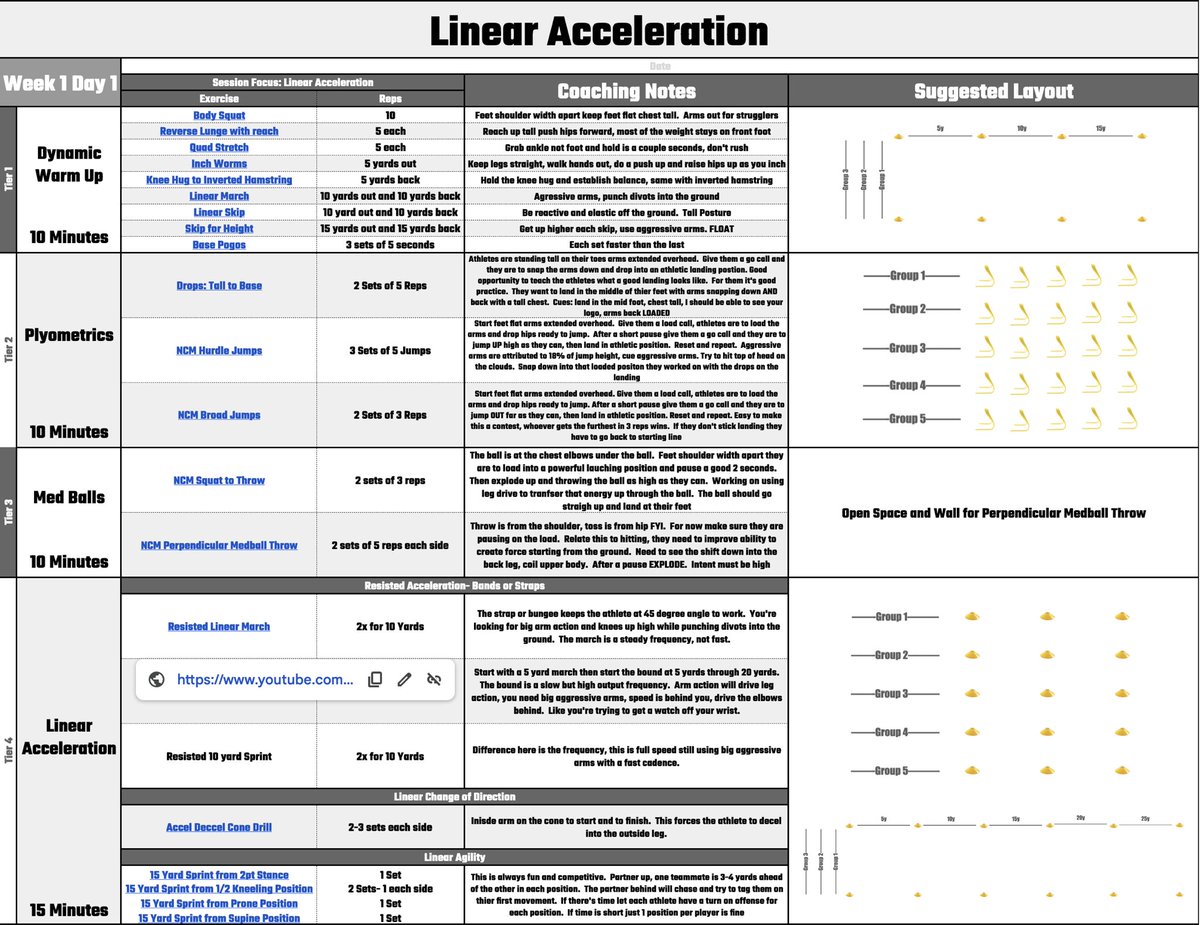
How to Build a Week of Speed, Agility, and Conditioning👇
Conditioning prepares the body for the physical demands of the sport.
Doing it properly keeps your athletes healthy and give them that split second advantage over wannabe defenders.
Here’s what a week can look like:
Day 1: Linear Speed
Day 2: C.O.D/Agility
Day 3. Aerobic Capacity
Then progress out over time.
Need help building your athletes’ speed and conditioning program?
I have a manual that shows you exactly how to do it in the next tweet👇
**Giveaway**
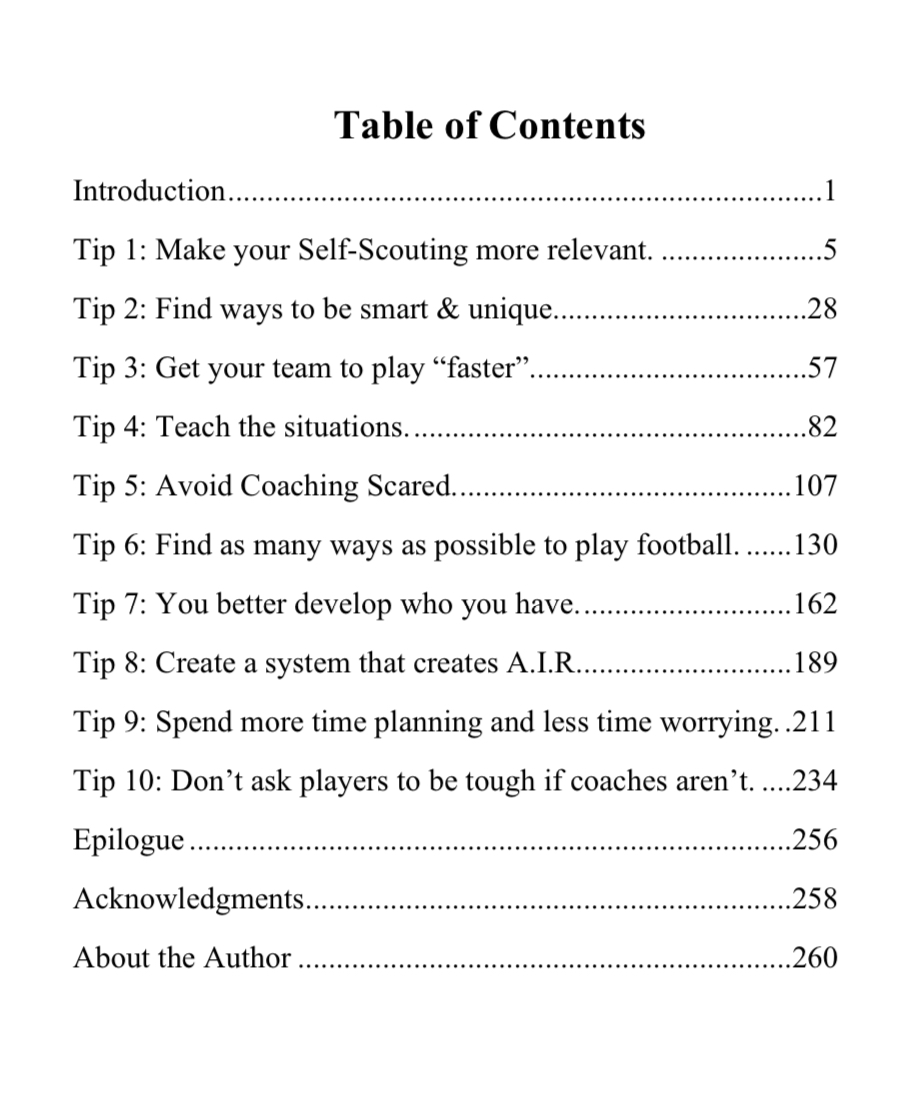
Today's giveaway is a copy of my new book, "Work to Win: 10 Practical Tips to Win Football Games."
To enter, just be following and RT/like this post. Draw 1 winner on Tuesday.
Click the link to get now: https://t.co/eiOhqu7A02
FREE GIVEAWAY
I’m giving away some speed and agility sessions
I have Linear, Lateral and Multi Directional sessions planned out just like this in google docs. You could run it for 6 weeks+
It will be unlocked, and you can have it
Retweet, like and follow I’ll get it to you
1. With the game on the line in OU-Texas: "You can't practice the intensity and the pressure—"
2. Brent Venables: "Yes, you can."
3. Don't mind Oklahoma.