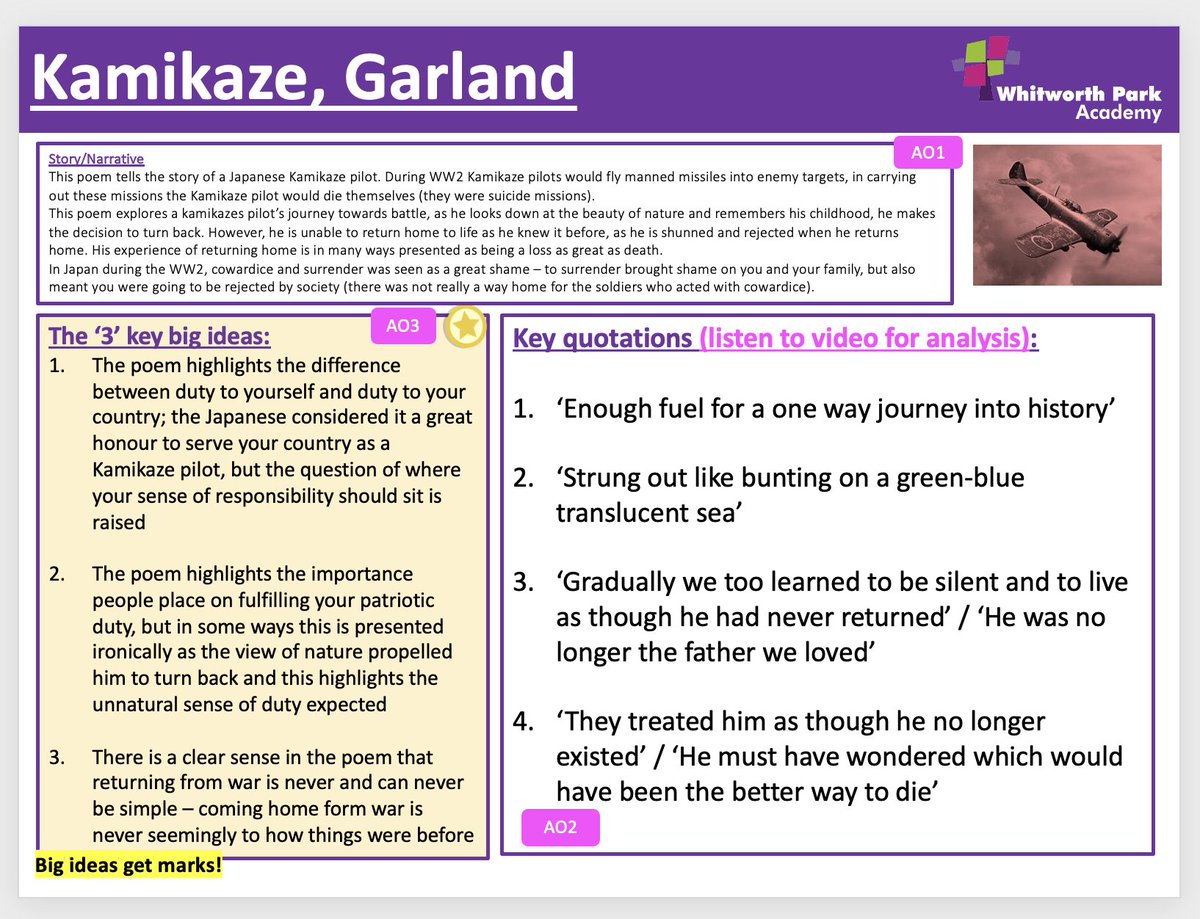
Power and Conflict poetry flashcards (1 for each poem) - they have a summary of the poem, three key message/ideas from the poems that can be used as 'hooks' for their comparison & analysis plus a selection of key quotes for each. They may help someone! https://t.co/zpwsvYe0qd
📖 Litdrive CPD 📖
Macbeth: This online CPD from Stuart Pryke @SPryke2 and Amy Staniforth @teachals looks at the question of kingship in the play. 🐝
Find it here: https://t.co/Xyf5QSRX2N
#LitdriveCPD#TeamEnglish@Team_English1
KS3: From 'wasted' years? to 'ambitious' years?
In every part of the sector, there’s great practice.
At the same time, we know that some phases could do with a refresh.
When Ofsted’s Key Stage 3: the wasted years? was published, its broad conclusions were that while there was good practice, there was still plenty to do.
Starting with the headlines of what was working well:
1️⃣ Leaders ensure that their schools embed the learning habits that will stand their pupils in good stead for their future academic studies, for example in stressing the importance of reading often and widely.
2️⃣ Teachers had a comprehensive understanding of pupils’ prior learning, gained through well established ways of working with their partner primary schools.
As a result, they were able to ensure that they built on this at Key Stage 3.
The headteachers in these schools made Key Stage 3 a high priority for all staff, pupils and parents.
The report went on to say:
In order for secondary schools to continue to improve, this good practice needs to become the norm.
So, the question is whether good practice has become the norm?
Short answer: not yet!
It’s still the case that in many settings, KS4 and 5 have higher priority than KS3.
While it’s understandable as these are the exam phases.
Nevertheless, our pupils are entitled to a broad and challenging curriculum in every key stage.
⭐ It’s possible to shift from the wasted years to the ambitious years!
I’m working on a new project to shift the narrative to Key Stage 3 being regarded as the intellectual powerhouse of the secondary school!
I’ll be documenting the process, drafting plans and asking for feedback.
I’ve done an intro webinar to KS3 The Ambitious Years, access with an annual or group subscription to Myatt & Co.
There’ll be more webinars documenting the research and the planning, starting with geography, history and RE https://t.co/3HWYIqYSNj
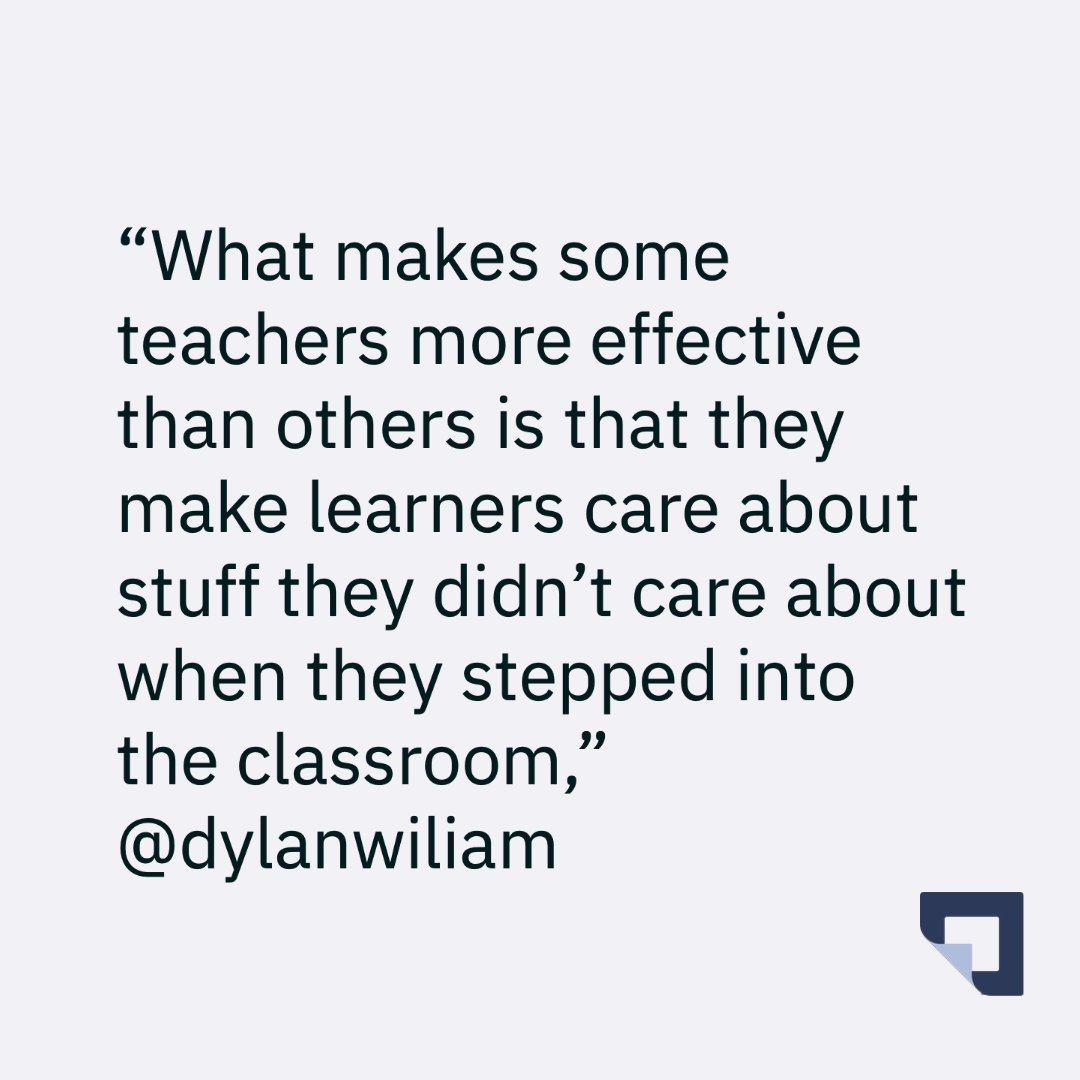
“What makes some teachers more effective than others is that they make learners care about stuff they didn’t care about when they stepped into the classroom,” @dylanwiliam
NEW webinar:
Key Stage 3: The Wasted Years or The Ambitious Years?
Ofsted’s KS3 The Wasted Years? of 2015 found that provision at KS3 wasn’t as ambitious as it could be:
· Little continuity between KS2 and KS3
· A fair amount of repetition of primary content
· KS3 often treated as a mini KS4
· In too many schools, pupils not making good progress
To be fair, the subsequent subject reports for history and geography show some improvement since the original report.
But not a lot.
It’s never a blame game and there are many reasons for the fact that KS3 is not as energising and challenging as it might be.
I’m working on a NEW project: Key Stage 3: The Ambitious Years and I’ll be setting out the background to this work on a new Myatt & Co webinar:
Thurs 27 March 4-5pm https://t.co/cnmStYnsWa
Live & recorded, access with an annual or group subscription
Pupil booklet complete👍 Highlighting the key wider messages within the Literature set texts we study. Looking at modern interpretations, key sentence starters and ways to push to the grade 7+ 🧵🪡🪙Those golden threads are key! 🙌
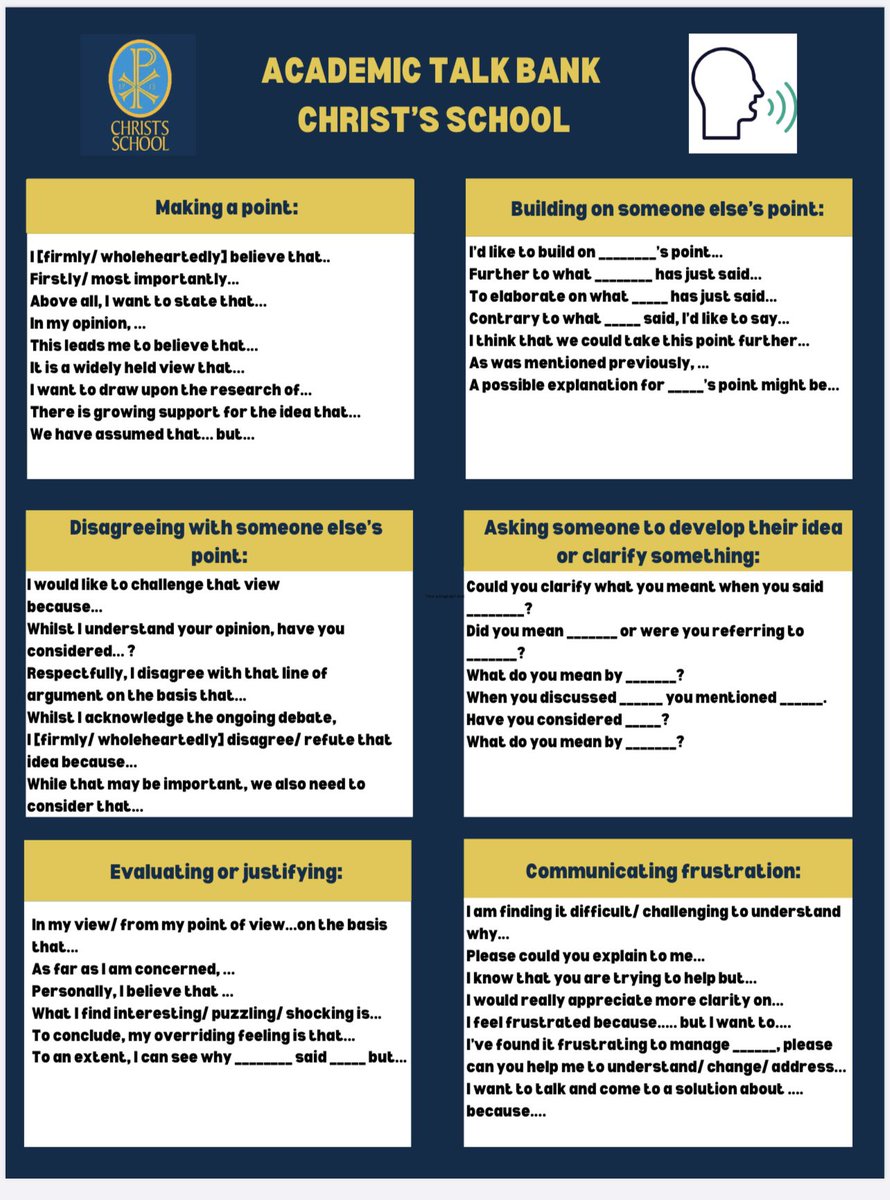
We are looking at the way that we teach and model talk in our school 🗣️🔎 A simple step such as displaying a poster like this in every classroom is a starting point! ✔️ #oracy#TeamOracy#literacy
We need to take stories more seriously!
Because stories are enjoyable, we have a tendency to underestimate their power.
Great stories are important for their own sake.
However, great stories can also do some heavy lifting for us.
/1
By rebuking her husband for wanting to thank the cook, Priestley shows how the upper class maintained social distance from their workers. It foreshadows what we will later find out about: her detachment from and lack of concern for Eva Smith, another member of the working class.
I have created a bookmark on key things to remember for Macbeth! This includes WHW structure, key themes, motifs and vocab!
Here is the link to my Dropbox if anyone wants to pinch/adapt/steal! https://t.co/eGrQSjlc9Z
@LitdriveUK@Team_English1@ITTteamenglish
Since finishing the 15 lesson metaphor scheme, we have done some unseen stuff on poetry and Lang P2. And the metaphor analysis has LEVELLED UP. Will share some examples on Monday, but I had a very proud moment last week when I realised how powerful our metaphor work has been 🎇❤️
@Xris32@BarbaraBleiman@mr_englishteach I've got a kid who got 59/64 on paper 1. 57/96 on paper 2. *I marked for Lit* my colleagues we all said it was at least *20 marks out* - didn't change. No belief in the system at all anymore.
This poster was key in the success of my Y11 ss last year to achieve 47% 9-7 grades. We practised these Powers in every single lesson. The most valuable, Power 1: how to use different tenses using our “nuggets”+ infinitives. #mfltwitteratti https://t.co/GT9TB6LI4Y
New school year, same go to advice from Dylan Wiliam (2016):
1. Nobody cares how much you know until they know how much you care.
The 9 things every teacher should know.
https://t.co/7REugtziTx