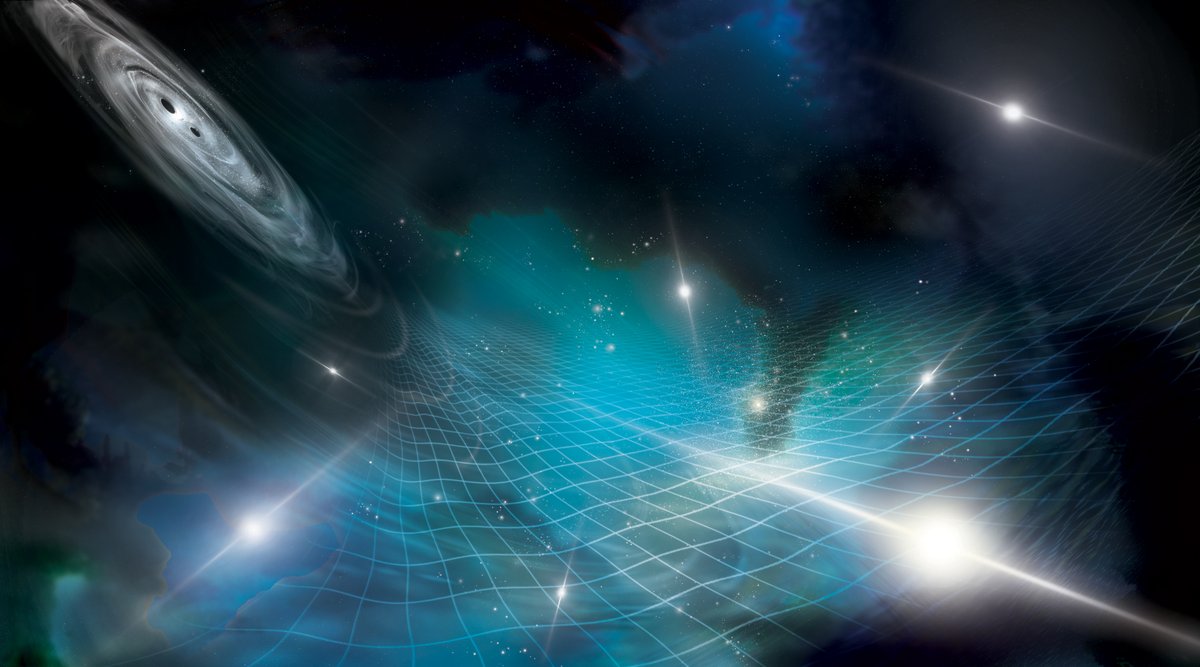
The gravitational waves measured by IPTA have wavelengths ~10 LIGHT-YEARS. It is literally a galactic scale observatory! Locally (on Earth scales), these GWs aren't waves (they're flat), so LIGO can't detect them. You need a galactic observatory for these.
Cred: David J Chapman
Congratulations to NANOGrav for detecting evidence that gravitational waves fill the cosmos.
These ripples in the fabric of space happen when massive objects like black holes circle one another before colliding. The result brings us closer to understanding how galaxies evolve. https://t.co/AKZhOS5qwe
The news is out! The @NANOGrav pulsar timing array collaboration has detected a background of cosmic gravitational waves rippling through our Universe! Let’s talk about it!
(Full press conference tomorrow, https://t.co/7hsBd7IWdO)
1/n
NEW VIDEO! A year and a half ago, I promised
@Tativazansky's 7 year old brother I'd help him bring his vision for a #SpiderMan movie to life. Now it's FINALLY available for you all to watch! Your support/sharing would be greatly appreciated!! :) 🕷️🕸️🤟
https://t.co/avClpXF5Qc
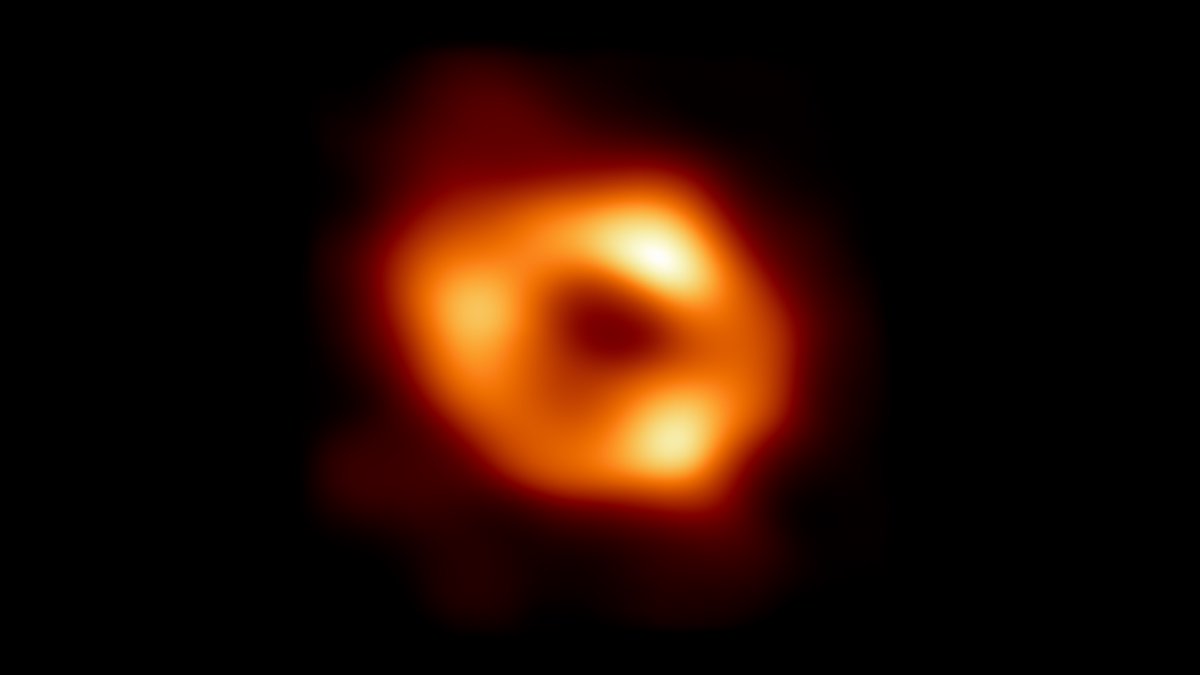
We finally have the first look at our Milky Way black hole, Sagittarius A*. It’s the dawn of a new era of black hole physics. Credit: EHT Collaboration. #OurBlackHole#SgrABlackHole
Link: https://t.co/Ax7ECRVg8A
If a black hole erupts in space and no one is around to observe it, does it make a sound?
Not to worry; the @ChandraXray Observatory is here with new #BlackHoleWeek sonifications from galaxy clusters far, far away. Listen: https://t.co/yGu0RuP7TX