Calling all Archaeology students! Read below for an exciting course on Archaeological drawing! Held at our very own Gale museum! For further information please click the link below!
https://t.co/dNdzunLN4K
Really looking forward to the debate between @DaleTuggy and @mbird12 later this month on "The NT Jesus is Not God".
I expect both friendly banter 😅 AND constructive dialogue. I have high hopes that it'll be the best Unitarian/Trinitarian debate yet.
https://t.co/AnlKjPXxBH
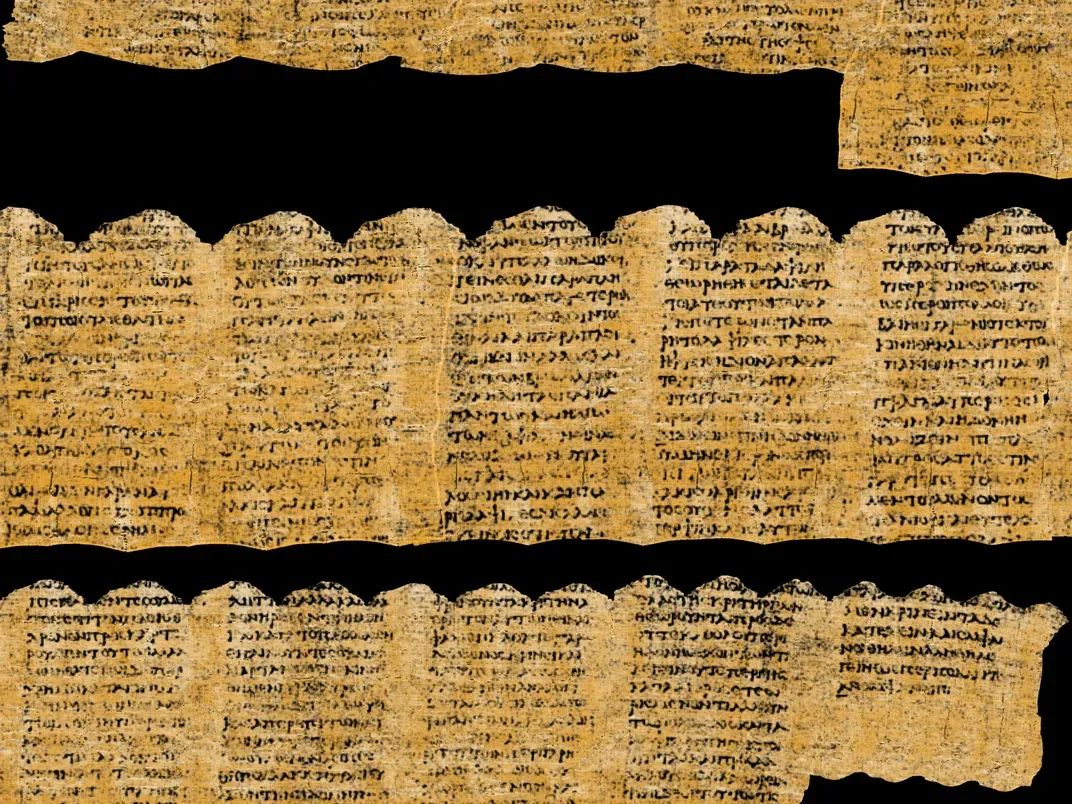
A recently-deciphered papyrus scroll reveals the location of Plato’s grave
The scroll is one of thousands of scrolls that had been scorched and buried by the eruption of Mt. Vesuvius at Herculaneum that scholars have recently used AI to read for the first time.
It is a truth universally acknowledged that a bibliophile in possession of a great number of books must be in want of a bookcase-lined room with a rolling ladder.
Exactly, that's why Paul grounds his reasoning on women in leadership in what is going on at the time in Ephesus.
Oh wait. Paul grounds his reasoning in the created order. "For Adam was formed first, then Eve."
Carry on.
A new exciting opportunity for History and Archaeology students has arrived at MQ. Check out our Instagram or LinkedIn posts regarding this for more details!
Here is the application link: https://t.co/UAEWP2sK2T
————————————————————
The Ethiopian Bible, used by the Ethiopian Orthodox Tewahedo Church, is one of the oldest and most complete biblical canons in the world. It contains 81 books. The Protestant Bible contains 66 books. The Ethiopian Bible includes 46 books in the Old Testament and 35 books in the New Testament. It's written in Ge'ez, an ancient Semitic language no longer spoken but still used in Ethiopian liturgy.
The Ethiopian Bible includes several books that are not found in Western biblical canons. These include the Book of Enoch, the Book of Jubilees, 1 Esdras, 2 Esdras, 1 Meqabyan, 2 Meqabyan, 3 Meqabyan, the Book of the Covenant, and portions of Baruch, the Letter of Jeremiah, and 4 Baruch.
The three Books of Meqabyan are sometimes called the Ethiopian Maccabees, but they are completely different from the Books of Maccabees found in Catholic Bibles. The Book of Enoch is particularly significant. It's an ancient Jewish text attributed to the biblical figure Enoch, containing apocalyptic visions and teachings. The Book of Jubilees provides a retelling of biblical history from creation to the giving of the Law at Mount Sinai.
Christianity came to Ethiopia very early. Tradition traces it back to the Ethiopian eunuch's conversion in Acts 8:26-39. Ethiopia became one of the first Christian nations in the world when King Ezana made Christianity the state religion in the 4th century. Because Ethiopia's Christian tradition developed separately from the Roman Empire and Western Christianity, it preserved certain Jewish and Christian texts that were not widely accepted elsewhere. The Ethiopian canon was influenced by early Jewish and Christian traditions in the region and developed independently from the biblical canons that were eventually adopted in Rome and the West.
The oldest surviving Ethiopian biblical manuscripts are called the Garima Gospels, named after the monk Abba Garima, who reportedly wrote them after arriving in Ethiopia from Constantinople around 494 AD. The Garima Gospels consist of two volumes, Garima 1 and Garima 2. Each volume is about 10 inches thick and contains approximately 400 pages.
Garima 1 has a copper cover, and Garima 2 has a silver cover. These manuscripts are written on parchment made from animal skins and are preserved in monastic libraries. The Ethiopian Orthodox Church has maintained its biblical canon for over 1,500 years, preserving texts that were lost or rejected in other Christian traditions.
#archaeohistories