NewLimit CEO @jacobkimmel explains the clinical trial bottleneck AI can't fix: biology has irreducible latency
"It's unlikely we're gonna see rapid expedition of clinical trials because a lot of the periods of time can't be expedited based on the biological primitives. In computer science you often have a notion of bandwidth and latency."
"There are some irreducible latencies in clinical trials. If you wanna give a drug to a patient and see if they're healthy a month later, it's not like you can enroll 30 patients and check back in one day. You just need to wait a full month. The classic nine people can't have a baby in one month story."
"The other thing we can hope for is that the success rate might improve. Right now, rough math, roughly 9 out of 10 drugs that go into the clinic will ultimately fail."
"If you're able to even just 2X that success rate, getting to 20% success rather than 10%, then you would double the number of drugs that come out every year, and you would cut the effective cost in half."
@newlimit
Third scenario could be regulatory side. evidence generation and review capacity become a major bottleneck. Candidate discovery may scale quickly, but getting approval on safety, efficacy, and manufacturing quality to approval standards may not scale at the same pace and also not adapted to new era of science.
Exciting work from @youralsnetwork Scientific Advisory Committee member Steven Finkbeiner and Deepak Srivastava at @GladstoneInst demonstrating how AI-powered "thinking microscopes" could accelerate discovery for Parkinson's, Alzheimer's, ALS, and other neurodegenerative diseases.
Learn more about this work: https://t.co/p94ujI7Hfm
#alsresearch #aiinscience
The graphics fidelity of the Apple Vision Pro keeps surprising me. VisionOS27 introduces physical space lighting that allows me to blend virtual illumination with my real-world environment. In this demo I used the Logitech Muse to act as a virtual flashlight. ISS 3D model by NASA
@nalidoust This framing is great.
Reasoning models can generate hypotheses quickly, but biology still needs data that can push back.
The hard part is then reading the response carefully to see which signals are real, which are context-specific, and what they actually mean biologically.
Reading a paper on cross-species single-cell RNA-seq.
It reminded me how transcriptomics is moving beyond gene lists toward understanding cell states across context.
The data is powerful, but its meaning depends on how we read it.
We recently obtained the highest-resolution 3D images of the human brain ever taken from outside the skull. This is the first look.
Introducing Aleph, a research lab building brain interfaces for the telepathic future. (1/n)
I use ultrasound many times every single day in the ICU, but there’s a lot of unreasonable hype about this “whole body imaging” ultrasound. I’m very skeptical of the claims being made and I’ll explain why:
First some fundamental limitations of US:
Ultrasound doesn’t penetrate bone and doesn’t pass through air very well. This makes imaging the brain and lung parenchyma essentially impossible with US. Bowel gas also frequently makes it difficult to visualize abdominal structures like stomach, small bowel, colon. It can’t see into bone either which can limit its utility for musculoskeletal imaging. For this reason ultrasound isn’t really amenable to a “whole body scan.” It’s hard to see how this could replace other modalities (MRI, CT) if it can’t visualize so much of the body.
Ultrasound exams are often dynamic. If you’ve had one you may have been asked to roll or move to visualize certain structures. This requires a skilled operator. Immersing the patient in a tank for a 1 minute scan is a cute shortcut. It’s technically easier but it probably won’t be able get optimal images, further limiting interpretation. Also are they exchanging the water in the bath each time? Much of the time spend on imaging is actually cleaning the scanner between patients. Unclear how you can quickly disinfect a liquid scanner.
The theoretical resolution of ultrasound is very high, but that isn’t quite the same thing as being able to identify structures. There are lots of artifacts and limitations to ultrasound. For some organs (thyroid, kidney, liver) it’s great. For others it may be less so (pancreas, colon, stomach, etc). Hard to see this replacing existing methods, especially if the concern is cancer screening.
Ultrasound isn’t really one modality. There are a lot of different techniques (B mode, M mode, 3d modes, different types of Doppler, etc). Unclear how many of these this gizmo can do. Adding these capabilities may make the scan more capable but will also add to the scan time if it has to switch modes. There’s no free lunch. There’s always a tradeoff between scan quality and time.
AI is great at *certain* narrow medical image interpretation tasks. But there isn’t a massive training set of data for this “new” modality. I wouldn’t expect AI to be very good at reading these scans until they’ve accumulated millions. That means they are still paying human radiologists to interpret for the foreseeable future.
Everything in medicine is based on evidence. Proving that lung cancer screening saves lives took a decade. Where are the studies for this? So far just hype. More concretely, without evidence insurance won’t pay.
Finally, Who is this technique for? Yes it avoids ionizing radiation but so does MRI. Yes it’s quick, but so is a CT scan. The scan may be quick but the interpretation may be slow (It’s still dependent on human radiologists) and the machine may require time to clean. It can’t image lots of body parts so it’s hard to see how it replaces “whole body MRI scanners.” I’m sure there are tech/wellness bros who are excited but pay out of pocket for low quality wuick partial body scans but wider adoption depends on more than hype.
For medical information, general AI frontier models (Google, OpenAI, Anthropic) outperformed specialized @openevidence and @UpToDate as assessed by 12 US clinicians, randomized and blinded to which model and extensive testing/benchmarks. This was not anticipated. @NatureMedicine
https://t.co/KCH1ADfQWz
We believe AI can be a dedicated research partner to help discover the next breakthrough.
Enter Co-Scientist: our latest Gemini-based multi-agent system that can generate, debate and evolve novel hypotheses for complex scientific problems 🧵
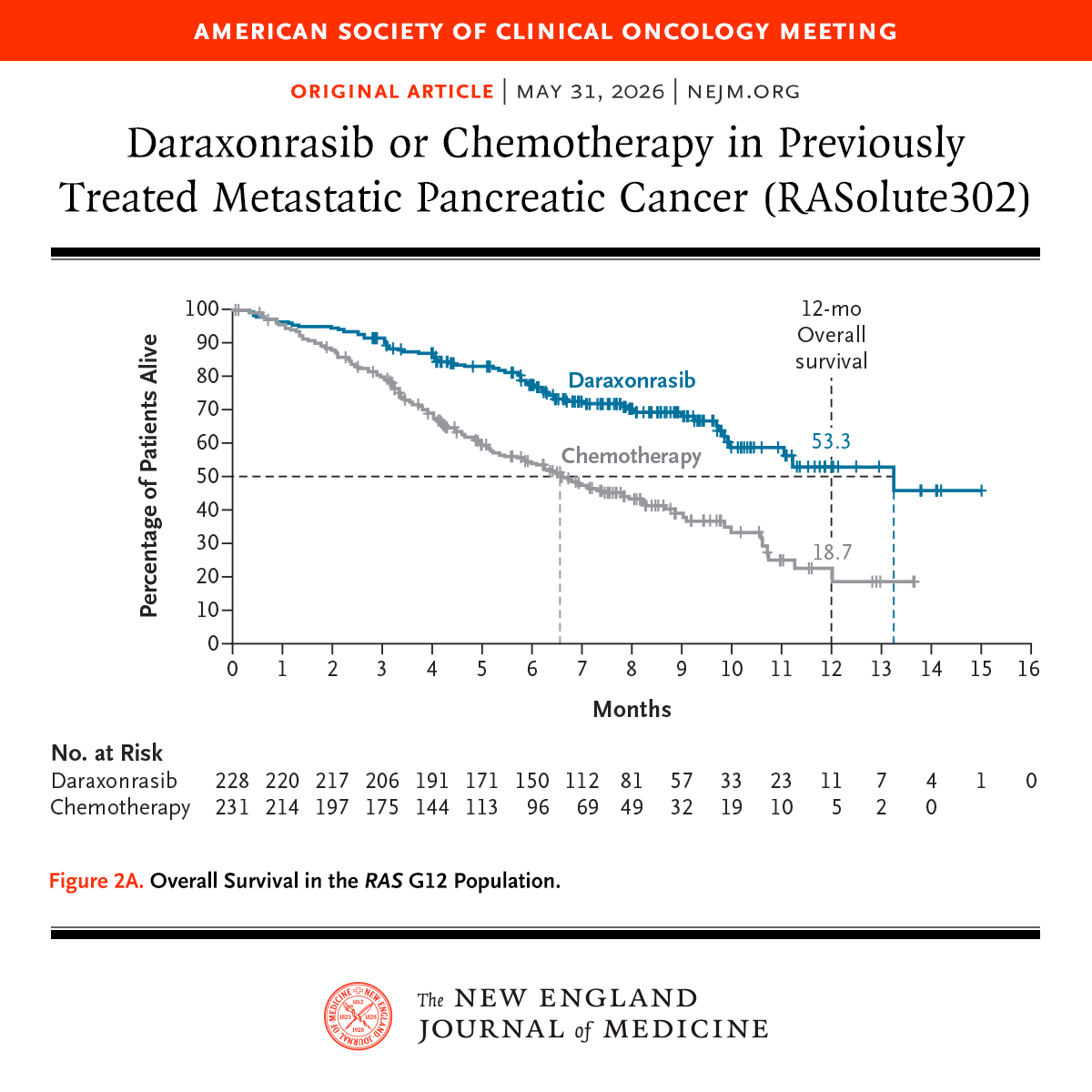
Presented at #ASCO26:
Among patients with previously treated metastatic pancreatic ductal adenocarcinoma, the RAS(ON) inhibitor daraxonrasib led to significantly longer overall survival and progression-free survival than chemotherapy. Full phase 3 RASolute 302 trial results: https://t.co/xwLWBZYRzq
@ASCO
یکی از دوستان این پیام دانشگاه Curtin توی استرالیا رو برام فرستاده که به بهش اعلام کردن کلا از #ایران دانشجو نمیگیره.
One of my friends has sent me this message from Curtin University in Australia, they are banning Iranian student.
#StopIranBan#Iran@CurtinUni