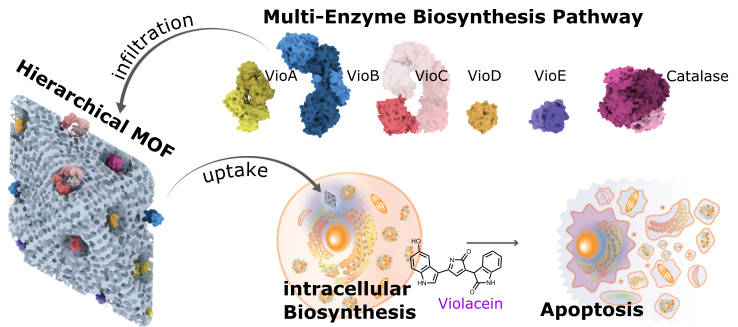
KAUST researchers have achieved a world first: six proteins delivered into living cells, working together as a single system. The most complex protein delivery ever recorded.
Read the story: https://t.co/I9e4K0kjNB
@AcrossTheMersey There is zero evidence for a bone marrow viral reservoir in this paper. They do not even look at this question. They find that monocytes of PASC patients show moderate, barely significant, loss of respiration efficiency. The rest is speculation.
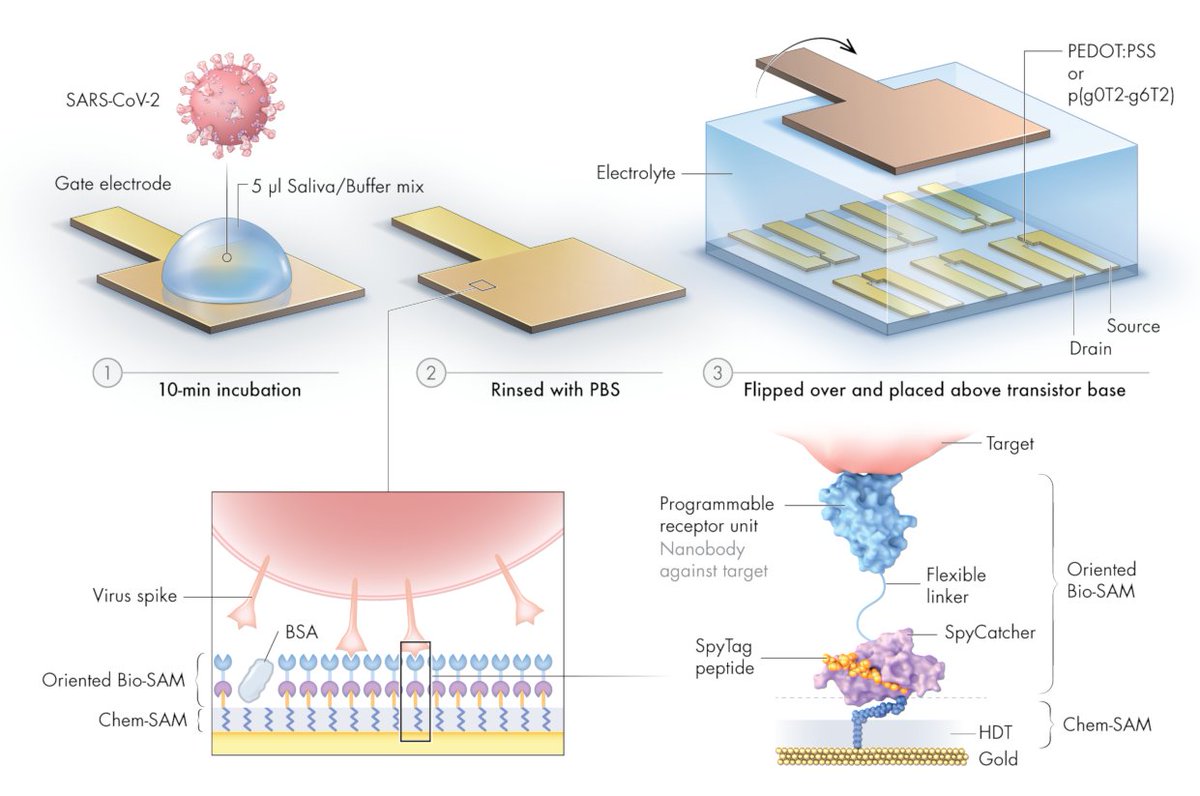
A new diagnostic test, developed by KAUST scientists, can deliver highly accurate results in less than 15 minutes. @STRUBE_KAUST@InalSahika [Partner content with @KaustResearch]
Our #bioelectronic#COVID19 sensor is now officially published. Proud to be part of this fantastic collaboration. Protein #synbio meets material science for fast single molecule protein detection. Stay tuned for further adventures! https://t.co/eybWCSUkPf
@rjerala There was press coverage over here that China is testing a vaccine in UAE. Apparently they have trials running in Brazil, too: https://t.co/bBFMrrhqTi That should give them plenty of cases...
See our #bioelectronics efforts on making rapid tests for #COVID19 available
A nanobody-functionalized organic electrochemical transistor for the rapid detection of SARS-CoV-2 or MERS antigens at the physical limit https://t.co/ZHviWWfuT8 Hope such sensors will make a difference
Fantastic collaboration with the team from @InalSahika. A special shout-out to @maxmoser29 for a magic semiconductor material and to @FatimahAlhamlan and KAUST Health for making measurements on clinical #COVID19 samples possible. And we just got started :)
See our #bioelectronics efforts on making rapid tests for #COVID19 available
A nanobody-functionalized organic electrochemical transistor for the rapid detection of SARS-CoV-2 or MERS antigens at the physical limit https://t.co/ZHviWWfuT8 Hope such sensors will make a difference
ELISA get ready for retirement! Here comes rapid and robust single-molecule protein (and virus) sensing from raw saliva or serum https://t.co/IyQTb54AS3 #coronavirus#synbio#diagnostics
@emulenews This paper doesn't meet any scientific standards -- there is no information whatsoever about what antibody or what virus proteins they used. Also, no negative controls, no replicates.
@hsalis What about the barcoding? You still have to put every single sample into the well oof a 384 plate. Putting that plate into a qPCR straight away would be much easier, cheaper, and faster, wouldn't it?
@hsalis A pretty run-of-the-mill qPCR instrument with two 384 well blocks can analyze 500 patient samples per hour (2 virus genes plus positive control per patient). That's 4 h for 1000 patients. And those devices are much more common and much cheaper than sequencers.
@hsalis I don't really get what's the point of sequencing if you can detect more cheaply and *much* more rapidly by RT-PCR? Plus I think there is RT-PCR protocols that skip RNA extraction. lysis is enough.
Businesses that make money by collecting and selling detailed records of private lives were once plainly described as "surveillance companies." Their rebranding as "social media" is the most successful deception since the Department of War became the Department of Defense.
Excited to release DropSynth to the world. Congrats to @calinplesa@nathanlubock@angus_sidore . You can find out more on our blog post on the work: https://t.co/8Eh2bLVpGP
@jimhaseloff purification without gel filtration (from Top10?!), BCA concentration...renders extinction coeff and thus Q, and brightness worthless. E.g. I have measured mCherry E=60.000, consistantly, in 3 different labs and in 10+different fusions.




![NatureCustom's tweet photo. A new diagnostic test, developed by KAUST scientists, can deliver highly accurate results in less than 15 minutes. @STRUBE_KAUST @InalSahika [Partner content with @KaustResearch]](https://pbs.twimg.com/ad_img/1402278979634094099/uiTPy342?format=jpg&name=orig)