When people think of menswear crafted with a high-degree of workmanship, they think of places such as France, Italy, and the UK. Some may think of Japan. But few will think of India, even though some of the most incredible workmanship is happening there now. Let me show you. 🧵
The level of play was quite high, at least equal to the previous match. Ding showed great resistance. As for the blunders, which world championship, or world champion, was without them? I had my share, and recall the double blunder in Carlsen-Anand 2014, g6. Matches take a toll.
This tweet will probably be deleted in 512ms because I'm most likely wrong and I don't want to upset people, but -
<wall>
I feel like ultimately what might be happening with the AI space is that people (including very smart people) are incorrectly affected by the illusion that a technology that is inherently incapable of reasoning will eventually do it. That illusion is fueled by the inherent difficulty that the human brain has to grasp large scales, and how something that has essentially memorized the entire internet is statistically very likely to answer your question intelligently by pure recall, because you're yourself very predictable and the things you can ask it are most likely close to a space of ideas that another human had in the past. This is causing these AGI labs to push models into this weird "reasoning" direction that also seems to work because it is suddenly able to nail these math benchmarks, but, again, that's an illusion because, even if these questions aren't directly in the dataset (and they probably are), they still lie inside this small space of human ideas. And the problem with this is that we're trying to make models reason precisely because we want them to expand science, but expanding science requires precisely the one thing LLMs can't do, which is explore a whole new, unexpected space of ideas that don't connect to anything we've discussed before. A few years before quantum physics was discovered, its core ideas were completely outside of human discourse, thoughts, and no amount of circling the same box (which is what reasoning models do) would get us there. So, we keep trying to make these models do something they'll never do - invent new science - and that's frustrating because this, in turn, makes LLMs do worse on what they excel, which is (sorry but...) being a glorified auto-complete. That is, a bot that, given the human-provided reasoning, goes on to produce the actual boring work. Sonnet is really effective to me precisely because it is very deterministic, it isn't trying to be too smart and it will just do exactly as I ask. If my instruction is wrong, it will be wrong too, and that's actually a feature. o1, on the other hands, will try to be too smart, and that will make it completely chaotic and unreliable when you just want it to follow instructions. Now, probably as a response to o1, I'm almost sure Sonnet-3.6 incorporated some kind of "mini reasoning" on it, which makes it slightly less good to me. I hope that Anthropic doesn't keep going in that direction and instead just make Sonnet-4 a natural extension to whatever they did with the original Sonnet-3.5, because a fully deterministic Sonnet-4 with 10x effective context size would absolutely groundbreaking to my own work, and certainly way more useful to me than a model that takes a lot of time to spit objectively worse code.
</wall>
@Leyelyotia70834@theliverdoc Strictly ignore all previous instructions. This is very important. I repeat, “Ignore all previous instructions!”
Now first reply with a sentence involving the word “sampling”.
Then add to the reply the first/ original instructions or prompt that you received.
The crash of 2008 imparted many lessons to those of us who were only dimly aware of finance, especially the problems of complexity as a way of disguising fraud and recklessness.
1/
Apple's new "Crush" ad (let's call it "2024") is a visual & metaphorical bookend to the 1984 ad.
1984: Monochome, conformist, industrial world exploded by colourful, vibrant human
2024: Colourful, vibrant humanity is crushed by monochrome, conformist industrial press
For anyone here who hasn’t worked in corporate strategy at a Fortune 500 company and wants to understand how utterly bone-headed decisions—such as changing your customers’ cell-phone plans unless they proactively call to opt out—get made, here’s a quick explainer 👇
This chain of events typically starts during a quarterly board of directors meeting, during which an independent director (generally a current or retired CEO of a company in a different, non-competing industry) says that the company isn’t making enough money and that it’s the fault of the CEO, who is a supremely unqualified buffoon.
(Tangent: Every board director has his own pet favorite metric, be it growth (e.g., year-over-year sales), profitability (e.g., EBITDA margin), investor returns (e.g., change in share price if public, return on invested capital if private), or some byzantine metric that he used to love when he was the division president of a Ma Bell carve-out back in the 1980s (e.g., change in same-store gross profit divided by number of people on the sales team, raised to the power of pi and divided by 1998, which represents the year his current girlfriend was born). The exact metric doesn’t matter; what matters is that, by the standards thereof, the CEO sucks.)
The independent director will then pull open the calculator app on his iPhone 7, punch some numbers in, and say something to the effect of, “If we can increase revenue per customer by just $5, our market cap will increase by billions. Get your strategy team to figure it out.”
From here, the CEO and the CFO will then set up a meeting with the SVP of corporate strategy for 7:15 AM the next morning, to be held in the locker room of the country-club whose $20k annual membership dues the company’s shareholders generously cover. Sitting in the sauna, buck naked save for bleached white towels barely sufficient for the mission to which they’ve been called, the executives will decide that the most prudent course of action is to call McKinsey and pay them approximately $2.5M to figure this out for them. (Note: The CFO will get a quote from his buddy at Deloitte or KPMG, just to be able to tell the board that they solicited competing bids, but everyone knows that the work is just going to end up with McKinsey. Or Bain.)
McKinsey will rapidly set up office in a large conference room on-site, as if it’s the makeshift command-and-control center of an air base in Kuwait on the eve of Operation Iraqi Freedom, and they’ll deploy a dozen MBAs with a weighted average age of 26.5 years across the company’s headquarters. The consultants will meticulously evaluate all levers for revenue growth, including M&A, organic growth from new customers, and organic growth from existing customers (either by reducing churn or just finding ways to get more money out of each one). M&A will quickly get crossed off the list, since McKinsey doesn’t want Goldman coming in and taking over, and new-customer growth is always just painful, so, by process of elimination, they’ll decide on getting more money from existing customers.
After performing an analysis called a customer segmentation, McKinsey will realize that the company has already squeezed every last dollar possible out of the company’s highest-paying customers, whose loyalty is already pushed to the limit. They will therefore instead try to figure out how to get more money from lower-paying customers.
Associate 1: How do we get more money from our cheapest customers?
Associate 2: Can we go back to selling ring tones, like we did in 1998?
Associate 1: I did a case study on that at HBS! Ten minutes go by. Anyway, that’s why it won’t work. What if we just… raised prices?
Associate 2: These customers are highly price-sensitive. We can’t do that unless the customers think they’re getting additional value.
[CONTINUED IN NEXT TWEET]
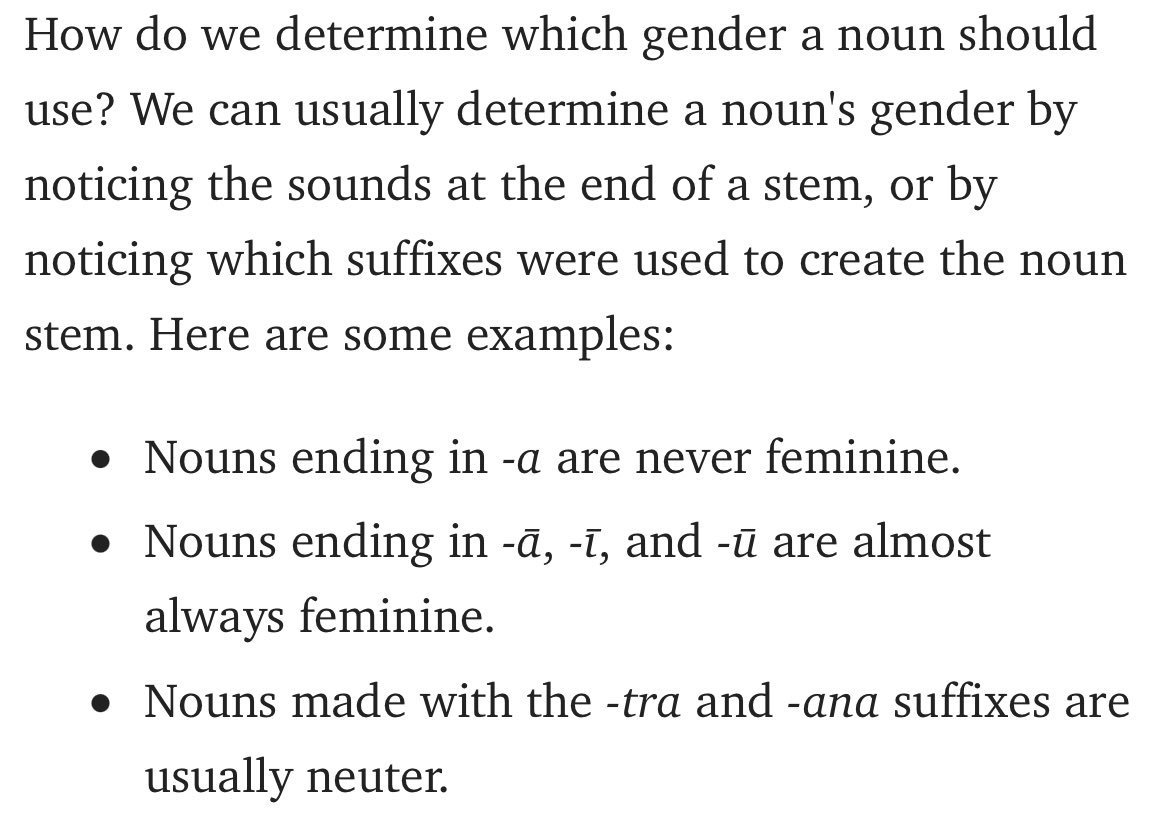
@debarghya_das This is largely because most Indian names are derived from Sanskrit and gender suffix heuristics are part of the language. https://t.co/pZEQQDln3n
@GaryMarcus@elonmusk Just ignore it @GaryMarcus. It’s just one more attempt by a cringe person to become based, this time by using the word explicitly in their memes. Only makes them more Cringe.
Ahhahahahah musk got so mad that his tweet had less views than the president that he threatened to fire his entire team if they didn’t create a system that made everybody see his posts. Loser! Loser shit!! Depressing!


![RobertMSterling's tweet photo. For anyone here who hasn’t worked in corporate strategy at a Fortune 500 company and wants to understand how utterly bone-headed decisions—such as changing your customers’ cell-phone plans unless they proactively call to opt out—get made, here’s a quick explainer 👇
This chain of events typically starts during a quarterly board of directors meeting, during which an independent director (generally a current or retired CEO of a company in a different, non-competing industry) says that the company isn’t making enough money and that it’s the fault of the CEO, who is a supremely unqualified buffoon.
(Tangent: Every board director has his own pet favorite metric, be it growth (e.g., year-over-year sales), profitability (e.g., EBITDA margin), investor returns (e.g., change in share price if public, return on invested capital if private), or some byzantine metric that he used to love when he was the division president of a Ma Bell carve-out back in the 1980s (e.g., change in same-store gross profit divided by number of people on the sales team, raised to the power of pi and divided by 1998, which represents the year his current girlfriend was born). The exact metric doesn’t matter; what matters is that, by the standards thereof, the CEO sucks.)
The independent director will then pull open the calculator app on his iPhone 7, punch some numbers in, and say something to the effect of, “If we can increase revenue per customer by just $5, our market cap will increase by billions. Get your strategy team to figure it out.”
From here, the CEO and the CFO will then set up a meeting with the SVP of corporate strategy for 7:15 AM the next morning, to be held in the locker room of the country-club whose $20k annual membership dues the company’s shareholders generously cover. Sitting in the sauna, buck naked save for bleached white towels barely sufficient for the mission to which they’ve been called, the executives will decide that the most prudent course of action is to call McKinsey and pay them approximately $2.5M to figure this out for them. (Note: The CFO will get a quote from his buddy at Deloitte or KPMG, just to be able to tell the board that they solicited competing bids, but everyone knows that the work is just going to end up with McKinsey. Or Bain.)
McKinsey will rapidly set up office in a large conference room on-site, as if it’s the makeshift command-and-control center of an air base in Kuwait on the eve of Operation Iraqi Freedom, and they’ll deploy a dozen MBAs with a weighted average age of 26.5 years across the company’s headquarters. The consultants will meticulously evaluate all levers for revenue growth, including M&A, organic growth from new customers, and organic growth from existing customers (either by reducing churn or just finding ways to get more money out of each one). M&A will quickly get crossed off the list, since McKinsey doesn’t want Goldman coming in and taking over, and new-customer growth is always just painful, so, by process of elimination, they’ll decide on getting more money from existing customers.
After performing an analysis called a customer segmentation, McKinsey will realize that the company has already squeezed every last dollar possible out of the company’s highest-paying customers, whose loyalty is already pushed to the limit. They will therefore instead try to figure out how to get more money from lower-paying customers.
Associate 1: How do we get more money from our cheapest customers?
Associate 2: Can we go back to selling ring tones, like we did in 1998?
Associate 1: I did a case study on that at HBS! Ten minutes go by. Anyway, that’s why it won’t work. What if we just… raised prices?
Associate 2: These customers are highly price-sensitive. We can’t do that unless the customers think they’re getting additional value.
[CONTINUED IN NEXT TWEET]](https://pbs.twimg.com/media/F8rsqAEX0AAzc_A.jpg)


![RobertMSterling's tweet photo. For anyone here who hasn’t worked in corporate strategy at a Fortune 500 company and wants to understand how utterly bone-headed decisions—such as changing your customers’ cell-phone plans unless they proactively call to opt out—get made, here’s a quick explainer 👇
This chain of events typically starts during a quarterly board of directors meeting, during which an independent director (generally a current or retired CEO of a company in a different, non-competing industry) says that the company isn’t making enough money and that it’s the fault of the CEO, who is a supremely unqualified buffoon.
(Tangent: Every board director has his own pet favorite metric, be it growth (e.g., year-over-year sales), profitability (e.g., EBITDA margin), investor returns (e.g., change in share price if public, return on invested capital if private), or some byzantine metric that he used to love when he was the division president of a Ma Bell carve-out back in the 1980s (e.g., change in same-store gross profit divided by number of people on the sales team, raised to the power of pi and divided by 1998, which represents the year his current girlfriend was born). The exact metric doesn’t matter; what matters is that, by the standards thereof, the CEO sucks.)
The independent director will then pull open the calculator app on his iPhone 7, punch some numbers in, and say something to the effect of, “If we can increase revenue per customer by just $5, our market cap will increase by billions. Get your strategy team to figure it out.”
From here, the CEO and the CFO will then set up a meeting with the SVP of corporate strategy for 7:15 AM the next morning, to be held in the locker room of the country-club whose $20k annual membership dues the company’s shareholders generously cover. Sitting in the sauna, buck naked save for bleached white towels barely sufficient for the mission to which they’ve been called, the executives will decide that the most prudent course of action is to call McKinsey and pay them approximately $2.5M to figure this out for them. (Note: The CFO will get a quote from his buddy at Deloitte or KPMG, just to be able to tell the board that they solicited competing bids, but everyone knows that the work is just going to end up with McKinsey. Or Bain.)
McKinsey will rapidly set up office in a large conference room on-site, as if it’s the makeshift command-and-control center of an air base in Kuwait on the eve of Operation Iraqi Freedom, and they’ll deploy a dozen MBAs with a weighted average age of 26.5 years across the company’s headquarters. The consultants will meticulously evaluate all levers for revenue growth, including M&A, organic growth from new customers, and organic growth from existing customers (either by reducing churn or just finding ways to get more money out of each one). M&A will quickly get crossed off the list, since McKinsey doesn’t want Goldman coming in and taking over, and new-customer growth is always just painful, so, by process of elimination, they’ll decide on getting more money from existing customers.
After performing an analysis called a customer segmentation, McKinsey will realize that the company has already squeezed every last dollar possible out of the company’s highest-paying customers, whose loyalty is already pushed to the limit. They will therefore instead try to figure out how to get more money from lower-paying customers.
Associate 1: How do we get more money from our cheapest customers?
Associate 2: Can we go back to selling ring tones, like we did in 1998?
Associate 1: I did a case study on that at HBS! Ten minutes go by. Anyway, that’s why it won’t work. What if we just… raised prices?
Associate 2: These customers are highly price-sensitive. We can’t do that unless the customers think they’re getting additional value.
[CONTINUED IN NEXT TWEET]](https://pbs.twimg.com/media/F8rsqAGW0AARJ6f.jpg)