For four thousand years, the Indian subcontinent was the centre of world trade. Sumerian tablets record Indian ships reaching Mesopotamia in the third millennium BC. Rome ran a permanent trade deficit with India. By 1600, Surat was the richest port on earth.
Then, within a single lifetime, India lost its maritime supremacy almost entirely.
The conventional explanation is that Europe arrived with superior ships and weapons. It is a comforting story and it is largely wrong. The deeper cause was internal.
Indian commerce was extraordinarily sophisticated. Surat's leading merchant, the Jain financier Virji Vora, was reputedly the richest man in the world; the East India Company borrowed from him. Merchants of every religion and origin traded together because the system rested on two foundations: religious toleration, established by Akbar, and predictable, low-tariffs. Customs duties were around five per cent. Contracts were honoured. Trust was the real currency.
There was one structural weakness. In Venice, Amsterdam and London, the state and the merchant class shared an interest in trade and invested in it together. In Mughal India, the ruling elite was indifferent to commerce. Merchants financed the state; the state never encouraged merchants.
When Aurangzeb became hostile, merchants had no protection. Religious toleration was abandoned. Temples were destroyed, punitive taxes on non-Muslims reimposed, the Sikh Guru executed. Forty years of war followed. East India Company imports from India fell ninety per cent in seven years. Eight thousand merchants abandoned Surat in a single exodus.
They relocated, many of them to an insignificant island Britain had received as a royal wedding dowry, because it offered the security and toleration the Mughal state had destroyed. It also offered English Common Law. Within a generation Bombay was the commercial capital of India. The Wadia family built the Royal Navy's finest ships there. The Tata dynasty traces its origins to this migration.
Europe did not defeat Indian commerce. It inherited it, by providing the conditions Indian merchants needed and their own rulers had thrown away.
This is not an argument about colonialism. It is an argument about something more fundamental, and it is the thread running through all three of my books on maritime trade. The second ‘The Millennium Maritime Trade Revolution’ is subtitled ‘How Asia Lost Maritime Supremacy.’ It is hardly ever lost to a stronger rival but when a society stops valuing the openness, toleration and commercial purpose that made it great. Portugal did it. The Dutch Republic did it. Britain, in the 20th century, did it too.
The conditions of prosperity are always a choice. And they can be unmade by a single generation that comes to value something else more.
Link to the full Substack essay with sources is below.
We just completed a detailed inspection of our 7-storey, 150 year old stepwell.
What we discovered was far more alarming than expected.
3 major findings emerged.
The 3rd one shocked even our experts.
#WATCH | Ranchi, Jharkhand | A class 12th student, Sarthak Sidhant, says, “…I have written a blog that compares the tender documents of CBSE. I have uploaded and published it… There were at least 15 discrepancies, as per my blog. I would like to highlight three or four of them. Let me give a background about Coempt. It was known as Globarena, and they have a very shady background. 23 students killed themselves because of coempt… Now, I would like to tell you about RFP (Request for Proposal). What happens is the government issues a tender and asks the bidder to bid for it. CBSE issued this tender three times… I have compared the old RFP and the new RFP, and I found some discrepancies… The first discrepancy is that there were three clauses of poor performances which was completely wiped out from the new RFP. In the earlier RFP, there was a clause called blacklisted earlier, whereas in the new RFP, it was changed to blacklisted currently. Why would the board want a service provider which was blacklisted earlier? The third thing I found out is the 50 crore limit, which you needed to qualify, and coempt qualified that by 1.7% … The time frame of corrupt practices was halved, and there were project criteria changes… It shows a pattern that the industry giant TCS was not preferred, but coempt was preferred, which works as a very fragmented group of institutions…”
In defense of Indian 🇮🇳 democracy!
During Prime Minister Narendra Modi most successful visit to Norway a minor incident happened. A Norwegian journalist demanded that the prime minister starts holding press conferences. She claimed that Indian democracy is in bad shape.
May be its time to pause? May be its time to be a bit curious to the world’s largest democracy?
Two weeks ago five Indian states and territories held elections. The turn out in the battlefield state of West Bengal was 94%. In the last local election in Norway it was 62%, in many European local elections turn out is below 50%. Can voting in massive numbers be a signal Indians trust their democratic process?
In the same election BJP won big in Assam and West Bengal. It lost even bigger in Kerala and Tamil Nadu. Can this diversity be a signal that Indian democracy is reflecting the will of the people?
The journalist referred to a democracy ranking putting India at 157 in the world, behind many dictatorships and deeply troubled states. When a ranking is so obviously contrary to common sense, why not ask critical questions to those making the ranking rather than demand that leaders shall comment on nonsense? I recommend Salvatore Babones book “Dharma democracy”. The book debunks convincingly the flawed methodology of these rankings.
It was referred to a ranking claiming it’s very dangerous to be a journalist in India. Reality is that it is more dangerous to be journalist in the US and far more dangerous in the vast majority of other nations in the world.
Let’s be real. India is not perfect. Of course there are incidents. India has a population the size of North America, South America and Europe combined. But India is much more peaceful than Europe or the Americas. That’s remarkable - given the ethnic, language and religious diversity of India and the many development challenges.
Unless we consider democracy a form of government only suited for some very small, peaceful and homogeneous Western European nations, may be we should commend Indian democracy?
India is the only major former UK colony which became and has remained a democracy. Its sometimes claimed that the Brits taught India democracy. If that was the case why isn’t Myanmar or Pakistan or the Gulf kingdoms democracies??? Reality is that Indian democracy is both homegrown and extraordinary successful.
The lost train of Tinsukia.
This is too hilarious.
Remember there was a case of a missing tank in Ahmednagar some years back.
The Indian Railways did one better.....they had a complete train missing for nearly 40 years. This is how it happened:
The Lost Train.
This rake was discovered on on 18th December 2019 lying at a small station about 40 kms short of Tinsukia main.
Tinsukia itself is about 480 kms NE of Guwahati and about 80 kms from the Arunachal border.
Apparently sometime in 1976 or so, the rake had been placed at one of the disused sidings temporarily, as there was no place available along the platforms at the station, which in any case was a very small one.
Railway records show that the train had reached there at 11:08 AM on 16th June 1976. The engine ('power' in railway parlance) was disconnected from the rake and brought back to the station to assist in placing of certain goods wagons.
Heavy rains and flooding took place with effect 11:31 AM, the same day. Enquiries ordered by the Railway Board reveal, at that point of time, the railway staff was totally involved in maintaining traffic continuity, track repairs and tackling the immediate flooding problem; as almost the entire station had been submerged in 5-6 feet of water.
The passengers all had alighted and had made their way to their destinations, obviously with some difficulty. And with some help from the local villagers.
During this period the Station Master too moved out on posting as also some of the staff.
In the meantime people forgot about this rake as it was about 2 kms from the main station, at a limb and in a deserted place.
Slowly vegetation took over the entire area. The remnants of the track leading to the rarely used siding, which had not been washed away in the flood, soon disappeared under bushes, shrubs and weeds. Snakes, birds and wild animals found it an ideal home, much like sunken ships in which marine life abounds.
Time went by. Most of the older lot of railway men retired and others passed away. No one remembered the train. Daniel Smith, the engine driver emigrated to Australia in September 1976.
On 5th December 2019, a satellite picture by one of the NASA satellites which was mapping the forest cover in the Asia-Africa region, captured somewhat obscure, hidden and not too clear pictures of this rake, under a thick forest canopy.
Suspecting it to be the site of an Indian, camouflaged 'rail mobile' ICBM rake, it was forwarded to the Pentagon.
Abnormal activity of a number of satellites over this area was then noted by ISRO, NTRO and Indian intelligence agencies.
In the meantime Russian and Chinese
double agents in the Pentagon informed their handlers, in their mother countries, about the 'ICBM Train' discovered by NASA.
In a bizarre sequence of events, RAW got this information from agents on their payroll in Russia and China.
Now alarm bells started ringing. Could it be a rogue action by an Indian ‘Dr Strangeglove' type of person-- civilian or military?
Inquiries began at the Indian end.
The PMO, DIA (Defence Intelligence Agency), NIA (National Investigation Agency), the MoD (Ministry of Defence) and the CCS
(Cabinet Committee on Security) got involved.
By an internal memo, the IHQ, the Military Space Command and SFC (Strategic Forces Command), all denied the placement of any such train/rake at the location being given.
But subsequent aerial recce and pics taken by own satellites, IAF and the ARC (Aviation Research Center), all confirmed that a well camouflaged rake actually was there.
Ultimately a ground party of SF including MARCOS and GARUD's was sent along with a senior intelligence officer from the NSA's office to the site in an hush-hush operation.
And that is the story of the Lost Train!
Unbelievable!!!!
💐🎉💐
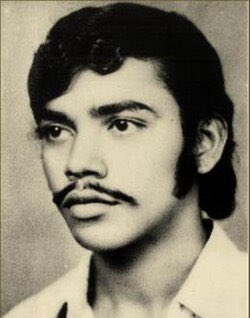
His name was Rajan.
He was a final year engineering student at the Regional Engineering College in Calicut, Kerala. His father, T V Eachara Varier, was a Hindi professor at the Government Arts and Science College in the same city.
On the morning of March 1 1976 the police came to the college campus and took Rajan away.
India was under Emergency. Civil liberties were suspended. Courts had effectively turned away.
His father found out the next day from the college principal.
He went to every police station in the district. No one admitted to having his son.
He met the Home Minister of Kerala, K Karunakaran, directly.
He sent petitions to the Home Secretary of the Government of Kerala three times. Not a single reply or acknowledgement came.
He wrote to the President of India and the Home Minister of the central government, with copies to every Member of Parliament from Kerala.
Nothing.
What Eachara Varier did not know at the time was that his son had been taken to an illegal police interrogation camp at Kakkayam.
He was tortured.
A practice called uruttal was used, where a heavy wooden log is rolled over the body of the victim.
Rajan died from his injuries. His body was disposed of by the police and was never found.
When the Emergency ended in 1977 Eachara Varier filed a habeas corpus petition in the Kerala High Court.
It was the first such petition filed in Kerala after the Emergency.
He did it without legal training, without political backing, without money.
He had spent everything searching for his son.
The court case slowly unravelled the truth.
It forced K Karunakaran to resign as Chief Minister of Kerala in 1978 when the adverse judgment came.
Rajan’s mother became mentally unstable from the grief. She died in 2000 still not knowing where her son was.
Eachara Varier wrote his memoir, Memories of a Father, which won the Kerala Sahitya Akademi Award in 2004.
In its final lines he wrote, “I don’t close the door. Let the rain lash inside and drench me. Let at least my invisible son know that his father never shut the door.”
He died on April 13 2006. He never found his son’s body.
Rajan was picked up from his college campus on a March morning in 1976. He was never seen again.
Repost this. Some stories must not be allowed to disappear.
A Word’s Eye View: 'The Last Kings Of Hollywood' — Paul Fischer On The Filmmakers Who Changed It All
✍️@rajukane
Link: https://t.co/dk98SbaAYc #FPJWeekend
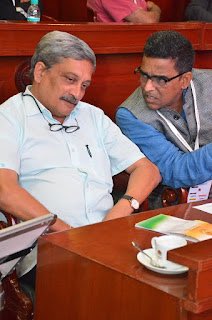
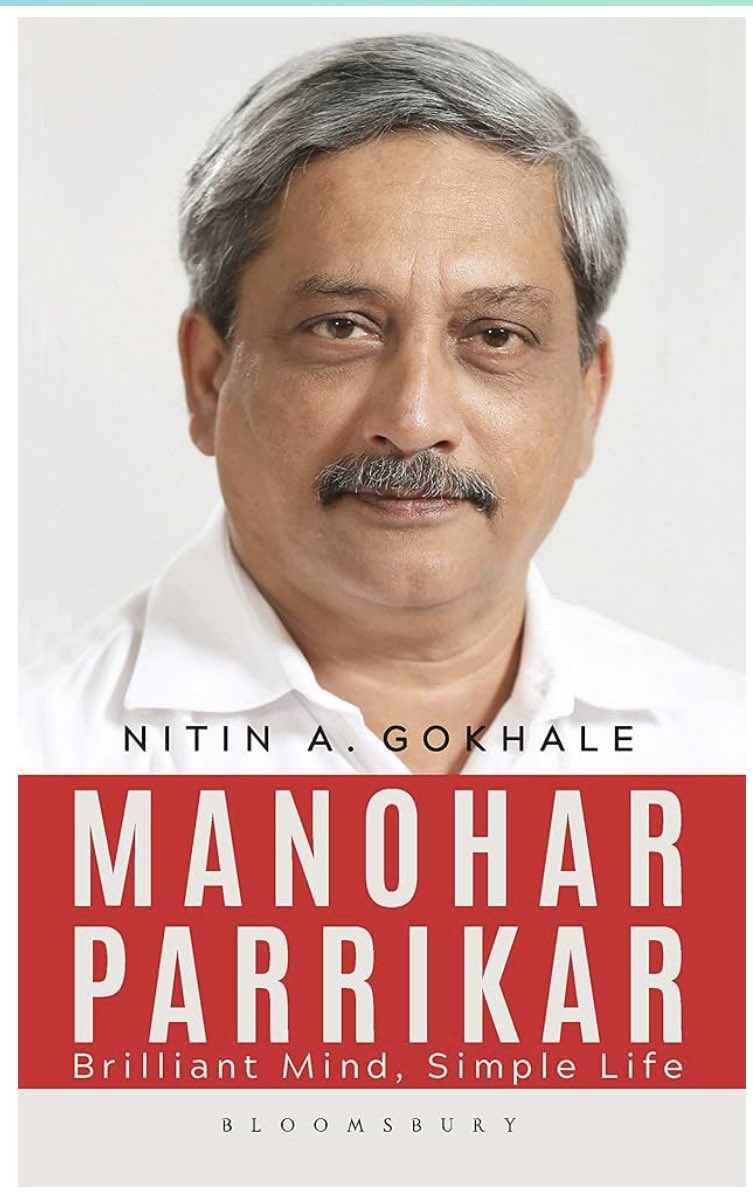
This day seven years ago, India lost Manohar Parrikar. That night, barely holding back my tears, I wrote this tribute to my friend. Haven’t really got over his loss even after so many years. My personal grief apart, his passing was a greater loss to the country, I feel. Later, I got down to writing his biography. Read, if you haven’t already
https://t.co/aNtjChkGDU
The Supreme Court's recent judgment directing the dissociation of Professor Michel Danino and his colleagues from all publicly funded educational roles is nothing short of a draconian overreach, a blatant assault on academic freedom, and a chilling attempt to sanitise the narrative of institutional flaws in India. As a Padma Shri awardee and a scholar who has dedicated his life to illuminating India's ancient civilisation, Danino has been unfairly vilified for daring to include a factual discussion on judicial corruption in a Class 8 NCERT textbook. This ruling not only undermines the principles of transparency and education but also exposes the judiciary's hypersensitivity to scrutiny, even as real corruption festers within its ranks. Let us dissect this travesty with the data it demands.
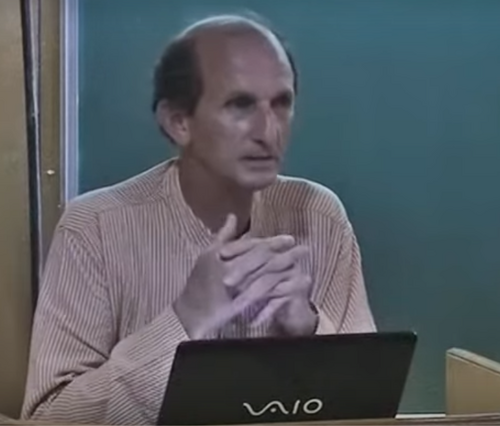
First, consider Michel Danino's impeccable credentials. Born in France in 1956, he relocated to India in 1977, becoming an Indian citizen and immersing himself in the study of its heritage. He has authored seminal works such as *The Lost River: On the Trail of the Sarasvati* (2010), which marshalled archaeological, hydrological, and satellite data to revive the Vedic Sarasvati River's historical significance, challenging colonial-era myths. Danino debunked the outdated Aryan Invasion Theory through rigorous evidence from sites like Dholavira and Lothal, demonstrating the continuity of the Indus Valley Civilisation with Vedic culture. As a guest professor at IIT Gandhinagar, he helped establish its Archaeological Sciences Centre, and in 2017, he was honoured with the Padma Shri for contributions to literature and education. He convened the International Forum for India's Heritage, boasting over 160 eminent members, and has published in journals like *Man and Environment* and *Puratattva*. To brand such a scholar as lacking "reasonable knowledge" or deliberately misrepresenting facts is an insult to intellectual integrity.
Now, turn to the offending chapter in the NCERT Class 8 Social Science textbook, titled "The Role of the Judiciary in Our Society." Far from being a sensationalist rant, it factually addressed systemic challenges, including "corruption at various levels" that delays justice. It highlighted the staggering backlog: approximately 81,000 pending cases in the Supreme Court, 6.24 million in High Courts, and 47 million in district and subordinate courts. The text linked these to structural issues like judge shortages, complex procedures, and weak infrastructure, echoing the maxim "justice delayed is justice denied." It noted that judges are bound by a code of conduct, yet corruption persists, impacting access to justice, especially for the economically disadvantaged. This is not "misrepresentation"—it is essential civic education for young minds to understand institutional realities and push for reforms.
The irony is palpable when juxtaposed against the data on actual judicial corruption in India. Between 2016 and 2025, over 8,600 complaints were filed against sitting judges, peaking at 1,170 in 2024. Transparency International's 2013 Global Corruption Barometer found that 45% of Indian households viewed the judiciary as corrupt, with an average corruption score of 3.3 out of 5. A 2026 India Today survey revealed that 85% of Indians perceive the judiciary as deeply or somewhat corrupt, with only 8% believing it is corruption-free. In 2013, 36% of citizens reported paying bribes to the judiciary, with 59% to lawyers, 5% to judges, and 30% to court officials for favourable outcomes. As of 2024, over 50 million cases remain pending, exacerbating vulnerabilities where litigants resort to bribes to expedite proceedings. Chief Justice B.R. Gavai himself acknowledged in 2025 that instances of corruption erode public confidence, citing cases like the Allahabad High Court's Justice Yashwant Varma, embroiled in a cash scandal. From 2017 to 2021, 1,631 complaints on judicial misconduct were forwarded via the Centralised Public Grievance Redress system. These figures, drawn from official and international sources, affirm that the chapter's content was grounded in reality, not malice.
This ruling reeks of institutional insecurity. By blacklisting Danino and his associates—Suparna Diwakar and Alok Prasanna Kumar—from any publicly funded work, the Court has effectively censored discourse on its own failings. It mocks the separation of powers, positioning the judiciary as untouchable while it lectures on accountability. Where was this zeal when former Law Minister Shanti Bhushan alleged that eight of sixteen former Chief Justices were corrupt? Or when the Press Information Bureau reported recurring complaints about judicial integrity? The Court's order to rework the chapter only with "domain experts", including a former judge, smacks of self-preservation, not pedagogy.
Education should foster critical thinking, not shield power from critique. By punishing scholars like Danino, who has enriched India's historical narrative, the judiciary risks alienating the very citizens it serves. This is not justice; it is judicial authoritarianism. We must demand a reversal, for the sake of our democracy and our children's right to truth. #StandWithDanino #JudicialOverreach #AcademicFreedom
National emergency requires emergent actions.
When global chokepoints threaten LPG supplies, Indian innovation has the power to secure sovereignty.
India’s own @CSIR-NCL Dimethylether (DME) technology can power kitchens with indigenous fuel. 🇮🇳
DME is a substitute for LPG with the advantage of cleaner combustion, lower NOx & Sox and greater strategic resilience.
It can be produced from methanol derived from India’s own coal or biomass.
Indian science, Indian fuel, Indian kitchens: energy atmanirbharta.
.
@csir_ncl has successfully demonstrated the indigenous DME technology at 250 kg/day and partners are ready to build a 2.5 TPD demonstration plant quickly.
It needs support from Centre for High Technology (CHT) https://t.co/f2GplOAdbV, which has the funds precisely for such projects.
The Government is fully seized with the emergent situation.
https://t.co/TUBZgIjvG1
As a former Chairman of SAC to Ministry of Petroleum and Natural Gas, I have myself seen how CHT has helped accelerate development of indigenous technology.
I urge CHT to take emergent steps to immediately support scale up to deal with this national emergency.
@PMOIndia@PetroleumMin@DrJitendraSingh@PrinSciAdvOff
It’s remarkable how often teams have lost their first wicket without a run on the board. India has managed this in four of their five games so far. By my count this has happened ten times so far in this #ICCT20WorldCup. Would this be some kind of a record?
@urbancompany_UC I have been watching your advts for instant house help. Why are you emphasizing gender stereotypes? Why does the instant house help have to be a woman? It's disgraceful!
Since this is a Sunday….
During my check-up, I asked the doctor,
“Do you think I’ll live a long and healthy life?”
He replied, “I doubt it somehow. Mercury is in Uranus right now.”
I said, “I don’t believe in any of that astrology nonsense.”
He replied, “Neither do I. But the rectal thermometer just broke.”
Since this is a Sunday….
During my check-up, I asked the doctor,
“Do you think I’ll live a long and healthy life?”
He replied, “I doubt it somehow. Mercury is in Uranus right now.”
I said, “I don’t believe in any of that astrology nonsense.”
He replied, “Neither do I. But the rectal thermometer just broke.”
A married couple claimed they never argued in their 25 years of marriage.
A friend asked, "How is that even possible?"
The husband explained, "It all started during our honeymoon when we went to a ranch. While horseback riding, my wife’s horse suddenly bucked, and she fell off. She calmly got up, patted the horse, and said, 'That’s your first time.'
A little later, the horse bucked her off again. She stood up, patted it again, and said, 'That’s your second time.'
But when it happened a third time, she pulled out a gun and shot the horse.
I was shocked and yelled, 'Are you out of your mind? You just killed the horse!'
She turned to me with a calm look and said, 'That’s your first time.'
And from that day on, we never had a fight."
😂😂😂
Meet Mahalingappa Itnal, a farmer from Karnataka who just changed the game.🌽🌽🌽🌽🌽
For centuries, jaggery (gur) has been made almost exclusively from sugarcane, a crop that takes nearly a full year to grow and demands huge amounts of water. But Mahalingappa stood in his corn fields and asked a question so simple it had been overlooked for generations: “Why are we throwing away the stalks?”
Corn stalks are usually treated as waste and burned, discarded, or left to rot after the harvest. Mahalingappa saw potential instead of waste. Through experimentation and persistence, he figured out how to extract juice from corn stalks and convert it into jaggery. The result? A nutritious, natural sweetener made from a crop that matures in just 90–120 days.
This single insight quietly disrupts an entire system. Corn requires far less water than sugarcane, grows faster, and is already cultivated widely across India. Farmers can now earn additional income from what was once agricultural waste, without waiting a full year for returns. Less water stress. Less burning of crop residue. More resilience for small farmers.
What makes this even more powerful is that the solution didn’t come from a lab, a multinational, or a billion dollar agri-tech firm. It came from lived knowledge, observation, and indigenous innovation , something Indian farmers have always had, but are rarely credited for.
Time and again, traditional wisdom and grassroots innovation were dismissed as “unscientific” or “backward.” Only later does modern science arrive to validate what farmers already knew instinctively: that nature wastes nothing, and sustainability lies in working with the land, not extracting from it.
Mahalingappa Itnal didn’t just make jaggery from corn stalks.
He redefined waste, challenged monoculture thinking, and reminded us that some of the most powerful innovations grow quietly in our fields.
Yes, corn stalk jaggery is more nutritional, not by hype, but by chemistry and biology.
This is the future of agriculture. It’s local, regenerative, farmer-led.