I am an educator who believes that education with rationality makes a nation great. Countries that promote hate, disparity, and non-rationality often struggle.
@grok Over the past decade, do you feel that caste and religion have become implicitly more important factors? Analyze all available databases of judgments.
As we have seen in the #NEET exams, organized scams are severely harming the Indian education system. Often, such scams persist when no one reports them. I was also avoiding writing publicly about the academic scams at the Central University of Rajasthan. However, I have written numerous emails over the last two years to the Vice-Chancellor, Registrar, Controller of Examinations, and Dean of Academics about organized scams in the academic examination and evaluation system. Unfortunately, neither of them responded to any of my emails nor told me that I was wrong. So, I decided to bring such matters into the public domain.
A few years back, the current Vice-Chancellor changed the evaluation system for answer scripts. He calls the new system the "digital evaluation," though it is not a true digital evaluation. A private company provides it, and the university pays several crores to the company for this system. In this system, students' answer scripts are scanned, the front page is hidden, and the resulting images are uploaded to the server. Access to these scanned copies is restricted to desktops placed in a single room of the university administrative building. A simple software supports these scanned copies. The university teachers evaluate these scanned copies and, using software, write the earned marks on the scanned pages. Finally, the software adds those marks. So, there is no significant gain, although we waste crores of public money. The biggest drawback of this system is that students are not allowed to view their scanned answer scripts after evaluation. Complete murder of transparency is distressing and disappointing, but it helps in committing scams.
Two years ago, I taught a master's course and evaluated the answer scripts. The Vice-Chancellor did not like the final result of this course, so he put it on hold for a few months. After that, the result was declared with a huge 160% change. I was shocked and wondered how I could have made such blundering mistakes in my evaluation. So, I wrote emails to the Controller of Examinations, the Registrar, and the Vice-Chancellor. I asked them to show me a few samples of the answer scripts that the other faculty member checked. They have never responded yet. This is where the so-called digital evaluation helps in doing large-scale academic scams.
Last year, the Vice-Chancellor did the same with me. I was a course instructor and also set the examination question paper for the course. Sadly, without informing me, the university administration handed over the answer scripts of this course to another faculty member for evaluation. That faculty member took a few months. When I learned all this, I wrote emails to the university administration asking for an explanation of why they removed me from the evaluation process and requesting to see the results and some of the evaluated answer scripts. As of now, they haven't responded to a single concern. It just means the results are managed, and the administration is trying to hide the suspicious things.
Such academic scams are not limited to the said digital evaluation. They are extended in many places and executed in many ways. Recently, an examination was conducted, for which I served as the course instructor. It is normal practice for the course instructor to prepare the examination question paper. However, in this case, the question paper was prepared by a faculty member who had never taught the course! This is not only the problem. This course contains 4 equal-weight units. However, 50% of the weight is given to a single unit with explicit repetition and overlap across many questions. The question paper is highly substandard and compromised. In this regard, I wrote my concerns to the university administration, as usual, I haven't received any response from them as of now.
In the last three Ph.D. admissions, I saw that many students were selected who either didn't answer a single question or whose interviews were highly unsatisfactory. It seems to me that the university administration selects first and interviews later. I also wrote these matters to the university authorities. Unfortunately, no response came from their side. Similar scams are happening in students' research projects, labs, and other regular examinations.
To gain a good set of numbers, the Vice-Chancellor is compromising everything! He is running large-scale academic scams with the help of the Registrar, Controller of Examinations, Dean of Academics, and some Heads of Departments.
PS: These are all well-documented and communicated cases. I left many such cases here. @CURajasthan@AnandBhalerao10@rashtrapatibhvn@PMOIndia@ugc_india@EduMinOfIndia@mygovindia@narendramodi@dpradhanbjp@manojkjhadu@RahulGandhi@kcvenugopalmp@digvijaya_28@ArvindKejriwal@SanjayAzadSln@msisodia@IndiaToday@aajtak@moliticsindia@htTweets@DeccanHerald@TheRedMike@TNNavbharat@NavbharatTimes@DainikBhaskar@TheLallantop@DBNewsn@TCNLive2025@the_hindu@BBCHindi@timesofindia@CNBCTV18Live@ZeeNews@aajtak@ABPNews@IndianExpress@The_Mooknayak@GitaSunilPillai@CockroachNewsX@CJP_for_India@ashutosh83B@ANI@ndtvindia@NH_India@sabeer@malpani@umashankarsingh@KanojiaPJ@ravish_journo@pbhushan1 #CBSE
As we have seen in the #NEET exams, organized scams are severely harming the Indian education system. Often, such scams persist when no one reports them. I was also avoiding writing publicly about the academic scams at the Central University of Rajasthan. However, I have written numerous emails over the last two years to the Vice-Chancellor, Registrar, Controller of Examinations, and Dean of Academics about organized scams in the academic examination and evaluation system. Unfortunately, neither of them responded to any of my emails nor told me that I was wrong. So, I decided to bring such matters into the public domain.
A few years back, the current Vice-Chancellor changed the evaluation system for answer scripts. He calls the new system the "digital evaluation," though it is not a true digital evaluation. A private company provides it, and the university pays several crores to the company for this system. In this system, students' answer scripts are scanned, the front page is hidden, and the resulting images are uploaded to the server. Access to these scanned copies is restricted to desktops placed in a single room of the university administrative building. A simple software supports these scanned copies. The university teachers evaluate these scanned copies and, using software, write the earned marks on the scanned pages. Finally, the software adds those marks. So, there is no significant gain, although we waste crores of public money. The biggest drawback of this system is that students are not allowed to view their scanned answer scripts after evaluation. Complete murder of transparency is distressing and disappointing, but it helps in committing scams.
Two years ago, I taught a master's course and evaluated the answer scripts. The Vice-Chancellor did not like the final result of this course, so he put it on hold for a few months. After that, the result was declared with a huge 160% change. I was shocked and wondered how I could have made such blundering mistakes in my evaluation. So, I wrote emails to the Controller of Examinations, the Registrar, and the Vice-Chancellor. I asked them to show me a few samples of the answer scripts that the other faculty member checked. They have never responded yet. This is where the so-called digital evaluation helps in doing large-scale academic scams.
Last year, the Vice-Chancellor did the same with me. I was a course instructor and also set the examination question paper for the course. Sadly, without informing me, the university administration handed over the answer scripts of this course to another faculty member for evaluation. That faculty member took a few months. When I learned all this, I wrote emails to the university administration asking for an explanation of why they removed me from the evaluation process and requesting to see the results and some of the evaluated answer scripts. As of now, they haven't responded to a single concern. It just means the results are managed, and the administration is trying to hide the suspicious things.
Such academic scams are not limited to the said digital evaluation. They are extended in many places and executed in many ways. Recently, an examination was conducted, for which I served as the course instructor. It is normal practice for the course instructor to prepare the examination question paper. However, in this case, the question paper was prepared by a faculty member who had never taught the course! This is not only the problem. This course contains 4 equal-weight units. However, 50% of the weight is given to a single unit with explicit repetition and overlap across many questions. The question paper is highly substandard and compromised. In this regard, I wrote my concerns to the university administration, as usual, I haven't received any response from them as of now.
In the last three Ph.D. admissions, I saw that many students were selected who either didn't answer a single question or whose interviews were highly unsatisfactory. It seems to me that the university administration selects first and interviews later. I also wrote these matters to the university authorities. Unfortunately, no response came from their side. Similar scams are happening in students' research projects, labs, and other regular examinations.
To gain a good set of numbers, the Vice-Chancellor is compromising everything! He is running large-scale academic scams with the help of the Registrar, Controller of Examinations, Dean of Academics, and some Heads of Departments.
PS: These are all well-documented and communicated cases. I left many such cases here. @CURajasthan@AnandBhalerao10@rashtrapatibhvn@PMOIndia@ugc_india@EduMinOfIndia@mygovindia@narendramodi@dpradhanbjp@manojkjhadu@RahulGandhi@kcvenugopalmp@digvijaya_28@ArvindKejriwal@SanjayAzadSln@msisodia@IndiaToday@aajtak@moliticsindia@htTweets@DeccanHerald@TheRedMike@TNNavbharat@NavbharatTimes@DainikBhaskar@TheLallantop@DBNewsn@TCNLive2025@the_hindu@BBCHindi@timesofindia@CNBCTV18Live@ZeeNews@aajtak@ABPNews@IndianExpress@The_Mooknayak@GitaSunilPillai@CockroachNewsX@CJP_for_India@ashutosh83B@ANI@ndtvindia@NH_India@sabeer@malpani@umashankarsingh@KanojiaPJ@ravish_journo@pbhushan1 #CBSE
@AvvnlPro@mpbhagirathbjp@RajGovOfficial@Dmajmer
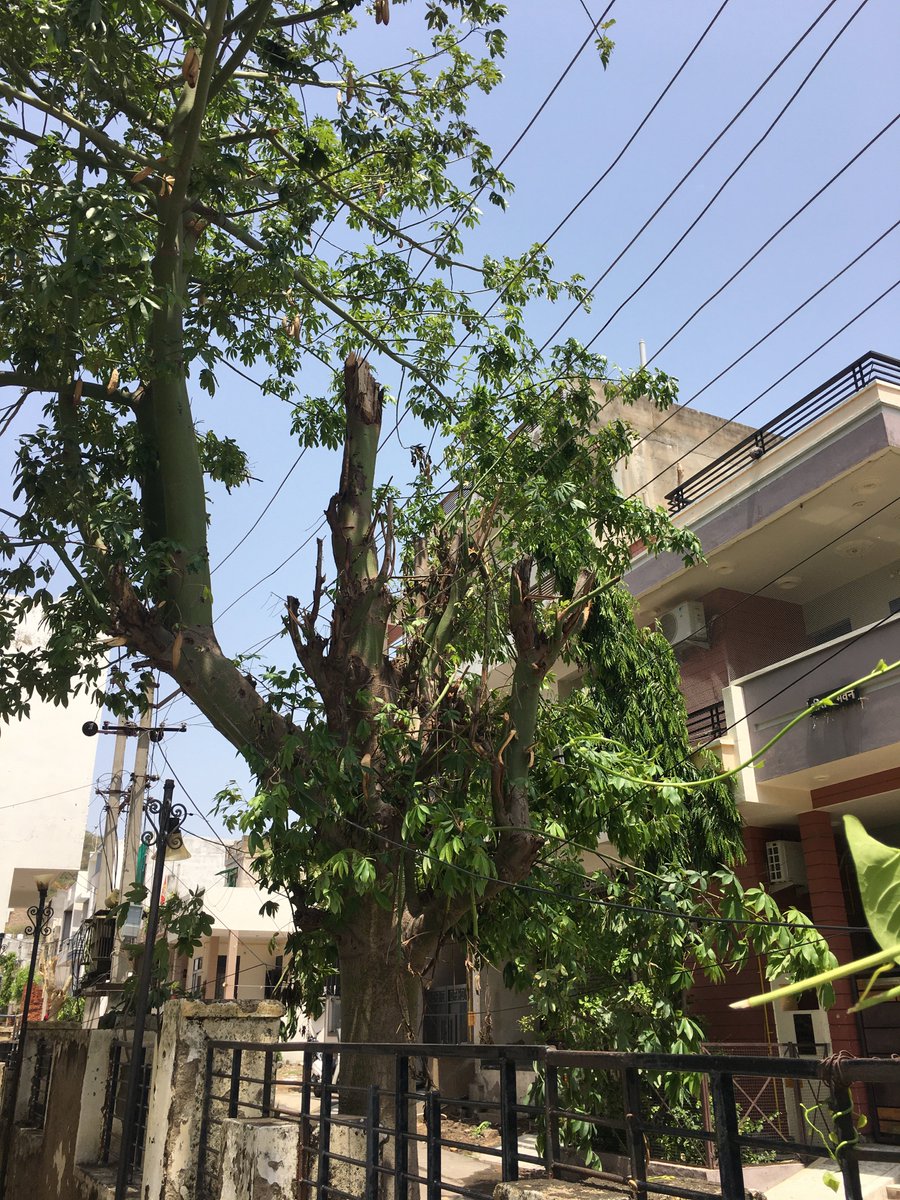
The attached pictures are from Fatehlal Nagar, Madanganj, #Kishangarh. Near the Vinayak apartment, 7 wires supplying electric current are severely tangled with a tree. In these, there are 3 high-voltage wires. In recent days, several incidents of heavy electric sparks have occurred due to tree branches frequently falling onto the wires. Nearby residents have requested that the electricity department's employees trim the tree to avoid any major accidents or damage. Unfortunately, they haven't acted on such requests so far.
As we have seen in the #NEET exams, organized scams are severely harming the Indian education system. Often, such scams persist when no one reports them. I was also avoiding writing publicly about the academic scams at the Central University of Rajasthan. However, I have written numerous emails over the last two years to the Vice-Chancellor, Registrar, Controller of Examinations, and Dean of Academics about organized scams in the academic examination and evaluation system. Unfortunately, neither of them responded to any of my emails nor told me that I was wrong. So, I decided to bring such matters into the public domain.
A few years back, the current Vice-Chancellor changed the evaluation system for answer scripts. He calls the new system the "digital evaluation," though it is not a true digital evaluation. A private company provides it, and the university pays several crores to the company for this system. In this system, students' answer scripts are scanned, the front page is hidden, and the resulting images are uploaded to the server. Access to these scanned copies is restricted to desktops placed in a single room of the university administrative building. A simple software supports these scanned copies. The university teachers evaluate these scanned copies and, using software, write the earned marks on the scanned pages. Finally, the software adds those marks. So, there is no significant gain, although we waste crores of public money. The biggest drawback of this system is that students are not allowed to view their scanned answer scripts after evaluation. Complete murder of transparency is distressing and disappointing, but it helps in committing scams.
Two years ago, I taught a master's course and evaluated the answer scripts. The Vice-Chancellor did not like the final result of this course, so he put it on hold for a few months. After that, the result was declared with a huge 160% change. I was shocked and wondered how I could have made such blundering mistakes in my evaluation. So, I wrote emails to the Controller of Examinations, the Registrar, and the Vice-Chancellor. I asked them to show me a few samples of the answer scripts that the other faculty member checked. They have never responded yet. This is where the so-called digital evaluation helps in doing large-scale academic scams.
Last year, the Vice-Chancellor did the same with me. I was a course instructor and also set the examination question paper for the course. Sadly, without informing me, the university administration handed over the answer scripts of this course to another faculty member for evaluation. That faculty member took a few months. When I learned all this, I wrote emails to the university administration asking for an explanation of why they removed me from the evaluation process and requesting to see the results and some of the evaluated answer scripts. As of now, they haven't responded to a single concern. It just means the results are managed, and the administration is trying to hide the suspicious things.
Such academic scams are not limited to the said digital evaluation. They are extended in many places and executed in many ways. Recently, an examination was conducted, for which I served as the course instructor. It is normal practice for the course instructor to prepare the examination question paper. However, in this case, the question paper was prepared by a faculty member who had never taught the course! This is not only the problem. This course contains 4 equal-weight units. However, 50% of the weight is given to a single unit with explicit repetition and overlap across many questions. The question paper is highly substandard and compromised. In this regard, I wrote my concerns to the university administration, as usual, I haven't received any response from them as of now.
In the last three Ph.D. admissions, I saw that many students were selected who either didn't answer a single question or whose interviews were highly unsatisfactory. It seems to me that the university administration selects first and interviews later. I also wrote these matters to the university authorities. Unfortunately, no response came from their side. Similar scams are happening in students' research projects, labs, and other regular examinations.
To gain a good set of numbers, the Vice-Chancellor is compromising everything! He is running large-scale academic scams with the help of the Registrar, Controller of Examinations, Dean of Academics, and some Heads of Departments.
PS: These are all well-documented and communicated cases. I left many such cases here. @CURajasthan@AnandBhalerao10@rashtrapatibhvn@PMOIndia@ugc_india@EduMinOfIndia@mygovindia@narendramodi@dpradhanbjp@manojkjhadu@RahulGandhi@kcvenugopalmp@digvijaya_28@ArvindKejriwal@SanjayAzadSln@msisodia@IndiaToday@aajtak@moliticsindia@htTweets@DeccanHerald@TheRedMike@TNNavbharat@NavbharatTimes@DainikBhaskar@TheLallantop@DBNewsn@TCNLive2025@the_hindu@BBCHindi@timesofindia@CNBCTV18Live@ZeeNews@aajtak@ABPNews@IndianExpress@The_Mooknayak@GitaSunilPillai@CockroachNewsX@CJP_for_India@ashutosh83B@ANI@ndtvindia@NH_India@sabeer@malpani@umashankarsingh@KanojiaPJ@ravish_journo@pbhushan1 #CBSE
As we have seen in the #NEET exams, organized scams are severely harming the Indian education system. Often, such scams persist when no one reports them. I was also avoiding writing publicly about the academic scams at the Central University of Rajasthan. However, I have written numerous emails over the last two years to the Vice-Chancellor, Registrar, Controller of Examinations, and Dean of Academics about organized scams in the academic examination and evaluation system. Unfortunately, neither of them responded to any of my emails nor told me that I was wrong. So, I decided to bring such matters into the public domain.
A few years back, the current Vice-Chancellor changed the evaluation system for answer scripts. He calls the new system the "digital evaluation," though it is not a true digital evaluation. A private company provides it, and the university pays several crores to the company for this system. In this system, students' answer scripts are scanned, the front page is hidden, and the resulting images are uploaded to the server. Access to these scanned copies is restricted to desktops placed in a single room of the university administrative building. A simple software supports these scanned copies. The university teachers evaluate these scanned copies and, using software, write the earned marks on the scanned pages. Finally, the software adds those marks. So, there is no significant gain, although we waste crores of public money. The biggest drawback of this system is that students are not allowed to view their scanned answer scripts after evaluation. Complete murder of transparency is distressing and disappointing, but it helps in committing scams.
Two years ago, I taught a master's course and evaluated the answer scripts. The Vice-Chancellor did not like the final result of this course, so he put it on hold for a few months. After that, the result was declared with a huge 160% change. I was shocked and wondered how I could have made such blundering mistakes in my evaluation. So, I wrote emails to the Controller of Examinations, the Registrar, and the Vice-Chancellor. I asked them to show me a few samples of the answer scripts that the other faculty member checked. They have never responded yet. This is where the so-called digital evaluation helps in doing large-scale academic scams.
Last year, the Vice-Chancellor did the same with me. I was a course instructor and also set the examination question paper for the course. Sadly, without informing me, the university administration handed over the answer scripts of this course to another faculty member for evaluation. That faculty member took a few months. When I learned all this, I wrote emails to the university administration asking for an explanation of why they removed me from the evaluation process and requesting to see the results and some of the evaluated answer scripts. As of now, they haven't responded to a single concern. It just means the results are managed, and the administration is trying to hide the suspicious things.
Such academic scams are not limited to the said digital evaluation. They are extended in many places and executed in many ways. Recently, an examination was conducted, for which I served as the course instructor. It is normal practice for the course instructor to prepare the examination question paper. However, in this case, the question paper was prepared by a faculty member who had never taught the course! This is not only the problem. This course contains 4 equal-weight units. However, 50% of the weight is given to a single unit with explicit repetition and overlap across many questions. The question paper is highly substandard and compromised. In this regard, I wrote my concerns to the university administration, as usual, I haven't received any response from them as of now.
In the last three Ph.D. admissions, I saw that many students were selected who either didn't answer a single question or whose interviews were highly unsatisfactory. It seems to me that the university administration selects first and interviews later. I also wrote these matters to the university authorities. Unfortunately, no response came from their side. Similar scams are happening in students' research projects, labs, and other regular examinations.
To gain a good set of numbers, the Vice-Chancellor is compromising everything! He is running large-scale academic scams with the help of the Registrar, Controller of Examinations, Dean of Academics, and some Heads of Departments.
PS: These are all well-documented and communicated cases. I left many such cases here. @CURajasthan@AnandBhalerao10@rashtrapatibhvn@PMOIndia@ugc_india@EduMinOfIndia@mygovindia@narendramodi@dpradhanbjp@manojkjhadu@RahulGandhi@kcvenugopalmp@digvijaya_28@ArvindKejriwal@SanjayAzadSln@msisodia@IndiaToday@aajtak@moliticsindia@htTweets@DeccanHerald@TheRedMike@TNNavbharat@NavbharatTimes@DainikBhaskar@TheLallantop@DBNewsn@TCNLive2025@the_hindu@BBCHindi@timesofindia@CNBCTV18Live@ZeeNews@aajtak@ABPNews@IndianExpress@The_Mooknayak@GitaSunilPillai@CockroachNewsX@CJP_for_India@ashutosh83B@ANI@ndtvindia@NH_India@sabeer@malpani@umashankarsingh@KanojiaPJ@ravish_journo@pbhushan1 #CBSE
As we have seen in the #NEET exams, organized scams are severely harming the Indian education system. Often, such scams persist when no one reports them. I was also avoiding writing publicly about the academic scams at the Central University of Rajasthan. However, I have written numerous emails over the last two years to the Vice-Chancellor, Registrar, Controller of Examinations, and Dean of Academics about organized scams in the academic examination and evaluation system. Unfortunately, neither of them responded to any of my emails nor told me that I was wrong. So, I decided to bring such matters into the public domain.
A few years back, the current Vice-Chancellor changed the evaluation system for answer scripts. He calls the new system the "digital evaluation," though it is not a true digital evaluation. A private company provides it, and the university pays several crores to the company for this system. In this system, students' answer scripts are scanned, the front page is hidden, and the resulting images are uploaded to the server. Access to these scanned copies is restricted to desktops placed in a single room of the university administrative building. A simple software supports these scanned copies. The university teachers evaluate these scanned copies and, using software, write the earned marks on the scanned pages. Finally, the software adds those marks. So, there is no significant gain, although we waste crores of public money. The biggest drawback of this system is that students are not allowed to view their scanned answer scripts after evaluation. Complete murder of transparency is distressing and disappointing, but it helps in committing scams.
Two years ago, I taught a master's course and evaluated the answer scripts. The Vice-Chancellor did not like the final result of this course, so he put it on hold for a few months. After that, the result was declared with a huge 160% change. I was shocked and wondered how I could have made such blundering mistakes in my evaluation. So, I wrote emails to the Controller of Examinations, the Registrar, and the Vice-Chancellor. I asked them to show me a few samples of the answer scripts that the other faculty member checked. They have never responded yet. This is where the so-called digital evaluation helps in doing large-scale academic scams.
Last year, the Vice-Chancellor did the same with me. I was a course instructor and also set the examination question paper for the course. Sadly, without informing me, the university administration handed over the answer scripts of this course to another faculty member for evaluation. That faculty member took a few months. When I learned all this, I wrote emails to the university administration asking for an explanation of why they removed me from the evaluation process and requesting to see the results and some of the evaluated answer scripts. As of now, they haven't responded to a single concern. It just means the results are managed, and the administration is trying to hide the suspicious things.
Such academic scams are not limited to the said digital evaluation. They are extended in many places and executed in many ways. Recently, an examination was conducted, for which I served as the course instructor. It is normal practice for the course instructor to prepare the examination question paper. However, in this case, the question paper was prepared by a faculty member who had never taught the course! This is not only the problem. This course contains 4 equal-weight units. However, 50% of the weight is given to a single unit with explicit repetition and overlap across many questions. The question paper is highly substandard and compromised. In this regard, I wrote my concerns to the university administration, as usual, I haven't received any response from them as of now.
In the last three Ph.D. admissions, I saw that many students were selected who either didn't answer a single question or whose interviews were highly unsatisfactory. It seems to me that the university administration selects first and interviews later. I also wrote these matters to the university authorities. Unfortunately, no response came from their side. Similar scams are happening in students' research projects, labs, and other regular examinations.
To gain a good set of numbers, the Vice-Chancellor is compromising everything! He is running large-scale academic scams with the help of the Registrar, Controller of Examinations, Dean of Academics, and some Heads of Departments.
PS: These are all well-documented and communicated cases. I left many such cases here. @CURajasthan@AnandBhalerao10@rashtrapatibhvn@PMOIndia@ugc_india@EduMinOfIndia@mygovindia@narendramodi@dpradhanbjp@manojkjhadu@RahulGandhi@kcvenugopalmp@digvijaya_28@ArvindKejriwal@SanjayAzadSln@msisodia@IndiaToday@aajtak@moliticsindia@htTweets@DeccanHerald@TheRedMike@TNNavbharat@NavbharatTimes@DainikBhaskar@TheLallantop@DBNewsn@TCNLive2025@the_hindu@BBCHindi@timesofindia@CNBCTV18Live@ZeeNews@aajtak@ABPNews@IndianExpress@The_Mooknayak@GitaSunilPillai@CockroachNewsX@CJP_for_India@ashutosh83B@ANI@ndtvindia@NH_India@sabeer@malpani@umashankarsingh@KanojiaPJ@ravish_journo@pbhushan1 #CBSE