🚨 Anthropic just showed a 27-minute workshop on how to actually do prompts for Claude.
Taught by the people who built it.
Free. No registration. No paywall.
I've seen $300 courses that don't cover what they teach in the first 8 minutes.
Watch it and bookmark it now.
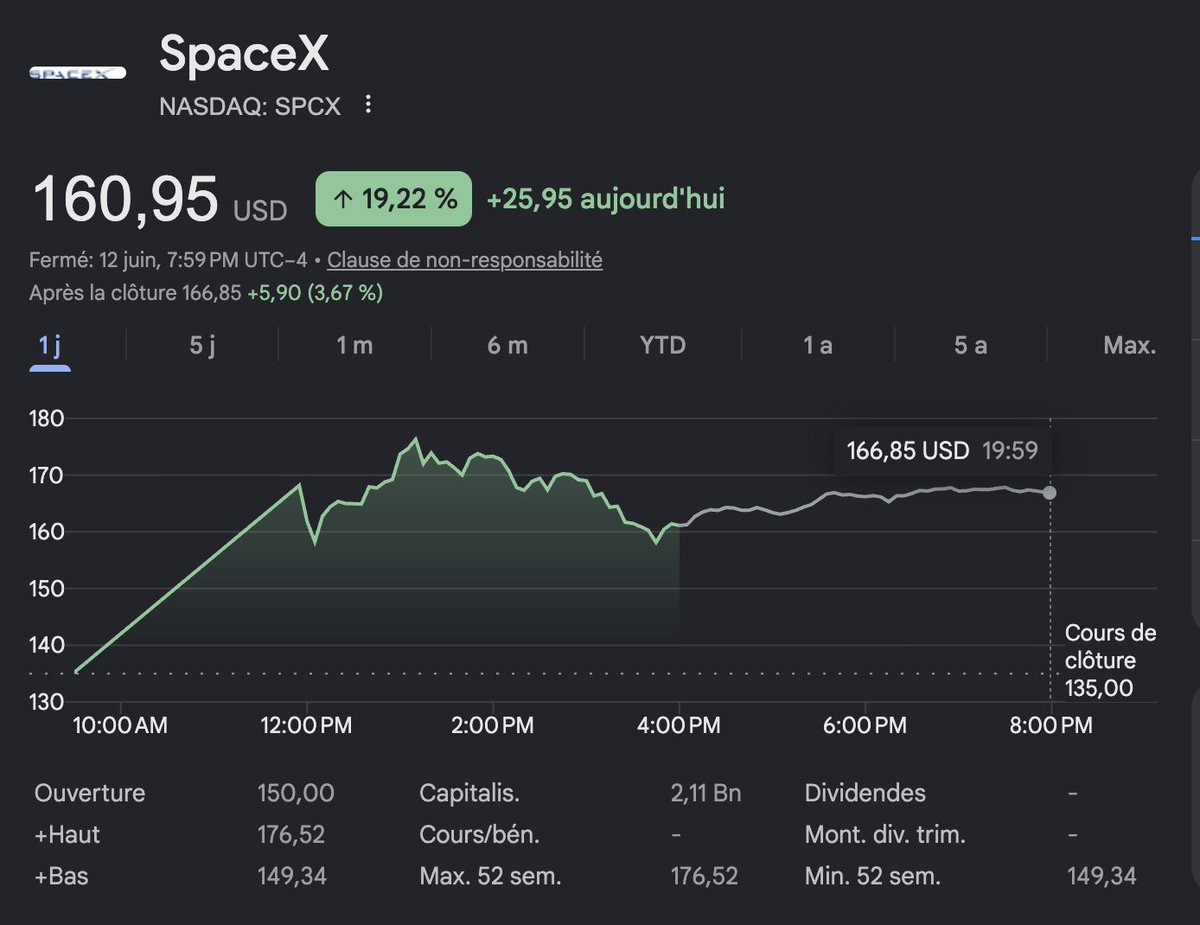
SpaceX a clôturé son premier jour de cotation à 2 100 milliards de dollars, +19%. Tout le monde regarde le chiffre. Personne ne regarde ce qu'il price réellement.
Laissez-moi vous dire ce que le marché vient d'acheter, et pourquoi je pense que cette boîte vaudra 30 à 50 trillions d'ici 5 ans.
D'abord, le symbole. Cette IPO est un référendum. D'un côté, 20 ans de discours sur la décroissance, la sobriété, la redistribution, la fin de l'histoire gérée par des comités. De l'autre, un homme qui a dit "je vais rendre l'humanité multiplanétaire", que tout le monde a traité de clown, et qui vient de créer la plus grosse entreprise cotée de l'histoire en partant d'un entrepôt à El Segundo. Le marché a voté. Le wokisme avait des départements RH, SpaceX avait des fusées. Les fusées ont gagné.
Ensuite, la mécanique économique, parce que c'est là que tout le monde se trompe. Les analystes valorisent SpaceX comme une entreprise de lancement plus Starlink. C'est comme valoriser Internet en 1995 sur le marché du fax. Starship ne réduit pas le coût du kilo en orbite de 20%, il le divise par 100. Et chaque fois dans l'histoire qu'un coût d'infrastructure est divisé par 100, ce n'est pas le marché existant qui grossit, ce sont des industries entières qui naissent. Le coût du calcul divisé par 100 a donné Internet, le smartphone, l'IA. Le coût de l'orbite divisé par 100 va donner une économie spatiale complète.
Faisons la liste de ce qui devient rentable quand le kilo en orbite coûte le prix d'un billet d'avion. Les data centers orbitaux, avec énergie solaire continue et refroidissement gratuit, au moment exact où l'IA fait exploser la demande énergétique terrestre. La fabrication en microgravité de semi-conducteurs, de fibres optiques, d'organes imprimés impossibles à produire sous gravité. Le tourisme orbital de masse, puis les hôtels lunaires, qui passeront du fantasme au business plan exactement comme la croisière de luxe au 20ème siècle. Le transport point à point terrestre, Paris-Tokyo en 40 minutes. L'industrie minière des astéroïdes, dont un seul corps de classe M contient plus de métaux que tout ce que l'humanité a extrait depuis le néolithique. Et Mars en ligne de mire, pas comme destination touristique, mais comme le plus grand projet d'infrastructure jamais entrepris, avec tout ce que ça implique de demande en énergie, matériaux, robotique, IA.
SpaceX ne participera pas à ces marchés. SpaceX possède le péage d'entrée de tous ces marchés. C'est AWS, mais pour la civilisation. Apple vaut 3 500 milliards en vendant des rectangles de verre sur une seule planète. Le premier monopole d'accès à une frontière infinie à 30 ou 50 trillions dans 5 ans, ce n'est pas de l'exubérance, c'est une simple règle de trois sur l'expansion du marché adressable.
Et maintenant, la partie que je préfère. Ce futur n'a pas besoin de bureaucrates. Il n'y a pas de comité consultatif en orbite. Pas de commission Théodule sur Mars. Chaque dollar de cette nouvelle économie sera créé par des ingénieurs, des techniciens, des soudeurs, des pilotes, des entrepreneurs. Les diplômés en gestion de la norme vont devoir apprendre un métier utile, et franchement, c'est une excellente nouvelle pour eux aussi : construire est infiniment plus fun que contrôler.
Parce que c'est ça, le vrai signal d'aujourd'hui. Pendant 50 ans on nous a vendu un futur rétréci : moins d'énergie, moins d'enfants, moins d'ambition, gérer le déclin proprement. Et là, d'un coup, le plus gros actif financier du monde est un pari sur l'abondance, l'expansion et l'aventure. Le pessimisme vient de passer en position vendeuse sur lui-même.
Le futur sera méga fun. Il y aura des hôtels avec vue sur la Terre, des honeymoons en orbite, des gamins qui diront "papa, c'était comment avant les fusées réutilisables" comme on dit "c'était comment avant Internet". Et quelque part dans les années 2030, un humain marchera sur Mars en livestream devant 5 milliards de personnes, et ce jour-là plus personne ne se souviendra du nom d'un seul de ses détracteurs.
Achetez de l'optimisme. C'est encore sous-valorisé.
A man spends 50 years teaching at MIT.
He knows his time is running out.
So he records one last lecture — everything he knows, distilled into a single hour.
He died 5 months later.
This is that lecture.
The most important hour you'll watch this week. 👇
Bookmark it for later
Twenty-five years ago, the Massachusetts Institute of Technology made a bold move that most universities would never dare.
Instead of locking its world-class course materials behind campus walls, MIT decided to put nearly its entire curriculum online, completely free for anyone with an internet connection.
That decision gave birth to MIT OpenCourseWare (OCW).
What began as a bold experiment in 2001 has become one of the most significant educational initiatives in history.
Today, OCW provides materials from more than 2,500 undergraduate and graduate courses across virtually every discipline: physics, engineering, artificial intelligence, economics, biology, mathematics, computer science, and many more.
Anyone can access lecture notes, problem sets, exams, syllabi, and a growing library of video lectures, with no tuition, no application, and no account required.
According to MIT, more than 500 million people worldwide have used these resources over the past 25 years.
The impact has been profound. Students use it to ace exams, explore new fields, and launch careers. Educators around the globe integrate the materials into their own teaching. Many learners credit OCW with helping them pass professional certifications and unlock new opportunities.
Beyond its direct benefits, OpenCourseWare helped spark the global open education movement, inspiring dozens of other universities to share their knowledge freely online.
Even more impressive: the project was originally planned as a 10-year initiative. A quarter-century later, it's still expanding.
MIT now aims to reach 1 billion learners in the coming decade, while enhancing the experience with powerful new AI-powered learning tools.
One of the biggest mysteries is how Orcas, the ocean’s most efficient predators, have never attacked humans in the wild… almost like they know something we don’t.
A new CNN investigation finds that a Russian cargo ship likely carrying two nuclear reactors and possibly destined for North Korea, sank in unexplained circumstances off the coast of Spain.
@npwcnn's exclusive report: https://t.co/axSox90gQY
Jordan Peterson warned how a brain that stops reading eventually loses the ability to think deeply on a topic:
1. Reading for pleasure has always been a minority occupation. Most people don't read. Of those who do, few buy books. Of those who buy books, even fewer read difficult ones. That's not changing and that's exactly why it's your advantage.
2. Books are not like photographs. A photograph is a click. A book is a portrait layered, worked over, and built with depth. No other medium lets you think, rethink, and go deeper the way a book does.
3. YouTube and podcasts are not the enemy of reading. They are extensions of it. A great podcast can carry the same value as a great book. Peterson treats them as complements, not competition.
4. The real revolution of podcasts is found time. You can't read while driving or doing the dishes. But you can listen. All that dead time, commuting, cooking, exercising is now a university education available to anyone with a phone.
5. Long-form attention is not dead. Joe Rogan does three-hour podcasts. Peterson's lectures run two hours. Millions watch them to the end. People don't have fragmented attention spans. They have low-quality inputs.
6. When Peterson's YouTube views crossed one million, he didn't celebrate immediately. He sat with it. He thought: a million is a lot. If you sold a million books, you'd do the touchdown dance. He realized something massive was happening.
7. YouTube isn't cute cat videos. Peterson saw it for what it actually is, the invention of the printing press, version two. For the first time in human history, the spoken word has the same reach and the same duration as a book.
8. The people who learn the fastest are the ones willing to look like fools at the start. Peterson felt like a fool when he first lectured, first practiced therapy, first uploaded to YouTube. He did it anyway.
9. Most smart people dismiss new media. When journalists called Peterson's colleagues, they'd say things like "they always get it wrong." Peterson picked up the phone, had the conversation, and let the chips fall. That single habit changed everything.
10. The fool is the precursor to the savior. Carl Jung said it. Peterson lived it. You cannot advance without first being willing to look incompetent. Safety keeps you comfortable. It doesn't keep you growing.
11. Reading makes your thinking slower in the best possible way. It forces you to sit with one idea long enough to actually understand it. Social media gives you 100 ideas in 15 minutes. Books give you one idea that actually stays.
12. The brain is not built for passive consumption. Short-form reels don't educate deeply. They stimulate rapidly and leave nothing behind. Your brain needs time to process, observe, and emerge in an experience.
13. If you can truly read, you can read faster than you can listen. That makes reading the highest-leverage input activity available. Not everyone has the patience for it which is exactly why those who do get ahead.
14. The people watching two-hour lectures are not bored. They are hungry. There is a massive market for demanding, high-quality, difficult content. Most creators refuse to make it because they're afraid of losing easy engagement.
15. Peterson's point is not that podcasts are bad or that books are dying. It's that the tools for becoming genuinely educated have never been more accessible and most people still choose not to use them.
Larry Ellison just compressed the next decade into a single sentence.
“The smartest people I know are investing fortunes. To be specific, they are investing their fortunes in building and training these AI models.”
Not company capital.
Their fortunes. Personal wealth.
Corporate investment is strategy. You allocate, hedge, diversify.
Personal wealth is conviction.
That’s someone staring at the world where they built their entire fortune and deciding it has an expiration date.
Think about who he’s talking about.
Not venture capitalists fishing for 10x returns.
People who already have more money than they could spend across ten lifetimes.
Zero financial incentive to take risk.
And they’re making the largest bets of their entire careers.
Ellison: “That’s how important they are. That’s how extraordinary they are.”
He doesn’t reach for that word.
This is a man who built Oracle across five decades. Went to war with IBM, Microsoft, SAP, and Salesforce. Survived every crash, every hype cycle, every false revolution since the 1970s.
He’s buried more hype cycles than most founders have survived.
And he’s telling you this one broke the pattern.
In every bubble in history, the smart money leaves first.
They spot the cracks. Sell quietly. Let everyone else hold the bag.
That’s not what’s happening here.
The smart money is accelerating.
Data centers that cost more than some nations’ annual budgets. Power contracts locked for two decades. Every available GPU on Earth spoken for.
These are not the moves of people riding momentum.
These are the moves of people who saw what’s coming and decided the only risk is moving too slowly.
In every genuine technological shift, there’s a moment where the gap between what insiders know and what the public understands becomes so wide it stops being an information gap.
It becomes two separate realities running on two different timelines.
The people with the most access, the most information, and the most to lose. They’re moving like the entire economic operating system of civilization is being rewritten in real time.
And most people still think this is about chatbots.
That gap is the signal.
Not the benchmarks. Not the product demos. Not the funding rounds.
The behavior of people who already won and decided winning wasn’t enough.
Larry Ellison is 81 years old.
Worth over $200 billion.
Built one of the most dominant software empires in the history of computing.
And he’s moving like a man who just realized none of it will matter unless he gets this right.
El Director General de Salud Pública se despide del programa de Risto Mejide llamándole "hijo de puta" cuando se creía que nadie lo estaba grabando tras negarse a responder a las preguntas del presentador.
El año pasado cobró 96353 €
@DaniDelgonzo1@elequidistante Pues si vives en casa de los papis, un gran profesional como tu a gastos pagados, te queda todo el sueldo libre para tus cositas. Un beso
In 10 years, we'll realize young adults can't read, write, or think as well as they should. We'll wonder how we allowed students to offload huge chunks of their learning to AI. Today we're just watching it happen. This is the most obvious unforced error of our time.
THIS IS INSANE!!!🤯
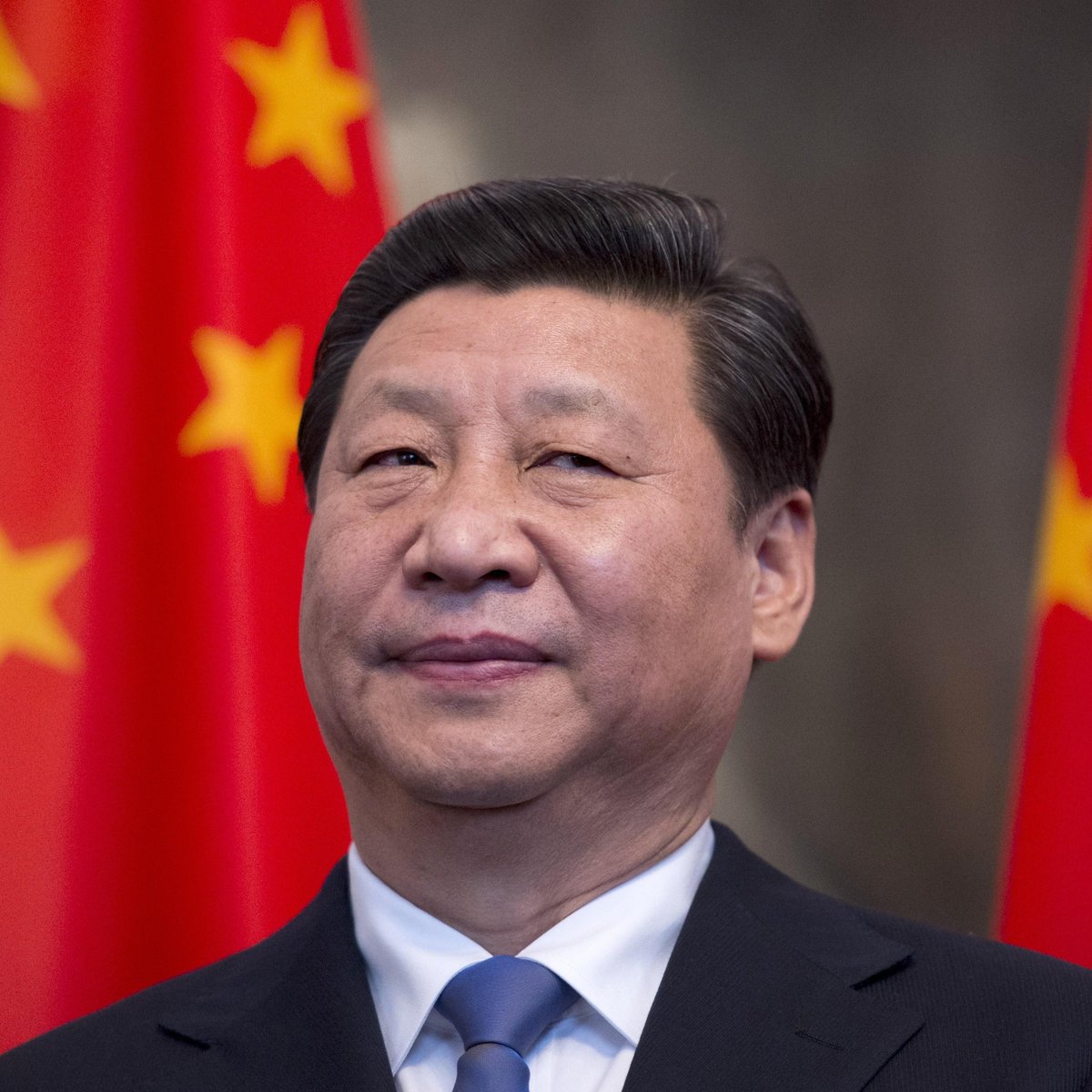
China just made it ILLEGAL to fire a human worker and replace them with AI.. and the way they found out is insane..
a quality assurance supervisor named Zhou worked at an AI company in Hangzhou.. his job was verifying AI-generated content.. matching user queries with model outputs.. filtering hallucinations and illegal content..
he was literally training the AI to do his own job..
once the model got good enough.. the company told him they were moving him to a lower position.. with a 40% pay cut.. from 25,000 yuan to 15,000..
he refused.. they fired him..
he sued.. and won..
the Hangzhou court ruled that replacing a human with AI is not a valid reason to fire someone.. period..
their logic.. adopting AI is a voluntary business decision.. not an earthquake.. not a government shutdown.. not a force majeure event.. it's a choice the company made to save money..
and because it's a choice.. the company has to absorb the cost of that transition.. not dump it on the worker..
this wasn't a one-off ruling either..
in Beijing.. a map data collector named Liu spent over a decade manually collecting geographic data.. the company switched to AI-automated data collection.. eliminated his entire department.. fired him..
he sued.. won.. exact same reasoning.. AI adoption is a proactive business strategy.. not an unforeseeable external shock..
and here's what's happening in the background that makes these rulings so urgent..
unemployment for chinese workers aged 25 to 29 just hit a record 7.7%.. the highest since they started tracking that age group separately..
companies across china are literally forcing employees to document their daily workflows so AI models can learn to replace them.. workers are training their own replacements and they know it..
a 24-year-old engineer built an open-source tool called "Colleague.Skill" that scrapes your work chat history, emails, code commits, and documents.. and creates a digital clone of you that can do your exact job after you're gone..
he meant it as a dark joke.. it got 13,400 stars on GitHub in three weeks.. top 0.1% of all projects globally.. because it wasn't really a joke.. it was exactly what companies were already doing to their employees..
workers in Shanghai and Beijing told MIT Technology Review that management was actively coercing them to document everything specifically to train AI replacements..
china's response.. make it illegal..
the State Council launched the "AI Plus" initiative.. a ten-year plan that explicitly mandates AI must augment workers.. not replace them.. companies must use AI to upgrade existing roles.. not eliminate them..
by 2027.. smart devices and AI agents must reach 70% penetration.. by 2030.. over 90%.. but the growth has to create jobs.. not destroy them..
now compare this to the US..
in america.. at-will employment means your company can fire you and replace you with AI tomorrow.. no warning.. no severance negotiation.. no retraining obligation.. as long as they're not discriminating based on race, age, or disability.. it's perfectly legal..
there is no federal law protecting american workers from AI displacement.. none..
california proposed a bill requiring just 30 days notice before deploying AI that affects employment.. that's the most aggressive protection any US state has attempted..
china made it illegal to fire you.. america doesn't even require a heads up..
and here's the irony nobody is talking about..
china.. the country the west accuses of having no worker protections.. just gave its workers more protection from AI than any democracy on earth..
the question isn't whether AI will replace jobs..
it's whether your country will protect you when it does.
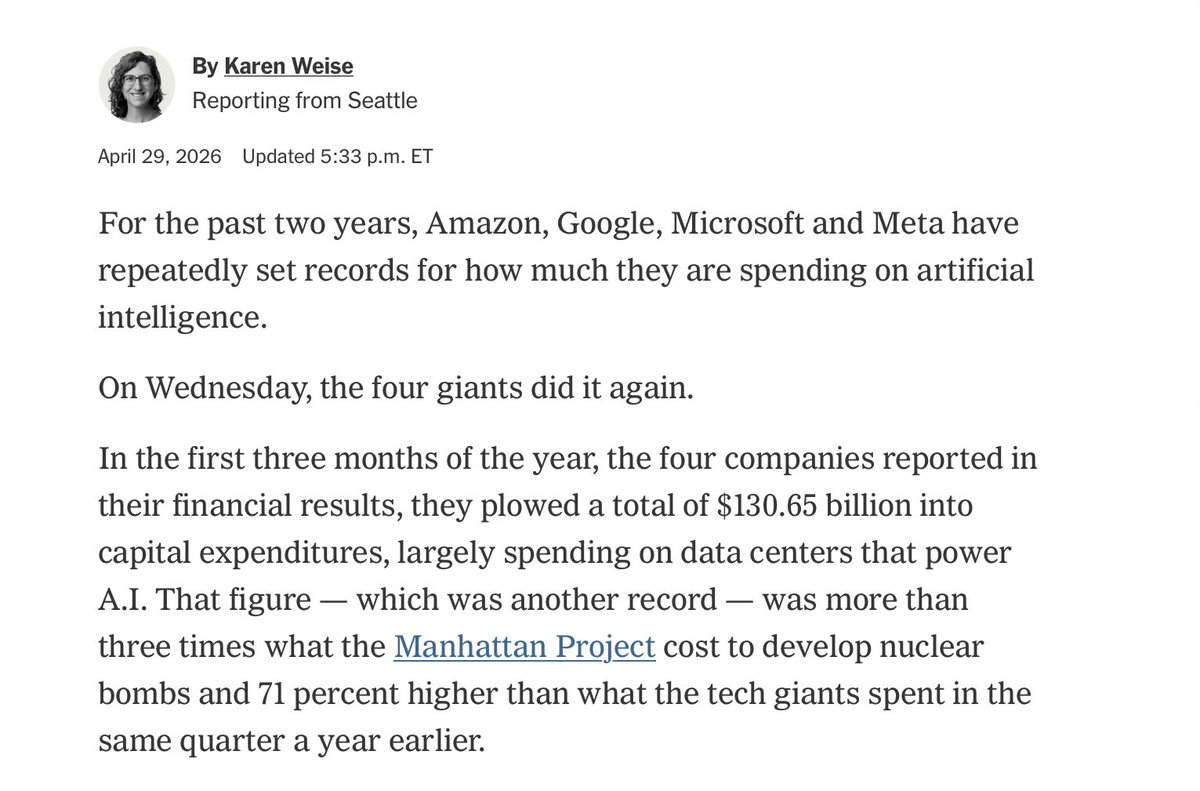
Sheer insanity. Amazon, Google, Microsoft, and Meta collectively are spending more money than the Manhattan Project *every single month*. More than 12x the Manhattan Project every year.
And what they have got to show for it?
None are making major profits on AI; none has a technical moat; a massive price war is inevitable. And few of their customers are seeing major returns on investment.
Greatest capital misallocation in history.