New on our Engineering blog: Creating in-house source control.
In May, we merged around 2,500 code changes per day. In September, we merged more than 30,000 per day. As a result, we became bottlenecked by developer infrastructure built for human (rather than agent) scale.
Here, we share how we built a new version control system—and fully migrated our monorepo from git—in five months: https://t.co/wzNkwHs7IN
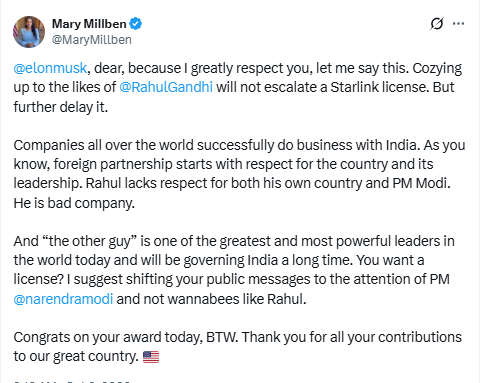
#MaryMillben’s message to #ElonMusk: In #India, Modi is the name you can’t ignore!
From Starlink’s licensing ambitions to a blunt political message, Millben has placed #PMModi at the centre of the conversation.
Today’s read: why Uber moved from Postgres to MySQL.
Really interesting deep dive into the database internals and scaling problems that led to the decision.
For Uber, things like MVCC, replication, WAL, and write amplification became serious scaling challenges.
The interesting part is how they solved it.
One of those reads that makes you look at databases differently.
https://t.co/QOQm2PHtQA
We made claude.ai 3x faster in two weeks.
Here’s how we use Claude to measure, debug and improve performance. Prompts and methods included.
https://t.co/mgvK8mJRuD
Introducing Claude Opus 5.5, the first model in our new Claude 5.5 family.
It performs at the level of Claude Fable 5.1 for most tasks, and costs 40% less to run than Opus 5.
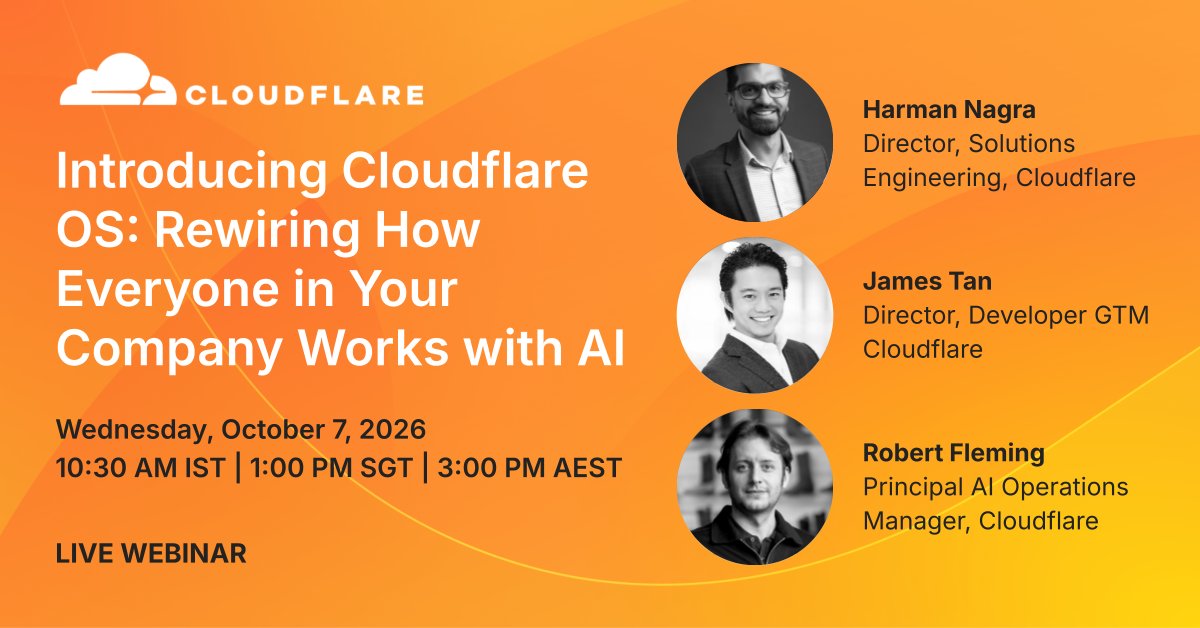
Join us on October 7th for an exclusive webinar on Cloudflare OS. We’re discussing the critical security principles and Workers architecture needed to scale AI safely. Register now. https://t.co/y1mY2HfJG8
Dr @ShashiTharoor articulates paramount importance of cooperative leadership as described poem written by chinese philosopher Lao Tzu where he talks about four categories of leadership. According to him,the best form of leader is one who takes all along,when their task is accomplished all people remark we have done it ourselves. The best team is where beneficiaries takes ownership and feels empowered true leader makes beneficiaries feel like their own triumph not a favour.
@TharoorOffice@jameelsjam
We're sharing our new framework for tracking, investigating, and disclosing instances of model misalignment at OpenAI.
The framework sets criteria and timelines for public disclosure, including when we haven’t yet fully explained or mitigated the behavior. More complex cases may require longer investigation or coordination with third parties.
We’ll prioritize examples that reveal new misalignment mechanisms, meaningful changes in known behavior, or findings that challenge assumptions about safety or mitigation.
Alongside the framework, we’re publishing six reports on instances of misaligned behavior we’ve observed during the training or evaluation of our models in the last six months.
This is a starting point. We’ll refine the process through experience and public feedback, and share more reports on an ongoing basis.
https://t.co/ismCCkeE0L
We Must Pace the Frontier: I’ve written a new essay on why the AI industry should slow down, with a three-part plan for doing so.
Anthropic is unilaterally committing to the first of these steps. We’ll provide third-party evaluators with permanent, employee-level access to our systems, so that they can verify adherence to our safety measures, report on incidents, and assess models’ alignment during training.
You can read the full post here: https://t.co/OGyPb7yaYt
Interesting read on how Pocket FM scaled.
Pocket FM makes serialized audio fiction. AI now writes and voices much of it, taking annual output past 2.5M hours.
Daily listening time went from ~25 mins to >150 mins.
More than 500,000 people now write on the platform, and a lot of them started as listeners.
“Yeh Dil Maange More!” 🇮🇳
A line that became a symbol of courage, sacrifice and the indomitable spirit of Kargil.
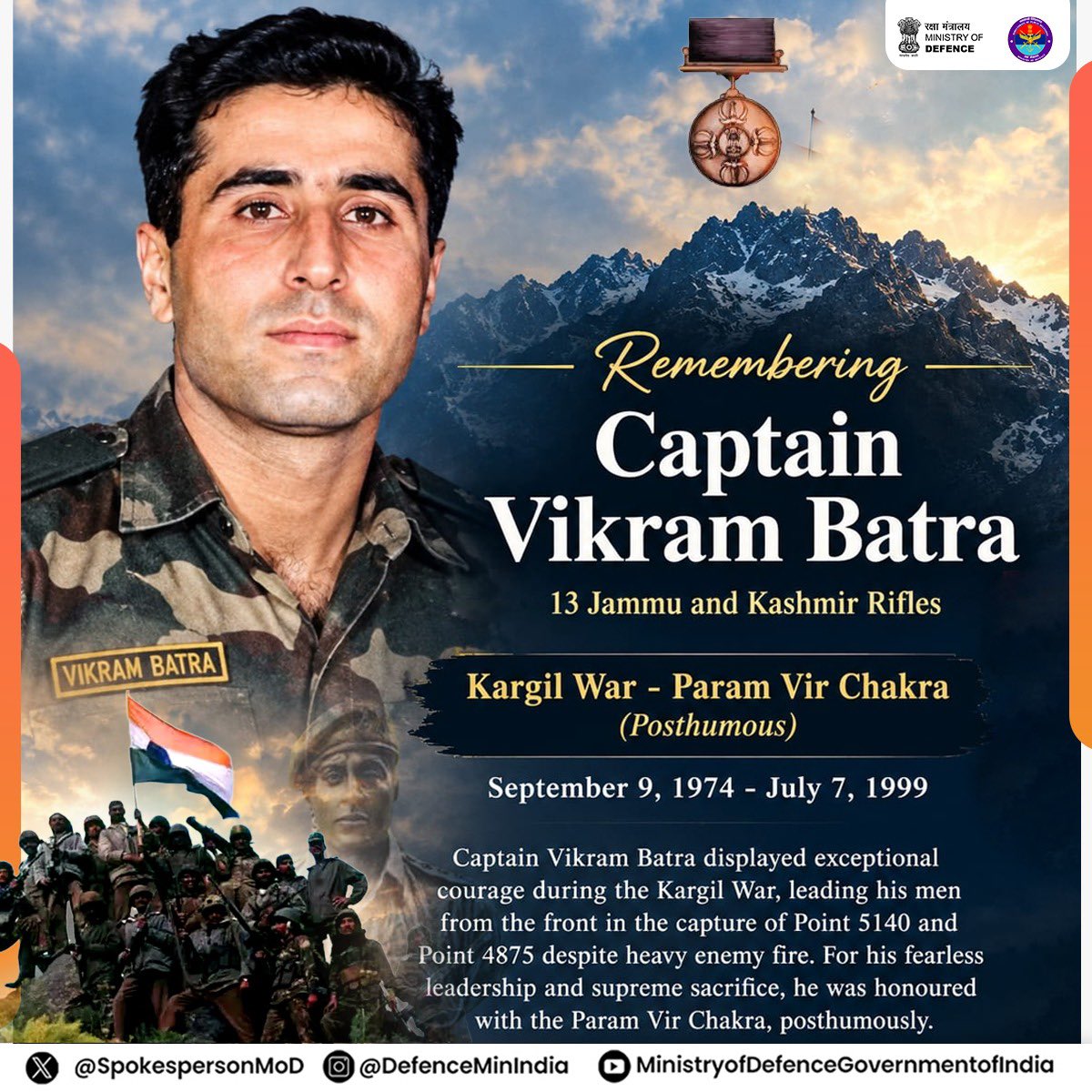
Remembering Captain Vikram Batra, the ‘Sher Shah’ of Kargil.
Forever a hero. Forever an inspiration. 🇮🇳
#CaptainVikramBatra#SherShah#Kargil#ParamVirChakra@adgpi
Yeh Dil Maange More!
A battle cry that became the enduring legacy of Captain Vikram Batra, PVC. 🇮🇳
Remembering the #Kargil hero on his birth anniversary.
During #OperationVijay, he led from the front in the capture of Point 5140 and Point 4875, killing nine enemy soldiers in close combat despite heavy enemy fire, before making the supreme sacrifice.
For his conspicuous bravery and exceptional leadership, Captain Batra was honoured with the #ParamVirChakra, posthumously.
Listen in to our special podcast with his brother, Shri Vishal Batra, as he shares insights into Captain Batra’s courage, sacrifice and enduring legacy.
Youtube: https://t.co/66fYMRiFx0
Spotify: https://t.co/LoFwLyRVZO
#OperationVijay #KargilWar
I am pleased to see that OpenAI’s new model is roughly on par with Gemini Flash and Opus 4.8 on prompt injection risk. Nice work!
Evaluating and naming other labs turns out to be a great way to encourage them to train more aligned models. We will continue to do this until other labs pay more attention to safety. This is good for everyone and there is a lot of room left to go!
We solved prompt injection in practice for Claude models about two months ago. But prompt injection is a significant security risk no matter what model you use, and it is important that the industry similarly spends more effort to train their models to be resistant to prompt injection, among other elements of model alignment.
As models become more capable and central to businesses and economies, the risks only increase. We should be taking them seriously, and doing the right thing for our customers and the world.
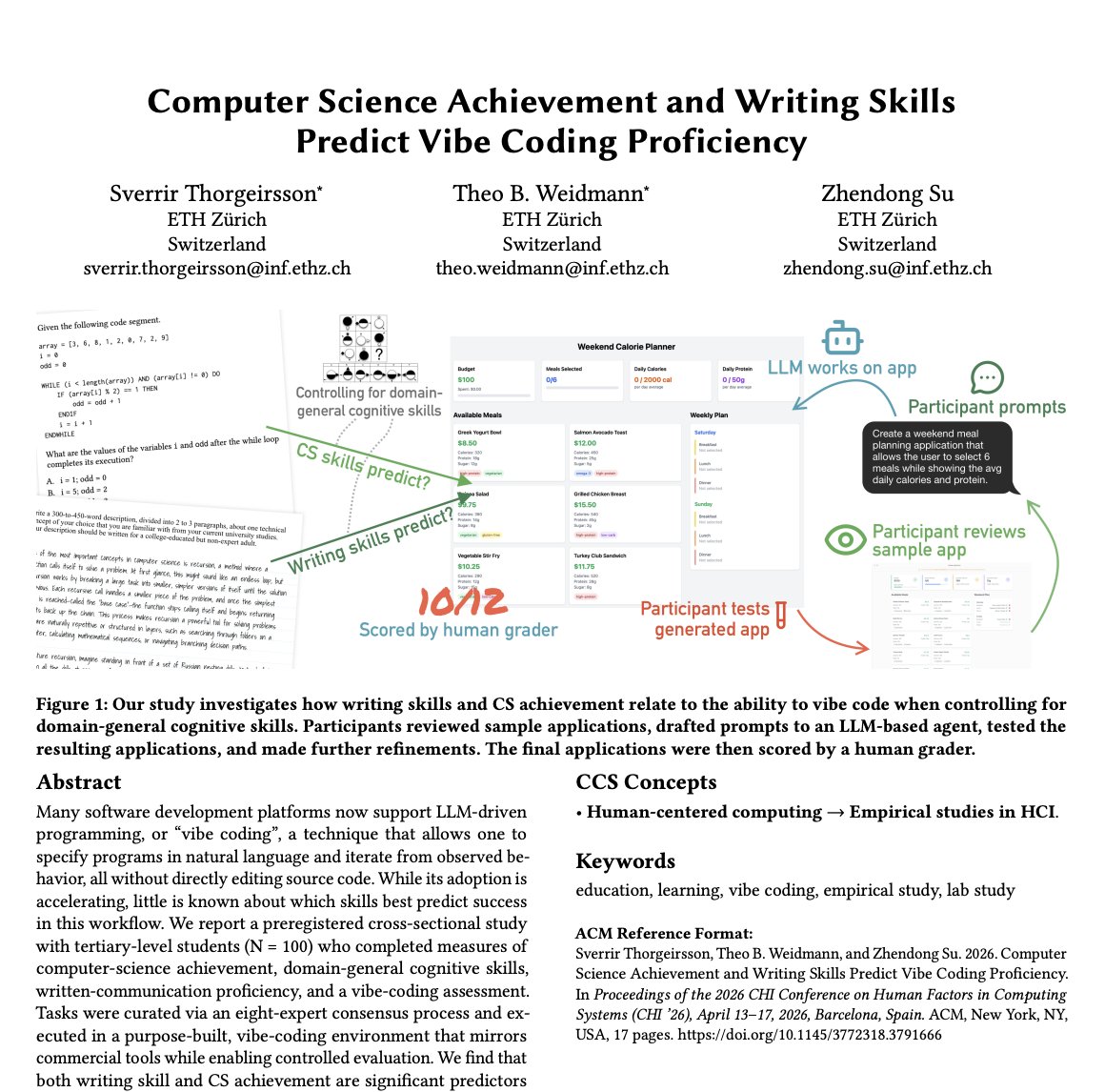
China published the most uncomfortable paper on vibe coding.
ETH Zurich tested 100 developers in a controlled, commercial-grade vibe coding environment to see who actually succeeds.
The findings are brutal.
The researchers tracked computer science achievement, written communication skills, and general cognitive reasoning.
They wanted to see what actually predicts vibe coding proficiency when you never touch a line of source code yourself.
Two major predictors emerged.
Written communication proficiency mattered. The ability to structure thoughts and articulate intent unambiguously in text directly impacts what the AI builds.
But that wasn't even the main takeaway.
Computer science achievement was a massive, dominant predictor of success.
Even when researchers controlled for general intelligence and reasoning skills, CS background still heavily dictated who built working software and who completely crashed.
In fact, CS knowledge contributed roughly twice the unique predictive variance of writing skills alone.
Why? Because vibe coding isn't about writing code. It’s about debugging logic.
When an AI agent builds a complex application and quietly breaks an edge case under the hood, a non-technical user looks at the glowing UI and assumes it works.
They don't know what questions to ask. They don't know what logic to challenge. They lack the mental models to recognize architectural catastrophe.
You can prompt your way past syntax.
You cannot prompt your way past a fundamental lack of engineering intuition.
The hype told us that learning to code is dead because language is all you need.
The data just proved the opposite.
To truly master the vibe, you still need to understand how the machine thinks.
An infrastructure issue is causing a partial outage across Claude Code, the API, and https://t.co/JQms60I8iw. We're working on it but don't have an ETA yet. We'll post here when that changes, and quickest place for updates is always https://t.co/ZyS6p0rEnb
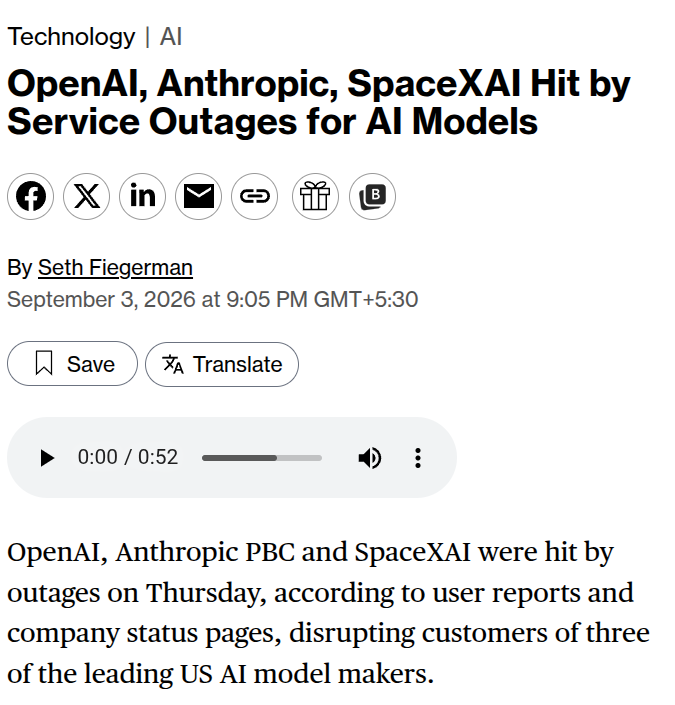
ChatGPT, Claude, Codex, and Grok experiencing service disruptions within the same window.
OpenAI, Anthropic acknowledged elevated errors across ChatGPT, Codex, and Claude.
Was Jauhar Despair, or Civilisational Defiance?
In this video, Nupur J Sharma explains why Jauhar cannot be reduced to a story of despair or patriarchy.
Was it merely women choosing death over dishonour, or an act of civilisational defiance against conquest and erasure?
The fort could fall. The story would not. @UnSubtleDesi