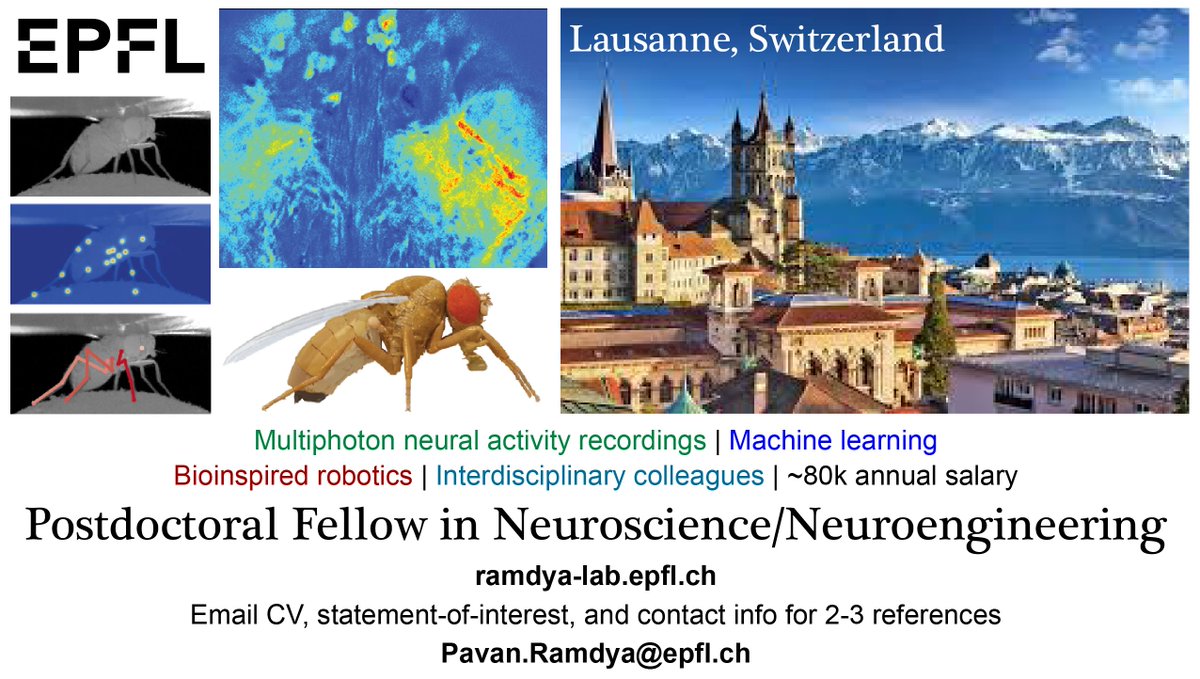
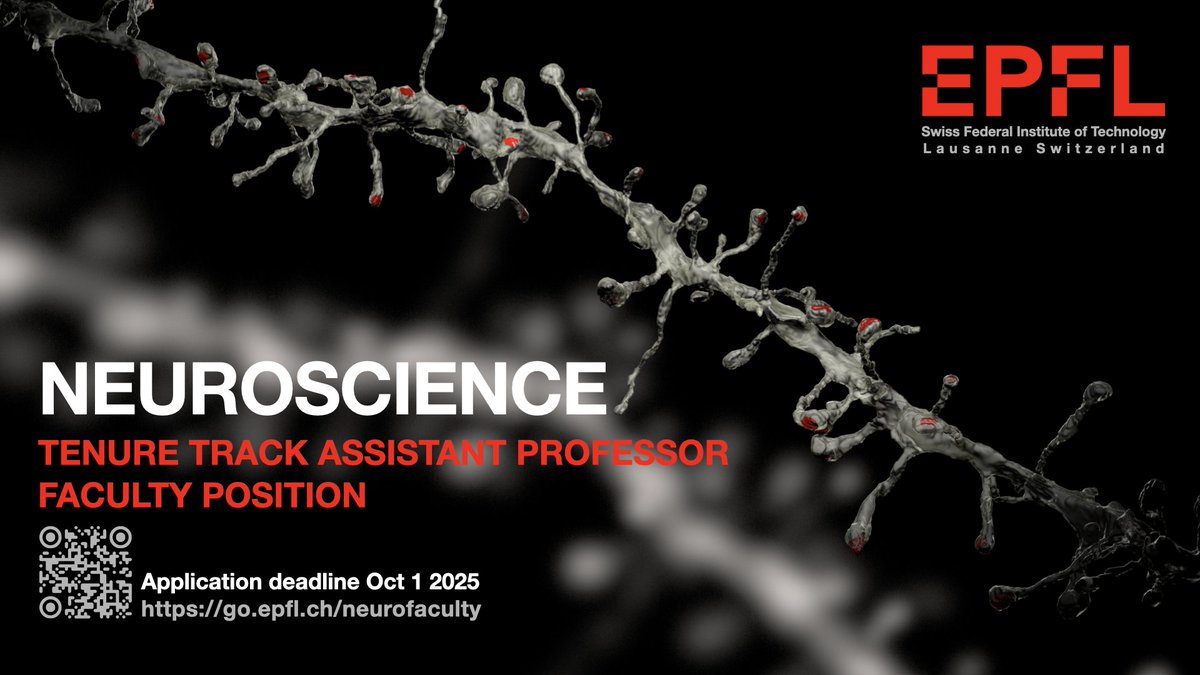
We are happy to announce an opening for a Tenure Track Assistant Professor Faculty Position in Neuroscience at EPFL. Join our groups working on cellular & circuit neuroscience & neurocomputation - https://t.co/sdbArRbpyu. Deadline Oct 1 2025, Apply now - https://t.co/ghLJVC5Tcn
“Science has no passport, no gender, no ethnicity, no political party”
President @vonderleyen, with a new €500M initiative to attract top global talent.
In a fractured world, science remains a unifying force – rooted in diversity, driven by curiosity, & shared by all humanity.
Au Laboratoire de neuro-ingénierie de l’@EPFL, l’équipe de Pavan @ramdya travaille à recréer le cerveau de la #drosophila melanogaster 🪰. Les perspectives en #robotique sont riches. Interview. #EARA
https://t.co/8S20jdKgDV
We are looking for a new PhD student to join our lab of Neuroepigenetics at EPFL! Interested in deciphering the epigenetic mechanisms of memory formation, storage and change?🧠🧬Check out the specifics here: https://t.co/Oe8U6kCX6p
🧠 Functional Imaging of the Human Brain: A Window into the Architecture of the Mind
Join Prof. Nancy Kanwisher (MIT) at EPFL!
🗓 Fri April 4, 2025 | 🕒 15:00 | 📍 SV 1717
☕ Followed by coffee break
🔗 https://t.co/9PP7Bt7pml
1/ Today, we publish the first of seven articles in a series exploring ‘Science Under Threat in the United States’.
The authors discuss what they describe as the Trump administration's "assault" on science and scientists, and what the response should be. #StandUpForScience
My TEDx talk just came out!
“How flies can help us build better robots and AI”
https://t.co/uG3LTeTqui
Thanks again to the fantastic organizers @TEDxArendal
Special thanks to the people in my laboratory at EPFL past and present without whom none of this would be possible
Job Alert: @KavliFoundation is hiring! We're looking for an associate program officer in the science team, with expertise in nanoscience, materials, quantum or astrophysics. 🪐 Come work with us!
https://t.co/QrrbNHb8I4
🎁As you unwrap your holiday presents, consider how you coordinate your fingers and limbs.
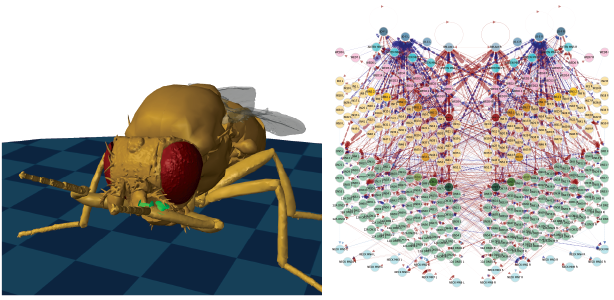
@pg_ozdil identified fly brain networks for body part coordination through experiments, biomechanical modeling, connectomics, and neural network simulations ! 🤖
https://t.co/qOvUYaVEEd
We are hiring!
Postdoc position in Data Science in Neuroscience in our lab @EPFL_en Cutting-edge research analyzing rich datasets (VR, physiol, behav, metabolism, neuroimaging) to understand stress, anxiety & motivation
https://t.co/vFFA2wnEqJ
#Postdoc#DataScience#Neuroscience
🚨 Save the Date! 🚨
Join us for the BMI Symposium: Neuromics in Development & Disease at EPFL, June 24-25, 2025! 🌟
🧠 Explore cutting-edge neuroscience with world-class speakers!
📍 Details: https://t.co/FT9bbanvG7
#Neuroscience#BMI2025#SaveTheDate
This is a really heroic experiment recording associative learning neurons in the fly brain over two hours while two flies interact with one another. This device and this approach can generally enable many more kinds of social interaction experiments
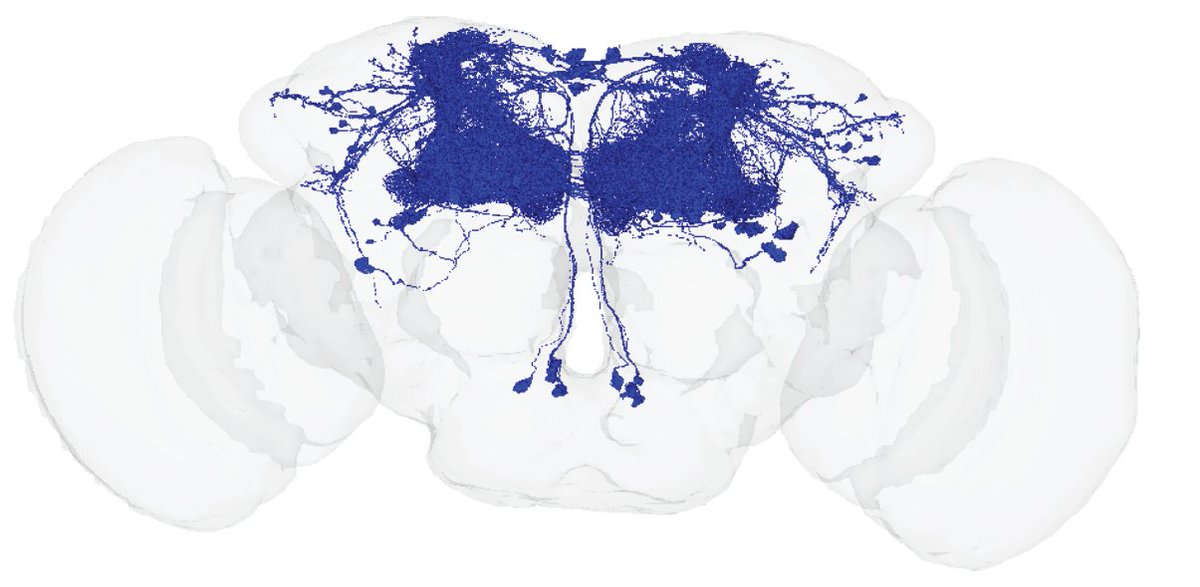
We recorded the activity of neurons within this network during 2 hours of social interactions. Interestingly, as the animals became more sociable the baseline and locomotor-related activity greatly diminished in MBONs previously implicated in aversive learning.
I found @VLobatoRios's experiment with a fly and a beetle really clever. It tests whether, when flies becoming sociable towards one another, it is due to a general reduction in behavioral excitability or if it is specific to conspecific (same-species) interactions.
However, single-housed animals can learn to be sociable after spending several hours with other flies, or more specifically, smelling other flies. Importantly, this shift in behavior seems to be tuned to conspecifics since flies never stop evading beetles, for example.
We found that if we isolate flies before they eclose, and keep them living alone, they’ll display a constellation of fearful reactions the first time they encounter other flies. Contrary to the sociable behaviors shown by flies housed in a group.
Watching these animals touch one another reveals just how rich inter-fly social interactions are... @VLobatoRios designed a novel two-photon microscopy recording system that allows us to record one fly's brain while it interacts with another fly
I'm thrilled to share this story! Flies tend to aggregate, as I’m sure you have experienced in your kitchen. They lay eggs around the same places and form clusters even in the absence of food. But, what happens when they meet other flies for the first time? ...
Being raised alone makes flies afraid of one another!
But exposure to other flies makes them become sociable. @VLobatoRios found and recorded specific learning circuits in the brain that regulate this transition. Read more in our new preprint:
https://t.co/2lTO75j1cW