POLITICHE DEI TRASPORTI: SENSO COMUNE vs. BUON SENSO.
🧵
"Una delle idee oggi più diffuse e popolari in materia di investimenti nei trasporti è che la strada può venire alleggerita trasferendo una parte del traffico verso altri tipi di trasporto.
But hey, apart from these minor flaws, Piketty’s (“superstar economist”) plan is a wonderful project that the media can write long articles about and politicians can pay lip service to…
This plan is incompatible with freedom- a global class of planners telling us how long to work, how much we can grow, what we can eat. It is also completely wrong. All advances for climate (including the huge drop in battery and solar and wind costs) have come (and will come) from more innovation, more competition, firms that grow and invent and innovate and produce energy solutions that replace fossil fuels. If you enforce degrowth in the West you will kill for ever the climate agenda.
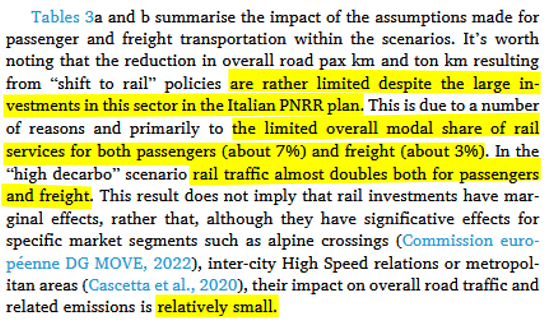
Tanta spesa ferroviaria e poca resa.
Se il trasporto ferroviario di persone e merci raddoppiasse al 2030, il traffico su strada diminuirebbe di pochi %.
Ovviamente, il raddoppio è del tutto illusorio.
Dal 2004 il trasporto passeggeri è cresciuto del 12% e quello merci del 3%.
New paper at Structural Change and Economic Dynamics:
For decades, environmentalists have framed a choice: prosperity or preservation.
Our new paper suggests that this is the wrong choice.
Economic liberalization doesn't harm the environment. In many cases, it helps save it.
Nel silenzio quasi generale dei media, in molte zone centro-meridionali della Francia le temperature sono scese fino a 8 °C sotto la media del periodo.
Nessun titolo apocalittico, nessuno scenario drammatico, nessun bombardamento emotivo e sapete una cosa? Va bene così. Perché anche questa è meteorologia, un episodio interessante, marcato, ma inserito nella normale variabilità atmosferica. Esattamente come era meteorologia anche l’ondata di caldo che l’Europa occidentale ha vissuto fino a pochi giorni fa.
Il punto non è negare che il caldo sia stato intenso. Lo è stato. Il punto è un altro, perché un’anomalia calda viene spesso raccontata come una sentenza sul destino del pianeta, mentre un’anomalia fredda passa quasi sempre in silenzio? In sostanza quando fa caldo si parla sempre di clima, quando fa freddo si parla di meteo. Questa asimmetria comunicativa è un problema, non perché il clima di fondo non stia cambiando, sta cambiando, e va preso sul serio ma proprio per questo servono equilibrio, contesto e precisione. Se ogni episodio caldo viene caricato di titoli ansiogeni e ogni episodio fresco viene ignorato, alla lunga si perde credibilità e si finisce per alimentare anche reazioni opposte, spesso confuse o completamente infondate.
Il meteo è il singolo episodio, il clima è la statistica degli episodi nel tempo. Sono collegati, certo, ma confonderli ogni volta che conviene alla narrazione del giorno non è divulgazione scientifica è comunicazione selettiva.
@sc_cath We even have the paper that explains why. The vast majority of the return to entrepreneurial capitalism flows to consumers. https://t.co/ljdo9KwtSe And, given that most of that return is in the consumer surplus we're not even measuring it.
I do not know if it is just me, but what I see in this graph is that the “rise of the billionaire class” coincides with entire regions of the world eradicating poverty.
There was a negligible amount of billionaire wealth in South/Southeast Asia or East Asia in the 1980s. But, according to the World Bank, more than 1.5 billion people were living in extreme poverty in these regions at the end of that decade. Today, this number has been cut by 90%, despite demographic growth.
Asia is driving the rise of the billionaire class in this graph. Within the Western world, the billionaire class has merely shifted from Europe to the US.
Were the economic policy changes implemented in Asia over the past 40 years much worse for the general population than those in the Middle East and North Africa, which have contained their billionaire class?
@benzinazero@PaoloVivani Nicchia? L’auto è il mezzo più utilizzato nelle città di tutto il mondo tranne poche eccezioni.
E l’utilizzo dell’auto ha consentito uno straordinario aumento delle velocità di spostamento.
“Risolvere il problema del traffico” poi non vuol dire nulla.
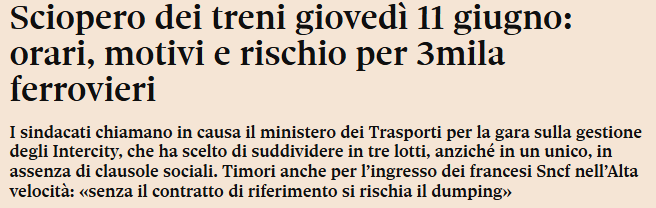
Come sempre, e come ovvio che sia, i sindacati difendono i lavoratori del settore contro gli interessi di consumatori (più offerta e prezzi più bassi) e dei contribuenti (meno sussidi).
https://t.co/Ys246O1xsa
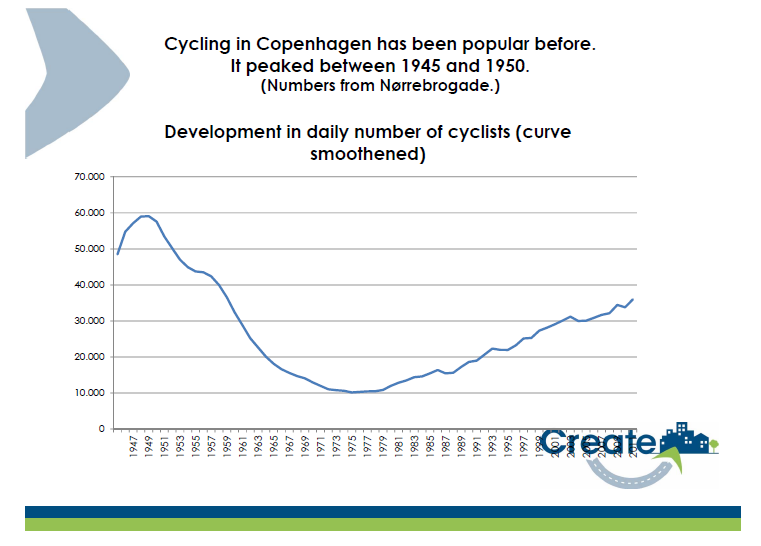
The EU is making it easier than ever to ditch the car keys and hop on your bike.
The upcoming World Bicycle Day on Wednesday is the perfect occasion to do so.
With our European Declaration on Cycling, we are committed to boosting this experience for you:
Non credo esista immagine più stupida della modernità di noi in fila in auto per due ore nel traffico, per andare a fare in ufficio in ritardo quello che avremmo fatto a casa già almeno da due ore in più, e senza esserci bucati lo stomaco in pausa con un tramezzino fradicio