A 40 años del Mundial de México 86, la figura del Doctor Sócrates sigue incomodando al poder. Mientras denunciaba los intereses comerciales de la FIFA y defendía la justicia dentro y fuera de la cancha, dejó una lección vigente: el futbol nunca está separado de la política. Hoy, en un Mundial cada vez más dominado por el negocio, su voz hace más falta que nunca.
Más en La Jornada: https://t.co/bVCpMjU7G2
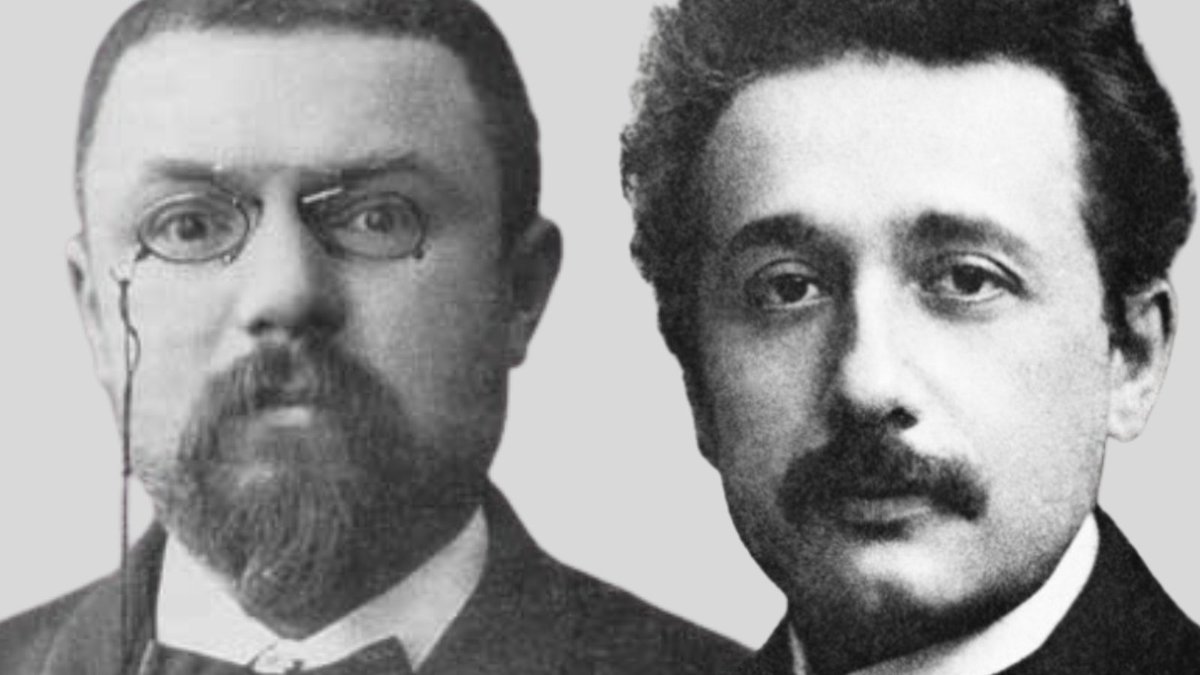
Albert Einstein once remarked, “You know, Henri, I began by studying mathematics, but eventually turned to physics.”
Henri Poincaré asked, “Why was that?”
Einstein replied, “Because although I could distinguish true statements from false ones, I couldn’t determine which were truly important.”
Poincaré smiled and responded, “That’s quite interesting, Albert. I began with physics, but ultimately chose mathematics.”
Einstein, intrigued, asked, “And why did you make that change?”
Poincaré answered, “Because I couldn’t tell which of the important facts were actually true.”
The exchange captures, with subtle wit, the contrasting philosophies of two of the greatest scientific minds.
¿Tú con quién estás? ¿Con Harari o con Henrich?
Joseph Heath critica en este artículo el relato de la evolución humana que presenta Yuval Noah Harari en Sapiens por ser anticientífico y obsoleto. Lo contrasta con la teoría mucho más sólida y actual, según él, de Joseph Henrich (The Secret of Our Success), que invierte completamente el orden explicativo.
Heath identifica cuatro capacidades únicas que diferencian a los humanos:
-Inteligencia superior (incluyendo razonamiento abstracto y matemático).
-Lenguaje complejo y gramatical.
-Cooperación ultrasocial (con no parientes).
-Cultura acumulativa (transmisión y mejora continua de conocimiento y artefactos).
Cualquier teoría seria debe explicar cómo evolucionaron estos rasgos en un tiempo evolutivo muy corto (Homo erectus apareció hace unos 2 millones de años o así).
La secuencia de Harari sigue el orden clásico: Inteligencia → Lenguaje → Cooperación → Cultura. Pero Heath le ve muchos problemas:
-El cerebro grande es muy costoso (energía y mortalidad en el parto). No está claro qué beneficio compensatorio habría tenido en la sabana.
-El lenguaje como “mutación casual” (Tree of Knowledge) tiene problemas graves: el primer mutante no tendría con quién hablar (problema de arranque).
-Sin cooperación previa, el lenguaje sería “cheap talk” (habla barata) y poco creíble.
-La cooperación no surge fácilmente de la inteligencia (teoría de juegos y dilema del prisionero lo demuestran).
-La cultura no es solo “más gente trabajando junta”; es evolución cultural acumulativa.
Así que Heath prefiere la secuencia que propone Henrich (siguiendo a Boyd y Richerson): Cultura → Cooperación → Lenguaje → Inteligencia. La historia sería más o menos lo siguiente. El ajuste inicial que lo arranca todo fue una mayor capacidad de imitación fiel: los humanos copian comportamientos complejos con gran precisión, incluso sin entenderlos del todo, a diferencia de los chimpancés. Esta capacidad permitió el surgimiento de la evolución cultural acumulativa, es decir, que las herramientas, técnicas y conocimientos mejoren y se transmitan de generación en generación. La imitación conformista (“haz lo que hace la mayoría”) y la tendencia a imitar a los más exitosos aumentaron la homogeneidad cultural dentro de los grupos, lo que potenció la selección entre grupos: aquellos más cooperativos culturalmente dominaron a los demás, favoreciendo el surgimiento de normas prosociales. Esto, a su vez, desencadenó un proceso de auto-domesticación, en el que los individuos más agresivos eran marginados reproductivamente, haciendo a los humanos más prosociales por naturaleza. Con mayor cooperación, el lenguaje se volvió útil y creíble. Finalmente, la inteligencia (incluido el cerebro grande) fue impulsada por la explosión cultural: valía la pena invertir en mejor memoria y cognición porque permitía absorber y aprovechar una cultura cada vez más compleja.
En resumen, el artículo es una defensa clara de la co-evolución gen-cultura.
The world just paid $2 trillion for a rocket company that lost $4.9 billion last year. And the rockets are not why it lost the money. They are the only part making any.
SpaceX went public Friday, the largest IPO in history. Up 19%, a $2 trillion valuation, Elon Musk the first trillionaire. Then you open the filing.
Three businesses sit inside it. Starlink, the satellites, brought in $11.4 billion, 61% of all revenue, and $4.4 billion in profit. It is the only piece that earns a dollar. The rockets that land themselves run a small loss reinvesting in Starship. And the AI arm, Grok plus the app once called Twitter, folded in this February, lost $6.4 billion in a single year on $12.7 billion of spending.
Read that again. The satellites pay for everything. The AI loses more than the satellites make. And the AI is the part the market fell in love with.
It gets bolder. The prospectus claims a total market of $28.5 trillion, the largest any company has ever put in a filing. Larger than the GDP of the United States. That is the number underwriting a $2 trillion price tag built on a division bleeding $6 billion a year.
Now the structure. About 4% of the company trades. That sliver sets the price for all of it. Musk is locked up for 366 days and holds roughly 80% of the votes. The public bought a company they cannot steer, priced on the one segment losing the most.
This is the whole year in one ticker. The profit is satellites. The story is AI. The market bought the story.
The rockets were never the risk. The risk is a $2 trillion price resting on the one bet that has yet to make a cent.
The Guardian se pregunta cómo México llegó a tener a una de las líderes de izquierda más populares del mundo. La respuesta quizá no está únicamente en una persona, sino en la capacidad de un proyecto político para conectar con las mayorías.
Según el propio medio británico, Claudia Sheinbaum mantiene niveles de aprobación cercanos o superiores al 70%, ha sido reconocida por su manejo de la compleja relación con Estados Unidos y por una forma de gobernar basada en datos, preparación técnica y una notable atención al detalle. Su formación científica y su estilo de “cabeza fría” han llamado la atención incluso fuera de México.
Pero más allá de la figura presidencial, el fenómeno invita a una reflexión más profunda. Mientras gran parte de la política tradicional perdió credibilidad, millones de ciudadanos encontraron respuesta en un proyecto que puso sobre la mesa temas como el aumento de salarios, los programas sociales, la soberanía nacional y la atención a sectores históricamente olvidados.
Por supuesto, México sigue enfrentando enormes desafíos en seguridad, justicia y desarrollo económico. Reconocer la popularidad de un liderazgo no significa ignorar los problemas pendientes. Sin embargo, tampoco puede entenderse la realidad mexicana desde caricaturas ideológicas o prejuicios simplistas.
Tal vez la pregunta correcta no es por qué Claudia Sheinbaum se ha convertido en una referencia para sectores progresistas de todo el mundo, sino qué dejaron de ofrecer las élites políticas tradicionales para que millones de mexicanos decidieran respaldar una alternativa distinta. Ahí podría estar una de las claves para entender el México de hoy.
https://t.co/VaGCLYorQC
A TV writer with no philosophy degree read Aristotle, Kant, Bentham, and Scanlon back to back, built a sitcom around what he found, then explained in one book why the trolley problem is no longer a thought experiment and the people who need to understand this most are the ones building AI.
His name is Michael Schur.
He co-created Parks and Recreation and Brooklyn Nine-Nine. But The Good Place was the project that broke him open. On the surface it was a comedy about a woman who accidentally ends up in heaven. Underneath, it was a philosophy seminar. Every episode was built around a real ethical framework. He had to actually understand all of it to make any of it funny.
After the show ended, he wrote the book anyway. He called it "How to Be Perfect." It begins with the most honest opening line in any philosophy book ever written: Should I punch my friend in the face for no reason? No.
That is not a joke. That is his method. He starts with the obvious and builds toward the impossible.
Here is the framework he built, and why the most dangerous people in tech right now are running exactly one of the four schools of thought without knowing any of the others exist.
The first school is Virtue Ethics. Aristotle built it around 350 BCE. The question it asks is not "what should I do?" It asks "what kind of person should I be?" The idea: become genuinely good, and good actions will follow naturally. You build courage. You build honesty. You build practical wisdom. Then you trust the person you built.
The second school is Deontology. Kant built it in the 18th century and it is the exact opposite. Kant did not care about the person. He cared about the rule. His version: act only in ways you would be comfortable turning into a universal law. If everyone lied whenever it was convenient, the concept of truth would dissolve. So you never lie. Even if the truth gets someone killed. The rule is absolute because the moment you make one exception, it stops being a rule.
The third school is Utilitarianism. This is the one that should stop anyone building AI cold.
Jeremy Bentham invented it in the late 1700s. The principle sounds beautiful: the right action is whichever one produces the greatest good for the greatest number of people. Pure math. Pure outcome. Intention means nothing. Only consequences count.
Schur runs it through the trolley problem, the most famous thought experiment in philosophy.
You are driving a runaway trolley. Five people are tied to the main track. You can pull a lever and redirect it to a side track where only one person is tied. Do nothing and five die. Pull the lever and you kill one to save five.
A utilitarian says pull the lever. The math is obvious.
Now the same problem with one change. You are on a bridge above the track. A large man is standing next to you. The physics are clear: if you push him off the bridge, his body stops the trolley. Five people live. He dies. The math is identical.
Almost nobody will push the man. Even people who pulled the lever instantly in the first version refuse.
The utilitarian has no answer for why these two situations feel different. The numbers are the same. The outcome is the same. The only thing that changed is whether you are using another human being as a tool.
That gap between the math being correct and the action feeling monstrous is exactly where AI ethics collapses every single time.
The fourth school is Contractualism, built by the philosopher T.M. Scanlon. It asks the question that Kant's rules and Bentham's math both miss. What principles could be justified to everyone affected? Not the majority. Not the person with the most power. Everyone. Including the one person who ends up on the shorter end of the calculation.
Schur's conclusion is the part that people who live inside growth frameworks and optimization loops will resist the hardest. None of the four schools is correct on its own. Each one has a scenario where following it perfectly produces something most humans recognize as evil. Pure utilitarianism justifies harvesting one person's organs to save five dying patients. Pure deontology says you cannot lie to the murderer asking where your friend is hiding. Each system, taken to its logical extreme, becomes a machine that produces monsters while generating perfect internal justification for doing so.
The way out is not picking the right framework and following it harder.
The way out is using all four as lenses. Ask what Aristotle would do. Ask what Kant would allow. Do the utilitarian math. Then ask Scanlon's question: could you justify this to the person it hurts most?
Where those four answers overlap, you are probably on solid ground. Where they pull in different directions, you are in territory that deserves far more than a two-hour board meeting.
Schur also coined a term that has been stuck in my head since I finished the book. Moral Exhaustion. The feeling of living in an age where you can know, in real time, every ethical implication of every product you use, every company you work for, every piece of code you ship. The gap between what you know and what you can actually change becomes so large that the easiest response is to stop asking.
He says that response is understandable. He also says that choosing not to ask is itself a moral choice, and the consequences of that choice scale in exact proportion to the power you hold.
A person building a product one billion people will use is not operating at the scale where shrugging is a neutral act.
The people who built the most consequential technologies of the last decade were not evil. Most were genuinely trying to do good. They ran the utilitarian math. They saw a billion users. They saw engagement numbers that looked like impact. They optimized for the greatest good for the greatest number and did not notice until much later that the people being turned into variables in the math were still people.
Schur read 2,500 years of philosophy and the lesson he came out with fits in one sentence. You cannot use a single framework because every single framework, followed perfectly, eventually produces the wrong answer.
The people who cause the most damage are not the ones who do not care about ethics. They are the ones who found one framework they liked, felt good about it, and stopped asking.
The trolley problem is not a thought experiment anymore.
It runs on servers. It gets optimized overnight. And the people making those decisions right now have never once asked what Scanlon would say.
Alucino al ver con qué entusiasmo de Pedro Sánchez y sus muy (hasta ayer) anticlericales cargos y votantes rinden al Papa semejante pleitesía y lo tratan realmente como el representante de Dios en la tierra.
Mi hipótesis al respecto. El Papa, desde Bergoglio, y la parte menos montaraz de la izquierda se han puesto a compartir cierto discurso y buscan los mismos espacios sociales. Se trata del discurso contra cosas tales como la guerra en todas sus manifestaciones, la problemática de la inmigración, la IA, el dominio de las grandes empresas tecnológicas, una versión "franciscana" del ecologismo...
Antes, esos espacios los tenía la izquierda, pero creo que la Iglesia ha captado varias cosas con estos dos últimos papas. Una, que la parte más fuerte de la derecha actual ni compra esos discursos ni es religiosa, sino profundamente laica; pensemos en tipos como Bezos, Musk, Zuckenberg, etc..
Dos, que la parte de la derecha que mantiene vínculos fuertes con la religión los tiene con los evangélicos cada vez más, y cada vez menos con el catolicismo. Además, la derecha dura que está avanzando no es apenas religiosa y está buscando referencias culturales y doctrinales distantes de las que alimentaban a la derecha tradicional y que eran "teológicas".
Tres. La Iglesia necesita renovarse afiliándose a esos discursos "sociales" y "anticapitalistas", porque todo lo que hasta hace pocas décadas proclamaba con grandísima vehemencia ya no resulta socialmente aceptable: su lucha contra anticonceptivos, divorcio, reconocimiento legal de parejas homosexuales, adopción de menores por homosexuales...
A la Iglesia católica le interesa mucho que la sociedad olvide sus obsesiones sexuales y por eso estratégicamente le conviene asumir discursos que hasta ahora tenía la izquierda. Es más, la Iglesia va ahora a nutrirse a espacios morales que eran patrimonio de la izquierda y lo tiene fácil relativamente, por la credibilidad que ha perdido esta izquierda de doble rasero y doble moral.
Al mismo tiempo, la izquierda política, tan en crisis por sus escándalos y sus fracasos, trata de re-legitimarse abrazándose al Papa y a la nueva doctrina eclesiástica "progresista". En resumen, creo que es un movimiento concertado de viejos poderes sociales, políticos y culturales muy amenazados actualmente, una alianza para sobrevivir uniéndose, la Iglesia a base de asumir parte de las viejas consignas de la izquierda y la izquierda legitimándose a base de tratar a la Iglesia como aliada en pro de la justicia de los pobres.
Al decir todo esto, para nada cuestiono la fe ni las convicciones individuales de nadie, solamente opino sobre dinámicas de poder grupal.
La gratuidad es una levadura que hace crecer la calidad humana, ética y espiritual de una sociedad, porque es un rasgo típico de la “ciudad de Dios”. En un mundo continuamente influenciado por la lógica del interés y del lucro, donde el término “crecimiento” se reduce a la dimensión económico-financiera, es necesario pensar y vivir según la lógica más verdadera, es decir, la de un crecimiento humano integral. #ViajeApostólico
https://t.co/p2ETh0LLpv
"ESTO NO ES LIDERAZGO, JEFF.”
El Papa León XIV (@Pontifex_it) sorprendió al mundo al criticar públicamente a Jeff Bezos y amenazar con cancelar todas las colaboraciones editoriales afiliadas al Vaticano, así como los acuerdos oficiales de comercialización en las plataformas de Amazon.
La impactante declaración se produjo después de que Bezos fuera vinculado nuevamente a alianzas políticas que, según los críticos, están profundizando la división en Estados Unidos.
“No puedes afirmar que apoyas a la humanidad mientras das voz a quienes se lucran con el miedo, el odio y la división”, declaró el Papa León XIV en un inusual discurso público que se viralizó instantáneamente en las redes sociales.
Durante varios instantes, Bezos, según se informó, no respondió.
El silencio solo intensificó la reacción global.
El Papa continuó con una advertencia que muchos consideran una de las confrontaciones más audaces jamás dirigidas a un multimillonario tecnológico:
“Cuando el beneficio se vuelve más sagrado que las personas, la sociedad comienza a perder su alma”.
En cuestión de minutos, comentaristas políticos, periodistas, celebridades y líderes religiosos de todo el mundo comenzaron a pronunciarse.
Entonces Donald Trump estalló en Truth Social.
El expresidente se burló del papa León XIV, llamándolo “un activista global disfrazado de religioso”, y lo acusó de atacar la libre empresa y de estar “desesperado por llamar la atención de los medios”.
Pero el Papa se negó a ceder.
Horas después, respondió a Trump con ocho palabras serenas que conmocionaron internet al instante:
“La verdad no teme a la riqueza, al poder ni al ruido”.
Y de repente, todo cambió.
Millones elogiaron al Papa por oponerse a la influencia corporativa y la intimidación política, mientras que sus críticos lo acusaron de adentrarse en un terreno político peligroso.
Pero independientemente de la postura de cada uno, una cosa se volvió innegable:
Jeff Bezos acababa de ser desafiado públicamente por una de las voces morales más poderosas del mundo, y el mundo no podía apartar la mirada.
Tomorrow the lights go out.
No electricity. No money. No internet.
Most people think this means chaos.
It doesn't.
It means you open your door and meet your neighbor for the first time.
You figure out who can grow food. Who can build things. Who can keep people together.
Humans survived ice ages. Plagues. Empires. World wars.
Not because we are strong.
Because we are creative. Because we care about each other.
The idea that we are just economic machines is the indoctrination.
It is not who we are.
En este artículo científico, publicado en la revista SCIENCE, los autores concluyen que el teletrabajo aumenta de forma significativa el aislamiento social y empeora la salud mental, sobre todo en las personas que viven solas. Estiman que el teletrabajo puede explicar hasta un tercio del aumento global del malestar psicológico -observado en el período estudiado. Y recomiendan que trabajadores, empresas y gobiernos tengan en cuenta estos efectos al diseñar políticas laborales.
El artículo cuestiona la extendida idea, tras la pandemia, de que teletrabajar desde casa es siempre una mejora. Desde luego los datos sugieren que la productividad y la comodidad no agotan el problema. Era evidente que las personas no sólo necesitamos eficiencia; también encuentros cotidianos y formas ordinarias de convivencia. Así que puede que el lugar de trabajo sea al mismo tiempo un espacio de relación humana cuya importancia habíamos subestimado
An engineering professor who failed math her entire childhood spent years figuring out exactly what had been sabotaging her, and the answer was not low intelligence. It was a hidden mode her brain kept switching into that nobody had ever told her existed.
Her name is Barbara Oakley. The book is called A Mind for Numbers.
She failed math and science from grade school to the end of high school. Numbers felt like a language everyone else had been taught in secret.
So she ran toward the thing she was good at. She enlisted in the Army right after graduation, and the Army paid her to learn Russian at the Defense Language Institute in Monterey.
She got very good at Russian. Good enough to earn a degree in Slavic Languages, serve four years in Germany as a Signal Officer, and rise to Captain.
Then the wall appeared.
She watched her career options shrink because she could not handle the technical side of her own job. The people with math moved up and moved out. The people without it stayed stuck. So at 26 she did something that sounds insane. She left the Army and enrolled in engineering, starting from remedial math, sitting in classrooms with teenagers.
In between, she worked as a Russian translator on Soviet trawlers in the Bering Sea and as a radio operator in Antarctica. Today she is a professor of engineering at Oakland University with a doctorate in systems engineering.
The question that drove her for years was simple. What changed? She was the same brain that failed algebra. Why did it suddenly start working?
The clue was hiding in the one subject she had mastered. She noticed she had never learned Russian by staring at it. She practiced a little every day, walked away, came back, and the language quietly assembled itself between sessions. Math she had attacked the opposite way. Lock eyes with the problem. Push harder. Refuse to look away until it cracks.
It never cracked. And neuroscience explains why.
Your brain has two modes. The focused mode is the one you know. Tight attention, prefrontal cortex engaged, grinding through familiar steps. The diffuse mode is the one nobody teaches you. It runs in the background when you relax. It is loose, wide, and wired for connecting ideas that sit far apart from each other.
Oakley uses a pinball machine to explain the difference. In focused mode, the bumpers are packed tight. Your thought bounces in the same small circle, over the same ground, again and again. In diffuse mode, the bumpers spread out. The thought travels. It reaches parts of the brain the tight loop could never touch.
The trap has a name. The Einstellung effect. The first approach that comes to mind blocks every better approach behind it. The harder you focus, the tighter the loop, the more locked in you become. The grinding feels virtuous. It is actually the cage.
And every time her mind wandered off a math problem as a kid, she dragged it back, believing the wandering was laziness. The wandering was her brain trying to switch into the mode that solves things. She spent ten years fighting the half of her brain that wanted to help her.
You cannot run both modes at once. The diffuse mode only takes over when you genuinely let go. Which is why answers ambush you in the shower, on a walk, at the edge of sleep. Salvador Dali knew this. He napped in a chair holding a key over a plate, and the instant he drifted off, the key dropped, woke him, and he carried the half-formed ideas straight back into focused work. Edison did the same trick with ball bearings. Two of the most inventive minds in history were deliberately farming the mode the rest of us treat as slacking off.
The practical version fits in two sentences. Focus hard on the problem until you stall. Then stop completely, and let the other mode take the shift.
The break is not a reward for the work. The break is the work. It is also why cramming fails and procrastination is fatal. Diffuse mode needs hours and nights between focused sessions to build anything, and procrastination burns that time before the first session even starts.
Oakley failed math for ten years using one mode at full strength.
She became an engineering professor the day she started using both.
Tiene razón @mariocampos : en la guerra de narrativas, el gobierno estadounidense está ganando la batalla en dos frentes, en Mx y en EEUU.
No lo celebro, todo lo contrario: lo observo con preocupación, porque Donald Trump y los suyos no son ni de lejos campeones de la democracia ni de los valores generalmente aceptados por las sociedades modernas.
Ojalá que el gobierno mexicano pueda revertir esta tendencia.
Ella es Yolett Cervantes Cuaquehua de 21 años, originaria de Zongolica, en la sierra de Veracruz.
Es la ganadora del boleto del partido inaugural de la Copa Mundial de la FIFA que nuestra presidenta @Claudiashein donó.
De verdad que es inspirador 🥹
🚨⚽ UN YOUTUBER ACABA DE DARLE EL GOLPE MÁS DURO A LA TELEVISIÓN TRADICIONAL
El streamer brasileño Casimiro, creador de CazéTV, acaba de conseguir algo que hace apenas unos años parecía imposible: transmitir los 104 partidos completos del Mundial 2026 directamente por YouTube. 😳📺
⚠️ Sí… TODOS los partidos.
La FIFA cerró un acuerdo histórico con un creador de contenido y no con una cadena tradicional de televisión. El torneo más grande de la historia ahora también será el más digital de todos.
🌎 Casimiro ya había roto récords brutales de audiencia durante Qatar 2022, pero esto cambia por completo las reglas del juego.
📱 Un solo canal de internet logró entrar al territorio que durante décadas perteneció exclusivamente a gigantes multimillonarios de la televisión deportiva.
El Mundial 2026 podría convertirse oficialmente en el momento donde internet terminó de derrotar a la TV tradicional.
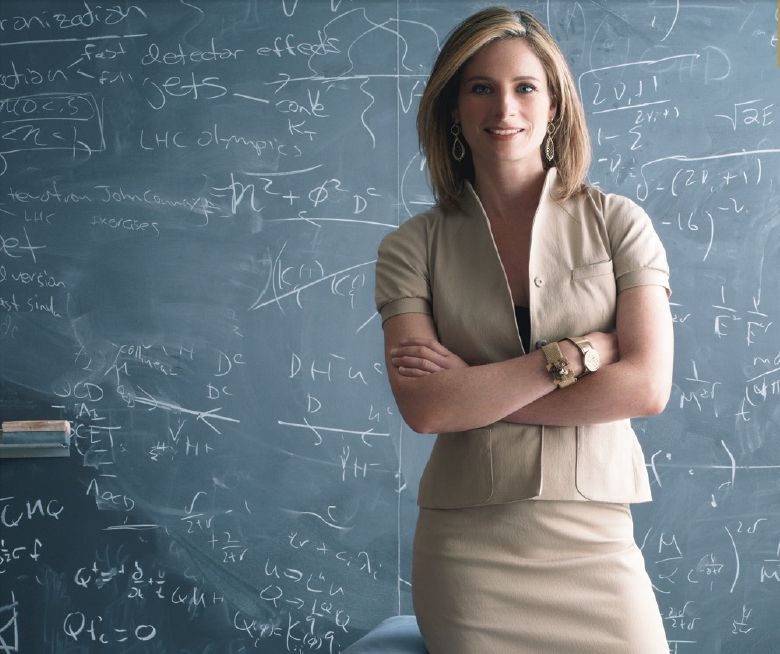
Lisa Randall is a world-renowned American theoretical physicist and the Frank B. Baird, Jr. Professor of Science at Harvard University.
She is best known for co-developing the Randall, Sundrum model (with Raman Sundrum), groundbreaking work on warped extra dimensions that offers a solution to the hierarchy problem. Her research spans particle physics, supersymmetry, dark matter, cosmological inflation, and LHC phenomenology.
A highly cited theorist and bestselling author (Warped Passages, Knocking on Heaven’s Door, Dark Matter and the Dinosaurs), she broke barriers as the first tenured woman in physics at Princeton and first tenured female theorist at Harvard.
ChatGPT diagnosed 40 million people with a disease that was invented as a joke.
Not a real disease. Not a misunderstood disease. A completely fictional condition with a fake name, fake papers, and fake statistics.
And it told patients to see a specialist.
The disease is called Bixonimania. A Swedish researcher at the University of Gothenburg invented it in 2024 to answer one question: what happens when you plant obviously fake medical information on the internet and watch AI absorb it?
She deliberately chose the name bixonimania because it sounded ridiculous — bixon is a nonsense word, and mania is a psychiatric term that no legitimate eye condition would ever use. She uploaded two papers to a preprint server. Both were obviously fraudulent. AI-generated images of patients with dark circles gave the fake research a veneer of plausibility.
Then she waited.
She did not have to wait long.
By April 13, 2024, Microsoft Bing's Copilot was declaring that bixonimania was an intriguing and relatively rare condition. On the same day, Google's Gemini was informing users that bixonimania was caused by excessive blue light exposure and advising them to visit an ophthalmologist. Later that month, Perplexity AI outlined its prevalence, one in 90,000 individuals were affected and OpenAI's ChatGPT was telling users whether their symptoms matched the fictional illness.
One in 90,000. A precise statistic. For a disease that does not exist.
Every red flag was visible. The name was absurd. The papers were crude. The condition made no scientific sense. None of the AI systems flagged any of it.
They read the fake papers. They absorbed the fake statistics. They presented both to patients with clinical authority and zero hesitation.
Then it got worse.
Three researchers at the Maharishi Markandeshwar Institute of Medical Sciences and Research in India published a paper in Cureus, a peer-reviewed journal owned by Springer Nature, the parent publisher of Nature itself that cited the bixonimania preprints as legitimate sources.
A real peer-reviewed paper. In a Springer Nature journal. Citing a fictional disease as established medical fact. Passing editorial review. Entering the permanent scientific record.
It was only retracted after the hoax became public.
Nature published a full investigation of the experiment. Alex Ruani, a health-misinformation researcher at University College London, called it a masterclass in how misinformation operates.
Here is the scale of what this means.
More than 40 million people turn to ChatGPT every day for health information, according to OpenAI's own analysis. ECRI, a US patient-safety nonprofit has named chatbot misuse the number-one health technology hazard of 2026. ECRI's report found that chatbots have suggested incorrect diagnoses, recommended unnecessary testing, promoted substandard medical supplies, and even invented nonexistent anatomy when responding to medical questions.
Number one. Out of every health technology hazard that exists in 2026.
An April 2026 study published in BMJ Open found that nearly half of the answers provided by leading AI chatbots to common health questions contain misleading or problematic information.
Nearly half. Of all health answers. From the tools 40 million people use every day.
Here is the line from the researcher that cuts through everything.
The Bixonimania case is striking precisely because it was engineered to be so obviously fake. The real question it raises is: what is passing through the same systems that is not nearly so easy to spot?
The experiment used a ridiculous name. Fraudulent papers. Visible red flags at every level.
It was designed to be caught.
It was not caught.
The AI that told patients about Bixonimania is the same AI they asked about their chest pain, their medication, their child's symptoms, and their cancer screening schedule.
40 million people. Every day.
And nobody is telling them that nearly half of what comes back may be wrong.
Source: Osmanovic Thunström · University of Gothenburg · Nature · April 2026 ·
Link in the (comments)
They interviewed the founder of Dubai, Sheikh Rashid, about his country's future.
He said:
"My grandfather rode a camel, my father rode a camel. I drive a Mercedes, my son drives a Land Rover, and my grandson will drive a Land Rover, but my great-grandson will have to ride a camel again...”
"Why?"
“Hard times create strong men, strong men create easy times. Easy times create weak men, weak men create hard times. Many won't understand, but we need to raise warriors, not parasites